Category Archives: Season 2

The Romans

Standard

Image

The Romans is the first of only two Doctor Who stories set in ancient Italy.  It would take a further 43 years, until 2008’s The Fires of Pompeii, for the Doctor to again visit the region.  Perhaps in a nod to the First Doctor’s inability to navigate the Tardis, the Tenth Doctor and Donna landed in what they had initially thought was Rome, but soon discovered was Pompeii.  The Tenth Doctor referred to his earlier adventures in Rome by stating that his role in the Great Fire of Rome was almost “nothing”.
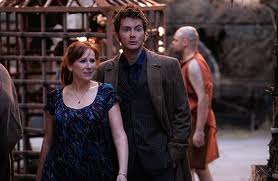
The Tenth Doctor and companion Donna in "The Fires of Pompeii"

The Tenth Doctor and companion Donna in “The Fires of Pompeii”

The Romans is perhaps the only Doctor Who story to have ever been conceived as a farce.  Unapologetically in the English tradition of ribald comedies, such as Carry On movies, The Romans does not lack the  “slap and tickle” school boy humour of the genre.  Barbara is chased around by Caesar Nero for most of episode 3, in a slapstick game of sexual catch in which she is an unwilling participant.  Seen as a threat by Nero’s wife,  Barbara is the victim of yet another attempted poisoning.  Unlike the first poisoning conspiracy in The Aztecs, it is not Barbara who thwarts the attempt on her life but Vicki, albeit unknowing of the intended victim.
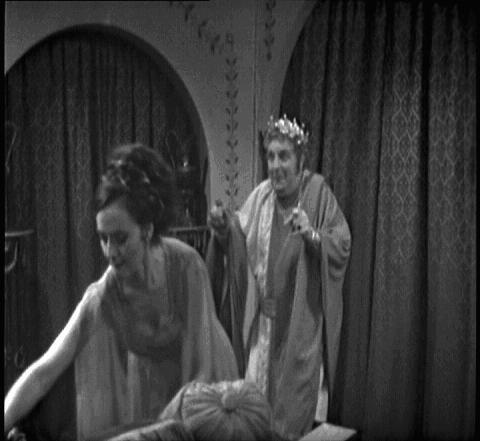
Nero plays a game of "slap and tickle" with a reluctant Barbara

Nero plays a game of “slap and tickle” with a reluctant Barbara

The story begins with the Doctor and his companions living it up in a Roman country villa.  For the first time since the show’s commencement, the Tardis Crew are holidaying and have been leading a leisurely existence for the last month.  Although never stated, but clearly implied, Ian and Barbara are very much a couple.  Together they play harmless practical jokes and Barbara restyles Ian’s hair. Ian would be happy to continue this lifestyle indefinitely, however the young Vicki is easily bored.  She complains to Barbara that she is not getting the life of adventure that the Doctor had promised.   Vicki shows no ill effects from the psychological trauma suffered at the hands of Bennett/Koquillion in her first serial.  Given that the term Post Traumatic Stress Disorder was not coined until the 1970s, it’s perhaps not surprising that the writer, Dennis Spooner, was not conversant at the time with psychological trauma and its effects.
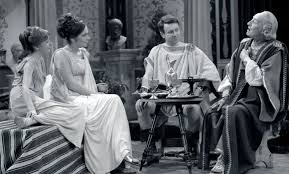
The Tardis Crew living it up in a country villa

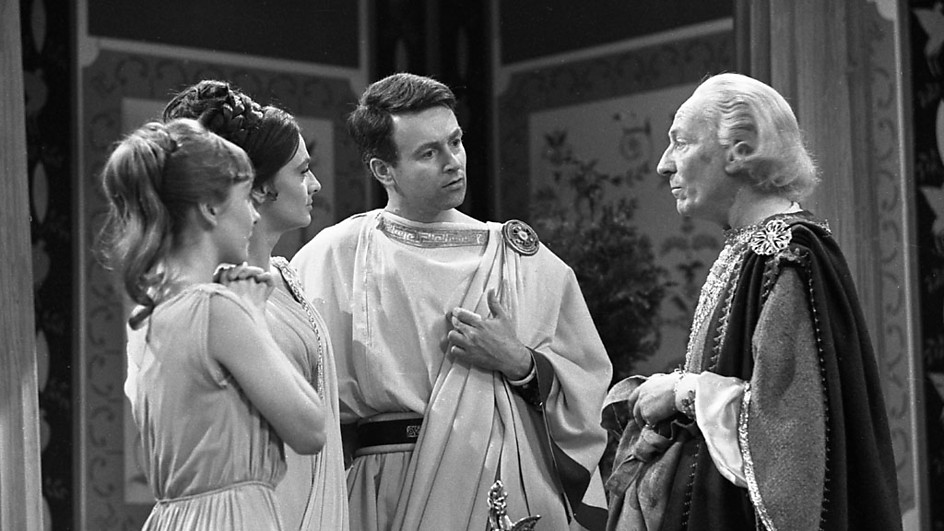
The Tardis Crew living it up in a country villa

The irascible Doctor decides to visit Rome and is begged by Vicki to be allowed to accompany him. Although accepting Vicki’s request, the Doctor refuses to allow Ian and Barbara to join him.  He doesn’t need people to fuss over him and suggests instead that they make their own way there.  Little does the Doctor know that his fellow companions will eventually make it to Rome, but not by their own free will.  Even at the story’s conclusion the Doctor is blindly unaware of his two companions’ adventures.
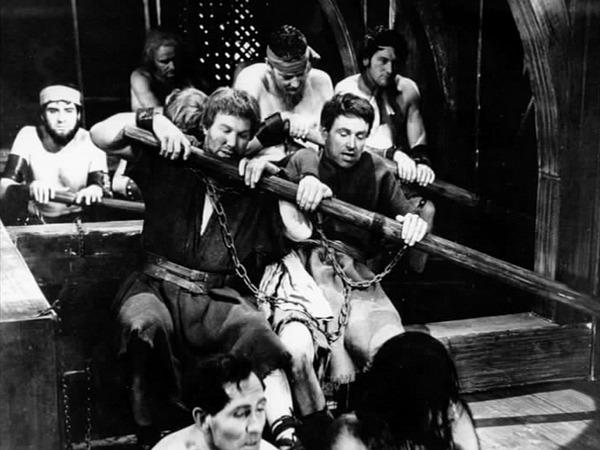
Ian as a galley slave

Ian as a galley slave

The farce continues as the Doctor is mistaken for the famous Corinthian lyre player, Maximus Pettullian. Initially unable to remember his assumed name, the Doctor and Vicki are taken to Nero’s palace where the real, but now decidedly dead, Maximus was due to play a recital. Being bereft of all lyre playing skills does not prevent the Doctor from performing at a feast for Nero in a hysterical example of what today might be described as “Air Lyre”.  Meanwhile, the Doctor and Vicki continuously, but ever so slightly, miss running into Barbara and Ian, who are unaware that their fellow Tardis crew members are also in Nero’s palace. After being captured in the villa and taken as slaves, Barbara is sold to Nero’s household as a servant and Ian finds himself as a galley slave in a boat.  After again being knocked unconscious, this time by a beam,  Ian escapes upon the boat’s wreck.  Making his way to Rome to save Barbara, Ian eventually finds her in Nero’s household.
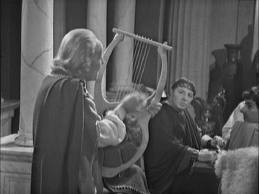
The Doctor and his non-existent lyre playing skills

The Doctor and his non-existent lyre playing skills

Almost every conceivable cliché of Roman life is played in this story.  When shopping in a market for fabric Barbara reminds Vicki that “when in Rome, do as the Romans do”. Ian quotes Latin texts whilst lounging around the villa eating grapes, is trained as a gladiator, and almost ends up as a lion’s meal.  The Doctor gets the corniest lines when, in reference to playing lyre amongst the lions, he states that his performance is bound to be a “roaring success” and “something to get your teeth into”. Slave traders abound, and the “good guy” in Nero’s household, Tavius, is a closet Christian. Rome burns whilst Nero plays the lyre, but not before the Doctor inadvertently gives him the idea that a fire is a good way of circumventing objections to Nero’s rebuilding plans.  Even the episode naming is clichéd, with the second entitled All Roads Lead to Rome.
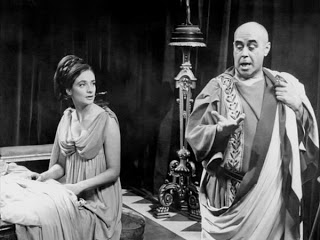
Barbara and the "guy guy" of Nero's household, Tavius

Barbara and the “guy guy” of Nero’s household, Tavius
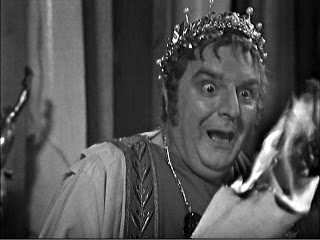
Nero conceives of the idea to burn Rome

Nero conceives of the idea to burn Rome

Relations between Vicki and Barbara have softened following the killing of Sandy in the The Rescue.  Vicki goes as far as asking Barbara to make her a dress while the pair are shopping in a Roman market.  Dressmaking is a skill frequently assumed of Barbara.  The Doctor continues to be decidedly amoral and exhibits how much he relishes a good fight. Upon being confronted by a would-be assassin, the Doctor smashes a pot plant over his head and then wraps a blanket around him.  He then throws wine over the assassin’s face, hits him over the head with a jar and very athletically dodges a swinging sword.  Just as Vicki picks up an object to hit the assailant, he jumps out of an open window.  Frustrated by Vicki’s intervention the Doctor regales the girl with tales of his fighting prowess.
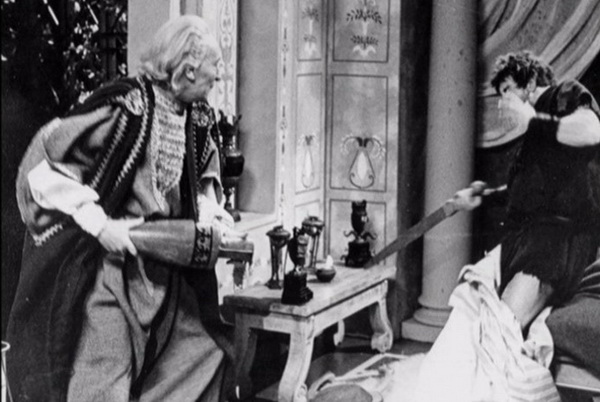
The Doctor displays his finely tuned fighting skills whilst in battle with a would-be assassin

The Doctor displays his finely tuned fighting skills whilst in battle with a would-be assassin

DOCTOR: Young lady, why did you have to come in and interrupt? Just as I’d got him all softened up and ready for the old one, two.

VICKI: You’re all right then?

DOCTOR: All right? Of course, I’m all right, my child.  You know, I am so constantly outwitting the opposition, I tend to forget the delights and satisfaction of the arts, the gentle art of fisticuffs.

VICKI: I realize you’re a many of many talents, Doctor, but I didn’t know fighting was one of them.

DOCTOR: My dear, I am one of the best.  Do you know it was I that used to teach the Mountain Mauler of Montana!

VICKI: The what?

DOCTOR: Do you remember?  Have you never heard?  No, of course, no, no, of course you haven’t, have you?
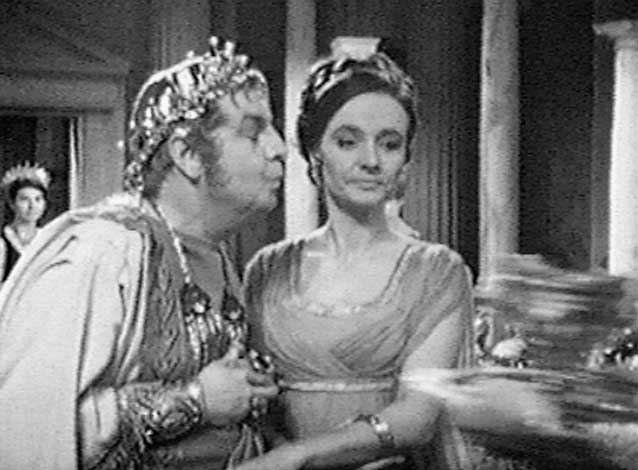
Barbara continually resisted Nero's advances, notwithstanding the gift of a gold bracelet.  The bracelet will be of significance in the next story, "The Web Planet"

Barbara continually resisted Nero’s advances, notwithstanding the gift of a gold bracelet. The bracelet will be of significance in the next story, “The Web Planet”

The Doctor, who in later serials such as Galaxy 4 is keen to advise all that neither him nor his crew kill, clearly has no such inhibitions when it comes to fighting. Will the Doctor entertain us with his combat skills in the next serial, The Web Planet? Stay tuned for the next review where perhaps this question will be answered.
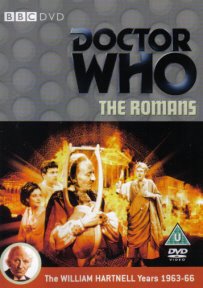
The Romans was originally broadcast in the UK between 16th January and 6th February 1965
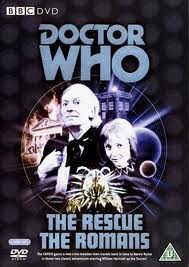
The Romans was originally broadcast in the UK between 16th January and 6th February 1965

"The Romans" DVD was released in a Box Set with "The Rescue" entitled (unsurprisingly) "The Rescue The Romans"

“The Romans” DVD was released in a Box Set with “The Rescue” entitled (unsurprisingly) “The Rescue The Romans”

Vivien Fleming

©Vivien Fleming, 2013.
The Rescue

Standard

Image

Perhaps more than any other, The Rescue is a serial that is more profoundly disturbing on the second viewing than on the first. Should you wish to watch this story without forewarning of its contents, then beware.  Spoilers are contained within.

Taken at face value, The Rescue is a somewhat innocuous story.  One of the few two part serials in classic Who, The Rescue was originally broadcast between the Dalekmania inducing Invasion of Earth, and the Carry On style slapstick comedy of The Romans. The Doctor’s grand-daughter, Susan, had left Doctor Who at the conclusion of The Dalek Invasion of Earth to commence a new life with the urban guerrilla, David Campbell. The purpose of this story was to introduce the new companion, Vicki, an orphan survivor of a spaceship crash on the planet Dido.

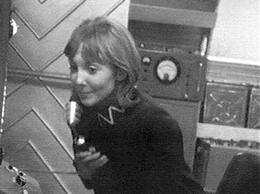
Vicki radios the Dido bound rescue craft

Vicki radios the Dido bound rescue craft

Only two crew members of the ship remain at the serial’s commencement, Vicki and Bennett, an apparently disabled man in his 30s or 40s who was played by Australian actor, Ray Barrett.  The other crew members who had survived the crash, it was believed, had perished in an explosion when they had attended a “meet and greet” with the residents of the planet, Dido. It was in this explosion that Bennett is said to have sustained an injury to his legs that left him all but bedridden.  Vicki was the only crew member who didn’t attend the function as she was suffering from a fever at the time.

Vicki and Bennett are the sole survivors of a spaceship crash on the planet Dido

Vicki and Bennett are the sole survivors of a spaceship crash on the planet Dido

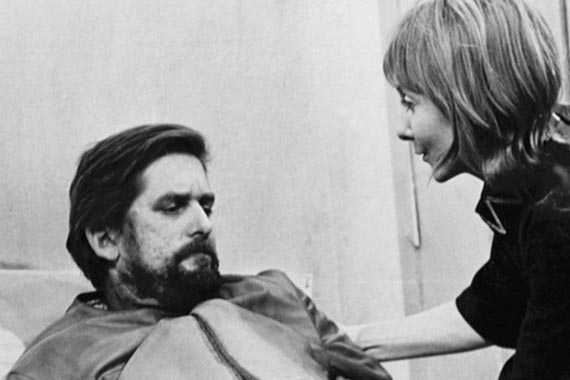
Barbara, Bennett and Vicki

Barbara, Bennett and Vicki

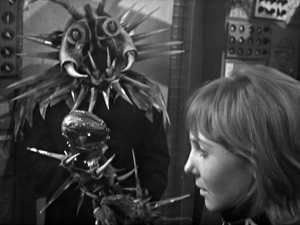
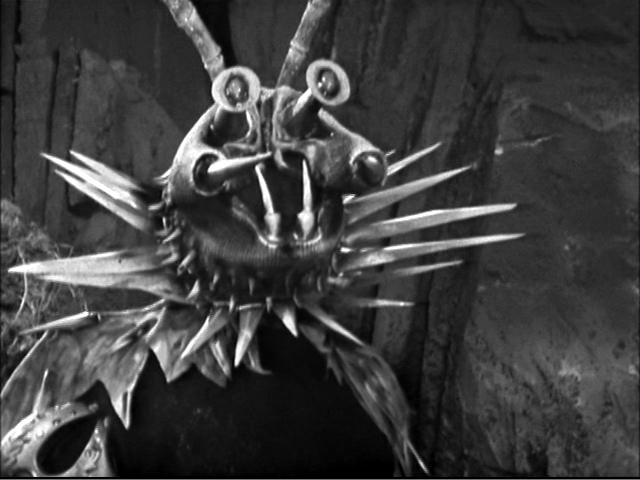
As the only able bodied survivor, Vicki takes on the role of caring for Bennett, who remains in his cabin most of the time.  Menacing the survivors is a grotesque monster called Koquillion. Although humanoid in body form, Koquillion’s head and hands are a jumble of large and pointed spikes. Vicki, however, is only ever alone when sees the monster. Bennett has not witnessed the beast in the presence of Vicki, however appears more than knowledgeable about its threat.  He is quick to remind Vicki to watch out for Koquillion.  He’ll be around somewhere, advises Bennett, and he will kill both of them if he learns about the rescue mission which is due to shortly arrive.

Koquillion menaces Vicki

Koquillion menaces Vicki

Koquillion plays a sinister game of mind control and psychological abuse on Vicki.  He arrives at the ship intermittently and tells her that she is not to wander within 50 yards of the vessel.  Koquillion claims that the local people are warlike and that he alone can save Vicki and Bennett from his own people.  “I am your only protection!” exclaims Koquillion,  “You should be grateful”.  This psychological warfare has left Vicki confused and contradictory.  One moment she is scared that Koquillion could keep her on Dido forever, yet when Barbara looks at her in a concerned manner she immediately snaps “You’re sorry for me, aren’t you?  I’m perfectly all right, you know.  I don’t care if nobody ever comes.  I’m fine.  I’m perfectly fine”.  Clearly Vicki is anything but fine.

Ian, Barbara and Koquillion

Ian, Barbara and Koquillion

Ordinarily left with no company other than the abrupt and irascible Bennett, Vicki takes solace in her friendship with a Didonian, a reptilian like native of the planet.  Whilst collecting water in jerry-cans her legless companion, whom Vicki has named Sandy, approaches.  Fearful that it is about to pounce on Vicki, Barbara shoots it, not withstanding Vicki’s protestations.   It subsequently takes the Doctor’s intervention to heal the rift that necessarily emerges between Vicki and Barbara.

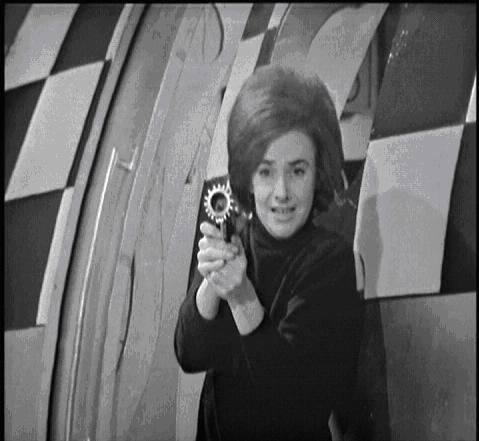
Barbara shows that even the inexperienced can shoot to kill

Barbara shows that even the inexperienced can shoot to kill

Vicki has been living on tenterhooks, waiting always for the unexpected arrival of Koquillion.  His psychological control of her is immense, notwithstanding that there has been no apparent physical violence. Vicki’s predicament is not dissimilar to that of a victim of domestic violence, particularly someone subject to verbal abuse and controlling behaviour.  The perpetrator may appear the perfect partner to outsiders as he or she is cautious to ensure that there are no witnesses to their behaviour.  The effect of this psychological violence is therefore all that much greater on the victim, who can unfortunately underplay the effects on them for the shame of revelation, or fear of not being believed.

Koquillion and Vicki

Koquillion and Vicki

It is only near the story’s end that the Doctor reveals that Koquillion and Bennett are one of the same.  Bennett has been leaving the ship through a hidden escape hatch in the floor of his cabin, donning the Koquillion gear, and terrorising Vicki.  It is this fact that makes The Rescue all that more unsettling.  Bennett had killed a crew member on the spaceship and had been arrested.  Prior to his crime being radioed to Earth, the ship crashed.  To conceal his crime he reasoned that he must kill all of the crew members, save for Vicki who was unaware of his crime. It was Bennett who arranged the explosion using the ship’s armaments, which killed the crew (including Vicki’s father) and the people of Dido who were attending the “meet and greet”. “You destroyed a whole planet to save your own skin”, said the Doctor, “You’re insane”.  The masquerade as Koquillion was to scare Vicki into believing that the Didonians were a terrible people.  She could therefore be assured to support his story that the blast that had killed the crew was caused by the Dido people.  Bennett met his end, however, at the hands of two of the Didonians who unbeknownst to him, had survived the blast.

The wrecked spaceship in which Vicki's father was killed

The wrecked spaceship in which Vicki’s father was killed

The Doctor, meanwhile, is suffering from the psychological effects of Susan’s departure.  For the first time ever he sleeps during the materialization of the Tardis.  In fact, it is during this serial that the word “materialize” is used for the first time to indicate the landing of the Tardis.  We also learn that the Tardis can travel through solid matter in flight.  Barbara wonders whether they will see a new side to the Doctor, to which Ian responds by saying he’s not getting any younger.  He then gesticulates in a manner so as to suggest that the Doctor is going senile. The Doctor also admits for the first time that he never obtained a medical degree, and even compliments Ian’s intelligence.

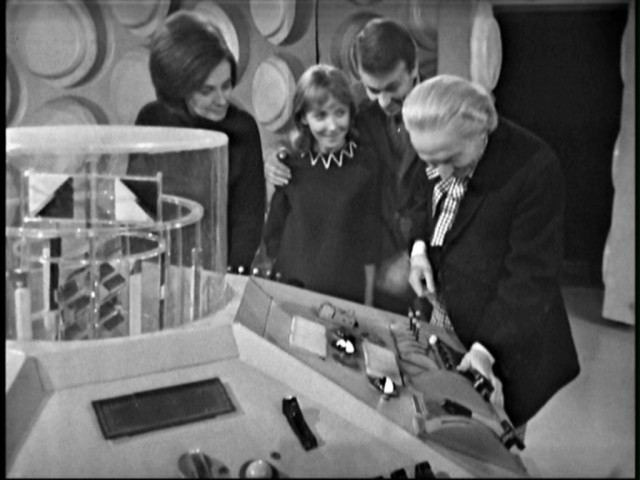
Barbara, Vicki, Ian and the Doctor safely in the Tardis at "The Rescue's" end

Barbara, Vicki, Ian and the Doctor safely in the Tardis at “The Rescue’s” end

The Doctor comforts Vicki upon telling her that Bennett murdered her father and offers to take her with them.  Ian and Barbara had simultaneously, but separately from the Doctor, also come to the conclusion that Vicki should depart Dido in the Tardis.  Promising her an abundance of adventure, Vicki accepts the Doctor’s invitation to travel in the “old box” which is bigger on the inside.  What scars, if any, she bears from her ordeal remain to be seen.  The orphaned girl from 2493 begins her exploits in time and space.

"The Rescue" was originally broadcast in the UK between 2nd and 9th January 1965

“The Rescue” was originally broadcast in the UK between 2nd and 9th January 1965

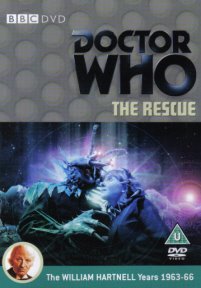
"The Rescue" DVD was released in a Box Set with "The Romans" entitled (unsurprisingly) "The Rescue The Romans"

“The Rescue” DVD was released in a Box Set with “The Romans” entitled (unsurprisingly) “The Rescue The Romans”

Vivien Fleming

©Vivien Fleming, 2013.
Two seasons down, 31 to go!

Standard

Image

The luxury of restored DVD copies of First Doctor serials comes to a somewhat abrupt end with the conclusion of Season 2.  Only two serials in the first two years of Doctor Who are missing from the BBC archives, Marco Polo and The Crusade.  Season three has seven incomplete or totally missing stories, including the twelve part epic The Daleks’ Master Plan.  My already diminished marathon viewing pace may reduce even more when confronted with reconstructions.  I hope not!

Recent commitments have slowed my reviewing however I hope to post reviews for the balance of Season two in the coming week.  Await with baited breath, if you dare, my reviews of
The Rescue, The Romans, The Web Planet, The Crusade, The Space Museum, The Chase, and The Time Meddler.

The Dalek Invasion of Earth

Standard

Image

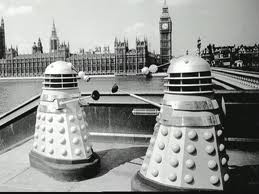
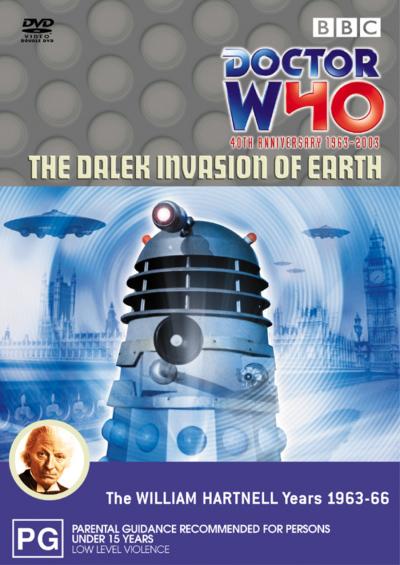
With iconic imagery of London that would remain unmatched until the classic emergence of the Cybermen from St. Paul’s Cathedral in 1968’s The Invasion, The Dalek Invasion of Earth was a ground breaking serial in Doctor Who’s history.  The story was the subject of a number of significant firsts and lasts, including the earliest shots of the English capital’s tourist hotspots which are so celebrated that at least one has been reenacted for the forthcoming docudrama to celebrate Who’s 50th anniversary, An Adventure in Space and Time. The story was also the first to see the departure of a companion, Susan, and the first on screen kiss, between Susan and her fiancé, David.  The Daleks made their only appearance with parabolic discs on their backs and the serial was also the second, and last, to be made into a feature film.

In the best tradition of Doctor Who, The Dalek Invasion of Earth involved the wild and improbable premise that Daleks invaded earth on or about 2164.  Six months prior to arriving in their now stereotypical looking flying saucers, the Daleks had sent meteors bearing the plague to the earth which had decimated the continents of Africa, South America and Asia. Countries were destroyed and the world became fragmented into small, independent communities. Although considering themselves “masters of Earth”, the Daleks interest in earth was not the domination of its human population, but rather to use it as a spacecraft.  Drilling to the core of the earth in Bedfordshire, the Daleks planned to remove its magnetic core, de-gravitize it, and then replace the core with a power system of their own making.  The Daleks then intended to steer the earth throughout the universe.  One would have thought it easier for the Daleks just to make more of their flying saucers, but alas, a rollicking good yarn that would not have been!

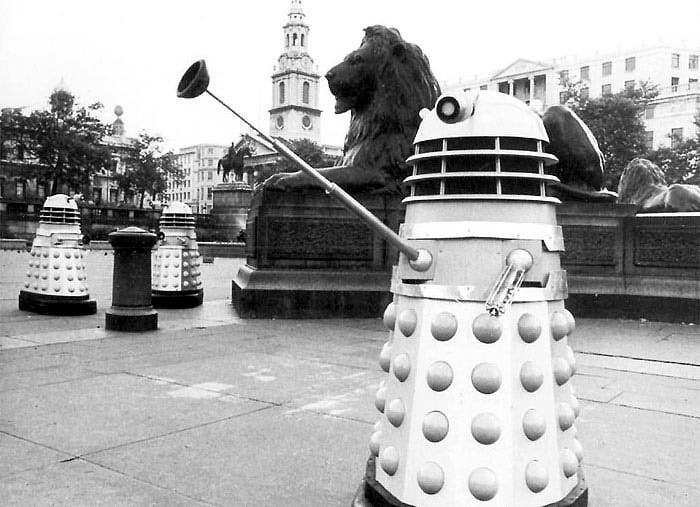
Producer of Doctor Who, Verity Lambert, pictured with a parabolic disc Dalek. These Daleks were only ever seen in "The Dalek Invasion of Earth".

Producer of Doctor Who, Verity Lambert, pictured with a parabolic disc Dalek. These Daleks were only ever seen in “The Dalek Invasion of Earth”.

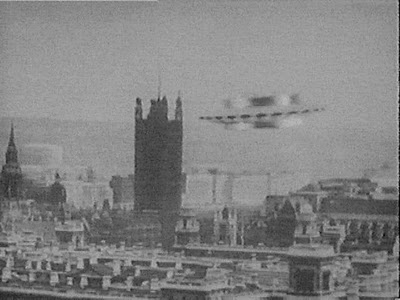
One of the Daleks' less than realistic flying saucers

One of the Daleks’ less than realistic flying saucers

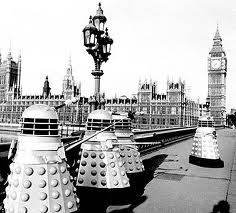
Dalekjs on Westminster Bridge

Daleks on Westminster Bridge

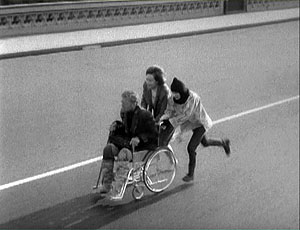
Given the Daleks’ anatomical disability, namely, their unfortunate endowment of a sucker and a mix-master like gun in lieu of hands, they naturally needed human help in their quest to drill to the earth’s centre.  Having dominated the decimated human population, the Daleks robotized the intelligent males into drone like soldiers who responded to their orders.  Almost everyone else was a slave in the Daleks’ mine in Bedfordshire. The few remaining “free” humans formed a resistance movement to fight the Daleks’ evil plan.  The Doctor and his companions meet up with one such resistance group which was under the leadership of Dortmun, an incapacitated scientist confined to a wheel chair.  One of these resistance members, David Campbell, was to become Susan’s fiancée, whilst another, Jenny, assisted Barbara in getting to Bedfordshire.  Along the way Barbara has the glorious achievement of plowing down a group of Daleks whilst driving a truck.

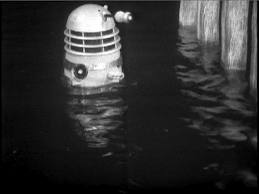
A submerged Dalek emerging from the Thames River

A submerged Dalek emerging from the Thames River

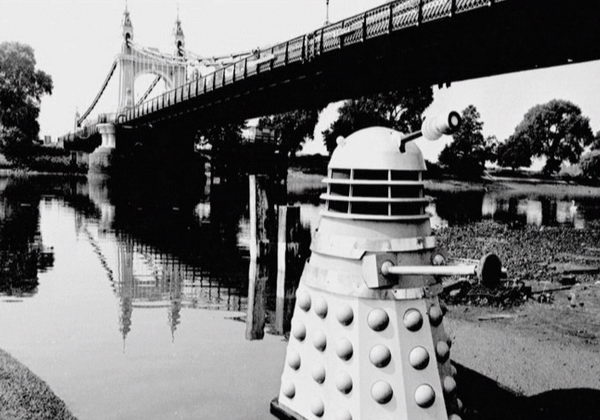
The Dalek shows no ill effects from its time in the polluted Thames

The Dalek shows no ill effects from its time in the polluted Thames

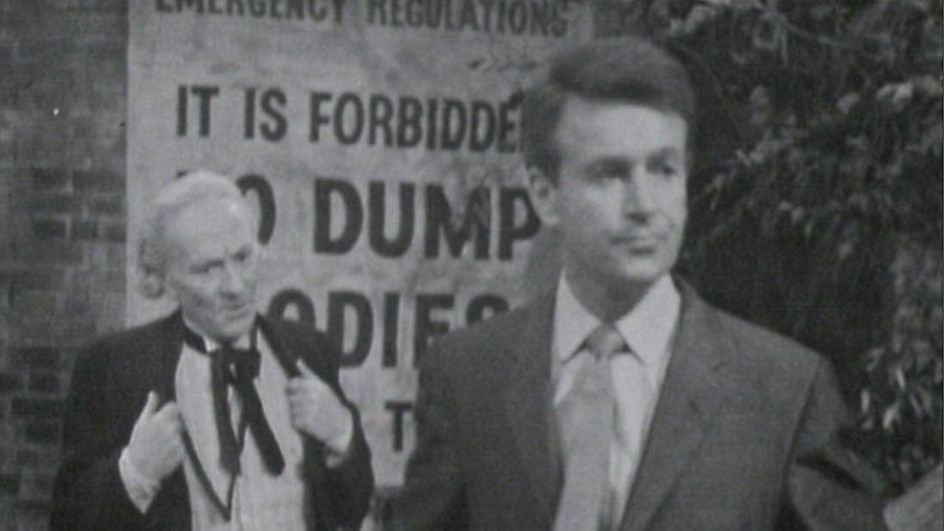
The Doctor and Ian in front of a sign forbidding the dumping of bodies in the river

The Doctor and Ian in front of a sign forbidding the dumping of bodies in the river

In the course of the Doctor and his companions’ adventures, the Doctor is a captive in the Daleks’ spaceship and is almost robotized, Ian contends with a mutated creature called The Slyther and finds himself inside the bomb which will blow out the earth’s core, and Susan is almost eaten by alligators which now inhabit London’s sewers. Barbara and her companion Jenny are betrayed to the Daleks by two women from whom they seek refuge, and are then held captive with metal neck braces.  After their ultimate victory over the Daleks, the Doctor, Barbara and Ian depart in the Tardis sans Susan. In the tear jerking conclusion, the Doctor locks his grand-daughter out of the ship and speaks to her through an intercom.  As she is now a woman, she needs roots somewhere and David is the person who can give her those roots, “not a silly old duffer like me”, said the Doctor.  Despite Susan’s protestations the Doctor leaves, but not before promising that one day he will be back.  It is this oration which opens Who’s 20th anniversary special, The Five Doctors, which is the next occasion when the Doctor and Susan are seen together.

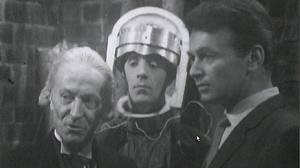
A Roboman with the Doctor and Ian

A Roboman with the Doctor and Ian

Slave labourers push a railway cart at the Bedfordshire mine

Slave labourers push a railway cart at the Bedfordshire mine

Akin to the first Dalek story, The Daleks, the writer, Terry Nation, drew upon Second World War imagery.  Post Dalek invasion London has its genesis in the London Blitz. The Daleks are again a representation of the Nazis and are even seen to do Nazi salutes. They are the “masters of the Earth”.  The Daleks make use of slave labour and communicate to the resistance by radio transmissions. Whilst most of the population is in grave fear of them, some self-interested individuals are prepared to co-operate with them for economic gain.  Such is the case of the two women in the wood and the black market racketeer, Ashton.

A Dalek does a Nazi salute

A Dalek does a Nazi salute

Daleks and Robomen at the Daleks' spaceship

Daleks and Robomen at the Daleks’ spaceship

Barbara, as always, is fabulous and puts on a particularly good show when attempting to outwit the Dalek leadership by muddling history.  As stated previously, she plows through Daleks, unscathed, in a truck and it is Barbara who realizes that the Robomen are given orders by a central command.  Taking over that microphone, she and the Doctor order the Robomen to turn on the Daleks.  Unfortunately she is oblivious to the sexism of the resistance men when she is asked whether she can cook.  Her reply of “I can get by” results in her being assigned to cooking duties because the resistance “need cooks”.  If this serial was produced five years later then perhaps she would have baulked at the gendered stereotype.  Clearly these urban guerillas had underestimated the resourcefulness of Barbara.

Barbara tries to confuse the Daleks with muddled history

Barbara tries to confuse the Daleks with muddled history

Barbara is caught by a Dalek's sucker

Barbara is caught by a Dalek’s sucker

The character of Jenny is particularly strong for a woman in the early 1960s.  Dortmun assures Barbara that Jenny isn’t callous, although the years of battling the Daleks has certainly left her hardened.  When Barbara asks why she is constantly running from the Daleks her reply is that “I’m not running, I’m surviving”.  Her rather arrogant nature doesn’t make for a particularly endearing personality and one is left wondering if this is a reflection of an underlying belief by Terry Nation that powerful women cannot also be “nice”.

Barbara and Jenny run Dortmun to safety

Barbara and Jenny run Dortmun to safety

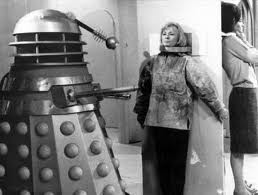
Jenny and Barbara are restrained by iron neck collars

Jenny and Barbara are restrained by iron neck collars

Susan transforms from a girl to a woman in the course of this story as her relationship with David blossoms. She initially reject’s David’s proposal of marriage as her grandfather is old and now needs her.  She didn’t want to have to make the choice between the stability that David offered, and the Doctor.  The Doctor, from inside the Tardis, ultimately makes the decision for Susan which on the face of it appears harsh and unloving.  David, however, reassures Susan that the Doctor knew that she could never leave him (David). That a relationship of such intensity could develop in the space of but a few days is indeed intriguing.  It became a precedent, nonetheless, for romance linked companion departures in the future, such as the Fourth Doctor’s companion Leela, who remains on Gallifrey with her newly acquired love, Andred.

Susan talks to the Doctor through the Tardis's PA system

Susan talks to the Doctor through the Tardis’s PA system

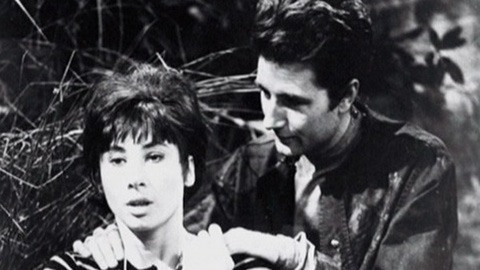
Susan and David in a tender moment

Susan and David in a tender moment

Susan is distressed to leave her grandfather

Susan is distressed to leave her grandfather

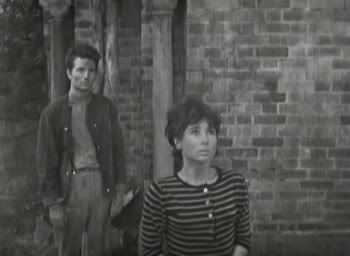
The Dalek Invasion of Earth marked the end of companion stability and the beginning of an almost revolving door of companions for the First Doctor. It is in the next serial, The Rescue, that we are introduced to the Doctor’s “grand-daughter substitute”, orphan Vicki. A new era will begin.

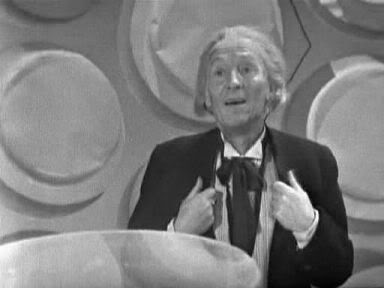
The Doctor says farewell to Susan

The Doctor says farewell to Susan

The Dalek Invasion of Earth was first broadcast in the UK between November 21 and December 26, 1964

The Dalek Invasion of Earth was first broadcast in the UK between November 21 and December 26, 1964

Vivien Fleming

©Vivien Fleming, 2013.
Planet of Giants

Standard

Image

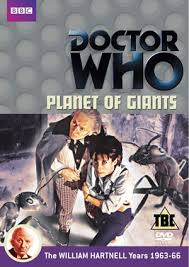
The opening serial of the second season of Doctor Who, Planet of Giants saw the return of the Tardis Crew after a break from the television screens of a mere six weeks. The penultimate serial to feature all the original cast members, Planet of Giants, albeit in a somewhat divergent form and with a different writer, was originally intended as the premiere serial of the first series.  Rather unsurprisingly given its infancy, the ninth Who story was the first since the premiere episode, An Unearthly Child, to be set in modern day England.  That being said, the action is all studio based and not a glimpse of London can be spied. Although modern day London was featured prominently in the season three finale, The War Machines, viewers didn’t have to wait that long to see the recognizable landmarks of England’s capital.  Set in the twenty second century the next serial, The Dalek Invasion of Earth, would undoubtedly have satiated the tastes of all those viewers seeking earth-bound points of reference. That story, however, is for my next review.

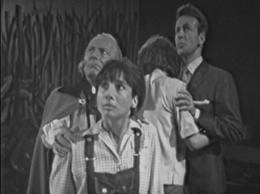
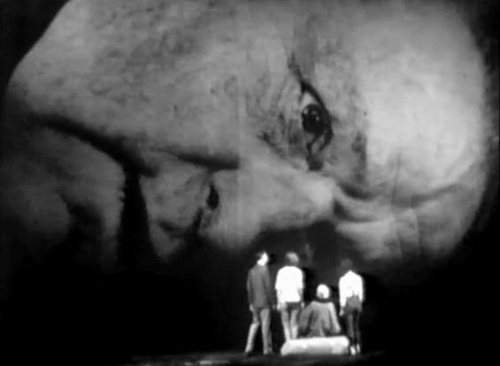
The frightened Tardis Crew are smaller than painted blades of grass

The frightened Tardis Crew are smaller than painted blades of grass

Planet of Giants was an ambitious story, beautifully realized on what was undoubtedly a budget almost as minute as the Doctor and his companions were in the serial.  Originally filmed as four episodes, but cut to three to quicken the pace of episodes three and four, Planet of Giants saw the Tardis Crew reduced to not much more than the size of ants.  As the Tardis was materializing in a suburban London backyard, presumably to return Barbara and Ian home, the doors flung open. For reasons unable to be later explained by the Doctor, the ship and its occupants were shrunk. The Tardis Crew, however, were unaware of their diminutive size until they stumbled upon a series of strange and perplexing objects whilst exploring outside. After splitting into two groups, Ian, with Susan, initially presumed that they had landed in the middle of some form of trade fair.  An exhibition, of sorts, in which huge copies of various objects were on display. Ants were the size of dinosaurs and matchboxes like houses. It was Susan, though, who quickly realized that it was the Tardis Crew that had been shrunk.  Perhaps it was her alien antecedents that permitted her to see that which Ian couldn’t.

Susan, Ian and the matchbox

Susan, Ian and the matchbox

Soon the Doctor and his companions were confronted by the hazards that naturally confront ant sized people.  Ian, who had climbed into a near empty match box, was picked up and carried away but a short distance. He was bounced around the matchbox brutally, slamming uncontrollable from side to side. To the others, this otherwise short stroll across a nicely manicured lawn to be reunited with Ian was a treacherously long haul. The Doctor, who was now much more concerned about the well-being of his companions, was insistent on locating “Chesterton”.  Eventually they are reunited.

A profoundly dead insect of mammoth proportions is examined by Barbara and the Doctor

A profoundly dead insect of mammoth proportions is examined by Barbara and the Doctor

In the interim, the viewers were witnesses to a conversation about a new insecticide, DN6, between Farrow, a “Ministry” man and Forrester, a conniving business person whose income and life style is dependent upon the approval, production and marketing of DN6.  Developed by the scientist Smithers in his back yard laboratory, DN6 has the capacity to kill more than just insects and remains effective indefinitely.  Farrow had learned of the potentially fatal consequences of DN6 whilst preparing a report for the government, however the insecticide’s inventor, Smithers, seemed blindly unaware of its hazards.  Unprepared to risk losing approval for DN6, Forrester shoots Farrow dead. He soon after reveals the murder to Smithers, thereby implicating him as an accessory after the fact.

The deceased Mr Farrow as seen by the Doctor and his companions.  This looks like something out of a Hitchcock movie

The deceased Mr Farrow as seen by the Doctor and his companions. This looks like something out of a Hitchcock movie

The Doctor and his companions are confronted by Farrow’s body on the lawn but are soon separated again when Ian and Barbara seek shelter in a brief case.  The brief case is picked up and carried inside the house.  Barbara considered the ride in the suitcase not dissimilar to that of a roller coaster and sustained a bad bruise to her knee from an unsecured paper clip. The Doctor and Susan must now rescue the teachers and in doing so encounter adventures galore.  Whilst outside a domestic cat was a menacing beast, inside a common sink and drain is sufficient to make out heroes contemplate imminent death by drowning. Lighting a match is akin to ramming a stockade, whilst lifting a telephone receiver is almost as laborious as lifting a London bus an inch off the ground.

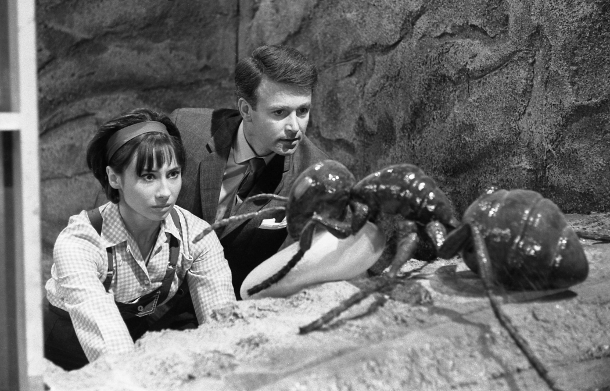
Ian and Susan are confronted by a giant ant

Ian and Susan are confronted by a giant ant

Perhaps what I admire most about this story is its strong environmental message. Concern for the long term effects of pesticides is something I would have thought was rarely discussed in the early 1960s. It’s certainly Doctor Who’s first venture into enviro-politics, an area of much concern in a number of Third Doctor serials including Inferno and The Green Death (yes, the one with the giant maggots!).  Not only is the Doctor concerned about the effect of the insecticide on his companions – he advises them not to eat or drink anything – but also other insects.  When Barbara questions what would kill insects in an ordinary garden, and then posits that killing “bees, and worms, and things” is wrong, the Doctor concurs and states that “Quite so.  Both are vital to the growth of things”.

The Doctor and Susan contemplate death by drowning

The Doctor and Susan contemplate death by drowning

Barbara, who absolutely shines in this story, subsequently becomes gravely ill after touching a grain of wheat which had been sprayed by insecticide.  Ian, who is with her at the time, does not notice and upon realizing her error, Barbara hides her actions from him. This is in spite of the fact that Barbara had asked to borrow Ian’s hanky and was aggressively attempting to clean the poison off her hands.  The usually observant and intelligent Ian was clearly away with the fairies on this occasion. Once Barbara becomes so ill that she collapses, and can no longer deny that she touched the insecticide, the Doctor determines that they must return to the Tardis as soon as possible.  When the ship’s crew is returned to their normal sizes the pesticide will only be 1/70th as potent on Barbara, the Doctor asserts. Naturally the Doctor was entirely correct and at the serial’s end the grain of wheat which was taken into the Tardis with much physical exertion, had resumed its normal proportions. Barely could it be seen.

Barbara is terrified to run into a giant fly

Barbara is terrified to run into a giant fly

A thoroughly enjoyable romp, with an honourable message and momentous adventure,  the Planet of Giants was a memorable start to Doctor Who’s second season. 

Planet of Giants was originally broadcast in the UK between 31st October and 14th November 1964

Planet of Giants was originally broadcast in the UK between 31st October and 14th November 1964

Vivien Fleming

©Vivien Fleming, 2013.