As the months countdown to Doctor Who’s 50th Anniversary on 23 November 2013, so the rumour mill concerning lost Doctor Who episodes escalates exponentially. To the best of fans’ knowledge 106 episodes remain missing from the BBC Archives, however the blog site Bleeding Cool has today reported two new rumours. One unnamed person associated with the Doctor Who production team is said to believe that there have been at least 40 episodes returned to the BBC, whilst another alleges 93. These rumours can be added to the pile which also includes claims that 90 episodes have been discovered somewhere in Africa. Dubbed the omnirumour (or omnirumor for those in America), the Africa 90 story has been circling for months and has set Who internet forums alight.
The 12 part Daleks’ Master Plan is one of the most sought after missing Doctor Who serials
Unfortunately absolutely no evidence has been forthcoming of any finds, not even one single screen capture. Hearsay is the sole testimony offered, with information only forthcoming from friends of friends. There has been talk of the BBC having compelled the signing of non disclosure agreements, delicate negotiations with film collectors and/or dictators, and all manner of other theories to justify the complete absence of evidence. The BBC has issued at least one statement denying that it has lost episodes in its possession, however the rather ambiguous nature of the statement did little to stem the flow of rumours.
The first Doctor Who regeneration (although it was not so named at the time) is among the 106 missing episodes
Having watched 11 straight missing episode reconstructions in the last several days, and with another two tomorrow before a one episode breather (episode three of The Underwater Menace), there’s not much more that I’d love than for a hoard of missing episodes to turn up. I won’t be holding my breath, however. Here’s hoping, though, that one day the hardened Doctor Who marathon viewers will be watching a lot fewer of the brilliant Loose Cannon Reconstructions.
The triple DVD Lost in Time contains many orphan Doctor Who episodes from the First and Second Doctor’s tenures
Known to most as the first Doctor Whoregeneration and the premiere appearance of the Cybermen, it has been persuasively argued by Phil Sandifer in Tardis Eruditorum that The Tenth Planet represents neither. Rather than signalling the First Doctor’s end, Sandifer states that it is rather the demise of the Doctor, per se. Save for his appearance in The Three Doctors, William Hartnell never played the role of the First Doctor. He was always merely “the Doctor” – the original, and some may say, the best. Killed by the energy draining force of the planet Mondas, the Doctor collapses to the floor in his terrifying end. Not only is it the death of the Doctor, but also the death of Doctor Who. Sandifer explains it thus:
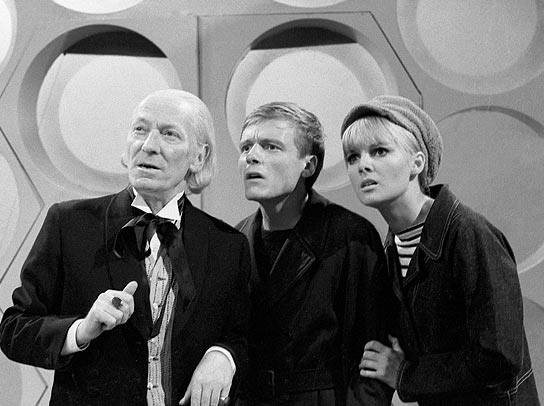
The Tardis Crew are ready to brave the cold. Polly chooses a highly impractical mini skirt
“And this is part of being a Doctor Who fan. You are absolutely guaranteed to see the show die in front of you, and then get replaced with a strange, different show using the same name. Eventually, everything that Doctor Who is comes to a crashing halt and something new happens instead”.
The Doctor dies
The sense of the television series named Doctor Who dying would have been very real to viewers on 29 October 1966. Doctor Whowas William Hartnell and William Hartnell was the Doctor. There was no precedent for the change of the lead character in such a radical fashion. Certainly the actor playing a role in a show, whether it be on television or stage, may have changed, but the character remained roughly similar in respect of personality type and more often than not, physical appearance. The most frequently cited similarity, that of the film version of Ian Fleming’s James Bond, was still being played by the first actor to do so, Sean Connery. It would not be until 1969 that George Lazenby would have his one and only outing as 007. Incidentally, it was that very same year that the American series Bewitched saw the character of Darrin Stephens played by a different actor, also with the unfortunate name of Dick. Dick Sargent replaced Dick York, but as in the case of James Bond, Darrin remained ostensibly the same character.
The face of a stranger replaces the familiar form of The Doctor
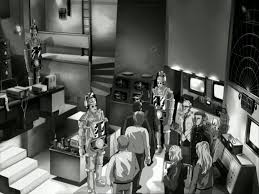
Doctor Who was different, however. This wasn’t the case of a quick change of lead actor, with the series continuing unchanged. This was actually the death of the lead. Although the new lead actor played the role of a character bearing the same name, the Doctor, his personality was remarkably different. There was very much a sense of re-birth and complete renewal. This was particularly evident in The Tenth Planet’s setting. This was the first “base under siege” story, a genre which would come to dominate Patrick Troughton’s tenure as the Doctor. A “base under siege” involves circumstances where the Doctor and his companions find themselves caught in a confined space or remote geographic location and are confronted by monsters that threaten everyone’s lives, the “base’s” existence, or both. The Series Seven story Cold War, in which the Doctor and Clara find themselves on a Soviet era submarine confronted by an Ice Warrior, is a classic example of the “base under siege” genre.
The Series 7 episode Cold War is a classic example of a “Base under Siege” story
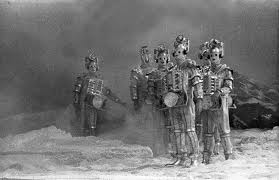
From its very opening sequence, where a rocket is launched, it is apparent that The Tenth Planet is a very different story. The Doctor and his companions are not seen until more than three and a half minutes after episode one’s commencement. Prior to that an array of international characters, not seen before in Doctor Who, are shown. Staffing the South Pole base are Americans, Italians and British, and manning the space shuttle are an Australian and a West Indian (or a resident of another Caribbean country). There’s a sense of confinement and it’s twenty years in the future – 1986. Once inside the base the Doctor is quick to be able identify a hitherto unknown planet hurtling towards the earth as Mondas, the Earth’s upside down twin. For the first time the Doctor shows that he knows not only the past’s history, but also its future. Five minutes before the episode’s conclusion we catch our first glimpse of a Mark 1 Cyberman and it’s on its harrowing features that the episode ends on a classic cliff hanger.
The Doctor and his companions find themselves in a base under siege
These are not the metal villains that the Cybermen are later portrayed as, but rather a far more frightening creation. A race of humanoids whose body parts have been replaced as they wear out, they still retain the vestiges of a human form. Their hands are human and ungloved, and their faces almost mummified in a cloth stocking. Instead of moving their lips as they speak, their featureless mouths open and their sing-song voices spew forth. There is no hint of the monotone voices of the later Cybermen, nor is there a predilection to shout one word threats such as “delete”. The Cybermen in The Tenth Planet are almost gentlemanly in their manners and until the fourth episode not intent on causing havoc to the Earth. Devoid of all emotions, they are entirely logical and see their transformation to Cybermen as a great advance. They are free from illness, heat and cold and wish the humans to travel to their home planet, Mondas, where “You will become like us”. The Cybermen are concerned only for survival, and a race for survival it is as Mondas careers towards the Earth. Only one planet can survive, but which will it be?
The Tenth Planet – A Cyberman extols the virtues of their form
Created by Kit Pedler, an unofficial scientific adviser to Doctor Who, the Cybermen arose from Pedler’s fear of humans being artificially transformed. A medical scientist by profession, Pedler wrote The Tenth Planet more than a year prior to the first heart transplant in December 1967. As displayed in the clip above, the Cybermen have their hearts removed. When Polly questions whether they have a heart at all, the response is entirely literal. That humans may one day become like the Cybermen was a genuine fear held by Pedler.
The Cybermen are at their frightening best as their humanoid antecedents are still evident
Cybermen through the ages
The selfish concern of American General Cutler for the well being of his astronaut son, Terry, is a particularly frightening aspect of The Tenth Planet. Cutler is prepared to detonate the Z Bomb and destroy Mondas merely to save his son’s life. Terry has been sent on a rescue mission by Geneva for the space shuttle which unbeknownst to the United Nations, has already disintegrated. The deaths of all on Mondas, and the possibility of immense radioactive damage to Earth, is of absolutely no concern to Cutler. The loud and bullying American makes the Cybermen and their quiet extolling of Mondas’ virtues appear almost palatable.
The American, General Cutler
Unfortunately illness caused William Hartnell to be absent for episode three. A stand-in faked his collapse to the floor and for the whole of the episode the Doctor is confined, unconscious, to quarters. Given his death in episode four, the Doctor’s absence in episode three provided a sense of continuity to the serial’s conclusion. Quite shocking and unexpected, the Doctor’s collapse upon his return to the Tardis otherwise bears very little reference to the rest of the story. In retrospect fans have read the events of previous serials into the Doctor’s weakening, although given the nature of Hartnell’s departure it’s just as likely that these “signs” were unintentional.
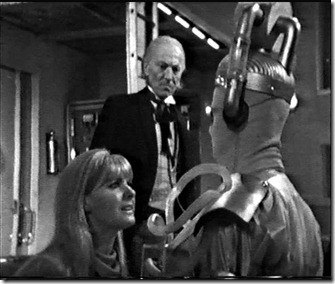
Polly tries unsuccessfully to reason with a Cyberman. The Doctor looks on
You may recall that the Doctor was subjected to the Daleks’ Time Destructor in episode 12 of The Daleks’ Master Plan. Although Sarah Kingdom aged quickly and died, the effects on the Doctor were not so great. He nonetheless suffered the Time Destructor’s effects to some degree, although these were reversed when Steven accidently discovered the means of reversing the Destructor. In The Celestial Toymaker the Doctor was rendered incorporeal by the Toymaker and in The Gunfighters he had a tooth removed by Doc Holliday. Finally in The War Machines an unsuccessful attempt was made to hypnotise him. Did these events precipitate the Doctor’s decline? It’s a question that is unlikely to be answered, although Phil Sandifer, whom we opened with, is adamant that the cause is without doubt the energy draining forces of the planet Mondas. When Polly asked the Doctor at the opening of episode four what had happened to him he responded by saying, “Oh, I’m not sure, my dear. Comes from an outside influence. Unless this old body of mine is wearing a bit thin”. It’s usually only the latter part of this answer that is remembered, rather than the “outside influence”.
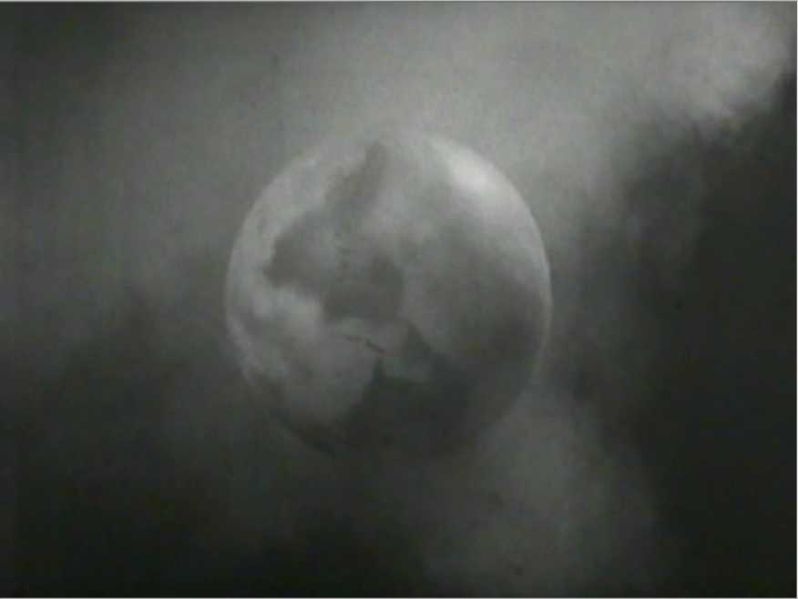
The planet Mondas is the Earth’s twin
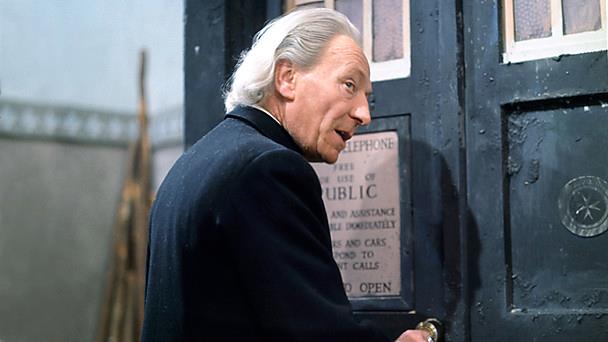
I will really miss the irascible old Doctor as Who continues Season four with Patrick Troughton at the helm. Join me for my next review as Doctor Who enters a new era with The Power of the Daleks.
The Doctor collapsed on the floor of the Tardis
The Tenth Planet was originally broadcast in the UK between 8 October and 29 October 1966. The DVD of the three episodes held in the BBC Archives, together with an animation of missing episode four, is to released by the BBC in November 2013
All four episodes of The Smugglersare missing from the BBC Archives. For the purposes of this marathon I viewed Loose Cannon’s reconstructions, links for which appear below.
It’s somewhat bizarre to “watch” a serial in which all four episodes have been lost but miraculously, all the violence is intact as tiny snippets of film. Such is the case with the opening story of Season 4, The Smugglers. Always to the rescue in the event of missing episodes, Loose Cannon’s reconstruction is resplendent with John Cura’s famous telesnaps, authentic photos taken during production and snippets from an amateur film of the production. Most startling, however, are five short clips courtesy of Australia’s Commonwealth Film Censorship Board. Discovered in the National Archives of Australia in October 1996 by Doctor Who fans Damian Shanahan and Ellen Parry, the clips had been excised by the Film Censorship Board and retained as evidence of the edits. At some point they had been transferred to the National Archives, presumably in accordance with government agency retention policies.
Elroy Josephs, who played the pirate Jamaica, was the first black person to have a speaking part in Doctor Who
Always broadcast during children’s television times in Australia, Classic Series Doctor Who was subject to government classification prior to airing. Segments deemed too terrifying or violent for children were routinely cut. It was for this reason that The Daleks’ Master Plan was never broadcast in Australia. Who’s most violent story to that date, the cuts required to The Dalek’s Master Plan were so extensive as to make it incomprehensible to the ordinary viewer. Thanks to Shanahan and Perry’s research, together with the Censorship Board’s hardline policy of the 1960s, a number of clips from otherwise totally lost episodes and stories have now been returned to the BBC’s archives. Perhaps the most iconic of these clips is from 1968 Second Doctor serial, Fury from the Deep. A full 54 seconds of a clip survives in which Quill and Oak suffocate Mrs Harris by breathing deadly gas from their mouths. Stayed tuned for my review of that Season 5 Serial 6 story to see the outstanding film clip.
Once of the most iconic images from the Second Doctor’s lost adventure Fury from the Deep. Almost one minute of this clip survives thanks to the Australian Film Censorship Board
A listing of The Smugglers clips recovered from Australia can be accessed from this page of Loose Cannon’s website – http://www.recons.com/clips/clips-lc30.htm Particularly valuable is Steve Phillips’ “The Doctor Who Clips List”. Here you will find photographs and a short description of all recovered snippets – http://dwclips.steve-p.org/ An interview with Damian Shanahan is included amongst the special features of Lost in Time. Linked below for your viewing pleasure are The Smugglers clips, together with extracts from the amateur video.
The Smugglers – Missing clips and amateur film
The Smugglers was William Hartnell’s last historical story, and the first Doctor Whoserial requiring the cast and crew to embark on a journey to the seaside for location shooting. Filmed at Cornwell, the serial is sure to have looked superb. Without the visuals, however, it’s somewhat difficult to state much at all about the serial. Whilst perfectly enjoyable, The Smugglersis by no means extraordinary. The story of the Doctor and his new companions arriving on a late 17th Century Cornwell beach, and finding themselves immersed in the deadly games of piracy and smuggling, is profoundly simple. The story could’ve been taken from any Boys’ Own Adventure book. Save for the Doctor, Polly and Ben arriving and departing in the Tardis, there is no science fiction in the story. Nor is it based on a real, or even mythical, historical event.
Ben and Polly take their first trip in the Tardis
As many clichés as possible were thrown into The Smugglers’ mix, such as an evil pirate captain with a hook for a hand; the drunken former pirate who becomes a drunken church warden; the local Squire who’s actually a small time crook; and the locals being insanely superstitious. For the first time ever a black actor has a speaking part, although Jamaica, the pirate crew member, is quickly dispatched by the evil Captain Pike for allowing prisoners to escape. The pirates are more interested in drinking the smugglers’ loot than retrieving it for their Captain, and most interestingly, the Doctor drinks some wine with Captain Pike. It was only in The Gunfighters that the Doctor repeatedly vowed that he was a teetotaller.
The evil pirate, Captain Pike
Ben and Polly’s first trip in the Tardis provides from some comic interludes in the serial’s first part. Unsurprisingly the new companions have difficulty accepting that the Tardis travels through time, although they are less puzzled by the Ship’s ability to transport them from London to Cornwell in a matter of minutes. Convinced that they are still in 1966, Ben and Polly immediately set off to find a train station. Ben’s principal concern is returning to his boat in time. This is despite him stating in The War Machines that he was on 6 months’ shore leave. Perhaps the Crew had been put in a state of suspended animation for six months because in The Faceless Ones, Ben and Polly’s last story, they are returned to London on the same day that they left. Needless to say, our new companions soon realize that it is not the 20th Century and quickly lose their sense of astonishment. That is, of course, until Polly is repeatedly mistaken for a “lad” because she’s wearing trousers. Even being locked up in a cell after being charged with the murder of the church warden, Ben and Polly are still decidedly calm.
Ben and Polly find appropriate clothing for 17th Century Cornwell. Because she wears trousers Polly is mistaken for a “lad”
The Doctor, who is referred to as “Saw Bones” by the sailors, admits to his new companions that he is unable to control where and when the Tardis materializes. He displays a skill for tarot reading and a strong need to assist the local villagers. When Ben seeks to quickly depart in the Tardis the Doctor advises Ben that he has a moral obligation to save the villagers from the rampaging pirates. The Doctor’s ethics have changed considerably from his first adventures with Barbara, Ian and Susan. In The Daleks he placed his Crew at risk to satisfy his desire to explore the Dalek city, and was just as quickly prepared to decamp from it without Ian and Barbara. No longer entirely egocentric, the Doctor is slowly developing into the universe saving character that we all know and love.
Captain Pike and Jamaica, just prior to the Jamaica’s murder
Our next serial, The Tenth Planet, is Hartnell’s last journey in the Tardis as the Doctor. Join me for my next review in which the Cybermen make their premiere appearance and Doctor Who’s first regeneration unfolds before our confused eyes.
Loose Cannon’s VHS cover art for The Smugglers Reconstructions. The Smugglers was originally aired in the UK between 10 September and 1 October 1966.
In terms of seasons, I’m now an eleventh of the way through my Doctor Who marathon – three seasons down and only 30 to go! William Hartnell has only two serials remaining as the Doctor, The Savages and The Tenth Planet, before Who’s first ever regeneration. I look forward to continuing my marathon with the Second Doctor, Patrick Troughton, even though every serial in Season 4 is incomplete. Thank goodness for Loose Cannon’s superb reconstructions and the orphan episodes on Lost in Time. Please join me for Season 4, as my journey through Doctor Who continues.











 The Doctor Who Mind Robber