Tag Archives: Second Doctor

The Macra Terror

Standard

Image

Science Fiction is the perfect genre for disguised social commentary. Subjects deemed too sensitive, or politically charged, to examine in mainstream drama can be critiqued in Science Fiction beneath the cloak of fantasy.  Doctor Who in the 21st Century has been the vehicle for political exploration, particularly in respect of same sex marriage.  Whilst the Eleventh Doctor’s companions, Amy Pond and Rory Williams, conformed to the Judeo-Christian tradition of being legally married (even if the Doctor, in his naivety, thought single bunk beds were fun), same sex marriage has been displayed between Madame Vastra, a warrior Silurian and her Victorian maid, and subsequent wife, Jenny Flint. Hence, whilst seemingly supporting the status quo for present day human companions, Doctor Who radically offers an alternate agenda in which same sex marriage is in itself uncontroversial when between an alien and a human.
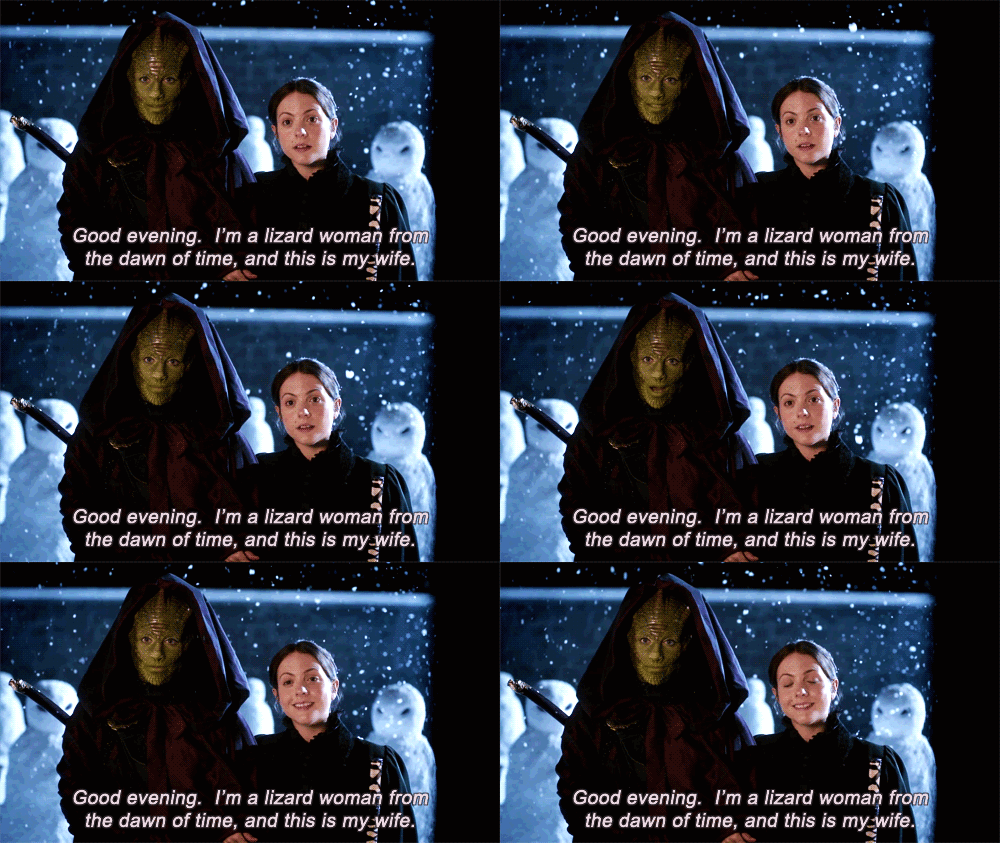
New Series Doctor Who has broached the subject of same-sex marriage.  Madame Vastra and her wife, Jenny Flint, are seen here in the 2012 Christmas Special The Snowmen

New Series Doctor Who has broached the subject of same-sex marriage. Madame Vastra and her wife, Jenny Flint, are seen here in the 2012 Christmas Special The Snowmen

The Series Three story, Gridlock, features an elderly human same sex couple,  Alice and May Cassini, who have been trapped on the motorway for  23 years.   Their relationship, whilst millions of years away in the far future, is disguised under the humour of a cat, Thomas Kincade Brannigan, who is married to a human, Valerie.  Notwithstanding his own less than conventional marriage, Brannigan is nonetheless unable to wrap his mind around the concept of two women being married to each other.  He continues to refer to the couple as the “Cassini Sisters”.  More about Gridlock, and its relationship to The Macra Terror¸ later in this review.

In 2007's Gridlock Thomas Kincade Brannigan, a cat, is married to a human, Valerie, but finds same-sex marriage difficult to comprehend
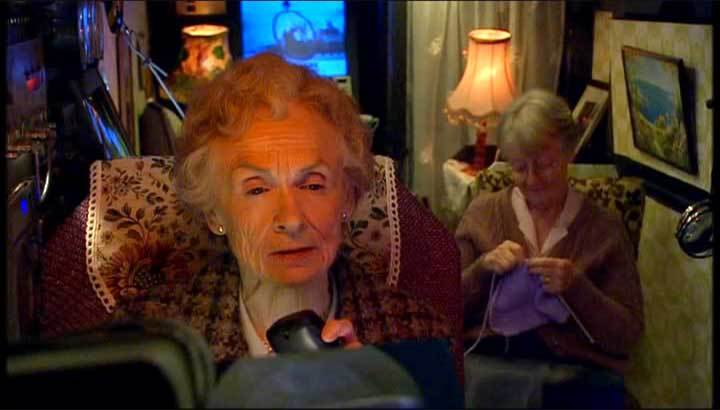
In 2007’s Gridlock Thomas Kincade Brannigan, a cat, is married to a human, Valerie, but finds same-sex marriage difficult to comprehend

The "Cassini Sisters", Alice and May, are actually a married couple.

The “Cassini Sisters”, Alice and May, are actually a married couple.

Whilst seemingly a story about giant killer crabs, The Macra Terror, is actually a biting social commentary on British working class recreation and totalitarian regimes. The third and final Doctor Who script written by Ian Stuart Black, The Macra Terror is a continuation of Black’s concerns surrounding colonialism which were raised in his first Who penned serial, The Savages. Black’s second serial, The War Machines, examined amongst other things, mind control which is another of the concerns of The Macra Terror.

Ian Stuart Black, writer of The Macra Terror, The Savages and The War Machines

Ian Stuart Black, writer of The Macra Terror, The Savages and The War Machines

The Macra Terror is set on an unnamed planet far in the future.  Colonized by Earth at some time in the past, this planet is the natural home of the Macra, giant crabs that are reliant up gases toxic to humans for their survival. Perhaps because humans had changed the above ground atmosphere of the planet, the Macra now reside underground, except at night when they visit the planet’s surface.  The Macra have enslaved the human population  and compels them to work mines to produce the toxic gas so essential for their survival.  The human residents, however, are ignorant of the Macra’s control of their colony and blissfully unaware that they have become enslaved through mind control. Believing themselves to reside in a utopian society, the human colony bears an uncanny resemblance to mid 20th Century British Holiday Camps.  Life is regimented, happiness compulsory and dissent considered a mental illness requiring treatment.

The Macra kills the Colony's Controller

The Macra kills the Colony’s Controller

A publicity shot of the Controller and Macra taken prior to filming.  Note that the Controller's hair and make up is different from the Australian Censors saved film clip

A publicity shot of the Controller and Macra taken prior to filming. Note that the Controller’s hair and make up is different from the Australian Censors saved film clip

A reasonable familiarity of the British holiday camp culture is required to understand the biting commentary of The Macra Terror.  As an Australian I found the story’s references to holiday camps oblique and the holiday camp atmosphere more akin to a prison.  Whilst that was certainly one of Black’s messages, British residents would have been a great deal more conversant with commercialized leisure culture that holiday camps were a part of.  These holiday camps were usually in seaside areas and were an immensely popular annual holiday for working class families.  Having suffered from the restrictions and rationing of the Second World War, the British were keen to escape from their work day drudgery into a world of organized leisure for a week or two a year.  Suitably priced for low income earners, the holiday camps offered affordable accommodation in acceptable, but rudimentary, accommodation and communal meals.  Activities for all the family were offered with these centring upon the communal nature of the holiday experience.  Competitions would be run for the best “Knobbly Knees” or the most “Glamorous Grannies”, for example, and holidayers would be conscripted into performing on stage.  Swimming pools, ballrooms, tennis courts, bars and funfairs could be found at these establishments.  Crèches provided child care for children, thereby allowing their parents the opportunity for valuable down time together.
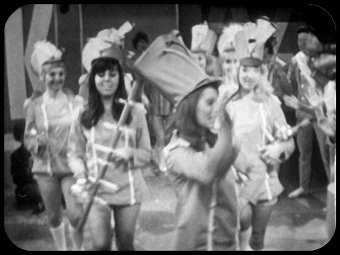
The Colony is run along the lines of a Holiday Camp.  Here Drum Majorettes perform

The Colony is run along the lines of a Holiday Camp. Here Drum Majorettes perform

Ben has a complimentary massage in the Refreshing Department

Ben has a complimentary massage in the Refreshing Department

These holiday camps, however, had an aura of regimentation around them.  Many of the camps had been resumed by the military during the war and still retained ghosts of soldiers’ past.  Public announcements were made through public address systems and some establishments, such as Butlins which was the UK’s largest holiday camp provider, awoke campers at the same time every morning with muzak.  Undoubtedly because of wartime austerity and regimentation, the average punter holidaying at these camps would have found such scheduling of their leisure unsurprising. An intriguing pictorial history of British Holiday camps can be accessed here.

Cinema release commercial for Butlins Holiday Camps

The music  you’d be woken up to each day at Butlins, together with postcards from the 1960s.

The Macra Terror opens with drum majorettes performing to a colony tune.  The Doctor, Ben, Polly and Jamie have found themselves on the planet and unwittingly captured an escaped patient of enforced conformity, Medok.  They are welcomed to the colony like honoured guests and afforded the services of the Refreshing Department.   A complete choice of all treatments is offered including steam baths, beauty treatments, massages, clothes cleaning, sunlight treatment, moonlight treatment, and sparkling and effervescent sprays.  Whilst Polly gleefully accepts a shampoo, the Doctor is put into a clothes reviver where both his body and his clothes are cleaned and he emerges immaculately groomed.  Although Polly thinks he looks gorgeous, the Doctor has other ideas.  Discovering the” rough and tumble machine” for the toning of muscles, the Doctor jumps in and emerges as his usual dishevelled self.  If only all four episodes of this serial weren’t lost, because this would be an incredible scene to see.

Paul Android, Colonial Dance, The Macra Terror.  The uploader describes himself as a hardcore Whovian who loves everything Doctor Who.  On his YouTube Channel he has over 100 piano arrangements of themes for Doctor Who.  Bless him!

The Doctor is quick to discover that all is not peachy in the colony.  The public address system announcements willing people to happiness have a sinister air about them. Whilst the humans are sleeping at night the Macra pump subliminal messages into their heads however the Doctor is able to awaken both Polly and Jamie before they come under its effects.  Ben is not so lucky and is successfully brainwashed.  This indoctrination ensures that all humans are compliant and are effectively in denial as to the Macra’s existence.  This indoctrination makes Ben turn against his friends and interestingly, loose his Cockney accent.   All is resolved at the end, however, when Ben saves the day by destroying the gas pumping equipment.  In doing so the Macra are killed and the colony again has its freedom.  Notwithstanding all the colony has been through, it appears to be happy to continue with its traditions of holiday camp style, enforced happiness.  When it’s suggested that the Doctor might become the Colony’s next Pilot (leader), the Tardis Crew is quick to decamp but not before Jamie does the Highland Fling as they exit through the door.  Now that’s another scene I’d love to have been able to see.
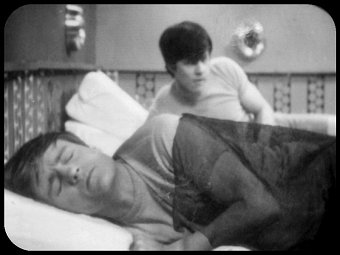
Jamie is a restless sleeper and cannot be indoctrinated.  Ben, however, is a victim of the mind control

Jamie is a restless sleeper and cannot be indoctrinated. Ben, however, is a victim of the mind control

The enforced happiness that is an essential element of the Macra controlled colony, is a theme that is taken up 21 years later in the Seventh Doctor story, The Happiness Patrol. Another biting political saga in disguise, The Happiness Patrol is scathingly critical of British Prime Minister Margaret Thatcher. The Macra, however, would not be seen in Doctor Who for another 40 years and currently hold the record for the second longest gap in appearances of any Who monster or character.  They made their return in the 2007 story, Gridlock, which bears some similarities with The Macra Terror. The character with the longest interval between appearances is The Great Intelligence, with 44 years between outings. In Gridlock the Macra have infiltrated the city of New New York in New Earth, whereas in The Macra Terror it is humans that have colonized the Macra’s planet. In both instances the Macra are reliant upon noxious gas, with the Gridlock variety thriving on the toxic fumes of motor vehicles.  The Tenth Doctor states that the Macra have devolved since last he met them, and again in Gridlock they appear to be doomed as the roof to the motorway opens, thereby allowing the gas on which they are reliant to escape.
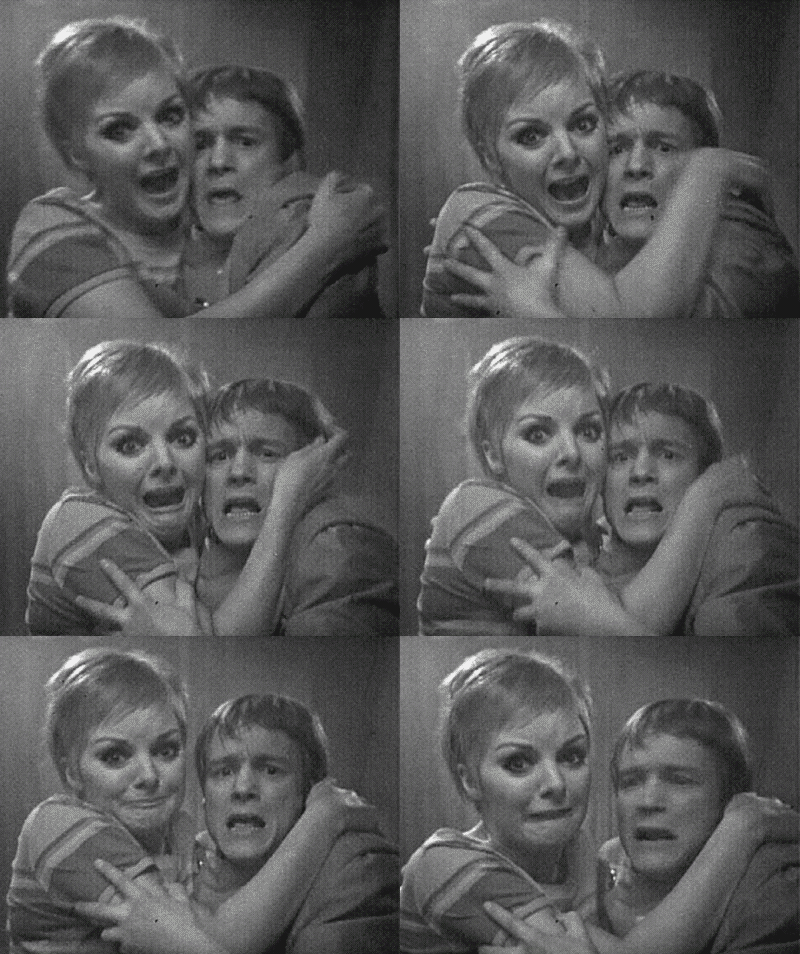
Polly and Ben are confronted by the Macra
Polly and Ben are confronted by the Macra

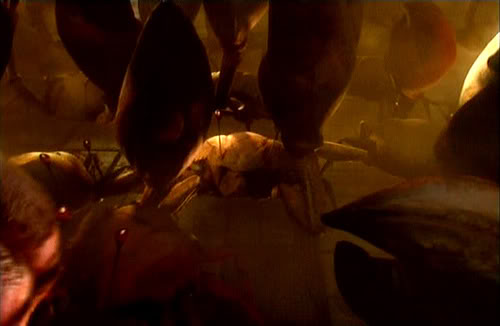
The 2007 Macra of Gridlock are much smaller and less intelligent creatures

The 2007 Macra of Gridlock are much smaller and less intelligent creatures

The Macra Terror is unfortunately Ben and Polly’s penultimate Doctor Who serial.  Join me at Gatwick Airport for The Faceless Ones as we sadly bid them farewell.
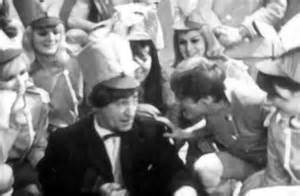
The Doctor finds another funny hat to wear

The Doctor finds another funny hat to wear

The Macra Terror was originally broadcast in the UK between 11 March and 1 April 1967.  All four episodes are missing from the BBC Archives

The Macra Terror was originally broadcast in the UK between 11 March and 1 April 1967. All four episodes are missing from the BBC Archives

Vivien Fleming

©Vivien Fleming, 2013.

The Moonbase – Loose Cannon Reconstructions

Standard

ImageEpisodes two and four of The Moonbase are held in the BBC Archives and have been released on the triple DVD set, Lost in Time.  Episodes one and three are missing. Loose Cannon’s magnificent reconstructions of them can be viewed at the links below.

Loose Cannon’s The Moonbase, Episode 1 part 1

Loose Cannon’s The Moonbase, Episode 1 part 2

Loose Cannon’s The Moonbase, Episode 3 part 1

Loose Cannon’s The Moonbase, Episode 3 part 2

The Moonbase was originally broadcast in the UK between11 February  and 4 March 1967.  Episodes 2 and 4 are available on the triple DVD set Lost in Time

The Moonbase was originally broadcast in the UK between 11 February and 4 March 1967. Episodes 2 and 4 are available on the triple DVD set Lost in Time

The Moonbase

Standard

Image

The Moonbase is arguably the story where the Second Doctor’s characterization truly takes its most familiar form.  The Doctor who is sentenced to regeneration and exile to Earth in The War Games for his continual breaches of the Time Lords’ Non-Interference Policy, conceivably had his  genesis in The Moonbase.  For it is in The Moonbase that this Doctor’s incarnation utters perhaps his most famous words, “There are some corners of the universe which have bred the most terrible things.  Things which act against everything we believe in. They must be fought”.  The Doctor’s goofing about has ended, although of course he’ll always be amusing, and his quest to save the universe has begun.

The genesis of the Second Doctor's characterization can be seen in The Moonbase

The genesis of the Second Doctor’s characterization can be seen in The Moonbase

In The Highlanders the Doctor was keen to leave as soon as he spied a steaming cannon ball.  It was only after Polly’s mocking of him that the Tardis Crew remained.  In The Moonbase, it is Ben who is keen to decamp at the earliest possible opportunity but the Doctor who is insistent on remaining. This is quite a radical change. This is, of course, after the Doctor had initially wanted to immediately leave the Moon after discovering he was not at his intended location, Mars. Being so experienced in space travel the Doctor had not even considered that his three companions may have relished the idea of walking on the moon.  This, naturally, was more than two years prior to the first human stepping foot on the Moon on 20th July 1969. Ever since the Soviet cosmonaut, Yuri Gagarin, became the first human to fly in space on 12th April 1961, the Western world was agog with the desire to beat the Communists and be the victors of the space race. That it took over three years for Doctor Who to first venture to the Moon is somewhat surprising given the context of the age.

It took three years for Doctor Who (and the Cybermen) to visit the Moon

It took three years for Doctor Who (and the Cybermen) to visit the Moon

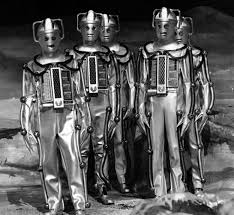
Although appearing of sturdier construction than the Mondas forebears in The Tenth Planet, the Cybermen of The Moonbase  had lost their most frightening element – the vestiges of their humanity. Prior to watching The Tenth Planet I’d scoff at the awkward appearance of the Mark 1 Cybermen, with their cloth stocking faces and human hands. This was but another example, I thought, of lacklustre costuming.  Fancy the team at Doctor Who thinking that the audience could be scared of men with stockings over their heads!  How wrong was I. The Mark 1 Cybermen were so very threatening for the primary reason that the vestiges of their humanity were still evident.  Their sing-song voices hinted at a humanity that had somehow gone askew.

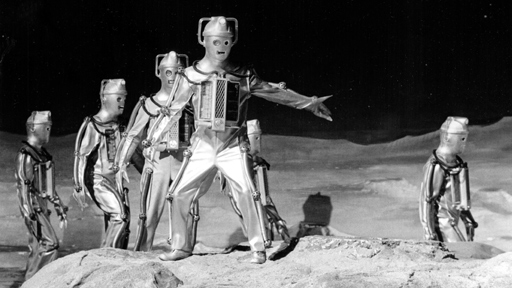
The Mark 2 Cybermen of The Moonbase have lost the vestiges of their humanity

The Mark 2 Cybermen of The Moonbase have lost the vestiges of their humanity

A Mark 1 Cyberman in The Tenth Planet

A Mark 1 Cyberman in The Tenth Planet

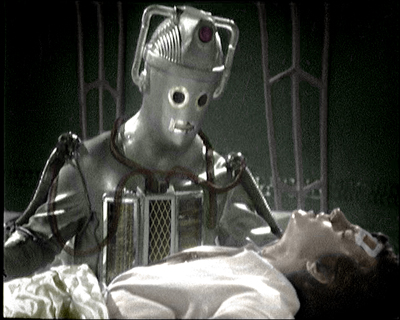
The Mark 2 Cybermen of The Moonbase are an almost different species altogether. Monsters they are, but humans they are not.  Their monotone metallic voices pay no homage to their humanoid origins and they are little more than robots.  Of itself there is nothing amiss with robots, per se, it’s just that “Cyber” without the “men” makes for an altogether different creature.  Doctor Who, however, had established its second great monster and no longer would the audience’s imaginations be limited to a Dalek only mindset.   Iconic imagery would soon abound to add to the Dalek’s emergence from the murky pollution of the Thames in The Dalek Invasion of Earth.  Cybermen will emerge from their icy tombs in The Tomb of the Cybermen and march down the steps of St Paul’s Cathedral in The Invasion.  Nothing will be the same again.

A Cyberman with Jamie

A Cyberman with Jamie

Akin to The Power of the Daleks, the Doctor is recognized by the Cybermen, notwithstanding his regenerated form.  Moreover, the adventures of the Doctor and his gang have for the first time gone down in the annals of history.  Hobson is perplexed by the Doctor’s ignorance of Cyberman history.  Every child knows that the Cybermen died when Mondas was blown up, Hobson states irritably. School children clearly now learn about the adventures of the Doctor and his companions.  The Moonbase commander, Hobson,  is  also the first to utter the words “we’re under siege” but the sentiment of  a confined environment under threat by monsters  is quickly to become a hallmark of Patrick Troughton’s era. There’s a “base under siege” and under siege the confines of Doctor Who will remain for much of the Second Doctor’s tenure.

The Moonbase is under siege and staffed by an international contingent including Brits, French, Danes, Australians and New Zealanders

The Moonbase is under siege and staffed by an international contingent including Brits, French, Danes, Australians and New Zealanders

The Moonbase is an early example of Doctor Who’s environmental concerns which would become all the more evident during Barry Lett’s tenure as Producer in the early 1970s. The 1964 Season Two opener, Planet of Giants, had contemplated the effect of pesticides on the world’s eco-systems.  In The Moonbase the Gravitron controls the Earth’s tides and has been doing so for the last 20 years since 2050.   By controlling the tides through the emission of deep sonic fields, the Gravitron controls the weather.  It is thermonuclear powered and has an inner core temperature of four million degrees.  The Gravitron guides hurricanes, for example, and when it is not working correctly the potential for disaster exists.  In this story we learn that thirty minutes previously, in Miami, Florida, they’d been experiencing blue skies and a heatwave.  Cyclone Lucy was now just overhead.  Something was causing the Gravitron to malfunction, but it is not until the story progresses that it is revealed that the Cybermen are the source of the problems. It’s the Cybermen’s intention to use the Gravitron to kill all life on the Earth and hence eliminate its threat to themselves. Whereas the Mark 1 Cybermen of The Tenth Planet were susceptible to radiation, it’s gravity which is the Mark 2 version’s weakness. The Doctor saves the world by turning the Gravitron onto the Cybermen and blasting them out into space.

The Gravitron is operated by men in funny hats that look like they were rejects from The Underwater Menace

The Gravitron is operated by men in funny hats that look like they were rejects from The Underwater Menace

Polly is spectacular in The Moonbase, and seemingly without scientific training is able to formulate a solvent to disintegrate the Cybermen’s plastic chest plates. Deriving the idea from Jamie’s off-hand comment that witches were kept at bay by sprinkling holy water, Polly reasons that if nail polish is a plastic and is removed by acetone, then surely chemicals exist on the base which could disintegrate the chamber holding the Cybermen’s heart and lungs.  Being uncertain that acetone would be the correct solvent to dissolve the Cybermen’s plastic, Polly sets about making a cocktail of different solvents in the hope that one will do the trick.  Thankfully her ad-hoc mix of benzene, ether, alcohol, acetone and epoxy-propane doesn’t blow up and does a splendid job of producing great sprays of foam from the dying Cybermen.  Ben nick-names the concoction the “Polly Cocktail”, although the boys, as is their want, seek to take the fame for the Cybermen’s destruction and to dissuade Polly from participating in “men’s work”. Girls can do anything and Polly certainly proves this!

The "Polly Cocktail" makes Polly the true hero of The Moonbase

The “Polly Cocktail” makes Polly the true hero of The Moonbase

Jamie doesn’t see a great deal of action in The Moonbase and spends most of his time recovering from a head injury in the sick bay.  His Scottish Highland origins are brought more to the fore in this serial.  Together with his comment about holy water and witches, Jamie also innocently speaks of seeing the “man in the moon” and in a hallucinatory state thinks that a Cyberman is the “Phantom Piper”.  Akin to the Grim Reaper, the McCrimmon “Phantom Piper” appears just prior to death. Thankfully we get to see Jamie running around in a kilt, which is always a blessing!

Polly tends to the ailing Jamie.  Whilst hallucinating  Jamie mistakes a Cyberman for the "Phantom Piper"

Polly tends to the ailing Jamie. Whilst hallucinating Jamie mistakes a Cyberman for the “Phantom Piper”

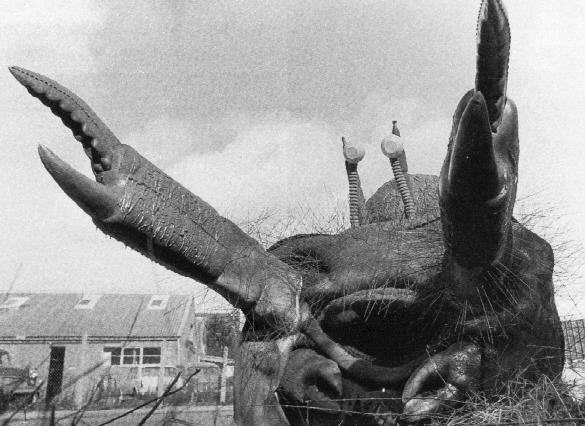
The Moonbase concludes with Doctor firing up the time scanner, a hitherto unheard of Tardis accoutrement which provides a glimpse into the future. Used infrequently and not very reliable, the time scanner shows an image of a giant claw. Our next story, The Macra Terror, is sure to be chilling.

The Moonbase was originally broadcast in the UK between11 February  and 4 March 1967.  Episodes 2 and 4 are available on the triple DVD set Lost in Time

The Moonbase was originally broadcast in the UK between 11 February and 4 March 1967. Episodes 2 and 4 are available on the triple DVD set Lost in Time

Vivien Fleming

©Vivien Fleming, 2013.

The Underwater Menace

Standard

Image

In the 2009 Doctor Who Magazine Mighty 200 Poll of Doctor Who stories, The Underwater Menace was voted the seventh least popular.  Coming in at an appalling 194, it was one story above another long derided Patrick Troughton serial, The Space Pirates. Throw in The Dominators at 191,and the Second Doctor has three of the ten least popular serials.  That even beats Colin Baker’s Sixth Doctor and Sylvester McCoy’s Seventh Doctor, each of whom had two serials each in the bottom 10.

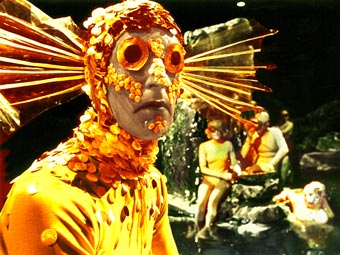
Two Fish People resplendent in their sequin costumes

Two Fish People resplendent in their sequin costumes

So why is The Underwater Menace so lowly regarded? That until late 2011 only one of its four episodes were held in the BBC Archives may provide part of the answer.  In fact, nearly two years after episode two’s return, it has yet to be released on DVD.  Episode three was first released to the public on VHS cassette in 1998 and subsequently reissued on the 2004 DVD Lost in Time.

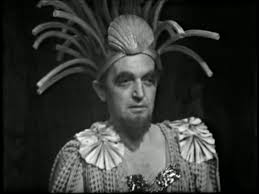
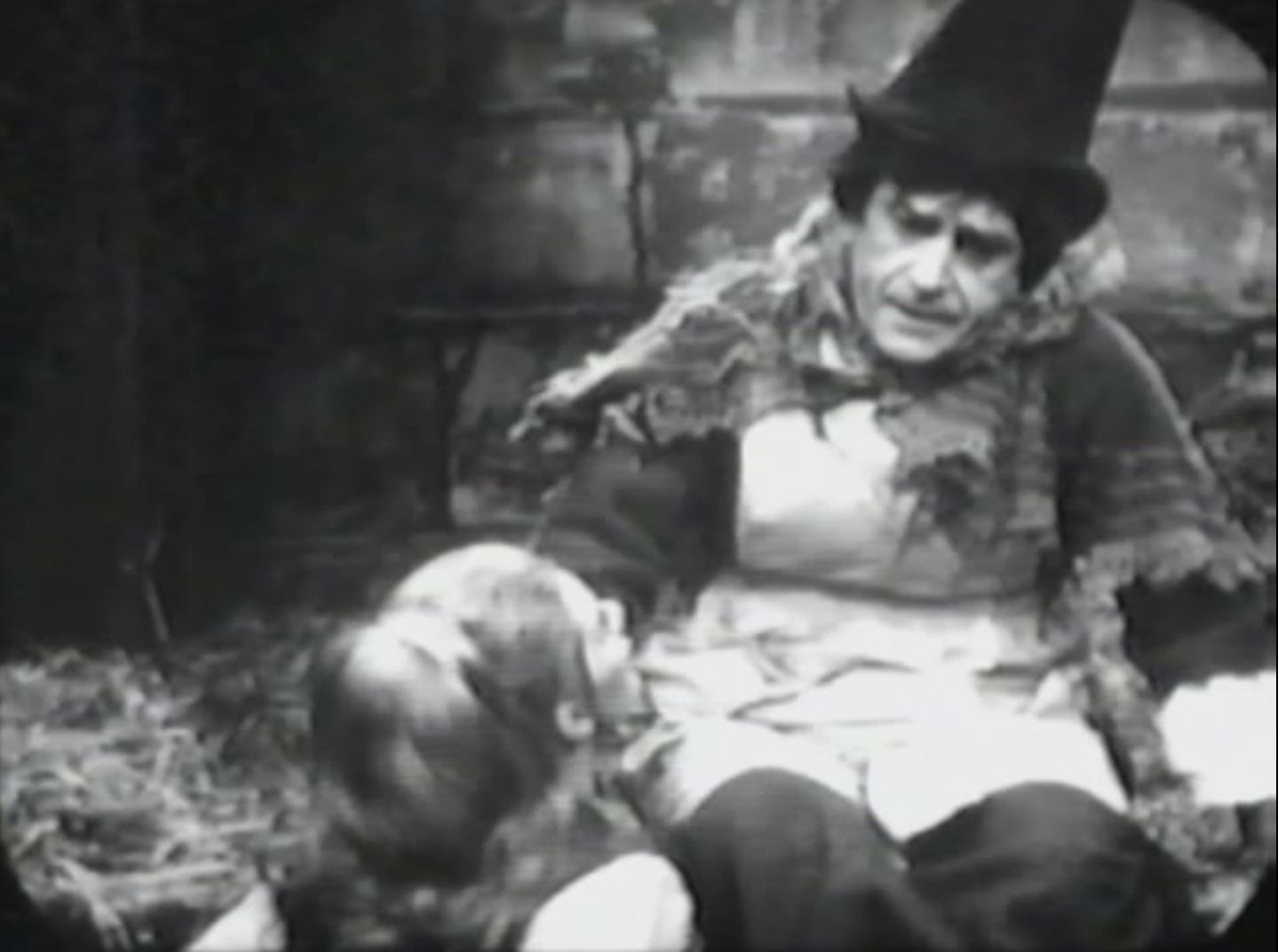
Damon in his funny head gear

Damon in his funny head gear

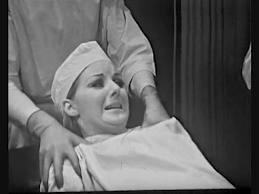
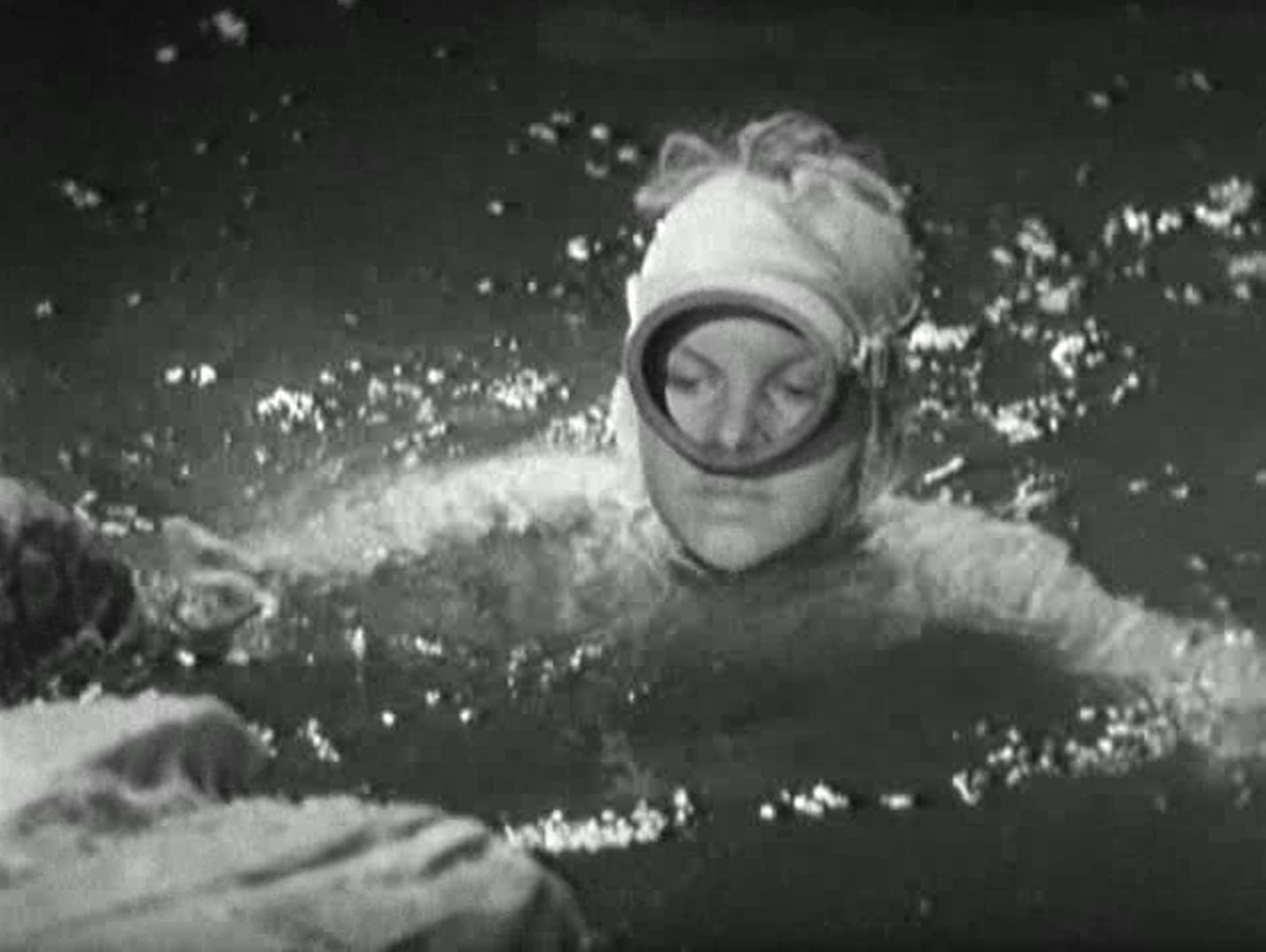
Without the context of the previous two episodes, episode three of The Underwater Menace must look extraordinarily bizarre to the casual viewer.  The classic disparaging comments dished out to Doctor Who, including bad graphics, wobbly sets and atrocious acting might, to the uninitiated, appear spot on.  The Fish People, who are enslaved by the Atlanteans, are surgically modified humans.  Having gills, flippers and scales, which are none other than sequins stuck to their faces, the Fish People farm the plankton that they, and the Atlanteans, are reliant upon for food. Being apparently bereft of refrigeration, this food source lasts only several hours before deterioration, thereby requiring the slave labour force to work around the clock to provide a constant fresh supply of stock. Polly narrowly escapes being operated upon to become a Fish Person in the episode one cliff hanger, which thanks for the ever vigilant Australian Censorship Board, we still have for our viewing pleasure.

Polly narrowly escaped being turned into a Fish Person

Polly narrowly escaped being turned into a Fish Person

Polly and Damon

Polly and Damon.  Polly’s Atlantean gear is just fab

Almost universally condemned for their costuming, I personally think the Fish People look fabulous, in a trippy, 1960s sort of way.  The Fish People swim around gracefully in an extended  performance of synchronized swimming during episode three.  I’m not entirely certain what the sequence’s purpose is  however it looks completely wild.  I can even excuse the trapeze wires that hold up the swimming Fish People up as they  elegantly swoon around.  Spotting the wires holding up space ships has always been one of my favourite parts of watching Doctor Who (there are some great strings to be spotted in The Dalek Invasion of Earth). This is just a logical extension of that peculiar interest!  That the Fish People decide to go on strike after having their humanity questioned by some enslaved miners is a bit farfetched, but hey, the reverse logic worked.

A rare colour photo of the Fish People

A rare colour photo of the Fish People

Not all Fish People wore sequins.  Given that The Underwater Menace went so over buget the BBC must not have been able to afford more sequins for this poor Fish Person

Not all Fish People wore sequins. Given that The Underwater Menace went so over budget, the BBC mustn’t have been able to afford more sequins for this poor Fish Person

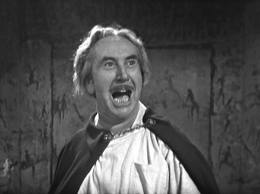
Joseph Furst’s acting as the insane Polish Professor Zaroff is frequently the source of criticism.  Episode three ends with his classic manic cry of “Nothing in ze world can stop me now!”  That Zaroff is a parody of the mad scientist, and clearly meant to be played in a hammy, over the top fashion, appears lost on most critics. Where’s everyone’s sense of humour gone?  Zaroff’s plan to drain the oceans into the Earth’s molten core, thereby causing the planet’s explosion from overheated steam, is also dismissed as ludicrous.   Sure, he only wants to destroy the Earth because he can, and will also die in the resultant explosion, but that’s what mad scientists do.  They wouldn’t be mad scientists if their plans were rational. As Philip Sandifer states in Tardis Eruditorum, Zaroff’s scheme is no crazier an idea than the Daleks’ plan in The Dalek Invasion of Earth to drill the core out of the centre of the Earth and use the planet as a space ship. And that second Dalek serial isn’t dismissed out of hand as some form of corny atrocity.

The mad scientist Professor Zaroff

The mad scientist Professor Zaroff. “Nothing in ze world can stop me now!”

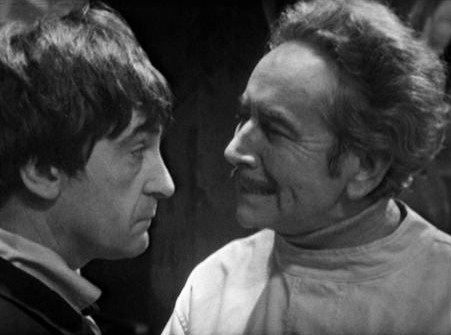
The Doctor and Zaroff

The Doctor and Zaroff

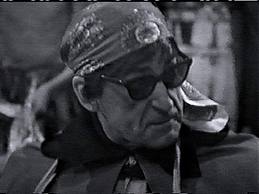
The Underwater Menace sees the Doctor take the lead in saving the Earth without recourse to dressing up continuously, although he does look rather cool when briefly dressed as some sort of tambourine playing hippy with sunglasses and bandanna.  We are even afforded the opportunity to see a snippet of the Doctor’s good conscience when he decides that he just can’t let Zaroff drown at the end of episode four.  A rock fall blocks the path to rescue, although at least the Doctor’s intentions are good. In this story the Doctor begins to display the characteristics that become his  staple for the duration of his tenure.

The Doctor is disguised as a tambourine playing hippy

The Doctor is disguised as a tambourine playing hippy

Polly, however, is denied the forthrightness of previous outings, and plays the screaming damsel far too often. Having been buoyed by her characterisation in The Highlanders, Polly’s inability to assertively take control of her own destiny in this serial was more than a little disappointing.  She can, however speak “foreign”, as Ben refers to it, and is conversant in German, French and Spanish.  Ben displays a good rapport with the Doctor and Jamie appears surprisingly unaffected by being dragged out of the 18th Century Scottish highlands, and into an underwater world of Fish People, temple worship and mad scientists. Ben and Jamie spend much of the time running around in black wetsuits.  The synthetic rubber of the wetsuit must have been an unusual sensation against Jamie’s highland skin, but remarkably he is not seen to make a comment about it.

Jamie and Ben spend much of their time in black wet suits

Jamie and Ben spend much of their time in black wet suits

The Underwater Menace ends with the mad scientist dead and the Atlanteans saved from Zaroff’s dastardly plan, although the city of Atlantis is flooded. No more Fish People will be made, and presumably they are freed from servitude. Religion, however, will be no more.  Damon believes that priests, superstition and temples made the Atlanteans follow Zaroff’s crazy plans and the temple should be buried forever.  Quite how this conclusion is reached is never stated and is certainly a very superficial solution to the Atlanteans’ problems. All told, however, The Underwater Menace is a fun romp and nowhere near as bad as its reputation.  Watch it with an eye for the ridiculous and you won’t be disappointed.

The Underwater Menace was originally broadcast in the UK between 14 January and 4 February 1967.  Episode 3 is available on the triple DVD set Lost in Time

The Underwater Menace was originally broadcast in the UK between 14 January and 4 February 1967. Episode 3 is available on the triple DVD set Lost in Time

Vivien Fleming

©Vivien Fleming, 2013.

REFERENCE:

Phil Sandifer, Tardis Eruditorum Volume 1: William Hartnell. Self published, 2011.

The Highlanders – Loose Cannon Reconstructions

Standard

ImageAll four episodes of The Highlanders are missing from the BBC Archives.  For the purposes of this marathon I viewed Loose Cannon’s reconstructions, links for which appear below.

Loose Cannon’s The Highlanders, Episode 1 Part 1

Loose Cannon’s The Highlanders, Episode 1 Part 2

Loose Cannon’s The Highlanders, Episode 2 Part 1

Loose Cannon’s The Highlanders, Episode 2 Part 2

Loose Cannon’s The Highlanders, Episode 3 Part 1

Loose Cannon’s The Highlanders, Episode 3 Part 2

Loose Cannon’s The Highlanders, Episode 4 Part 1

Loose Cannon’s The Highlanders, Episode 4 Part 2

The Highlanders

Standard

Image

Viewers who tuned into BBC One between 17th December 1966 and 7th January 1967 to watch Doctor Who must have really been left wondering exactly who or what the good Doctor had become. In the Power of the Daleks they saw a man with a completely different face who did his best to confound and confuse his companions by speaking in the third person. In The Highlanders the Doctor appeared more interested in acting the clown, playing fancy dress and putting on fake accents.  First he was a German physician named Doctor Von Wer, then dressed in drag as a Scottish washer woman, and finally he was a Cockney Redcoat soldier. Patrick Troughton was everything that William Hartnell wasn’t. What he didn’t appear to be playing was the Doctor.

One of the Doctor's many disguises in The Highlanders was as a Scots washer woman

One of the Doctor’s many disguises in The Highlanders was as a Scots washer woman

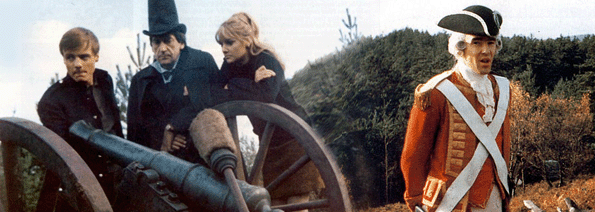
Whilst Patrick Troughton was being anything but the Doctor, Anneke Wills (Polly) and Michael Craze (Ben) were really allowed to shine. The character of Polly as been really growing on me,  and I was not disappointed by her outing in The Highlanders.  When the party disembark from the Tardis and discover a hot, old fashioned cannon ball, the Doctor is the first to want to leave.  The Doctor who was always guaranteed to want to explore, and lead himself and his companions into trouble, was seemingly gone.  Polly was dumbfounded and told him that they couldn’t leave as they looked like they were in England.  When Polly added, “Doctor, you don’t want us to think you’re afraid, do you?” the Doctor’s quick retort was, “Why not?”

The companions, Polly and Ben, take prominent roles in The Highlanders

The companions, Polly and Ben, take prominent roles in The Highlanders

The Doctor and Ben are lucky not to be hanged

The Doctor and Ben are lucky not to be hanged

After meeting up with an injured Laird and his clansmen, Polly is dispatched with the Laird’s daughter, Kirsty, to fetch clean water to bathe the wound.  Whilst the women are out Ben clumsily triggers off a gun and attracts the attention of the English redcoats, who are scouring the highlands for rebels following the Battle of Culloden (1746). Forced on the run after the men are captured, Polly has little time for the tears of her lassie companion.  She calls Kirsty a peasant, berates her for always crying and storms off in a huff, only to then find herself trapped in an animal pit. Kirsty finds Polly however she promptly falls into the pit herself.  Incredibly, the swinging 60’s girl is more resourceful than her 18th Century highland counterpart and is able to devise an escape plan.

Polly and Kirsty are forced to flee from the Redcoats

Polly and Kirsty are forced to flee from the Redcoats

Upon almost being seen by the Redcoat patrol that have been sent to pursue the women, Polly pulls the commanding officer, Lt Algernon Thomas Alfred ffinch, into the pit with them.  It’s here that Polly’s resourcefulness comes to the fore.  Taking the officer’s ID, she playfully taunts the upper class Lieutenant with the affected surname. ffinch  is spelt with two f’s and no capital so Polly promptly calls him f-finch.  Well that’s when she’s not calling him Algy!  Robbing ffinch of the vast sum of 20 guineas, they take a lock of his hair and his identification as bargaining tools should they be apprehended.  The women have effectively blackmailed ffinch as they demand his silence for fear that he will be exposed as the victim of an assault and robbery at the hands of two women.  Polly and Kirsty leave ffinch tied up in the pit as they continue their journey to Inverness where the Doctor, Ben and the highlanders have been taken as prisoners.

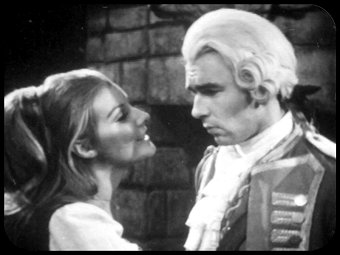
Polly seduces the hapless Lt ffinch

Polly seduces the hapless Lt ffinch

Polly, ffinch and Kirsty

Polly, ffinch and Kirsty

Once in Inverness Polly again exhibits her shrewdness with an ingenuous plan to find the Doctor and Ben.  Respectable women in 18th Century Scotland didn’t wander the streets alone, least of all enter taverns.  Disguised as orange sellers, however, the women were afforded the opportunity enter the Sea Eagle Inn.  Deemed to be orange wenches, or women of ill-repute, their plan quickly came to fruition when they ran into the Doctor, who was dressed in drag. Also in the tavern was the corrupt Solicitor Grey and his comic Clerk, Perkins.  Grey was in command of rebel prisoners, although he was making money on the side by selling the robust highlanders into the slave trade.

Polly procures suitable clothing for her masquerade as an "orange wench"

Polly procures suitable clothing for her masquerade as an “orange wench”

Ben, the Laird and the highlanders had become victims of the trafficking scheme and  found themselves in chains upon the ship Annabelle.  The Doctor would have been in the same situation had he not ingenuously escaped earlier whilst impersonating the German physician von Wer. Following his escape from the dungeon in which the prisoners were held prior to their transfer to the ship, the Doctor had trussed up Grey and left him in a cupboard and pounded Perkins head into a table.  Without fail every commentary I’ve read considers the Doctor’s “trick” with Perkins to be hilariously funny.  Perhaps it’s because I’m not a man that I find the gratuitous violence uncalled for and decidedly unfunny. Ben displays his own ingenuity once onboard the Annabelle. Trussed up and dunked from the yardarm, he uses a Houdini trick to be able to free himself from his shackles and swim ashore.

The comic relief, Solicitor Grey's Clerk named Perkins

The comic relief, Solicitor Grey’s Clerk named Perkins

All four episodes of The Highlanders are missing from the BBC Archives so not surprisingly a lot is lost in the translation to audio and telesnaps. The battle on board the Annabelle in which the highlanders wrest control of the ship, thanks to the weaponry provided by the Doctor, is hard to visualize. So too are the scenes in Culloden. We miss seeing the last Doctor Who historical adventure until 1982’s Black Orchard, and also Frazer Hines’ debut as Jamie McCrimmon. That being said, Jamie’s role is minor and a proper companion he does not become until the next serial, The Underwater Menace. Join me for my next review as I continue my journey through Doctor Who. 

The VHS cover art for Loose Cannon's The Highlanders reconstructions.  The Highlanders was originally broadcast in the UK between 17 December 1966 and 7 January 1967

The VHS cover art for Loose Cannon’s The Highlanders reconstructions. The Highlanders was originally broadcast in the UK between 17 December 1966 and 7 January 1967

Vivien Fleming

©Vivien Fleming, 2013.

The Power of the Daleks – Loose Cannon Reconstructions

Standard

Image

All six episodes of The Power of the Daleks are missing from the BBC Archives. For the purposes of this marathon I watched Loose Cannon’s reconstructions, links for which appear below.

Loose Cannon’s The Power of the Daleks, Episode 1 Part 1

Loose Cannon’s The Power of the Daleks, Episode 1 Part 2

Loose Cannon’s The Power of the Daleks, Episode 2 Part 1

Loose Cannon’s The Power of the Daleks, Episode 2 Part 2

Loose Cannon’s The Power of the Daleks, Episode 3 Part 1

Loose Cannon’s The Power of the Daleks, Episode 3 Part 2

Loose Cannon’s The Power of the Daleks, Episode 4 Part 1

Loose Cannon’s The Power of the Daleks, Episode 4 Part 2

Loose Cannon’s The Power of the Daleks, Episode 5 Part 1

Loose Cannon’s The Power of the Daleks, Episode 5 Part 2

Loose Cannon’s The Power of the Daleks, Episode 6 Part 1

Loose Cannon’s The Power of the Daleks, Episode 6 Part 2


The Power of the Daleks

Standard

Image

“The Doctor was a great collector, wasn’t he”, the strange little man with the ill-fitting, improvised clothes said as he rummaged through the large chest.  “But you’re the Doctor” exclaimed a confused Polly.  “Oh, I don’t look like him” quipped the man.

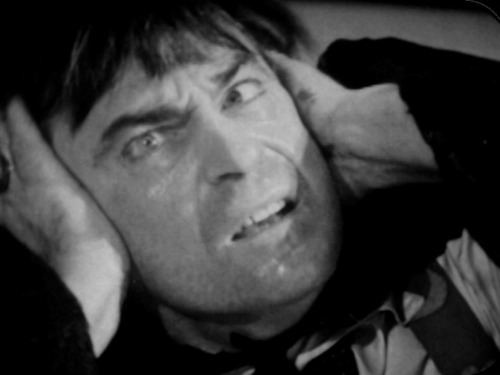
So began the journey of the Second Doctor, Patrick Troughton, as he recovered  from his “renewal” as though he’d been on an LSD trip.  In fact, the reference to LSD  comes directly from the production notes.  This was 1966, of course.  When Ben had told the “old Doctor” that the ordeal in the Cyberman ship was “all over”  (The Tenth Planet) the Doctor had replied by saying “What did you say, my boy?  It’s all over.  It’s all over.  That’s what you said.  No, but it isn’t all over.  It’s far from being all over”.  The “new”  Doctor had strangely chuckled “It’s over.  It’s over” as he scrambled to his feet upon regenerating. Whilst the Doctor’s “renewal” may have been over, his journey to be understood by his companions was only beginning.

Upon renewal the Doctor is in a confused state, as if he'd been tripping on LSD

Upon renewal the Doctor is in a confused state, as if he’d been tripping on LSD

Quietly hostile and prone to referring to himself in the third person, the Doctor evaded answering uncomfortable questions by playing a recorder retrieved from the chest. The sceptic Ben was infuriated by the Doctor’s behaviour  and didn’t believe the man before him to be the same person as the “old Doctor”.  Polly, however, was more willing to believe and recalled the old Doctor’s comment to the effect that perhaps his old body was wearing a bit thin.  No one had exited or entered the Tardis so surely this stranger must be the Doctor. It would take a Dalek to recognize the Doctor by sight, towards the end of episode two, for Ben to finally believe that the “new” Doctor was one of the same as the “old Doctor”.

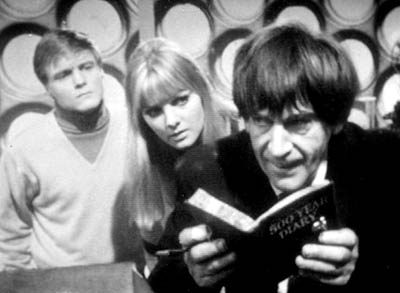
Ben, Polly and the new Doctor with his 500 Year Diary

Ben, Polly and the new Doctor with his 500 Year Diary

The Dalek’s recognition of the Doctor, and the Doctor’s visible fear of his oldest foe, was a superbly climatic scene which undoubtedly influenced Rob Shearman as he wrote Dalek, the pepper pots’ debut in Season 1 of the 2005 series.  Watch the short clip from Dalek below and marvel at the Ninth Doctor’s fear when he hears the monotone voice of the Dalek say “Dock Toorrr”. The Doctor’s fear as he runs to the door is just palpable. Were The Power of the Daleks not lost and we could watch the serial in its full glory, then I suspect that the Second Doctor’s fear, as he backs into a chair as the Dalek focuses his eye stalk onto him, would be  just as unmistakeable.

That The Power of the Daleks should be an influence on the writers of new series Who should come as no surprise. The serial is critically lauded as perhaps the best Dalek story ever and is undoubtedly held in higher regard as a consequence of its missing status.  The soundtrack is smashing and the few fragment clips of the Daleks absolutely superb. You can even excuse the production team for the reasonably obvious cardboard cut-out Daleks used to swell the numbers in crowd scenes.  We hear much chanting of “exterminate, annihilate, destroy” and  “Daleks conquer and destroy”, whilst also seeing the construction of Daleks for the first time.  Whilst proceeding down the conveyer belt their mutant insides are plonked inside and seen by viewers for the first time in their live state.  The Dalek mutants seen in episode of 12 of the Daleks’ Master Plan were in a regressed form. What makes the Daleks all the more frightening is that they are initially so compliant and obliging.

The Power of the Daleks – Surviving Dalek clips

The similarity between the Series 5 episode Victory of the Daleks and The Power of the Daleks is remarkable.  In both stories the Daleks originally portray themselves as servants of humans.  In Power the Dalek chants “I am your servant”, whilst in Victory their incantation is “I am your soldier”.  In both stories the Doctor is increasingly frustrated at everyone’s refusal to take his concerns about the Daleks seriously.  Wildly cognisant of the Dalek’s evil reputation, similar fear and frustration would be instilled into the viewers as well.  As Toby Hadoke stated in Running Through Corridors, “… with us, the audience, more aware than most of the characters involved in this adventure just how deadly these creatures are.  It’s like watching kids playing with a hand grenade, but being stuck behind soundproofed glass and unable to issue a warning”.

Victory of the Daleks Trailer

Victory of the Daleks bears distinct similiarities to The Power of the Daleks

Victory of the Daleks’ antecedents can be seen in The Power of the Daleks

Many of the humans in The Power of the Daleks are not particularly likeable.  A rebel group within the community are planning a rebellion, however their grievances are unclear.  Unlike the young double eye-browed rebels in The Space Museum whose oppression one could empathise with, even though they were the most useless revolutionaries ever portrayed on TV, these rebels are bullish and ignorant.  Prepared to sacrifice anyone to achieve their ends, they make the Daleks in earlier episodes appear positively gentlemanly. Whereas the humans were unable to fathom the Cybermen’s lack of empathy in The Tenth Planet, it is in The Power of the Daleks that the monsters express the very same disbelief about the humans.  A Dalek innocently asks, “Why do human beings kill human beings?”

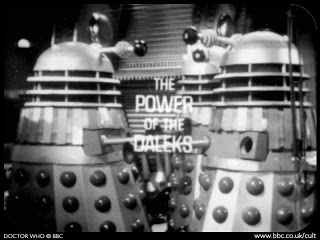
The Power of the Daleks - Title Card

It’s invariably the ignorance of humans, and the Rebels’ preparedness to co-opt the Daleks to their cause,  which is the reason for their downfall. After using the humans to acquire the materials necessary to construct new Daleks, they have no further need for humans and destroy them.  The Daleks are at their evil best and it’s a great shame that the visuals have been lost because the telesnaps make the massacre at the end look magnificent.  Ultimately, however, the Doctor saves the day by destroying the Daleks.  Or does he?

The Daleks are at their frightening best in The Power of the Daleks

The Daleks are at their frightening best in The Power of the Daleks

What puzzled me was why the Daleks needed to be charged in Power of the Daleks whenever they were not on metal, yet the Daleks seen in The Chase and The Daleks’ Master Plan didn’t.  Wood and Miles in About Time 2  posit cheekily that these Daleks must have been exhausted from their 200 years spent at the bottom of the mercury swamp or not fully-charged as they were fresh models straight off the production-line.   One wonders how viewers can pick up these continuity discrepancies in the early years of Doctor Who, and yet the writers could not.  Perhaps it was because the serial was written by David Whitaker and was the first Dalek serial in which Terry Nation had no input.

The Power of the Daleks was originally broadcast in the UK between 5 November and 10 December 1966

 Loose Cannon’s VHS cover art for The Power of the Daleks. The Power of the Daleks was originally broadcast in the UK between 5 November and 10 December 1966


Vivien Fleming

©Vivien Fleming, 2013.
 

REFERENCES:

Robert Shearman and Toby Hadoke, Running Through Corridors.  Rob and Toby’s Marathon Watch of Doctor Who (Mad Norwegian Press, Des Moines, Iowa: 2011),

Tat Wood & Lawrence Miles, About Time. The Unauthorized Guide to Doctor Who. 1966-1969 Seasons 4 to 6. Mad Norweigan Press, Illinois, 2010.

Missing Episodes Hysteria

Standard

Image

As the months countdown to Doctor Who’s 50th Anniversary on 23 November 2013, so the rumour mill concerning lost Doctor Who episodes escalates exponentially.  To the best of fans’ knowledge 106 episodes remain missing from the BBC Archives, however the blog site Bleeding Cool has today reported two new rumours. One unnamed person associated with the Doctor Who production team is said to believe that there have been at least 40 episodes returned to the BBC, whilst another alleges 93. These rumours can be added to the pile which also includes claims that 90 episodes have been discovered somewhere in Africa.  Dubbed the omnirumour (or omnirumor for those in America), the Africa 90 story has been circling for months and has set Who internet forums alight.
The 12 part Dalek's Master Plan is one of the most sought after missing Doctor Who serials

The 12 part Daleks’ Master Plan is one of the most sought after missing Doctor Who serials

Unfortunately absolutely no evidence has been forthcoming of any finds, not even one single screen capture. Hearsay is the sole testimony offered, with information only forthcoming from friends of friends.  There has been talk of the BBC having compelled the signing of non disclosure agreements, delicate negotiations with film collectors and/or dictators, and all manner of other theories to justify the complete absence of evidence.  The BBC has issued at least one statement denying that it has lost episodes in its possession, however the rather ambiguous nature of the statement did little to stem the flow of rumours.

The first Doctor Who regeneration (although it was not so named at the time) is among the 106 missing episodes

The first Doctor Who regeneration (although it was not so named at the time) is among the 106 missing episodes

Having watched 11 straight missing episode reconstructions in the last several days, and with another two tomorrow before a one episode breather (episode three of The Underwater Menace), there’s not much more that I’d love than for a hoard of missing episodes to turn up. I won’t be holding my breath, however. Here’s hoping, though, that one day the hardened Doctor Who marathon viewers will be watching a lot fewer of the brilliant Loose Cannon Reconstructions.

The triple DVD Lost in Time contains many orphan Doctor Who episodes from the First and Second Doctor's tenures

The triple DVD Lost in Time contains many orphan Doctor Who episodes from the First and Second Doctor’s tenures

Bleeding Cool’s latest contribution to the missing episodes hysteria can be read at http://www.bleedingcool.com/2013/07/29/those-doctor-who-missing-episodes-rumours-take-a-licking-but-keep-on-ticking/

You can read my update of the Missing Episodes rumours here.

Vivien Fleming

©Vivien Fleming, 2013.