Monthly Archives: July 2013

The Chase

Standard

Image

Less than 18 months after their creation, the Daleks made their third appearance as the Doctor’s arch enemies in the six part serial, The Chase.  Almost universally panned in fan circles as the worst Dalek story ever, The Chase is not entirely without merit. It is in this story that Ian and Barbara leave the Tardis for the last time and return to 1965 London.  Their arrival home in the Daleks’  time travelling ship is one of the most iconic and best remembered segments in Who’s history.  The still photography of the teachers playfully posing against a variety of London landmarks joyfully demonstrates their relief to finally return to what passes as normality.  How did they explain away their two year absence from Coal Hill School?  That’s a mystery that remains unanswered.
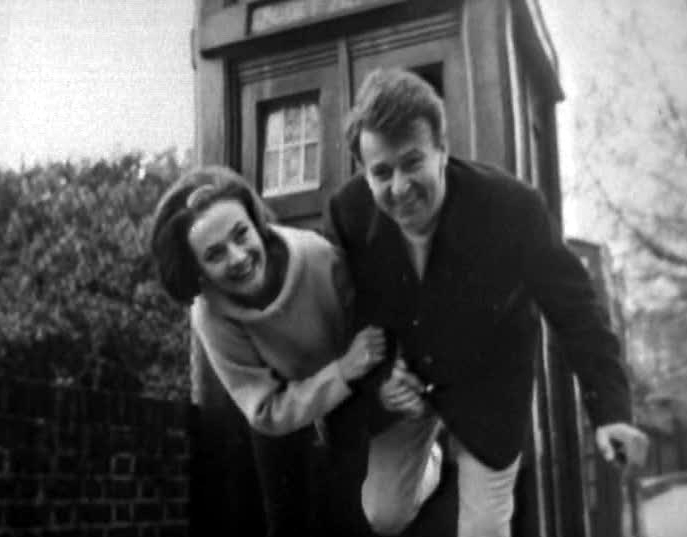
Ian and Barbara enjoy London as they pose in front of a real Police Box.  Yes, they really did exist!

Ian and Barbara enjoy London as they pose in front of a real Police Box. Yes, they really did exist!

Prior to their tear jerking departure from the Doctor and Vicki, Ian and Barbara were as close to home as 1966 New York.  It was on the Empire State Building, in episode three, that the viewer meets the character of Morton Dill, played by Peter Purves.  The viewers and the production team alike were unaware that Purves would  reappear in episode six of that same serial as a stranded spaceship pilot on the planet Mechanus, named Steven Taylor.  Evidencing the almost complete absence of forward planning in the Doctor Who camp, the decision to appoint a replacement for Ian and Barbara was not made until Purves  impressed all concerned during his role as a naive tourist from Alabama.  In a period of less than three weeks Purves went from a bit-part extra to a companion-in-waiting. It would not be until the next serial, The Time Meddler, that the character of Steven Taylor  would be officially invested into the Tardis Crew.  Purves was the first person to have appeared as two separate characters in the same Who serial.
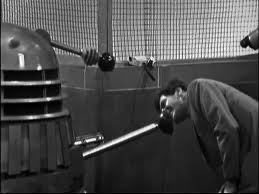
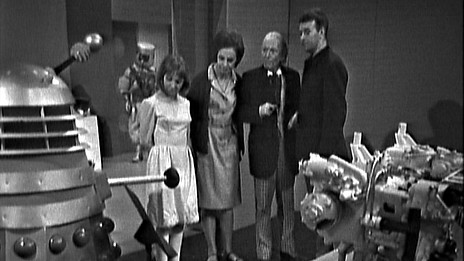
Morton Dill, the dim witted hick from Alabama, investigates a Dalek on the Empire State Building

Morton Dill, the dim witted hick from Alabama, investigates a Dalek on the Empire State Building

My 12 year old son considers Peter Purves to be the Doctor’s best companion solely based upon his portrayal of Morton Dill.  And he wasn’t even a companion then! My son loves the Alabama imbecile and finds it hard to contain his laughter as he watches Dill’s onscreen antics.  Purves’  attempt at an American accent was at least consistent in that episode, unlike the season three story, The Gunfighters, where he occasionally forgets that he’s meant to be from the USA. Moreover, we don’t have to listen to him sing in The Chase!
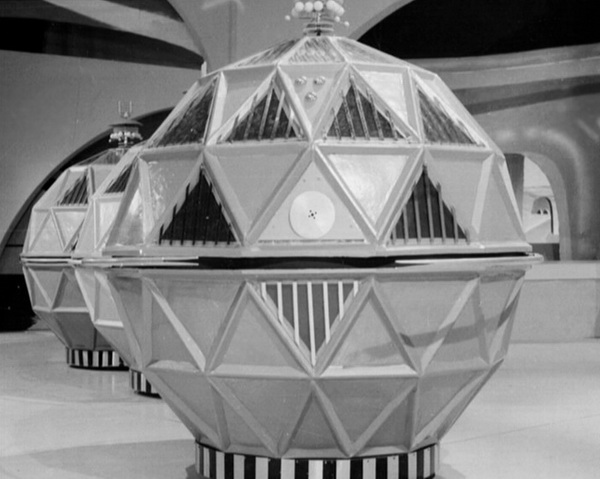
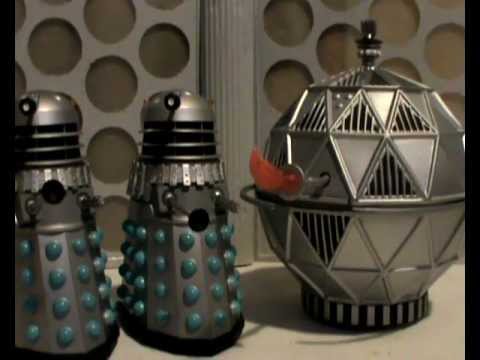
A Mechanoid.  The "next big thing" that wasn't!

A Mechanoid. The “next big thing” that wasn’t!

Not surprisingly, The Chase witnesses a number of firsts. There’s the first, and regrettably only, appearance of yet another “next big thing”, the Mechanoids.  Their unwieldy size, slowness and limited movement undoubtedly had much to do with this.  It was not for want of trying that it took almost another 18 months for Doctor Who to eventually invent a genuine contender to the Dalek popularity stakes, the Cybermen.  Another first and last was the Time-and-Space Visualiser, a large disc with television monitor which was taken as a souvenir from the planet Xeros’ Space Museum.  Seemingly programmed by punch cards, the Visualiser enabled the Tardis occupants to view any event in history’s past.  To demonstrate the machine’s awesome powers the crew were treated to clips from Abraham Lincoln’s “Gettysburg Address”, William Shakespeare conversing with Queen Elizabeth 1, and most prestigiously for Doctor Who, the Beatles performing in 1965. The Beatles clip was no mere piece of stock footage from the BBC Archives, but a song filmed specifically for Who and also shown on Top of the Pops. The Chase is the first to feature an evil android Doctor.  The serial also sees debut of the redesigned Daleks, who at last have their  own time machine.
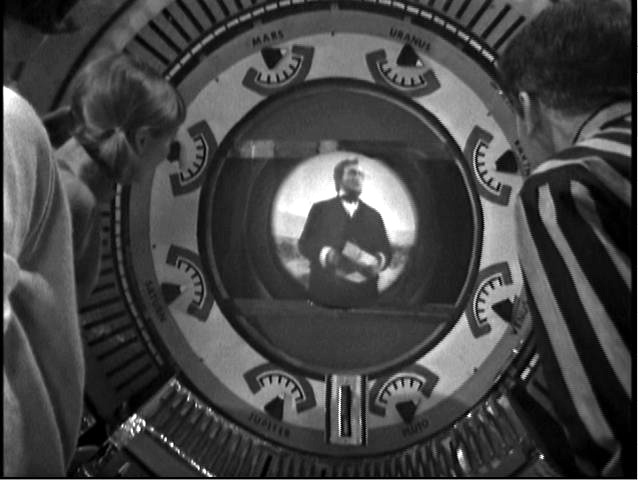
The Time-and-Space Visualiser showing Abraham Lincoln's "Gettysburg Address"

The Time-and-Space Visualiser showing Abraham Lincoln’s “Gettysburg Address”
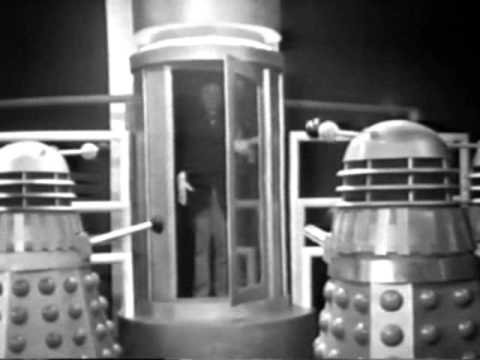
The Daleks produce an evil android Doctor

The Daleks produce an evil android Doctor

Why is it that The Chase is held in such low regard? The answer would undoubtedly vary from person to person, although the hybrid nature of the story must be a likely cause. There are so many elements thrown in together, with no satisfactory explanation why. The only plot involves the Daleks chasing the Doctor and his crew to various locations throughout the universe.  The Doctor is the Daleks ultimate enemy as he thwarted their attempts to commandeer the Earth as a spaceship in The Dalek Invasion of Earth.  At least in The Keys of Marinus the crew were endeavouring to retrieve the lost keys to the Conscience of Marinus, and their adventures encompassed a series of locations and terrains on only one planet.  During the course of The Chase the Doctor and his companions are variously in a Haunted House;  the Mary Celeste; New York City; and the planets Aridius and Mechanus.
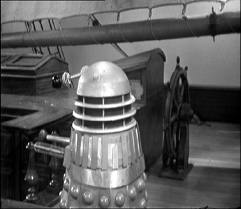
Daleks on the Mary Celeste

Daleks on the Mary Celeste

Bizarre is a less than adequate word to describe the Tardis Crew’s adventures in the Haunted House in which with a robotic Count Dracula, Frankenstein and Grey Lady reside.  One is left wondering why, and whatever was Terry Nation thinking at the time. Nation would also have us believe that Daleks were the cause of the mysterious disappearance of the crew of the British-American merchant ship, the Mary Celeste, in 1872. The Daleks also had a keen interest in New York’s Empire State Building.  Had the Twin Towers been built in 1965 then I’m sure Nation would have positioned them there instead. It almost seems as though Nation was giddy on the success of the Daleks and had assumed that viewers were gullible enough to accept anything thrown at them.  Clearly the BBC production team agreed, at least at the time.
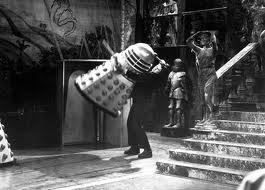
Frankenstein puts an end to a pesky Dalek

Frankenstein puts an end to a pesky Dalek

In retrospect, however, such criticism fails to acknowledge the sheer fun of the story.  And it’s probably the gaiety of this serial which is the principal reason why The Chase is held in such high disregard.  Daleks are meant to be menacing and intimidating. Throw in a mix of comedy interludes  and the foreboding in which they are ordinarily met quickly evaporates.  Viewers have no need for bothersome distractions of a witty nature. They just want to be terrified, even if by mid 1965 it was plainly obvious that the Doctor and his companions always triumph.  The Daleks’ next appearance, in six months time, did not suffer from a similar fate.  The highly regarded 12 parter, The Daleks’ Master Plan, gave the audience three solid months of terror and the first time, the death of not only one, but two companions.  Hereafter the security of the Tardis Crew could never again be assured.
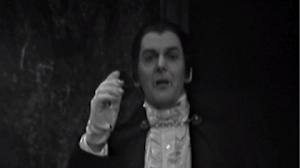
Dracula and Doctor Who just don't mix

Dracula and Doctor Who just don’t mix
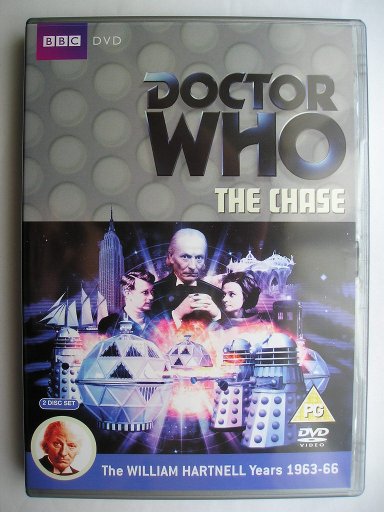
The Chase was originally broadcast in the UK between 22 May and 26 June 1965
The Chase was originally broadcast in the UK between 22 May and 26 June 1965

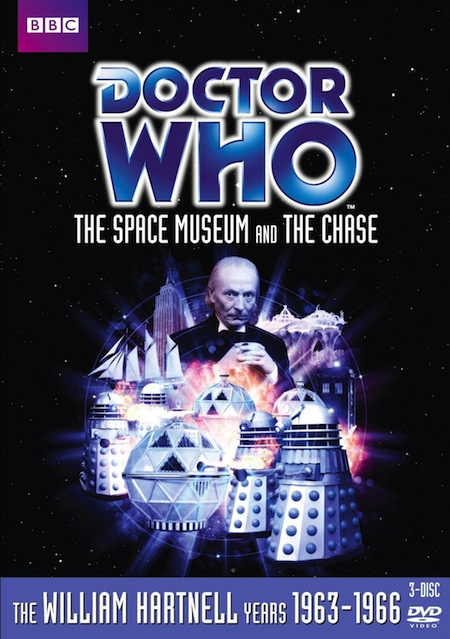
The Chase was released in a Box Set with The Space Museum entitled (You guessed it!) "The Space Museum The Chase".

The Chase was released in a Box Set with The Space Museum entitled (you guessed it!) “The Space Museum The Chase”.

Vivien Fleming

©Vivien Fleming, 2013.

The Space Museum

Standard

Image

You can always be assured that Rob Shearman will give a hearty defence of any long derided Doctor Who serial.  Writer of the Series One episode, Dalek, and several Big Finish audio productions, Shearman joined with Toby Hadoke, of Moths Ate My Doctor Who Scarf fame, to author Running Through Corridors: Rob and Toby’s Marathon Watch of Doctor Who.  Shearman’s affection for The Space Museum is  laid bare in the DVD special feature, Defending the Museum.  His devotion rests on the assumption that The Space Museum is a parody of William Hartnell era Doctor Who episodes. The aggressors, the Moroks, are little more than morons who invade a planet only to turn it into a museum for their past achievements. The rebels are excruciatingly bad.  Dressed in black polo neck jumpers, they look like students in a coffee bar.  Vicki starts a revolution only because she’s bored and the native Xerons don’t need a great revolutionary, just a locksmith!

Writer Rob Shearman

Writer Rob Shearman

Shearman is quick to praise episode one of The Space Museum, which he considers quite extraordinary. The story, he argues, is about inaction and how an event can be prevented once you know it’s going to happen. If this was in a theological context the argument would be about predestination and Calvinist theories of same.  In the world of Doctor Who, however, does doing something really matter?  In The Space Museum’s case it certainly does.  Although all the motions of the Tardis Crew lead them into the very same situation, their actions have a positive effect on third parties.  It is precisely because of other people’s deeds that history, for want of a better word, is changed and the Doctor and his companions are saved.

The Tardis Crew as museum exhibits

The Tardis Crew as museum exhibits

Although Shearman’s analysis is a worthy summation of the serial’s message, The Space Museum suffers from internal contradictions which counter this.  In episode four Barbara laments that the crew have been on four separate journeys involving  four discrete courses, yet they all lead to this one point.  The Doctor explains that their actions may have influenced others, to which Ian responds by concluding that it can be others that change the future for them.  Vicki quips in with the example of a revolution.  What none of the Tardis Crew seem to realize, however, is that they’ve actually changed history themselves.   The Doctor made much of the loss of one of Ian’s buttons earlier in the serial and chided him for not having noticed whether the frozen Ian in the display cabinet  had a lost button or not. The Doctor and his companions, after all, were all wearing the same clothes.  What no one twigged to, regrettably, was that once Barbara’s cardigan had been unravelled then she was no longer identical to the cardiganed Barbara in the display case.  A bite of Barbara’s cardigan by a clueless Ian, and Barbara’s homely skills in teaching Ian how to retrieve wool from a knitted garment, was all that was required to save them. Heck, who needs a revolution with an arsenal of firearms when a knitted one will do!

Ian attempts to eat Barbara's cardigan

Ian attempts to eat Barbara’s cardigan

The Space Museum is resplendent with comic interludes, the Doctor being given the majority of them.  Eccentric as always, the Doctor frequently giggles at the cleverness of his own actions.  After tying up a young Xeron rebel without the victim even seeing him, the Doctor hides in the casing of a Dalek exhibit.  Popping his head out of the top of the Dalek is a classic moment.  When hooked to the Moroks’ thought machine he is able to outwit the truth analyser which reflects thoughts onto a television screen.  When asked how he arrived on Xeron, a picture of a penny farthing is flashed onto the screen.  A pod of seals is seen when the Doctor is asked where he comes from.  The Doctor naturally cackles with glee.

The Doctor hides inside the casing of a Dalek exhibit

The Doctor hides inside the casing of a Dalek exhibit

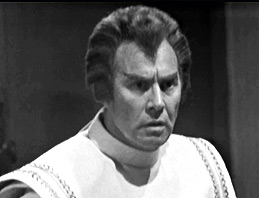
Ian is portrayed in a menacing and quite violent light in this serial.  Although cheerfully playing a game of “Cowboys and Indians” after removing a ray gun from its exhibition case, Ian is soon brandishing the weapon like a true warrior.  Threatening the aggressors with a gun comes easily to Ian, who astounds the viewers with his matter of fact acceptance of violence near the close of the third episode.  Pointing the ray gun at the Morok leader, Ian is told by the threatened Lobos that he’d be a fool to kill him.  “You will achieve nothing”, says Lobos.  Ian’s reply is chilling – “Possibly, but it might be enjoyable”. Ian’s colleagues at Coal Hill School would scarcely recognize him.

Morok Leader Lobos.  The Moroks' hairstyles are as unappealing as the Xerons' eyebrows

Morok Leader Lobos. The Moroks’ hairstyles are as unappealing as the Xerons’ eyebrows

Vicki is able to distance herself from the Doctor in this serial and spends much of the time in the presence of the young rebel Xerons.   She has a rudimentary knowledge of the Daleks from 25th Century history books although she is surprised at how unintimidating they appear. Vicki has a sound understanding of time dimension theory and is able to re-programme a less than intelligent computer to accept truthful, but otherwise incorrect, answers.  As previously mentioned, her crowning glory in the serial is convincing the laid back rebels that revolution is not only a good, but also an achievable, objective. Unfortunately everything concerning the revolution is too easy and entirely implausible, with young Vicki making it appear like a fun afternoon distraction.

Vicki tricks a less than intelligent computer

Vicki tricks a less than intelligent computer

Romance appears imminent at the story’s end as Vicki bids a fond farewell to the rebel, Tor.  Holding both of his hands on their goodbyes, it appears for a moment that Vicki may have to choose between love and the Doctor.  Alas, another quick marriage proposal is not made and Vicki remains with the Tardis Crew – at least for the moment.

Those bizarre Xeron extra eyebrows.  Is it little wonder that Vicki didn't stay?

Those bizarre Xeron extra eyebrows. Is it little wonder that Vicki didn’t stay?

Barbara’s role in The Space Museum  is somewhat less forthright than usual, although she does display her characteristic homely skills in clothing (de)construction. The costume department failed her miserably and she is dressed in the most matronly garb yet seen. That the show was filmed almost live is evident from Barbara’s half slip being in view for the best part of an episode.

The Tardis Crew examine the Dalek exhibit.  Barbara lucked out in the costume department

The Tardis Crew examine the Dalek exhibit. Barbara lucked out in the costume department

The serial ends with the revelation that the whole “time dimension” problem was caused by a stuck component in the Tardis.  If this sounds familiar, well it is.   The bizarre events of The Edge of Destruction were prompted by the same type of technical malfunction.  As Tat Wood and Lawrence Miles state in About Time 1, the Doctor has clearly yet to discover WD40!

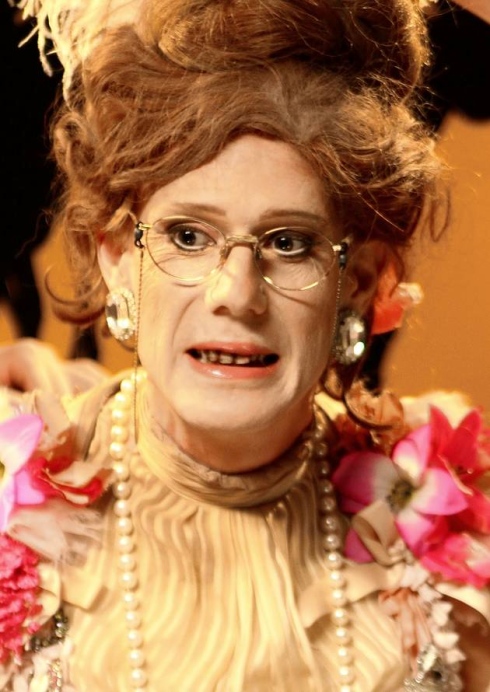
The special features on The Space Museum DVD are well worth viewing.  Together with Rob Shearman’s defence, there’s also a delightful short piece,  My Grandfather, the Doctor, in which Jessica Carney speaks about the career of her grandfather, William Hartnell.  Comedian Christopher Green’s spoof, A Holiday for the Doctor, in which he stars as actress Ida Barr, is not to be missed.

Christopher Greene as "Ida Barr"

Christopher Greene as “Ida Barr”

"The Space Museum" was originally broadcast in the UK between 24th April and 15th May 1965

“The Space Museum” was originally broadcast in the UK between 24th April and 15th May 1965

The Space Museum was released in a Box Set with The Chase entitled (you guessed it!) "The Space Museum The Chase".

The Space Museum was released in a Box Set with The Chase entitled (you guessed it!) “The Space Museum The Chase”.


Vivien Fleming

©Vivien Fleming, 2013.

Reference

Tat Wood & Lawrence Miles, “About Time. The Unauthorized Guide to Doctor Who. 1963-1966 Seasons 1 to 3″. Mad Norweigan Press, Illinois, 2009.