Category Archives: Season 3

The Daleks’ Master Plan – Loose Cannon Reconstructions Episodes 1, 3 and 4

Standard

Image

Only episodes 2, 5 and 10 of The Daleks’ Master Plan are held in the BBC archives and have been released on the Triple set DVD Lost in Time. For the purposes of my marathon I viewed the aforementioned episodes on DVD and reconstructions of the remaining episodes. Searching for the reconstructions on YouTube can be a difficult task so this and my next two posts will be devoted to providing the appropriate links. Enjoy your journey!

Loose Cannon’s The Daleks’ Master Plan, Episode 1 Part 1

Loose Cannon’s The Daleks’ Master Plan, Episode 1 Part 2

Loose Cannon’s The Daleks’ Master Plan, Episode 3 Part 1

Loose Cannon’s The Daleks’ Master Plan, Episode 3 Part 2

Loose Cannon’s The Daleks’ Master Plan, Episode 4 Part 1

Loose Cannon’s The Daleks’ Master Plan, Episode 4 Part 2

Episodes 2, 5 and 10 of "The Daleks' Master Plan" are included in the "Lost in Time" triple DVD set. "The Daleks' Master Plan"  was originally broadcast in the UK between 13th November 1965 and 29 January 1966.

Episodes 2, 5 and 10 of The Daleks’ Master Plan are included in the Lost in Time triple DVD set. The Daleks’ Master Plan was originally broadcast in the UK between 13th November 1965 and 29 January 1966.

The Daleks’ Master Plan – The First Deaths of Doctor Who Companions

Standard

Image

Magnificent in parts, and downright dodgy in others, The Dalek’s Master Plan was a serial of extremes. It was condemned for its violence and criticized for its comedy interludes.  In Australia it was one of only two Doctor Who serials that were never screened.  As parts of the 12 part serial had been classified as adult, the ABC decided against reconstructing it to fit the child friendly time slot in which Who normally aired.  Viewer reaction to the Christmas special, The Feast of Steven,  which was broadcast as episode 7,  was particularly bad.  The comedy antics in the Liverpool Police Station and the 1920’s Hollywood film set would have perplexed an audience that for the previous month and a half had been viewing a serial resplendent with fear and violence.  Similarly, the unexpected arrival of the Doctor’s adversary from The Time Meddler, the Monk, in episode 8 and the comedy interludes that continued with him through episodes 9 and 10, must have been puzzling to the audience. That being said, I love the Monk and only wish he’d again grace our screens.  Steven Moffatt, are you reading this?

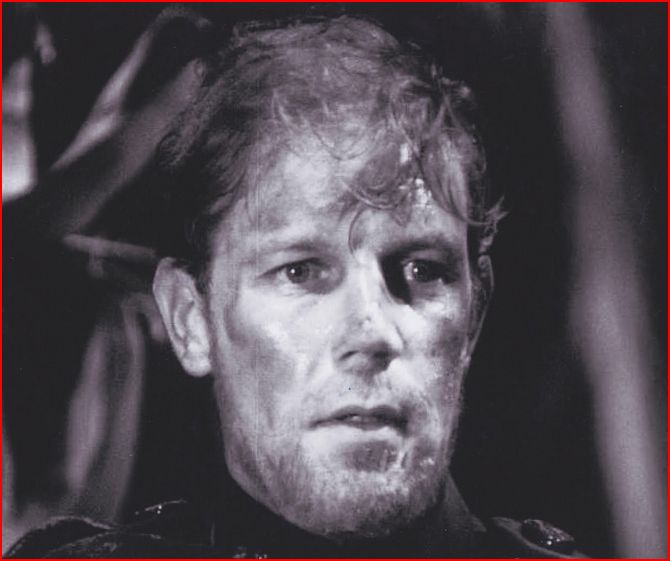
Kert Gantry - the first of many violent deaths in The Daleks Master Plan

Kert Gantry – the first of many violent deaths in The Daleks’ Master Plan

Given the length of the serial it is not my intention to provide even the most rudimentary synopsis.  One transcript I’ve seen is 72 pages long and unfortunately I don’t have the time to write a 10,000 word dissertation!  There are a number of books that provide excellent summaries of this, and other, Who serials.  In particular I’d suggest David J Howe and Stephen James Walker’s The Television Companion.  The Unofficial and Unauthorised Guide to Doctor Who.  Published by Telos in 2003 the book is now out of print although copies frequently appear on eBay.  Telos Publishing uploaded  cover photos of Volume 1 and 2 of  the 2013 edition of The Television Companion on their Facebook page in late 2012.  I’m uncertain when the release is anticipated.
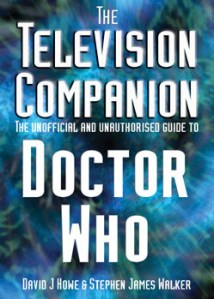
David J Howe & Stephen James Walker's The Television Companion was published in 2003 by Telos Publishing

David J Howe & Stephen James Walker’s The Television Companion was published in 2003 by Telos Publishing

The death of real humans, and not the “Bug Eyed Monsters” that Sydney Newman so decried, was a permeating feature of The Daleks’ Master Plan. The deaths of three Tardis travellers, companions Katarina and Sara Kingdom, and Space Security Service agent Bret Vyon, upended all hitherto held presumptions that the Doctor always averted disaster.  Unlike any Who serial that it had preceded in respect of violence, The Daleks’ Master Plan evidenced the new tangent that producer, John Wiles, was taking the show.  It is to the lives and deaths of these three Tardis fellow travellers that I will be devoting today’s review.
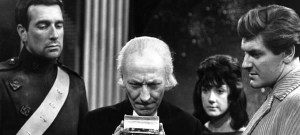
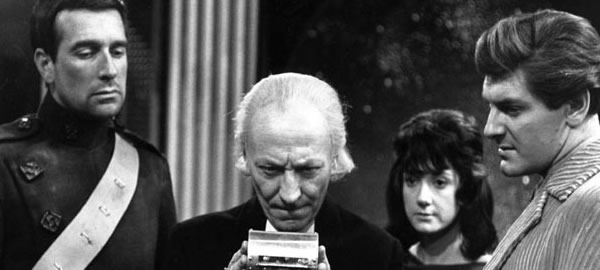
The Doctor, Vyon, Steven and Katarina

Vyon, the Doctor, Katarina and Steven

KATARINA

Katarina, the deferential handmaiden of Cassandra, was a sudden and unwitting occupant of the Tardis as the credits rolled in The Myth Makers.  Pushed into the Ship by the departing Vicki, Katarina was clearly out of her depth in a world of space travel.  Possibly born as early as 1300 BC, Katarina’s fellow passenger was the space pilot Steven, whose era of birth was never stated but was probably born sometime after 2500 AD. With around four millennia separating their births, Steven and Katarina would have been as alien to each other as the Doctor was to Barbara and Ian when first they met in the scrap merchant’s yard at Totters Lane. Katarina was a women of her time and naturally observed and comprehended  all around her in the context of a mystical or supernatural schema.  Once in the Tardis she believed she had entered the hereafter and that the Doctor was her gateway to the Place of Perfection.  She spoke barely a word during her full three episodes as a member of the Tardis Crew, and took no active part in any of the proceedings, save for operating some buttons on the console as directed by the Doctor and retrieving tablets from Bret Vyon’s pocket.

Katarina

Katarina

The object of the third episode cliff hanger, Katarina was taken hostage at knifepoint by a prisoner, Kirksen, who had boarded the Doctor’s stolen spacecraft after it had crash landed on the prison planet,  Desperus.  Unaware that Kirksen was onboard and hiding in the airlock, the spacecraft took off again after hasty repairs.  Kirksen threatened to kill Katarina if he was not returned to the nearest planet, which inconveniently for the Doctor and crew was the very planet from which they’d just escaped, Kembel.  Heated debate ensued between the Doctor, Steven and Bret Vyon as to whether they should turn back.  Although a decision was eventually made to return to Kembel, Katarina pushed a button which opened the airlock door.  She and Kirksen are sucked into space and died, and all within the first five minutes of episode four. Although Steven thought that this may have been an accident, the Doctor was convinced that she had sacrificed her life for them.  He lamented her demise whilst congratulating her courage:

Katarina tends the gravely ill Steven

Katarina tends the gravely ill Steven

“She didn’t understand.  She couldn’t understand.  She wanted to save our lives and  perhaps the lives of all the other beings of the Solar System. I hope she’s found her Perfection.  Oh, how I shall always remember her as one of the Daughters of the Gods.  Yes, as one of the Daughters of the Gods”.
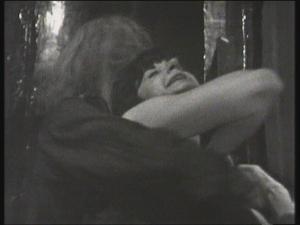
Katarina is taken captive by Kirksen

Katarina is taken captive by Kirksen

Katarina’s shocking death was the first to befall a companion in Doctor Who and was yet another in an increasingly long string of failures for the Doctor.

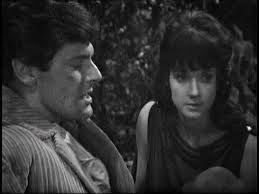
Steven and Katarina

Steven and Katarina

BRET VYON

It is perhaps because Nicholas Courtney went on  to become the much cherished Brigadier Alistair Gordon Lethbridge-Stewart,  that the first character he played in Doctor Who, Bret Vyon, has not been accorded the status of companion in the annals of Who history.  Spending as much time onscreen and inside the Tardis as the official companion Katarina, Vyon’s character has been viewed somewhat as an interloper, albeit one with an incredibly extensive role in episodes one through to four.  Unlike the almost mute Katarina who was almost entirely compliant with the Doctor’s commands, Vyon was headstrong and self assured, and began his relationship with the Doctor on less than civil terms.  On the planet Kembel with fellow agent Kert Gantry, Vyon was looking for leads on the fate of Marc Cory, the agent who met his demise  at the Daleks’ hands in Mission to the Unknown.  Gantry was quickly and violently dispatched by the Daleks within minutes of the opening of episode one, leaving Vyon alone in the jungle.  Finding the Doctor outside of the Tardis, Vyon threatens him at gunpoint and demands the key.  “Give me the key or I’ll kill you”  he states. Leaving the Doctor outside, Vyon enters the Tardis and is confronted by Katarina and Steven, who is only in a semi-conscious state following the injuries sustained at the end of The Myth Makers.  Vyon demands that the crew fly the Ship, together with him, off the planet. Rousing briefly in a groggy state, Steven uses a spanner and knocks out Vyon who falls to the floor.

NIcholas Courtney played Bret Vyon in his first Doctor Who appearance

Nicholas Courtney played Bret Vyon in his first Doctor Who appearance

The Doctor soon enters the Tardis  and puts the unconscious Vyon into  chair.  Upon the disorientated Vyon waking up the Doctor says to him, “I call it the magnetic chair. It has a forcefield strong enough to restrain a herd of elephants”. After the Doctor leaves, Vyon assists Steven by guiding Katarina to remove two tablets from his pocket.  The naive Katarina has never seen tablets before and has to ask Vyon if what she’s found is indeed them.  By assisting in Steven’s recovery Vyon, whom the Doctor had earlier considered to be a “violent young man”, showed himself to be an ally of the Tardis Crew.  Released from the restraint of the chair, Vyon thereafter works in coalition with the Doctor.

Katarina, Steven, the Doctor and Vyon

Katarina, Steven, the Doctor and Vyon

Again displaying his propensity for violence, Vyon commandeers Mavic Chen, the Guardian of the Solar System’s, Spar which for all intents and purposes is a hotted up spaceship.  After sneaking into the ship and taking the pilot and engineer by surprise, Vyon shouts “I’m taking over this spaceship.  Over there. Tie them up”. With just Steven and Katarina present during the heist, Vyon almost takes off without the Doctor after being shocked by the sound of an alarm.  Luckily the Doctor returns just prior to take-off.  After the death of Katarina along the way, the eventually arrive at Earth where Vyon meets up with an old friend, Daxtar, the manager of a research station. Vyon believes that Daxtar will become an ally against the Daleks’ and Mavic Chen’s plans for domination of the universe. Unknown to Vyon, Chen has already procured Daxtar’s allegiances.  The Doctor quickly twigs to this betrayal upon Daxtar mentioning the taranium core, something which Daxtar could only be aware of if he was in league with the enemy.  Without a second’s delay Vyon shoots Daxtar dead. Before there’s any chance to contemplate the consequences of Vyon’s actions, the group is scattered by the arrival of Space Security Agent Sara Kingdom and her colleague, Borkar.  Sent by Chen to assassinate the “traitors” who had stolen the Taranium core, Kingdom shoots Vyon dead. It is only later that we become privy to the fact that Kingdom is Vyon’s sister.

Vyon and Steven

Vyon and Steven

SARA KINGDOM

Like Vyon, Sara Kingdom is an employee of the Space Security Service.  The SSS is at the service of Mavic Chen, the Guardian of the Solar System  and perhaps one of Doctor Who’s most evil villains ever.  Highly regarded by the Service, Kingdom is known to obey orders without question  in a ruthless and timely manner.  It is with these credentials in mind that Chen dispatched Kingdom to seek and destroy the Doctor, Steven, and Vyon.  Our hero, the Doctor, had masqueraded as  Zephon, one of the delegates to the Dalek’s conference, and attended the meeting in which Chen had advised that the Daleks’ ultimate weapon, the Time Destructor, was complete.   The real Zephon, however, had been tied up by Katarina and Steven at Vyon’s command.  Upon Zephon freeing himself and activating an alarm, the Daleks’ conference went into a state of chaos and the Doctor  was able to escape with the Taranium Core, the essential element required to activate the Time Destructor. It was because the Doctor and his crew had the Taranium Core that Mavic wanted them dead and the Core returned to him.
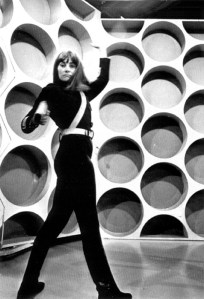
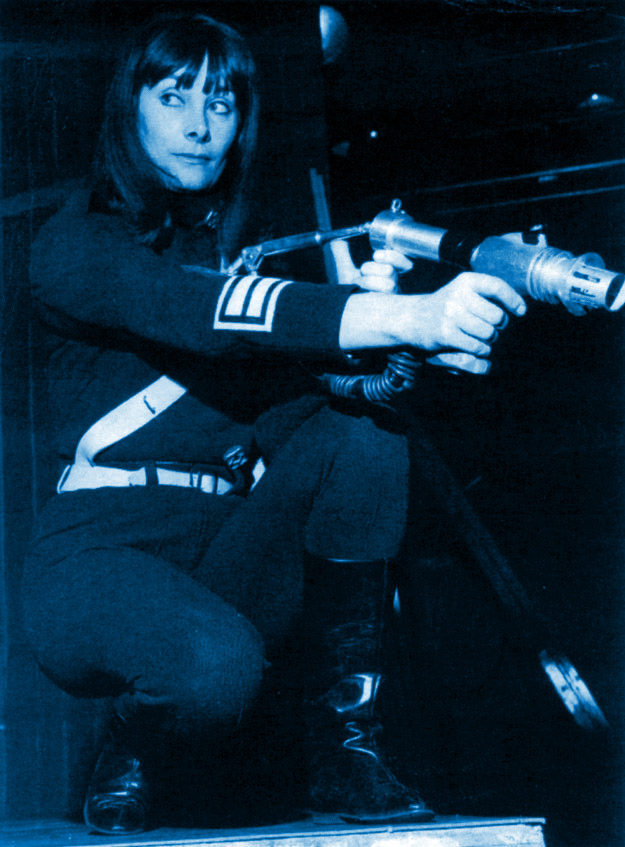
Jean Marsh in black cat suit as Sara Kingdom

Jean Marsh in black cat suit as Sara Kingdom

Unlike her brother Vyon, Kingdom is not yet cognisant of Chen’s treachery and assumes that he is working in the best interests of the Solar System.  She immediately accepts Chen’s command and quickly dispatches Vyon with seemingly no remorse. Kingdom is portrayed as a cold blooded killer and orders her colleague, Borkar, to track down and kill the Doctor and Steven.  After chasing the Doctor and Steven, Kingdom is caught  with them in a laboratory.  Whilst there they are accidently subjected to a molecular dissemination experiment (together with some mice, but that’s another story) and transported to the planet Mira.  Confronted by invisible monsters named Visians, the Doctor, Kingdom and Steven retreat into a cave.  Steven argues with Kingdom about Vyon’s death and accuses her of blindly following Chen’s orders without question.  Had she not considered, Steven posited, why a space security agent, one of her own people, had become a traitor?  She questioned neither Chen nor Vyon, and didn’t give Vyon a chance. Considering Steven’s story fantastic Kingdom eventually admits that Vyon was her brother and rushes out of the cave in a distraught manner.  The Doctor takes this as a sign that Kingdom finally believes them.  Shortly thereafter Kingdom returns to the cave after being touched by a Visian.  From that point forward Kingdom is a firm ally of the Doctor and Steven.
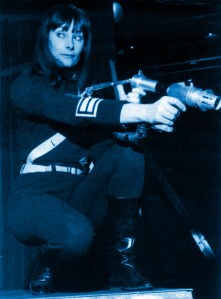
Sara Kingdom in combat mode

Sara Kingdom in combat mode

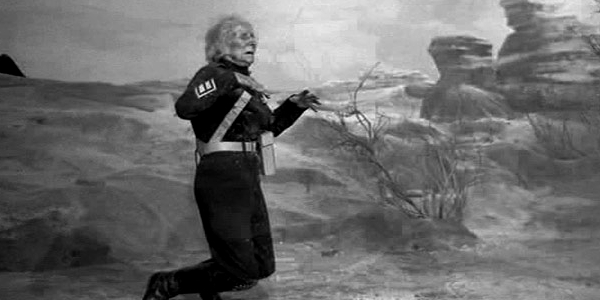
Kingdom is adept at martial arts and karate chops several villains in the course of our heroes’ adventures.  Unfortunately those episodes are lost in time so viewers are unlikely to ever see the black cat suited Kingdom doing her moves on our TV screens. She eventually loses her life in episode 12 after going back into the Daleks’ underground city to assist the Doctor.  The Doctor activates the Time Destructor after the distraction caused by Chen’s execution, and he and Kingdom make their way back to the Tardis.  Steven is already safely ensconced within, having previously been ordered back to the Ship by the Doctor.  In the process of returning to the Tardis through the jungle the Doctor and Kingdom begin to rapidly age. Having both collapsed, Kingdom dies, is reduced to bones and quickly thereafter, dust. Presumably because of his Time Lord anatomy (although, of course, he was not yet identified as such in the series) the Doctor does not age as rapidly as Kingdom.  Seeing the pair on the scanner, Steven rushes outside and also begins to age.  In attempting to deactivate the Time Destructor Steven accidently puts it in reverse resulting in our two heroes returning to the correct ages. Being already dead, it is too late for Kingdom and also for the Daleks, who had until that point been seemingly immune to the effects of the Time Destructor.  More about the fate of the Daleks, however, in my next review.

Sara Kingdom ages from the effects of the Time Destructor

Sara Kingdom ages from the effects of the Time Destructor

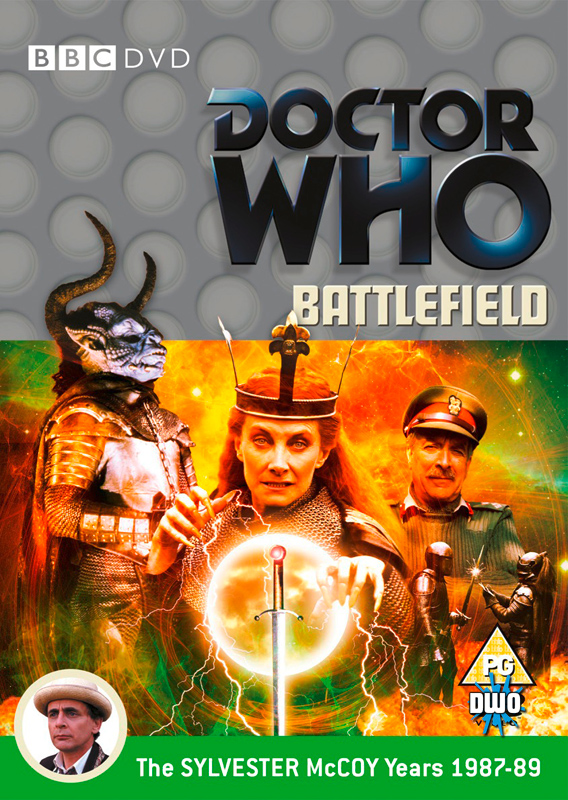
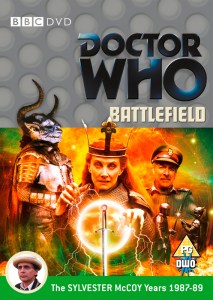
As an aside, there’s a rather nice interview with Jean Marsh, who played Sara Kingdom, in the special features of the Seventh Doctor’s Battlefield DVD.  In the segment  entitled From Kingdom to Queen, Marsh reminisces on her three appearances in Doctor Who – The Crusade (1965), The Daleks’ Master Plan (1965/6) and Battlefield (1989). Although not referred to in the interview, it’s interesting to note that Marsh appeared with Nicholas Courtney in both his first (The Daleks’ Master Plan) and last (Battlefield) appearance on Doctor Who. That makes the world of Who seem very small and incestuous, doesn’t it?
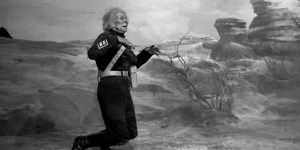
Sara Kingdom collapses as she rapidly ages

Sara Kingdom collapses as she rapidly ages

Stay tuned for my next review on three of the villains in The Daleks’ Master Plan – Mavic Chen, the Daleks, and the Monk.

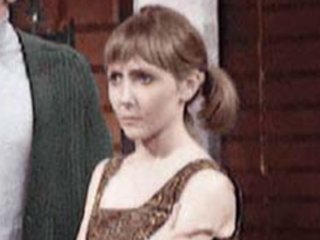
The young Sara Kingdom
The young Sara Kingdom

An interview with Jean Marsh, From Kingdom to Queen, is one of the special features of the Seventh's Doctor Battlefield DVD

An interview with Jean Marsh, From Kingdom to Queen, is one of the special features of the Seventh Doctor’s Battlefield DVD
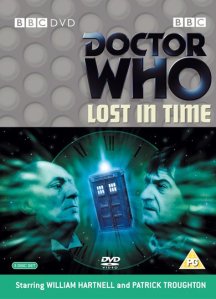
Episodes 2, 5 and 10 of "The Daleks' Master Plan" are included in the "Lost in Time" triple DVD set. "The Daleks' Master Plan"  was originally broadcast in the UK between 13th November 1965 and 29 January 1966.

Episodes 2, 5 and 10 of The Daleks’ Master Plan are included in the Lost in Time triple DVD set. The Daleks’ Master Plan was originally broadcast in the UK between 13th November 1965 and 29 January 1966.

Vivien Fleming

©Vivien Fleming, 2013.

Reference

David J Howe & Stephen James Walker, The Television Companion. The Unofficial and Unauthorised Guide to Doctor Who. Telos Publishing Ltd, Surrey, 2003.

The Peculiar Case of Vicki’s Quick Exit

Standard

Image

I have to admit I really liked Vicki. Young, perhaps no more than 17, she had a vibrancy that had been missing in her predecessor, the Doctor’s grand-daughter, Susan.  As a former secondary school teacher I envied the way she was schooled. In The Web Planet Vicki incorrectly assumed that Barbara had taught at a nursery school because they “worked upwards from the three Rs.”  The curriculum of Coal Hill School in 1963 seemed like child’s play to her.  At the age of 10 she took a certificate of education in medicine,  physics and chemistry.  When asked by Barbara how long she spent in the classroom Vicki was totally perplexed.  She’d spent almost an hour a week with a machine.  Life in 2493 must have been a child’s dream existence!

A rare photo of  Maureen O'Brien as Vicki in colour

A rare photo of Maureen O’Brien as Vicki in colour

Vicki was a member of the Tardis Crew  in episodes which screened from 2 January 1965 until 6th November 1965.  In just under 12 months Vicki had gone from an orphaned girl stranded on the planet Dido to the love interest of Troilus, son of the King of Troy. During that time, however, there was little in the way of character development. Save for when we met Vicki in The Rescue and she was clearly suffering from the effects of Bennett/Koquillion’s abuse, she remains a vibrant and forthright young woman throughout. As I have previously lamented, it was a shame that the opportunity wasn’t taken to examine the long term effects of this abuse on Vicki, however my concern for Post Traumatic Stress Disorder plainly comes from a 21st century perspective.

Koquillion and Vicki

Koquillion and Vicki

This absence of character evolution says much about the 1960’s perception of women, particularly young ones.  In the 1960s the median age of first marriage for women was around 20 years of age.  Career opportunities  were limited and pay was not equal.  Although unable to locate figures for the United Kingdom, Australia as a Commonwealth country would have been reasonably similar. Until 1966 the Australian Public Service required single women  to resign from their positions on the eve of their marriage. Equal pay was not granted until 1972. Is it any surprise, therefore, that women were portrayed as either children or mothers?  With women having perhaps only five years between leaving school and marriage, this period between childhood and motherhood was marginalized and frequently forgotten.

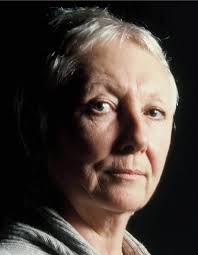
Maureen O'Brien

Maureen O’Brien

When we first meet Vicki she is in a stereotypical role as carer for Bennett.  As Bennett is supposedly crippled and unable to work, Vicki is compelled to undertake all the chores including collecting water, cooking and cleaning.  She isn’t seen to complain about this notwithstanding the absence of any thanks from Bennett.   Once a member of the Tardis Crew, Vicki  is somewhat of a companion for the Doctor – a faux grand-daughter, if you like.   The Doctor has someone to fuss around, care about and instruct.  She provides him with moral support  and most probably a sense of identity.  She is close by his side in The Romans and The Crusade and does not distance herself in any great manner until The Space Museum, where she becomes involved with the young Xeron rebels and seems to start a revolution for fun.  A potential love interest comes to nothing. Although coupled with Steven for much of The Time Meddler, Vicki is back at the Doctor’s side during Galaxy 4.  In her final serial, The Myth Makers, Vicki  is again separated from the Doctor but only because he’s compelled her to remain in the Tardis because of a sprained ankle.  As was the case with both Susan and Barbara, female companions in Doctor Who are overly susceptible to wrenching their ankles.  They require time to recuperate from such injuries, unlike Ian who was frequently knocked unconscious and seemed able to get up, and shake it off, each time.

Vicki, Steven and the Doctor in The Time Meddler

Vicki, Steven and the Doctor in The Time Meddler

Quite phenomenally Vicki is capable of falling in love with Troilus in less than 24 hours, most of which time she was a prisoner in a dungeon.  This love affair was even quicker than Susan and David’s in The Dalek Invasion of Earth. Having pleaded with the Doctor in The Crusade not to leave her as the Tardis was her only home, Vicki was extraordinarily quick to leave its confines in The Myth Makers. The television audience is not even privy to Vicki’s farewells to the Doctor as they take place out of camera shot inside the Tardis. The Doctor, nonetheless, appears satisfied with her explanation which seems to have been that she didn’t want Troilus to think she had betrayed him.

Vicki with the Doctor in The Crusade

Vicki with the Doctor in The Crusade

Although spending one’s life travelling in a blue wooden box through time and space may appear somewhat aimless, it’s certainly more secure than with a bloke you’ve only known for a day; in a time several thousand years before your own; and in a land where your love’s home City has been destroyed.  Ever quick to point out logical flaws in a witty manner, Wood and Miles in About Time 1 couldn’t help but extrapolate on a grave problem that Vicki and Troilus would be confronted by.  As the Tardis translates languages for the benefit of the Crew and persons they meet along the way, once it had left then the two lovers would be unable to communicate with each other.  Unless, of course, Vicki had learnt Ancient Greek, the language that Homer attributes to the Trojans in Iliad, in school!

Vicki - I hope that tasted nice!

Vicki – I hope that tasted nice!

Aside from the characterization failures in Doctor Who, the reality of Maureen O’Brien’s hasty exit from the role of Vicki appears to lay in programme’s change of producer.  According to Howe, Walker and Stammers in The Handbook, O’Brien had been cast by Verity Truman having been suggested by one of her former drama teachers who then was in the employ of the BBC. The new producer, John Wiles, replaced Truman beginning with the production of The Myth Makers, although he had shadowed Truman during the making of Galaxy 4. Wood and Miles argue that “Wiles had noticed her tendency to pick holes in the dialogue during rehearsals for Galaxy Four, and made arrangements to have her removed while the cast were on holiday”.  It was on her return from a week’s break given to the regular cast whilst Mission to the Unknown was filmed  that O’Brien heard of her dismissal. Although the new character of Katarina was going to replace Vicki it soon became evident to Wiles and story editor, Donald Tosh, that Katarina’s Trojan naivety would make her an unsuitable companion.  It’s for that reason that Katarina was just as hastily written out of Doctor Who in the fourth episode of The Daleks’ Master Plan.

A recent photo of Maureen O'Brien

A recent photo of Maureen O’Brien

So ends the less than a year long tenure of Maureen O’Brien as Vicki.  This was but the beginning of a revolving door of companions which would grace the screens of Doctor Who over the next several years.

Vicki as we first meet her

Vicki as we first meet her

Vivien Fleming

©Vivien Fleming, 2013.
 

References

David J Howe, Stephen James Walker & Mark Stammers, The Handbook. The Unofficial and Unauthorised Guide to the Production of Doctor Who. Telos Publishing Ltd, Surrey, 2005.

Tat Wood & Lawrence Miles, About Time 1. The Unauthorized Guide to Doctor Who. 1963-1966 Seasons 1 to 3. Mad Norweigan Press, Illinois, 2009.

The Myth Makers

Standard

Image

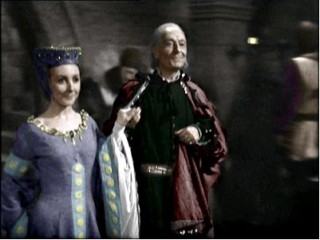
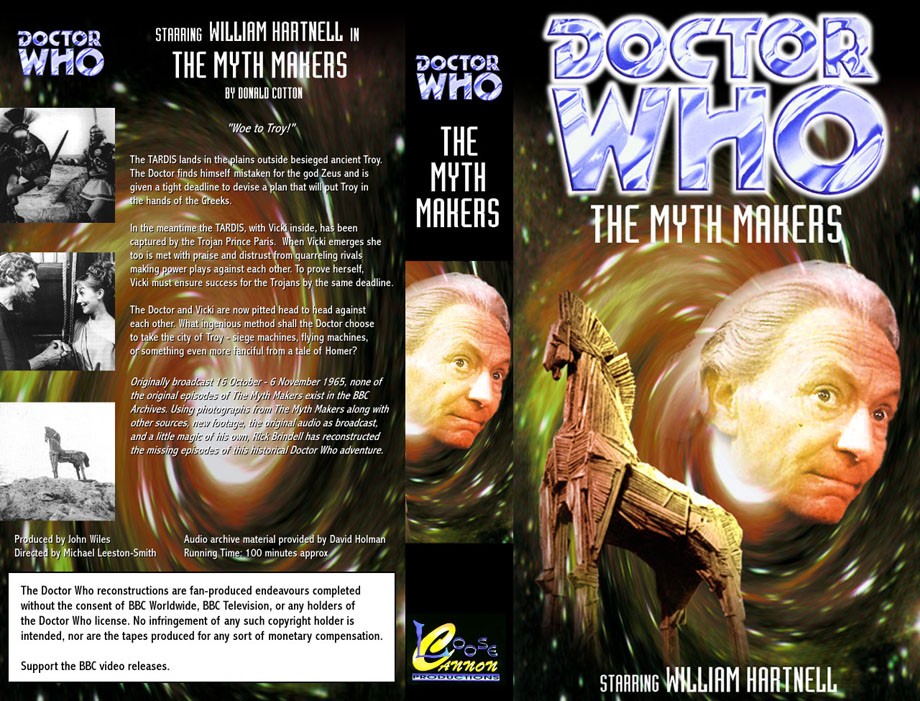
Emerging from the materialized Tardis on the plains just outside of Troy, the Doctor is mistaken for the god Zeus by the Greek warrior Achilles who is in battle with Hector, son of Trojan King Priam.  Doctor Who has entered into the legend of the Trojan War with the four part serial, The Myth Makers. Whereas Barbara had been mistaken for the reincarnation of the high priest Yetaxa by the Aztecs for wearing his bracelet, the Doctor needs don nothing to take on a deified form in Homeric Troy.  Aware that Zeus had appeared among his people in many forms, Achilles is honoured to have the god appear to him in guise of an old beggar.

Whilst initially insulted at being mistaken for a beggar, the Doctor quickly sees the benefits of his  alleged divinity and plays along. Achilles is reprimanded for not addressing the Doctor with due deference and threatened with a strike of thunderbolt if the Doctor should be hindered from returning to the Tardis.  The Tardis is my “travelling temple”, the Doctor states, “being small, it’s convenient”.

The Doctor's travelling temple - small and convenient.  This is not a shot taken from The Myth Makers. Unfortunately no telesnaps survive.

The Doctor’s travelling temple – small and convenient. This shot is not taken from The Myth Makers. Unfortunately no telesnaps survive of the four part serial.

And so the scene is set for a comedy in which the norms and conventions of Doctor Who, as laid out in the previous two years, are set aside and the Doctor shown not to be always the hero.  But before this conclusion is reached the fourth and final episode of the serial rapidly becomes a tragedy as the Doctor actively causes history to be made.  The Doctor, as you will recall, was scathingly critical of Barbara in The Aztecs when she willing accepted the divinity thrust upon her.   She was not to change one line of history, the Doctor implored Barbara, who had determined that the Aztec society should be saved from itself by the abolition of human sacrifice. How quickly the Doctor had forgotten his own advice!

Taken prisoner by the Greeks, the Doctor maintains his ruse as Zeus (I know, it’s a bad pun!) until he discovers the Tardis stolen the next morning.  Steven, dressed in Greek garb, had been taken prisoner separately from the Doctor and both men had pretended not to know each other to permit the Doctor’s continued masquerade as Zeus.  Steven is mistaken as a Trojan spy and the Greeks seek to execute him. The Doctor saves him from being killed by offering to execute him with a bolt of lightning (as Zeus) at his “temple” the following morning.  As this is clearly a ploy to enable our heroes to escape in the Tardis, the Doctor has little option other than to admit to his fraud.  Odysseus allows the Doctor and Steven to live, but only if the Doctor assists him in defeating the Trojans within two days.

The Tardis, meanwhile, has been taken into the walls of the City by another of King Priam’s sons, Paris, who presents it to his father as a gift.  Vicki has remained within the Ship tending a sprained ankle and emerges from it just prior to King Priam’s daughter, Cassandra, setting it alight as a sacrifice for the gods.  Blessed with the gift of prophesy, Cassandra has dreamt of a wooden structure left outside the city by the Greeks which once brought inside, would spill forth an army of Greeks who would decimate the City. Vicki’s miraculous appearance is seen as another sign from the gods and she is renamed Cressida by the King.

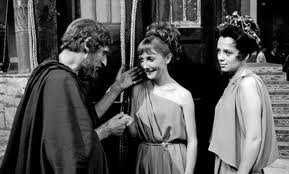
Vicki, King Priam, and Cassandra

Vicki, King Priam, and Cassandra

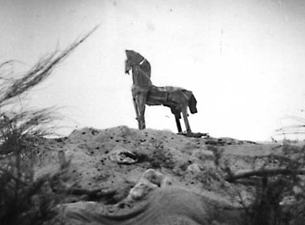
Cassandra, who is ridiculed by the family for her prophesies, is nonetheless correct in her visions of a Greek gift bringing forth doom. It wasn’t the Doctor’s Tardis that contained the Greeks, however, but  rather the giant wooden horse which was built upon the Doctor’s suggestion. After initially rejecting Steven’s notion of a Trojan Horse, the Doctor soon suggests the idea and within a day the phenomenally large edifice has been constructed. Finding himself inside the Trojan Horse, the Doctor panics and suggests that the whole plan is a bad idea.  It is too late to change, however, and upon being taken inside the City the Greeks emerge and slaughter the people of Troy.  Cassandra is taken prisoner and the rest of her family, save for the youngest son Troilus,  are slain.  Steven, who has masqueraded as a Greek, willingly been taken prisoner, and then escaped, is badly injured in the shoulder whilst in battle with a Trojan soldier.  Katarina, the dutiful handmaiden of Cassandra,  finds Steven and assists him to the Tardis.  Vicki, in the interim, has fallen in love with King Priam’s youngest son,  Troilus and sent him out of the City on a faux errand to avoid the impending bloodshed.  Determined to meet up with her love and assure him that she had not betrayed him, Vicki tells the Doctor privately of her intention to leave the Tardis Crew.  She pushes both Steven and Katarina into the Tardis as the Doctor dematerializes his Ship.  Vicki meets Troilus on the plain and they resolve to establish a new Troy together.

Vicki and Troilus

Vicki and Troilus

Although the Tardis is safely away from the bloodshed of Troy, all is not well for the Doctor and his crew.  Steven is critically injured, the naive Katarina believes that she’s in the afterlife, and the viewer can never again be assured that the Doctor will save the day.  In “causing” history, the Doctor has facilitated the destruction of Troy and the deaths of a multitude of people.   Having already seen in  Mission to the Unknown that the Doctor cannot be relied on materialize when he’s needed,  the Doctor’s reputation has again taken a severe blow.  With the return of his arch enemies in the next serial,  The Daleks’ Master Plan, the odds appear against the Doctor.

The Doctor causes history by suggesting that the Greeks construct the Trojan Horse

The Doctor causes history by suggesting that the Greeks construct the Trojan Horse

The complete four part serial of The Myth Makers is missing from the BBC archives.  For the purposes of this marathon I watched Loose Cannon’s reconstruction, the links for which are below. The Myth Makers was originally broadcast in the United Kingdom between 16th October and 6th November 1965.

Loose Cannon’s The Myth Makers – Episode 1 Part 1

Loose Cannon’s The Myth Makers – Episode 1 Part 2

Loose Cannon’s The Myth Makers – Episode 2 Part 1

Loose Cannon’s The Myth Makers – Episode 2 Part 2

Loose Cannon’s The Myth Makers – Episode 3 Part 1

Loose Cannon’s The Myth Makers – Episode 3 Part 2

Loose Cannon’s The Myth Makers – Episode 4 Part 1

Loose Cannon’s The Myth Makers – Episode 4 Part 2

Vivien Fleming

©Vivien Fleming, 2013.

Mission to the Unknown

Standard

Image

Received wisdom has it that Mission to the Unknown is the only one part serial in classic Doctor Who. Moreover it’s renown for containing absolutely none of the regular cast members or the Tardis. In today’s language it would be described as a “Doctor Lite” episode.  Such broad generalizations, however,  fail to conceptualize the serial as it was originally intended – as part one of a story arc which fans now refer to as The Daleks’ Master Plan.  Sometimes designated as a prequel to The Daleks’ Master Plan,  Phil Sandifer in his tome, Tardis Eruditorum Volume 1: William Hartnell, persuasively argues that Mission to the Unknown is actually the first part of a five part serial, part two of which was aired five weeks later.  Sandifer asserts that rather than being a single 12 part serial, The Daleks’ Master Plan is really four separate serials aired over a period of 17 weeks and encompassing both Mission to the Unknown and The Myth Makers.  But more about Sandifer’s assertions in my review of The Daleks’ Master Plan.

Tardis Eruditorum Volume 1: William Hartnell by Phil Sandifer

Tardis Eruditorum Volume 1: William Hartnell by Phil Sandifer

It is sufficient for our purposes now to limit discussions to the single 25 minute episode entitled Mission to the Unknown.  The last Doctor Who story produced by Verity Lambert,  this serial was screened the week following episode four of Galaxy 4.  Whereas the overwhelming number of Who serials start in the console room of the Tardis, Mission to the Unknown commences with a man unrecognizable to the viewer lying almost unconscious on the ground.  Around him is a jungle, or at least we believe it to be a jungle because this episode, like another 105 others of 1960’s Doctor Who, is lost.  Not only was it junked by the BBC, there are also none of John Cura’s extremely helpful telesnaps.  Instead we are left with just a handful of photos to guess what the story looked like.  This has not stopped fans making reconstructions utilizing the audio and ingenious methods of visually representing the action.  For my marathon I watched two such reconstructions – an animation produced by lifelong Who fan, Ian Levine, and the other by Loose Cannon.  Both can be accessed below for your viewing pleasure.

Ian Levine’s animation of “Mission to the Unknown” Part 1

Ian Levine’s animation of “Mission to the Unknown” Part 2

Loose Cannon’s “Mission to the Unknown” Part 1

Loose Cannon’s “Mission to the Unknown” Part 2

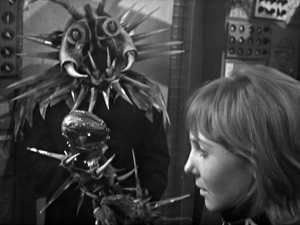
Mission to the Unknown  brought  a sense of  terror back to the Daleks after the somewhat unsuccessful attempt at comedy in The Chase.  Given that the Daleks were the “bread and butter” of Doctor Who it was a wise move by the production team to reaffirm their deadly disposition.  Akin to the Daleks’ home planet of Skaro, the planet Kembel, on which three space travellers are stranded, is a dangerous place. Space pilot Marc Cory asserts  that it’s the most hostile planet in the universe and is avoided by other civilizations.  Unbeknownst to the space travellers on their arrival, there is a Dalek base on Kembel.  Cory first twigs to this when he comes upon a Varga plant.  Natives of the planet Skaro, Varga plants were developed in Dalek laboratories and grown to give the Daleks extra protection.  Part animal and part vegetable, they look somewhat like a cactus and drag themselves along by their roots. The Varga plants have large thorns containing poison.  If pricked by one the human victim dies and is quickly transformed into a Varga plant. The poison in the plant attacks the victim’s brain and produces in them an overwhelming desire to kill.  They are devoid of all rational thought.

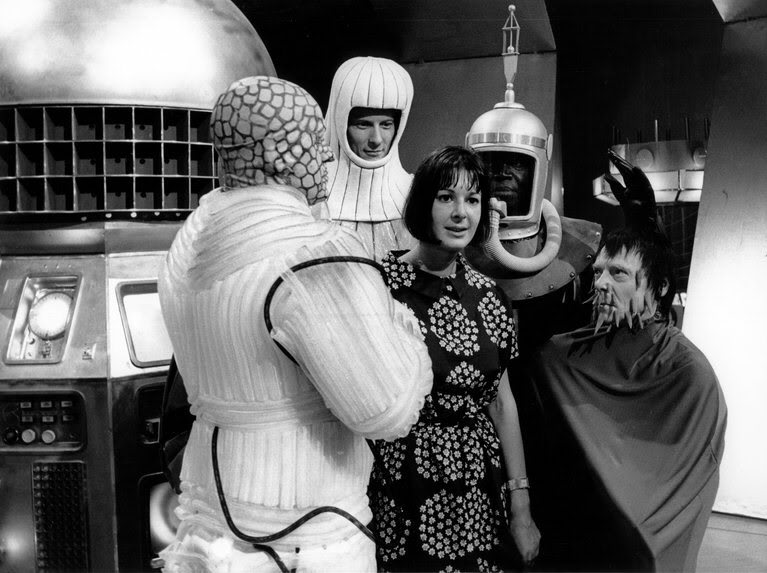
A press photo of Doctor Who producer, Verity Lambert, with one of the Daleks' allies, Malpha

A press photo of Doctor Who producer, Verity Lambert, with one of the Daleks’ allies, Malpha.  Is Verity offering the alien a cigarette?

First crew member Jeff Garvey, and then another, Gordon Lowery, are victims of the Varga thorns.  Cory, who is with the Space Security Service, and therefore “licensed to kill” (Terry Nation had been watching too much James Bond!), shoots both Garvey and Lowery dead prior to their transformation into Varga.  Both men transform into Varga after their deaths.  Shortly thereafter Cory himself is exterminated after being encircled by Daleks.  During all of these death our hero, the Doctor, is nowhere to be seen.   The man who viewers have depended on for almost two years to always save the day is either unwilling, or unable, to thwart these vicious attacks.  Moreover, the Daleks are holding a conference on Kembel with emissaries from seven outer galaxies.  They are sure to all be horrid looking aliens.  If only we could see them! The allies plan galactic domination and to conquer Mars, Venus, Jupiter and the Moon colonies.  Their first conquest  will be Earth. With a 100 per cent success rate in killing all three humans in the serial,  things look decidedly rosy for the Daleks and their allies.  These are troubling times indeed. Without the Doctor the future for the whole galaxy is bleak.

The Daleks and emissaries from the seven outer galaxies at the conference

The Daleks and emissaries from the seven outer galaxies at the conference

Vivien Fleming

©Vivien Fleming, 2013.

REFERENCE:

Phil Sandifer, Tardis Eruditorum Volume 1: William Hartnell. Self published, 2011.

Yippee! I’m up to date!

Standard
All I want for Christmas is a Chumbley toy!

All I want for Christmas is a Chumbley toy!

At last I’m up to date with my reviews.  A quick trip to Sydney, a funeral, and a visit by a friend resulted in my reviews lagging way behind my viewing.  Henceforth I can view and review reasonably contemporaneously. As soon as my eldest son finishes watching the Special Edition of Inferno (I train my children well) it’s back to season 3 and a reconstruction of Mission to the Unknown.

Vivien Fleming

Galaxy 4

Standard

Galaxy 4 cover

If beauty is in the eye of the beholder then no better example could be found than in the premiere story of Doctor Who’s third season, Galaxy 4.  It’s at this stage that you’d anticipate me summarizing the moral thesis of the story as my opening catch phrase alludes to.  Not so!  The beauty to which I refer bears no relationship to the relative physical characteristics of the Drahvins and the Rills, but rather to the viewer’s appreciation of the serial.  In their book Running Through Corridors, Rob Shearman and Toby Hadoke approach a marathon watch of Doctor Who with the intention of finding the good in each and every story – even the downright shockers.  Despite their best endeavours,  neither Shearman or Hadoke could find much to endear them to Galaxy 4. I beg to differ, and as such am perhaps one of the few fans who genuinely love the serial.

Even Rob Shearman and Toby Hadoke had difficulty finding the good in Galaxy 4

Even Rob Shearman and Toby Hadoke had difficulty finding the good in Galaxy 4

It’s probably because I’m a woman that I find the concept of a female dominated alien race somewhat appealing.  The Drahvins, natives of the planet Drahva in Galaxy 4, are a most practical bunch.  When the Doctor and Steven ask the leader, Maaga, if all their race are female, Maaga’s response if most abrupt – “Oh, we have a small number of men, as many as we need.  The rest we kill.  They consume valuable food and fulfil no particular function.”  I almost squeal with delight whenever I watch that segment, but please don’t tell my sons.  They’ll probably find it hard to sleep at night!  The Doctor responds cheekily by saying, “Yours must be a very interesting civilisation”.  If ever there was an understatement, that’s one.  When Maaga later offers to free Steven if he takes the Drahvins off the planet in his ship, his retort is classic.  “Oh, yes, yes.  But even assuming I believed you, that on the way you didn’t decide that I was eating too much food, there is a snag … I can’t operate it”, he states. There are no flies on Steven.  He’s a bright one!

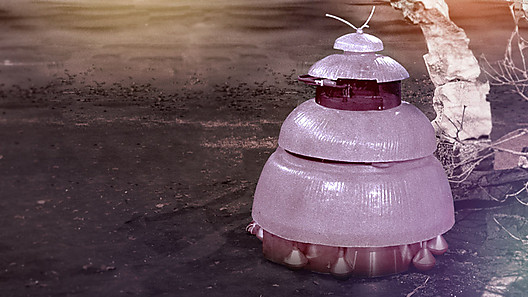
The Drahvins with a Chumbley

The Drahvins with a Chumbley

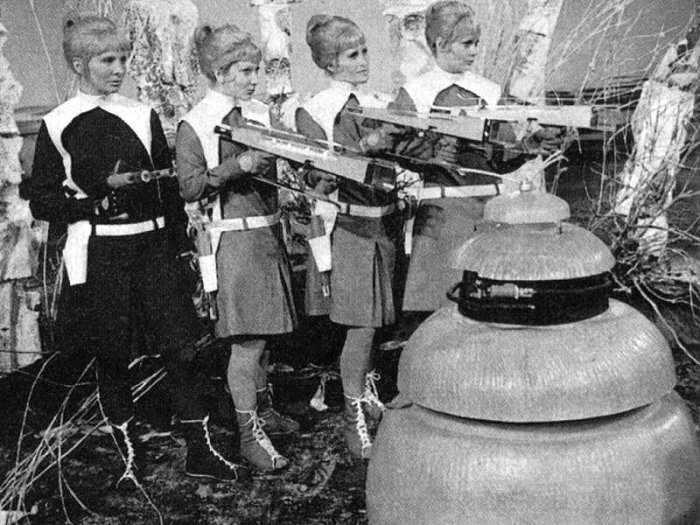
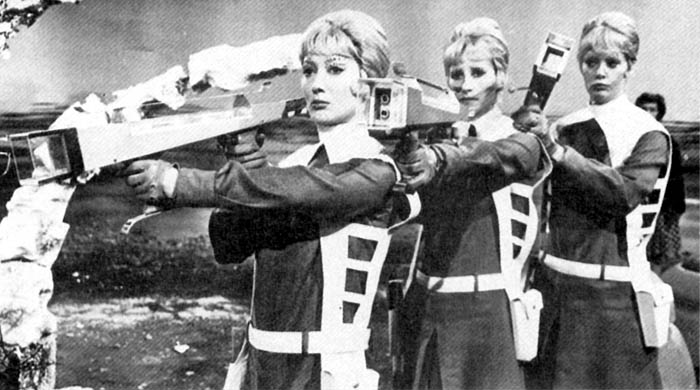
The Drahvins that the Doctor and his companions meet are small in number and comprise only four in total.  All have long blonde hair and wear unflattering green and white uniforms.  All but the leader, Maaga, are drones.  Bred purely as soldiers, the three are without intelligence and cultivated in test tubes.  Whilst Maaga is a living being, she considers the soldiers to be mere products, and inferior ones at that.  “Grown for a purpose and capable of nothing more”, she says, “To fight. To Kill”.  The soldiers are programmed to obey all orders on command and to offer themselves up to death if they fail in their mission. Like the Tribe of Gum in An Unearthly Child, the Drahvins cannot understand human kindness and why a person might sacrifice their life for another.  While Maaga eats real food, the soldiers subsist on tablets only.  Steven endeavours to reason with one of the Drahvin and convince her of the inequality of this class based system.   Before he can succeed Maaga enters the room and stops the conversation.

The Drahvins in colour.  Their dresses were actually green.

The Drahvins in colour. Their dresses were actually green.

The soldiers’ lack of intelligence is the cause of constant frustration to Maaga.  Charged with finding a new planet for colonization,  she was lumbered with soldiers to assist her.  All thinking is left to her and the drones lack even the intellect to imagine the Rills dying on a white exploding planet.  Death and destruction are things Maaga intellectually craves,  but killing is undertaken in an automated and routine manner by the drones.  They are incapable of enjoying the process of killing. Maaga is one sick and twisted psychotic individual!

The Drahvins in combat mode

The Drahvins in combat mode

It is little wonder that the writer, William Emms, saw fit to have the Drahvins all killed at the story’s end.  They’re not nice people, even if the thought of a planet with limited men might appear momentarily enticing.  Both the Doctor and the Rills’ failure to rescue the Drahvins, although logical, is morally troublesome.  The Rills had long offered to transport the Drahvins home, notwithstanding their longstanding aggression against them.   Earlier in the serial the Doctor had even stated to Maaga that neither he, nor his companions, kill.  And yet, the Doctor leaves the Drahvins on the planet knowing full well that within minutes it will explode.  Compare this, for a moment, with the Fourth Doctor’s classic moral dilemma in The Genesis of the Daleks.  The Doctor is afforded the opportunity to destroy the Daleks forever, and yet he hesitates.  Does he have the right to commit genocide, even though the Daleks are evil reincarnate and will cause death and suffering to millions of people?  Sarah Jane certainly considers it morally acceptable but the Doctor is not so sure. By the Seventh Doctor’s tenure, however, such moral  concerns appear far from his mind when Skaro is seemingly destroyed in Remembrance of the Daleks.

Is it morally correct to kill the Drahvins?

Is it morally correct to kill the Drahvins?

That Galaxy 4 featured humans produced by test tube, 13 years prior the first in vitro fertilisation (IVF) birth in 1978, is quite marvellous.  The story canvassed the moral issue of cloning three decades before the birth of Dolly the Sheep in 1996.   Future science, rather than science fiction, was at the core.

Maaga, the Drahvin leader, isn't a clone

Maaga, the Drahvin leader, isn’t a clone

I opened with the phrase  “Beauty is in the eye of the beholder”.  This, undoubtedly, was the major theme of the writer, William Emms.  The beautiful people in the serial, the Drahvins, are actually morally bankrupt and psychotically evil.  Given their blonde hair, I suspect the Drahvins to be modelled on the Nazis.  Not unlike Hitler, their leader  Maaga rallied her troops’ support by openly lying about the “enemy”. The Nazis lead the German people to incorrectly believe that the Jewish people were the cause of Germany’s economic woes. Maaga convinced her people that the Rills had killed a Drahvin soldier and were necessarily evil.   Maaga had actually killed the soldier herself.

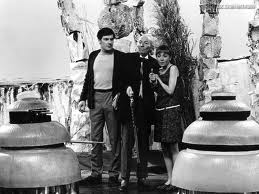
Steven, the Doctor and Vicki encounter Chumblies for the first time

Steven, the Doctor and Vicki encounter Chumblies for the first time

The Rills are the “ugly”  of the story and even consider themselves to be physically unbearable to all but their own kind.  They are great big green blobs that can only breathe ammonia. They are, however, the good and the just of the story.  Notwithstanding having their spacecraft shot down by the Drahvins, they offer assistance to the stranded women when both peoples are marooned on the planet.  They continue to offer the hand of friendship almost to the end.   They immediately forgive the Doctor for sabotaging their equipment and attend to the repair without seeking the Doctor’s assistance.  Like the Sensorites, the Rill communicate telepathically.  Having no vocal chords they speak through the robotic Chumblies.

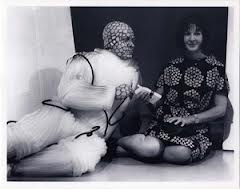
A Chumbley with four Rills in the background

A Chumbley with four Rills in the background

I cannot end this review without mention of Chumblies.  I love the Chumblies.  They’re cute and chumble around in a most endearing fashion.  So named by Vicki for that very reason, it’s somewhat amusing that the Rills had no problem using this adopted nickname when referring to their robotic assistants.  Surely they already had a name for them!  “Bring back the Chumblies” I say to BBC Wales, and while you’re at it, a big stuffed Chumbley would look rather nice on my bed!

Maaga, Steven and Vicki

Maaga, Steven and Vicki

Only episode three of Galaxy 4 exists in its entirety, having been rediscovered in 2011.  A reconstruction of the missing story, using off-screen stills, audio recordings and animation, together with the recently recovered episode three, was included in the special features of The Aztecs Special Edition released in 2013.

The Doctor and Vicki realize that the Chumbley poses no threat

The Doctor and Vicki realize that the Chumbley poses no threat

A reconstruction of "Galaxy 4", including the complete episode three, is included as a special feature of "The Aztecs" Special Edition DVD. "Galaxy 4" was originally broadcast in the UK between 11 September and 2 October 1965

A reconstruction of “Galaxy 4”, including the complete episode three, is included as a special feature of “The Aztecs” Special Edition DVD.
“Galaxy 4” was originally broadcast in the UK between 11 September and 2 October 1965

Vivien Fleming

©Vivien Fleming, 2013.


REFERENCE:

Robert Shearman and Toby Hadoke, “Running Through Corridors.  Rob and Toby’s Marathon Watch of Doctor Who” (Mad Norwegian Press, Des Moines, Iowa: 2011),