Tag Archives: Loose Cannon

The Savages – Loose Cannon Reconstructions

Standard

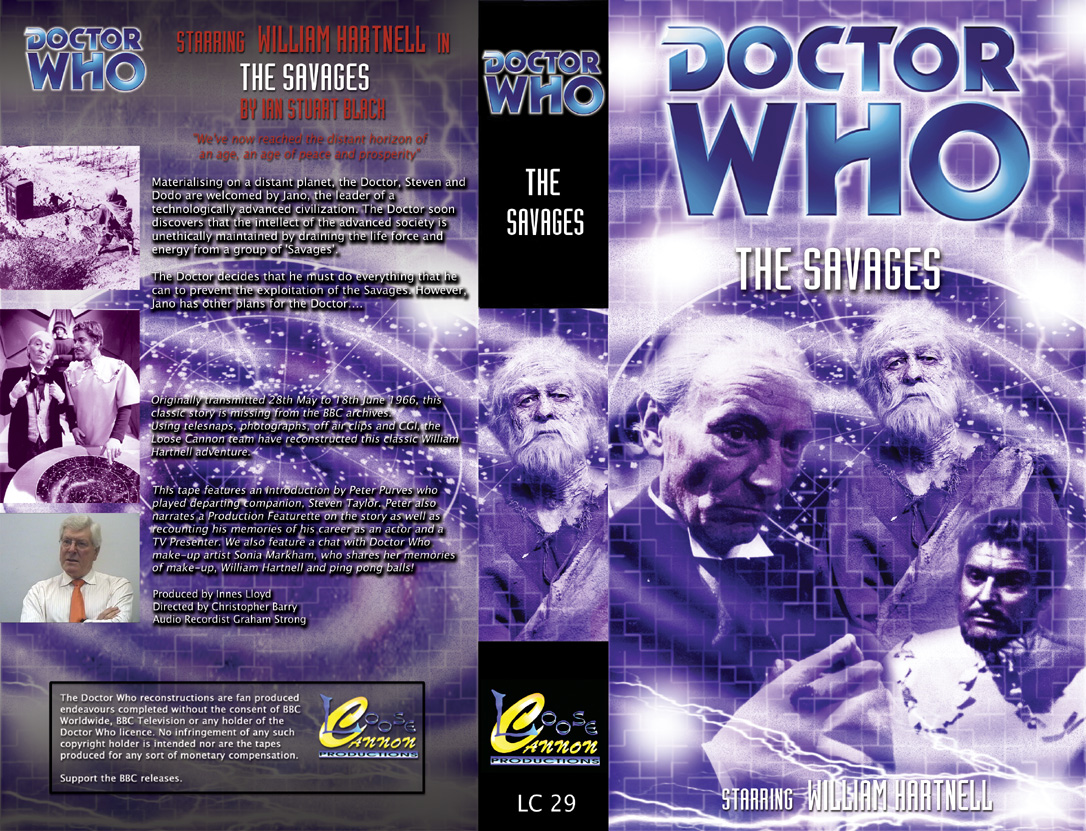
The Savages - Loose Cannon VHS cover

All four episodes of The Savages are missing from the BBC Archives.  For the purposes of this marathon I viewed Loose Cannon’s reconstructions, the links for which are below.

Loose Cannon’s The Savages, Episode 1 Part 1

Loose Cannon’s The Savages, Episode 1 Part 2

Loose Cannon’s The Savages, Episode 2 Part 1

Loose Cannon’s The Savages, Episode 2 Part 2

Loose Cannon’s The Savages, Episode 3 Part 1

Loose Cannon’s The Savages, Episode 3 Part 2

Loose Cannon’s The Savages, Episode 4 Part 1

Loose Cannon’s The Savages, Episode 4 Part 2

The Savages

Standard

The Savages - Book

Watching The Savages was somewhat of a rare treat.  Not only was it a serial that I’d never before watched, but also one that I’d neither read nor heard spoken about.  I entered its viewing, therefore, with no preconceptions and an entirely open mind.  I’m very pleased that I did because I was thoroughly taken by this 1960’s tale of morality.  I enjoy looking for the political in serials, even if a message was not intentionally left.  The Savages, however, proudly flaunts its political design.  Whether it was intended to be a tale against South Africa’s apartheid regime, the association of eugenics with Nazi Germany, or a cutting condemnation of the British Class system, it matters not.  What is important in my mind is that The Savages is as equally as relevant today as it was in 1966.

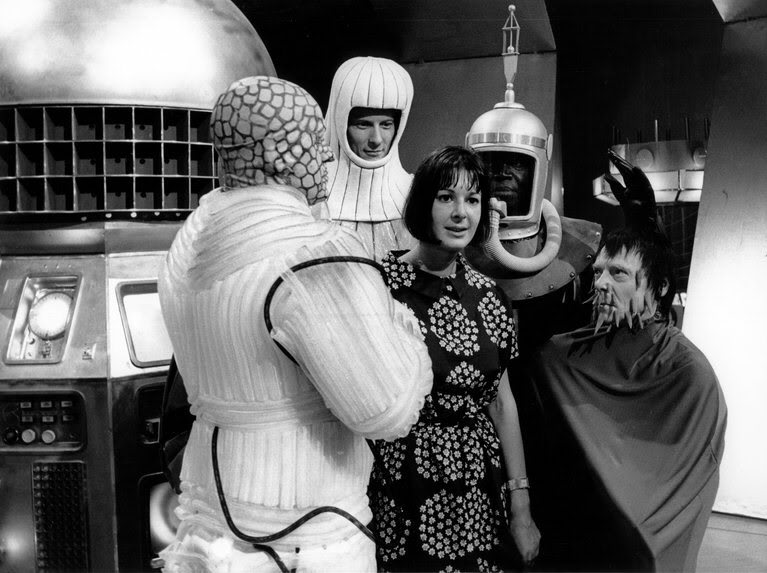
The "Savage" inhabitants of the planet.  They are humans, just like the Elders, whoever they are considered barbarians

The “Savage” inhabitants of the planet. They are humans, just like the Elders, however they are considered barbarians by the Elders

The Doctor and his companions find themselves on an unnamed planet amongst a civilization which the Doctor considers highly advanced. Although the landscape is somewhat arid and populated by people leading an almost caveman like existence (the Savages), there is built on the planet a sparkling city.  Freedom is afforded to the city’s occupants sufficient to allow them as much leisure time as they so desire.  Their wants are always met, however they are unable to exit the city to the real world.  The city is entirely enclosed with no access to natural air, light, sun, rain or wind, however the occupants don’t consider themselves to suffer materially or physically as a consequence.  The occupants of both the city (the Elders) and the outside world (the Savages) are human and save for the vast differences in their qualities of life, are nonetheless identical physically and psychologically.

 Steven and Dodo are confronted by a Savage.  They run to the Tardis for cover


Steven and Dodo are confronted by a Savage. They run to the Tardis for cover

The Elders consider themselves superior in all ways to the Savages, who are treated as barbarians.  The Elders welcome the Doctor’s arrival and claim that they have been tracking the course of his spaceship for many eons. His arrival is considered a time of momentous historical importance. The Doctor is treated as a folk hero and a man of very high regard,  and is afforded the honorary office of High Elder. The Council of Elders, however, is nonetheless surprised that the Doctor is travelling with companions.  Dodo and Steven are welcomed and given gifts of a mirror inlaid with precious gemstones (for Dodo) and an ornamental dagger (for Steven).  The mirror plays an important role in the story at a later stage.
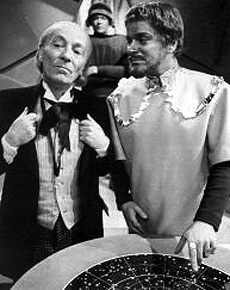
The Doctor and Jago, the Elder's leader

The Doctor and Jago, the Elder’s leader

The Elders are proud of their intellectual and scientific progress and extol its virtues to the Doctor.  Jano’s discussion of race perfection is chillingly reminiscent of eugenics:

“Doctor, do you realise that with our knowledge, we can make the brave man braver, the wise man wiser, the strong man stronger.  We can make the beautiful girl more beautiful still.  You will see the advantages of that in the perfection of our race”.

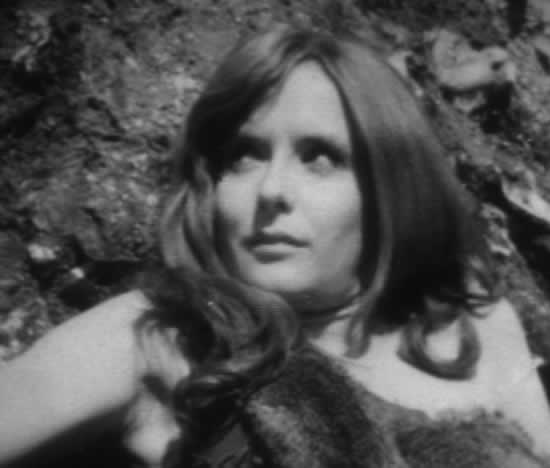
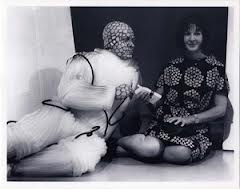
Nanina is a Savage whose life force the Elders use to make their own people more beautiful

Nanina is a Savage whose life force the Elders use to make their own people more beautiful

Whilst initially impressed by the Elders’ “vast scientific research” and their race of “great intelligence”, the Doctor soon became suspicious and had an uncomfortable feeling about this  place which otherwise evidenced a greatly advanced society.  On coming upon one of the Savages in the Elders’ facility the Doctor was quickly cognisant of what was occurring.  The Elders had “discovered a way of extracting life’s force from human beings, and absorbing it into themselves, leaving the victim, as you see, almost dead”.

The Elders escorting Nanina from their laboratory following a transference

The Elders escorting Nanina from their laboratory following a transference

Once aware of the horrors that were perpetrated against the Savages, the Doctor was quick to condemn the travesty.  In doing so, however, he found himself an unwilling participant in the Elders’ immoral “medical” procedure.  The Doctor’s powerful conversation with the Elder leader, Jano, is worthy of quoting verbatim.

JANO:  We do not understand you, Doctor. You have accepted our honours gladly, how can you condemn this great artistic and scientific civilisation because of a few wretched barbarians?

DOCTOR: So your rewards are only for the people that agree with you ?

JANO: No. No, of course not.  But if you are going to oppose us.

DOCTOR: Oppose you? Indeed I am going to oppose you, just in the same way that I oppose the Daleks or any other menace to common humanity.

JANO: I am sorry you take this attitude, Doctor.  It is most unscientific.  You are standing in the way of human progress.

DOCTOR: Human progress, sir?  How dare you call your treatment of these people progress!

JANO: They are hardly people, Doctor.  They are not like us.

DOCTOR: I fail to see the difference.

JANO: Do you not realise that all progress is based on exploitation.

DOCTOR: Exploitation indeed!  This, sir, is protracted murder!

JANO: We have achieved a very great deal merely by the sacrifice of a few savages.

DOCTOR: The sacrifice of even one soul is far too great!  You must put an end to this inhuman practice.

JANO: You leave me no choice.  Take him away, Captain.  And tell Senta that we have an emergency.  I shall be sending him special instructions.

The Doctor is placed on a gurney and strapped down.  Wheeled into the vaporization unit, the Doctor undergoes transference.  This procedure is considered by the Elders to be the most impressive ever undertaken because no person of such high intellect has previously been subjected to it. The Doctor is rendered unconscious and upon waking he is weak, groggy and disorientated.  He is unable to speak for the rest of the episode.

The Doctor is an unwilling donor in the Elders' life force extraction

The Doctor is an unwilling donor in the Elders’ life force extraction

Given the unique nature of the Doctor’s transference the Elder leader, Jano, volunteers to be the recipient of the Doctor’s life force. Unbeknownst to all, Jano receives more than he bargained for.  Perhaps because of the Doctor’s non-human DNA, Jano develops a conscience and the speech mannerisms of the Doctor. Rob Shearman argues in Running Through Corridors that this was a ploy by the Doctor Who production team to see if the Doctor could be performed by someone other than William Hartnell.  In my review of The Celestial Toymaker I noted that Hartnell was lucky to have escaped the chop during that production run.  Shearman goes on to state that Frederick Jaeger, the actor who played Jano, was unsuccessful in pulling it off.  Had he done so, and replaced Hartnell, then the series is unlikely to have lasted more than a short period of time.  It was the radical reworking of the title character in the form of Patrick Troughton, Shearman argues, that secured Doctor Who’s future.

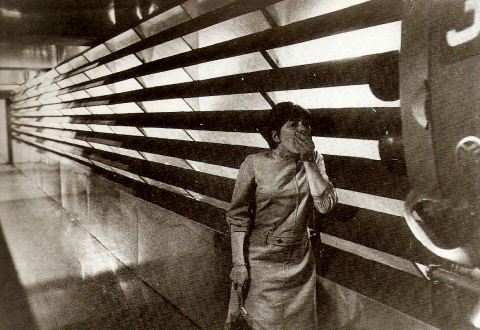
Dodo in the tunnels of the Elders' city

Dodo in the tunnels of the Elders’ city

It is the emergence of Jano’s conscience that facilitates his treason against the Elders and support of the Doctor, his companions and the Savages in the destruction of the Elders’ scientific equipment.  The Doctor’s acquiescence to the wilful destruction evidences a distinct change to his previous “no interference” policy.  The Doctor is changing history and quite proudly doing so.  The devastation of the equipment is undertaken in a most luddite like manner and is perhaps a hint that this serial is just as much about the perils of technology, and its effect upon the working classes, as it is about issues pertaining to racism or eugenics. Given that the writer, Ian Sturt Black, died in 1997 we are unlikely to ever know for sure.

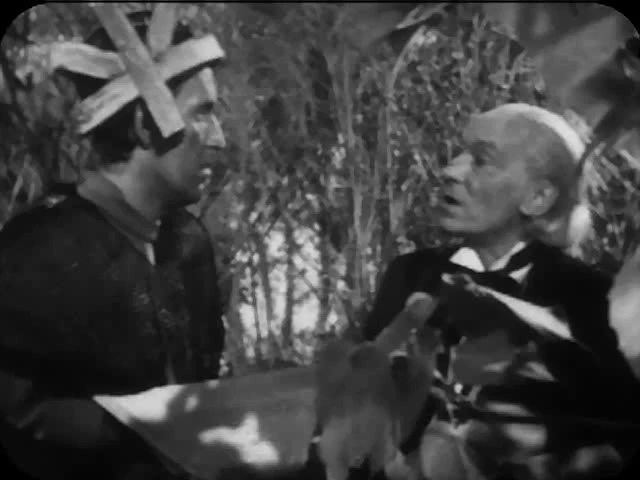
The Doctor and Exorse, one of the Elders. Note Exorse's less than flattering head gear

The Doctor and Exorse, one of the Elders. Note Exorse’s less than flattering head gear

It has been argued that The Savages is essentially the same story as The Ark. Both involve a society residing in an artificial environment in which one group oppresses the other.  There is no logical basis for this discrimination and in both serials the oppressed rise up and usurp their overlords.  Both end with the need for co-operation between the former enemies.  When reviewing The Ark I noted that there was no guarantee that the Monoids would accept the Guardians’ proposals for peace.  In The Savages, however, peace is assured by the intervention of an independent third party as mediator.  Much to Steven’s  dismay, the Doctor volunteered him to remain and facilitate the transformation to a fair and just society. Although initially hesitant, Steven quickly accepts the challenge and the Doctor and Dodo depart to the Tardis. Although Steven’s retreat  is only slightly less hasty than Vicki’s, at least he is not the victim of a quick romance and marriage.  As our next serial, The War Machines, will show, there are a lot worse companion exits to come.
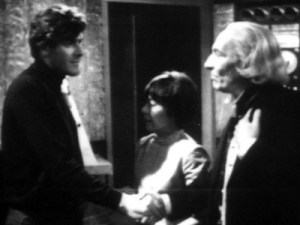
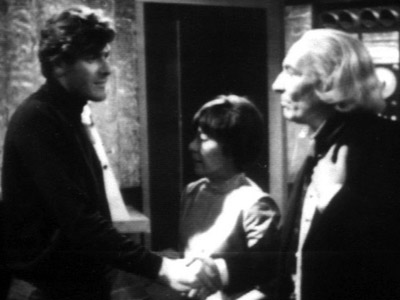
The Doctor says farewell to Steven as the distressed Dodo looks on

The Doctor says farewell to Steven as the distressed Dodo looks on

For the record, The Savages is the first serial to not have its episodes individually titled. Henceforth the viewers are better able to know when a serial starts and finishes.  Unfortunately for diehard fans of the series it also means that there will no longer be any arguments on what the serial’s correct title is! A sign of the more innocent times of the 1960s can be seen in the Doctor’s unique calculating apparatus – a Reacting Vibrator.  Is it any wonder that it was never seen or heard of again. This serial is also unique in that there are absolutely no monsters.  The inhumanity of humans to their own kind is monstrous enough. The four episodes of The Savages are among the 106 episodes that are no longer held in the BBC archives.  This marathon was undertaken by viewing Loose Cannon’s excellent reconstructions.

The Doctor and his strangely named RV - Reacting Vibrator.  Is it any wonder that it was never seen or heard of again?

The Doctor and his strangely named RV – Reacting Vibrator. Is it any wonder that it was never seen or heard of again?

Loose Cannon's VHS Cover art for their The Savages reconstructions.  The Savages was originally broadcast in the UK between 28th May and 18th June 1966

Loose Cannon’s VHS Cover art for their The Savages reconstructions. The Savages was originally broadcast in the UK between 28th May and 18th June 1966

Vivien Fleming

©Vivien Fleming, 2013.

REFERENCE:

Robert Shearman and Toby Hadoke, Running Through Corridors.  Rob and Toby’s Marathon Watch of Doctor Who (Mad Norwegian Press, Des Moines, Iowa: 2011),
The Celestial Toymaker – Loose Cannon Reconstructions

Standard

Image

Episode 4 of The Celestial Toymaker is available on the Lost in Time DVD.  For the purposes of this marathon I viewed Loose Cannon’s reconstructions of episodes 1, 2 and 3, and the BBC produced DVD for episode 4.

Loose Cannon’s The Celestial Toymaker, Episode 1 Part 1

Loose Cannon’s The Celestial Toymaker, Episode 1 Part 2

Loose Cannon’s The Celestial Toymaker, Episode 2 Part 1

Loose Cannon’s The Celestial Toymaker, Episode 2 Part 2

Loose Cannon’s The Celestial Toymaker, Episode 3 Part 1

Loose Cannon’s The Celestial Toymaker, Episode 3 Part 2

Episode 4 of The Celestial Toymaker is included in the Lost in Time triple DVD set. The Celestial Toymaker was originally broadcast in the UK between 2nd April and 23rd April 1966

Episode 4 of The Celestial Toymaker is included in the Lost in Time triple DVD set. The Celestial Toymaker was originally broadcast in the UK between 2nd April and 23rd April 1966

The Celestial Toymaker

Standard

Image

After the delight of watching a complete story on DVD for the first time in what seemed like an eternity, it was back to reconstructions for episodes one, two and three of The Celestial Toymaker.  Episode four is in the BBC Archives and was released on the Lost in Time DVD. This is perhaps an opportune time to discuss the incredible work done by Loose Cannon in reconstructing lost episodes of Doctor Who. Started in 1997 by Rick Brindell, Loose Cannon  Productions is a team of six very talented Doctor Who aficionados who have devoted their considerable energies to reconstructing lost episodes.  Some of their work, such as The Celestial Toymaker, could be more accurately described as a recreation because of the specifically created material contained within.  There being no telesnaps of The Celestial Toymaker missing episodes, Loose Cannon utilized authentic photos and screen grabs from the surviving episode four.  Large sections have been cleverly recreated such as Steven’s game of blind man’s bluff.  Here photos of a man hopping from block to block have been reimaged to appear as Steven.  It’s particularly well done and provides the viewer with a sense that they’re watching a much more animated production.  The use of extensive captions scrolling across the bottom of the screen provide a running commentary of the action and alerts the viewer to activity that still photos alone could not convey.

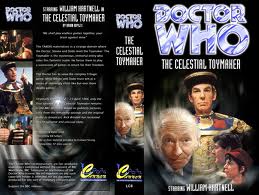
The Cover for Loose Cannon's The Celestial Toymaker.  Reproductions are only available on VHS tapes, although they can be viewed on YouTube.  Loose Cannon does not sell or profit financially from the sale of their reconstructions

The Cover for Loose Cannon’s The Celestial Toymaker. Reproductions are only available on VHS tapes, although they can be viewed on YouTube. Loose Cannon does not sell or profit financially from the sale of their reconstructions

Until the recovery of episode four and its release on video in 1991, The Celestial Toymaker had been held in generally high regard by Doctor Who fandom.   Based on the recollections of those who originally viewed the serial in 1966, The Target Books novelization and the audio soundtrack,  the serial had something of a mystique about it.  Sadly, once episode four was viewed opinion took a downward spiral.  This is unfortunate as I found the story very engaging and fascinating.  The concept of a world of make believe in which the characters are compelled to participate in childish games in order to retrieve the Tardis is both sinister and surreal. That I’m a great fan of the Second Doctor’s The Mind Robber probably evidences my idiosyncratic tendencies.  Both serials have a similar edge about them.

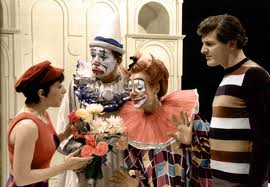
At last a story with some colour photographs!  The Toymaker, clowns and the Doctor

At last a story with some colour photographs! The Toymaker, clowns and the Doctor

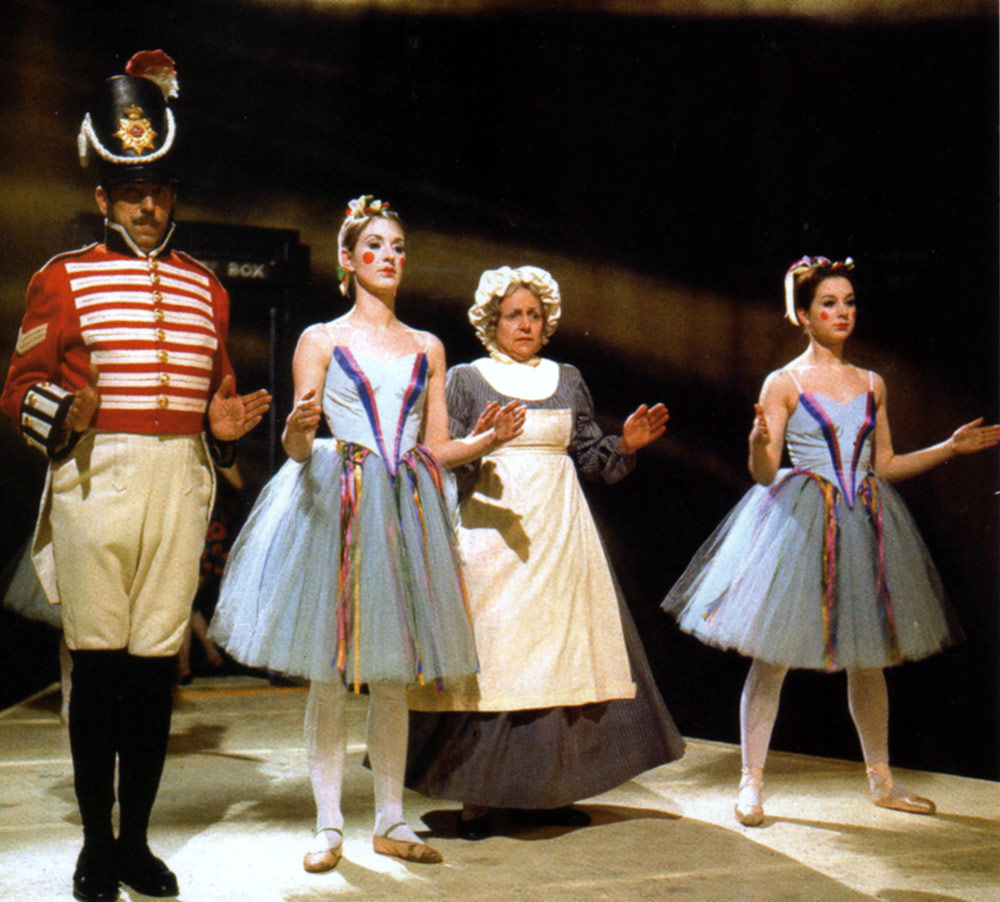
Ballerinas block the companions path

Ballerinas block the companions path

The Celestial Toymaker had been commissioned by outgoing  producer John Wiles who had been frustrated by William Hartnell’s increasingly petulant behaviour. It had been his intention to write Hartnell out of Doctor Who and in doing so conceived of a plot line in which the Doctor would change his appearance.  Wiles’ plan to replace the lead character was vetoed and the new producer, Innes Lloyd, was compelled to retain Hartnell. Much of the storyline remained, however, with Hartnell absent from episodes two and three.  It appears that Hartnell had been sent away on holidays. In About Time 1, Tat Wood and Lawrence Miles argue that “from now on … Hartnell is on borrowed time”.

Tat Wood & Lawrence Miles About Time 1.  The Unauthorized Guide to Doctor Who 1963-1966 Seasons 1 to 3

Tat Wood & Lawrence Miles’ About Time 1. The Unauthorized Guide to Doctor Who 1963-1966 Seasons 1 to 3

Hartnell’s absence from half of the story was achieved by the ingenious ploy of making the Doctor firstly invisible, and then mute.  This required only the pre-recording of a few lines of script, the use of a hand double, and some very clever special effects for the mid 1960s. The Doctor is in battle with the Toymaker, an evil immortal who finds great joy in condemning others to a lifetime of playing puerile children’s games for his own gratification.  Even with the control of others so firmly in his grasp, the Toymaker is still bored with this dolls’ house existence.  He will not stop, however, as being vain and indignant he never likes to lose.   The Doctor is compelled to play a game of trilogic, a puzzle in which the ten pieces must be moved and restacked in exactly the correct 1023 moves.  Annoyed by the Doctor’s presence the Toymaker makes him incorporeal, leaving only his right hand visible. Not satisfied by the Doctor’s invisibility, the Toymaker then makes him mute. It is in this state that the Doctor stays until he is one move away from winning the game in episode four.

The Toymaker finds the Doctor's presence intolerable

The Toymaker finds the Doctor’s presence intolerable

The sergeant, cook and ballerinas

The sergeant, cook and ballerinas

Meanwhile the Doctor’s companions, Steven and Dodo, are engaged in a surreal world of children’s games with clowns, playing cards, ballerinas, a cook, a sergeant, and a bratty school boy. None of the characters are real, however distancing herself emotionally from them is very difficult for Dodo. At the end of each episode a riddle is flashed onto the screen, the answer to which will guide Steven and Dodo in the successful completion of their tasks.  The Tardis has been taken by the Toymaker and to facilitate its return the companions must not only win the games, but do so prior to the Doctor completing his 1023 move game.

The Toymaker with a robot with a TV in its stomach

The Toymaker with a robot with a TV in its stomach

Dodo, Steven and the clowns

Dodo, Steven and the clowns

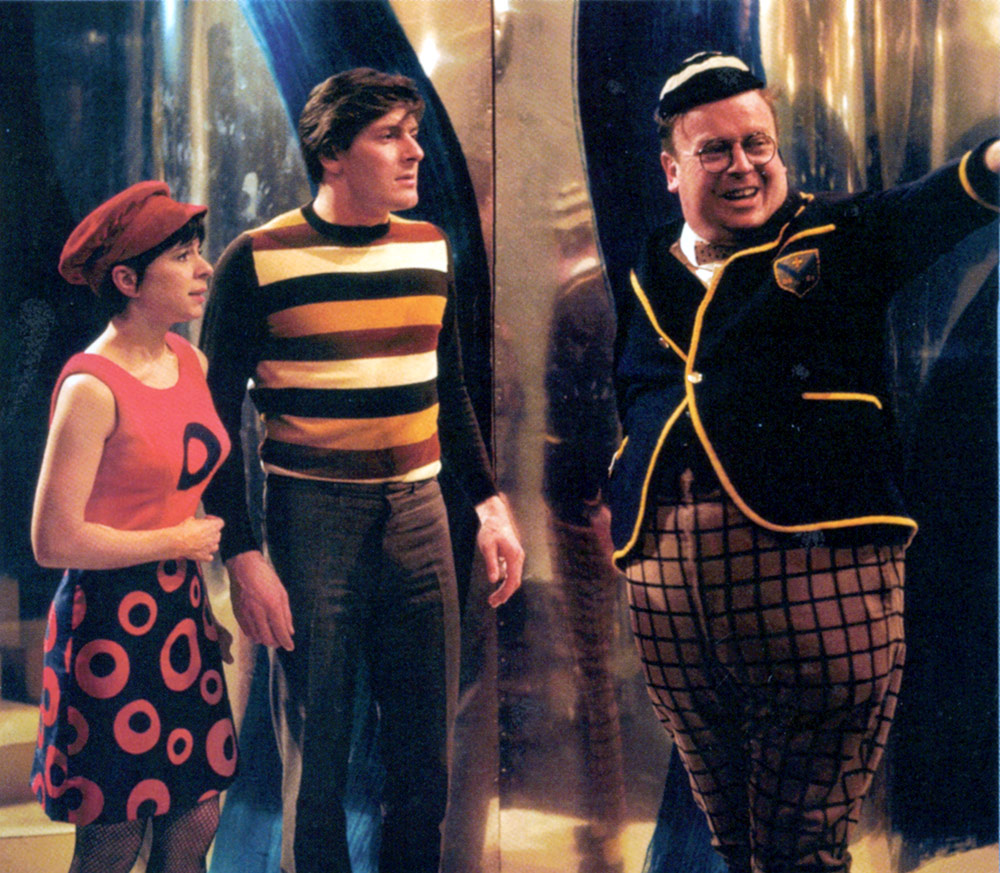
The particularly belligerent Steven and the childlike Dodo play blind man’s bluff,  musical chairs, avoid the dolls, find the key and a human board game, all with sinister obstacles. Sitting on the wrong chair, for example, may result in you being frozen solid or melted.  To fall from a space in the board game sees you electrocuted, and being caught by a ballerina results in you perpetually dancing.  Needless to say, our heroes are victorious . The Doctor beats the Toymaker by bluff and cunning and with their Tardis returned, the crew retire to it.  Having pocketed some hard lollies from Cyril, the superbly played “adult” school boy, Dodo shares them around.  Given that Cyril is not real, I was somewhat bemused to note that his sweet treats are.  Despite his “death” by electrocution, Cyril has the last laugh.  The Doctor breaks a tooth on the lolly, and so the scene is set for the next episode’s western shenanigans. If you’re up for a comedy musical with an extraordinarily repetitive sung narration, then join me when I next review The Gunfighters.

Dodo, Steven and Cyril the nasty "schoolboy"

Dodo, Steven and Cyril the nasty “schoolboy”

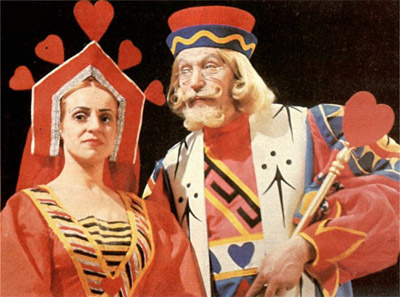
The King and Queen of Hearts

The King and Queen of Hearts

Episode 4 of The Celestial Toymaker is included in the Lost in Time triple DVD set. The Celestial Toymaker was originally broadcast in the UK between 2nd April and 23rd April 1966

Episode 4 of The Celestial Toymaker is included in the Lost in Time triple DVD set. The Celestial Toymaker was originally broadcast in the UK between 2nd April and 23rd April 1966

Vivien Fleming

©Vivien Fleming, 2013.

Reference

Tat Wood & Lawrence Miles, About Time. The Unauthorized Guide to Doctor Who. 1963-1966 Seasons 1 to 3. Mad Norweigan Press, Illinois, 2009.

The Massacre – Loose Cannon Reconstructions

Standard

Image

All four episodes of The Massacre were junked by the BBC and to date no copies have been returned to the BBC Archives. For the purposes of this marathon I viewed the Loose Cannon reconstructions, links to which are provided below for your viewing pleasure. Please note that none of the cliff-hangers were reprised in the following episodes so don’t worry, you haven’t chosen the wrong link!

The Massacre was originally broadcast in the UK between 5th February and 26th February 1966.

Loose Cannon’s The Massacre, episode 1 part 1

Loose Cannon’s The Massacre, episode 1 part 2

Loose Cannon’s The Massacre, episode 2 part 1

Loose Cannon’s The Massacre, episode 2 part 2

Loose Cannon’s The Massacre, episode 3 part 1

Loose Cannon’s The Massacre, episode 3 part 2

Loose Cannon’s The Massacre, episode 4 part 1

Loose Cannon’s The Massacre, episode 4 part 2

The Daleks’ Master Plan – Loose Cannon Reconstructions Episodes 9, 11 and 12

Standard

Image

Loose Cannon’s Daleks’ Master Plan, Episode 9 Part 1

Loose Cannon’s Daleks’ Master Plan, Episode 9 Part 2

Loose Cannon’s Daleks’ Master Plan, Episode 11 Part 1

Loose Cannon’s Daleks’ Master Plan, Episode 11 Part 2

Loose Cannon’s Daleks’ Master Plan, Episode 12 Part 1

Loose Cannon’s Daleks’ Master Plan, Episode 12 Part 2

Episodes 2, 5 and 10 of "The Daleks' Master Plan" are included in the "Lost in Time" triple DVD set. "The Daleks' Master Plan"  was originally broadcast in the UK between 13th November 1965 and 29 January 1966.

Episodes 2, 5 and 10 of The Daleks’ Master Plan are included in the Lost in Time triple DVD set. The Daleks’ Master Plan was originally broadcast in the UK between 13th November 1965 and 29 January 1966.

The Daleks’ Master Plan – Loose Cannon Reconstructions Episodes 6, 7 and 8

Standard

Image

Loose Cannon’s The Daleks’ Master Plan, Episode 6 Part 1

Loose Cannon’s The Daleks’ Master Plan, Episode 6 Part 2

Loose Cannon’s The Daleks’ Master Plan, Episode 7 Part 1

Loose Cannon’s The Daleks’ Master Plan, Episode 7 Part 2

Loose Cannon’s The Daleks’ Master Plan, Episode 8 Part 1

Loose Cannon’s The Daleks’ Master Plan, Episode 8 Part 2

Episodes 2, 5 and 10 of "The Daleks' Master Plan" are included in the "Lost in Time" triple DVD set. "The Daleks' Master Plan"  was originally broadcast in the UK between 13th November 1965 and 29 January 1966.

Episodes 2, 5 and 10 of The Daleks’ Master Plan are included in the Lost in Time triple DVD set. The Daleks’ Master Plan was originally broadcast in the UK between 13th November 1965 and 29 January 1966.

The Daleks’ Master Plan – Loose Cannon Reconstructions Episodes 1, 3 and 4

Standard

Image

Only episodes 2, 5 and 10 of The Daleks’ Master Plan are held in the BBC archives and have been released on the Triple set DVD Lost in Time. For the purposes of my marathon I viewed the aforementioned episodes on DVD and reconstructions of the remaining episodes. Searching for the reconstructions on YouTube can be a difficult task so this and my next two posts will be devoted to providing the appropriate links. Enjoy your journey!

Loose Cannon’s The Daleks’ Master Plan, Episode 1 Part 1

Loose Cannon’s The Daleks’ Master Plan, Episode 1 Part 2

Loose Cannon’s The Daleks’ Master Plan, Episode 3 Part 1

Loose Cannon’s The Daleks’ Master Plan, Episode 3 Part 2

Loose Cannon’s The Daleks’ Master Plan, Episode 4 Part 1

Loose Cannon’s The Daleks’ Master Plan, Episode 4 Part 2

Episodes 2, 5 and 10 of "The Daleks' Master Plan" are included in the "Lost in Time" triple DVD set. "The Daleks' Master Plan"  was originally broadcast in the UK between 13th November 1965 and 29 January 1966.

Episodes 2, 5 and 10 of The Daleks’ Master Plan are included in the Lost in Time triple DVD set. The Daleks’ Master Plan was originally broadcast in the UK between 13th November 1965 and 29 January 1966.

The Myth Makers

Standard

Image

Emerging from the materialized Tardis on the plains just outside of Troy, the Doctor is mistaken for the god Zeus by the Greek warrior Achilles who is in battle with Hector, son of Trojan King Priam.  Doctor Who has entered into the legend of the Trojan War with the four part serial, The Myth Makers. Whereas Barbara had been mistaken for the reincarnation of the high priest Yetaxa by the Aztecs for wearing his bracelet, the Doctor needs don nothing to take on a deified form in Homeric Troy.  Aware that Zeus had appeared among his people in many forms, Achilles is honoured to have the god appear to him in guise of an old beggar.

Whilst initially insulted at being mistaken for a beggar, the Doctor quickly sees the benefits of his  alleged divinity and plays along. Achilles is reprimanded for not addressing the Doctor with due deference and threatened with a strike of thunderbolt if the Doctor should be hindered from returning to the Tardis.  The Tardis is my “travelling temple”, the Doctor states, “being small, it’s convenient”.

The Doctor's travelling temple - small and convenient.  This is not a shot taken from The Myth Makers. Unfortunately no telesnaps survive.

The Doctor’s travelling temple – small and convenient. This shot is not taken from The Myth Makers. Unfortunately no telesnaps survive of the four part serial.

And so the scene is set for a comedy in which the norms and conventions of Doctor Who, as laid out in the previous two years, are set aside and the Doctor shown not to be always the hero.  But before this conclusion is reached the fourth and final episode of the serial rapidly becomes a tragedy as the Doctor actively causes history to be made.  The Doctor, as you will recall, was scathingly critical of Barbara in The Aztecs when she willing accepted the divinity thrust upon her.   She was not to change one line of history, the Doctor implored Barbara, who had determined that the Aztec society should be saved from itself by the abolition of human sacrifice. How quickly the Doctor had forgotten his own advice!

Taken prisoner by the Greeks, the Doctor maintains his ruse as Zeus (I know, it’s a bad pun!) until he discovers the Tardis stolen the next morning.  Steven, dressed in Greek garb, had been taken prisoner separately from the Doctor and both men had pretended not to know each other to permit the Doctor’s continued masquerade as Zeus.  Steven is mistaken as a Trojan spy and the Greeks seek to execute him. The Doctor saves him from being killed by offering to execute him with a bolt of lightning (as Zeus) at his “temple” the following morning.  As this is clearly a ploy to enable our heroes to escape in the Tardis, the Doctor has little option other than to admit to his fraud.  Odysseus allows the Doctor and Steven to live, but only if the Doctor assists him in defeating the Trojans within two days.

The Tardis, meanwhile, has been taken into the walls of the City by another of King Priam’s sons, Paris, who presents it to his father as a gift.  Vicki has remained within the Ship tending a sprained ankle and emerges from it just prior to King Priam’s daughter, Cassandra, setting it alight as a sacrifice for the gods.  Blessed with the gift of prophesy, Cassandra has dreamt of a wooden structure left outside the city by the Greeks which once brought inside, would spill forth an army of Greeks who would decimate the City. Vicki’s miraculous appearance is seen as another sign from the gods and she is renamed Cressida by the King.

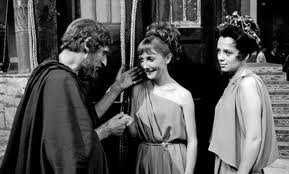
Vicki, King Priam, and Cassandra

Vicki, King Priam, and Cassandra

Cassandra, who is ridiculed by the family for her prophesies, is nonetheless correct in her visions of a Greek gift bringing forth doom. It wasn’t the Doctor’s Tardis that contained the Greeks, however, but  rather the giant wooden horse which was built upon the Doctor’s suggestion. After initially rejecting Steven’s notion of a Trojan Horse, the Doctor soon suggests the idea and within a day the phenomenally large edifice has been constructed. Finding himself inside the Trojan Horse, the Doctor panics and suggests that the whole plan is a bad idea.  It is too late to change, however, and upon being taken inside the City the Greeks emerge and slaughter the people of Troy.  Cassandra is taken prisoner and the rest of her family, save for the youngest son Troilus,  are slain.  Steven, who has masqueraded as a Greek, willingly been taken prisoner, and then escaped, is badly injured in the shoulder whilst in battle with a Trojan soldier.  Katarina, the dutiful handmaiden of Cassandra,  finds Steven and assists him to the Tardis.  Vicki, in the interim, has fallen in love with King Priam’s youngest son,  Troilus and sent him out of the City on a faux errand to avoid the impending bloodshed.  Determined to meet up with her love and assure him that she had not betrayed him, Vicki tells the Doctor privately of her intention to leave the Tardis Crew.  She pushes both Steven and Katarina into the Tardis as the Doctor dematerializes his Ship.  Vicki meets Troilus on the plain and they resolve to establish a new Troy together.

Vicki and Troilus

Vicki and Troilus

Although the Tardis is safely away from the bloodshed of Troy, all is not well for the Doctor and his crew.  Steven is critically injured, the naive Katarina believes that she’s in the afterlife, and the viewer can never again be assured that the Doctor will save the day.  In “causing” history, the Doctor has facilitated the destruction of Troy and the deaths of a multitude of people.   Having already seen in  Mission to the Unknown that the Doctor cannot be relied on materialize when he’s needed,  the Doctor’s reputation has again taken a severe blow.  With the return of his arch enemies in the next serial,  The Daleks’ Master Plan, the odds appear against the Doctor.

The Doctor causes history by suggesting that the Greeks construct the Trojan Horse

The Doctor causes history by suggesting that the Greeks construct the Trojan Horse

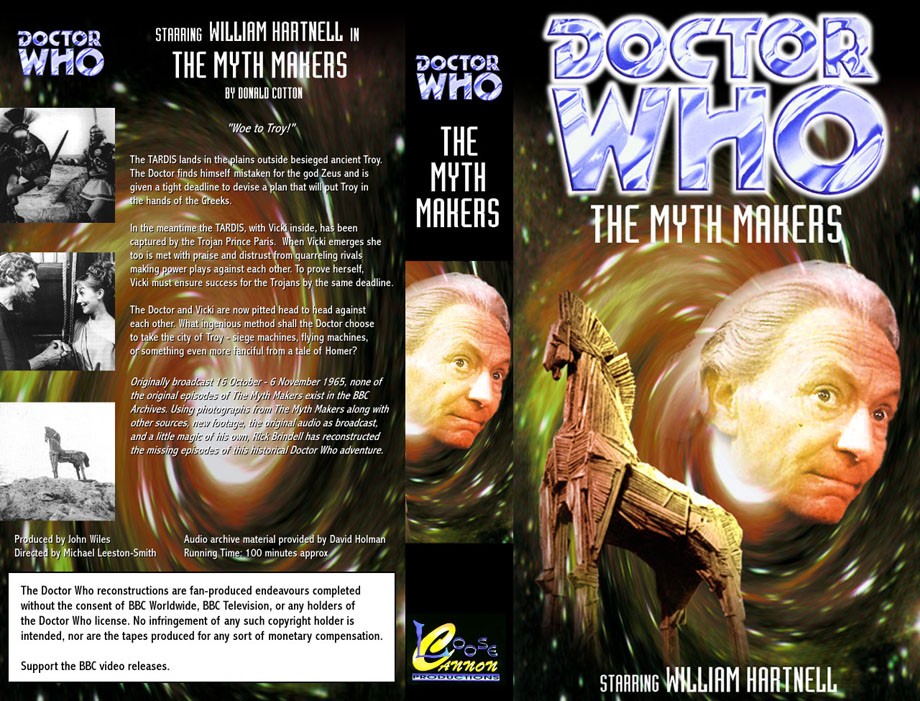
The complete four part serial of The Myth Makers is missing from the BBC archives.  For the purposes of this marathon I watched Loose Cannon’s reconstruction, the links for which are below. The Myth Makers was originally broadcast in the United Kingdom between 16th October and 6th November 1965.

Loose Cannon’s The Myth Makers – Episode 1 Part 1

Loose Cannon’s The Myth Makers – Episode 1 Part 2

Loose Cannon’s The Myth Makers – Episode 2 Part 1

Loose Cannon’s The Myth Makers – Episode 2 Part 2

Loose Cannon’s The Myth Makers – Episode 3 Part 1

Loose Cannon’s The Myth Makers – Episode 3 Part 2

Loose Cannon’s The Myth Makers – Episode 4 Part 1

Loose Cannon’s The Myth Makers – Episode 4 Part 2

Vivien Fleming

©Vivien Fleming, 2013.

Mission to the Unknown

Standard

Image

Received wisdom has it that Mission to the Unknown is the only one part serial in classic Doctor Who. Moreover it’s renown for containing absolutely none of the regular cast members or the Tardis. In today’s language it would be described as a “Doctor Lite” episode.  Such broad generalizations, however,  fail to conceptualize the serial as it was originally intended – as part one of a story arc which fans now refer to as The Daleks’ Master Plan.  Sometimes designated as a prequel to The Daleks’ Master Plan,  Phil Sandifer in his tome, Tardis Eruditorum Volume 1: William Hartnell, persuasively argues that Mission to the Unknown is actually the first part of a five part serial, part two of which was aired five weeks later.  Sandifer asserts that rather than being a single 12 part serial, The Daleks’ Master Plan is really four separate serials aired over a period of 17 weeks and encompassing both Mission to the Unknown and The Myth Makers.  But more about Sandifer’s assertions in my review of The Daleks’ Master Plan.

Tardis Eruditorum Volume 1: William Hartnell by Phil Sandifer

Tardis Eruditorum Volume 1: William Hartnell by Phil Sandifer

It is sufficient for our purposes now to limit discussions to the single 25 minute episode entitled Mission to the Unknown.  The last Doctor Who story produced by Verity Lambert,  this serial was screened the week following episode four of Galaxy 4.  Whereas the overwhelming number of Who serials start in the console room of the Tardis, Mission to the Unknown commences with a man unrecognizable to the viewer lying almost unconscious on the ground.  Around him is a jungle, or at least we believe it to be a jungle because this episode, like another 105 others of 1960’s Doctor Who, is lost.  Not only was it junked by the BBC, there are also none of John Cura’s extremely helpful telesnaps.  Instead we are left with just a handful of photos to guess what the story looked like.  This has not stopped fans making reconstructions utilizing the audio and ingenious methods of visually representing the action.  For my marathon I watched two such reconstructions – an animation produced by lifelong Who fan, Ian Levine, and the other by Loose Cannon.  Both can be accessed below for your viewing pleasure.

Ian Levine’s animation of “Mission to the Unknown” Part 1

Ian Levine’s animation of “Mission to the Unknown” Part 2

Loose Cannon’s “Mission to the Unknown” Part 1

Loose Cannon’s “Mission to the Unknown” Part 2

Mission to the Unknown  brought  a sense of  terror back to the Daleks after the somewhat unsuccessful attempt at comedy in The Chase.  Given that the Daleks were the “bread and butter” of Doctor Who it was a wise move by the production team to reaffirm their deadly disposition.  Akin to the Daleks’ home planet of Skaro, the planet Kembel, on which three space travellers are stranded, is a dangerous place. Space pilot Marc Cory asserts  that it’s the most hostile planet in the universe and is avoided by other civilizations.  Unbeknownst to the space travellers on their arrival, there is a Dalek base on Kembel.  Cory first twigs to this when he comes upon a Varga plant.  Natives of the planet Skaro, Varga plants were developed in Dalek laboratories and grown to give the Daleks extra protection.  Part animal and part vegetable, they look somewhat like a cactus and drag themselves along by their roots. The Varga plants have large thorns containing poison.  If pricked by one the human victim dies and is quickly transformed into a Varga plant. The poison in the plant attacks the victim’s brain and produces in them an overwhelming desire to kill.  They are devoid of all rational thought.

A press photo of Doctor Who producer, Verity Lambert, with one of the Daleks' allies, Malpha

A press photo of Doctor Who producer, Verity Lambert, with one of the Daleks’ allies, Malpha.  Is Verity offering the alien a cigarette?

First crew member Jeff Garvey, and then another, Gordon Lowery, are victims of the Varga thorns.  Cory, who is with the Space Security Service, and therefore “licensed to kill” (Terry Nation had been watching too much James Bond!), shoots both Garvey and Lowery dead prior to their transformation into Varga.  Both men transform into Varga after their deaths.  Shortly thereafter Cory himself is exterminated after being encircled by Daleks.  During all of these death our hero, the Doctor, is nowhere to be seen.   The man who viewers have depended on for almost two years to always save the day is either unwilling, or unable, to thwart these vicious attacks.  Moreover, the Daleks are holding a conference on Kembel with emissaries from seven outer galaxies.  They are sure to all be horrid looking aliens.  If only we could see them! The allies plan galactic domination and to conquer Mars, Venus, Jupiter and the Moon colonies.  Their first conquest  will be Earth. With a 100 per cent success rate in killing all three humans in the serial,  things look decidedly rosy for the Daleks and their allies.  These are troubling times indeed. Without the Doctor the future for the whole galaxy is bleak.

The Daleks and emissaries from the seven outer galaxies at the conference

The Daleks and emissaries from the seven outer galaxies at the conference

Vivien Fleming

©Vivien Fleming, 2013.

REFERENCE:

Phil Sandifer, Tardis Eruditorum Volume 1: William Hartnell. Self published, 2011.