Comedian, actor, and author of Moths Ate My Doctor Who Scarf, Toby Hadoke, investigates the writer of The Sensorites, Peter R. Newman, in an informative documentary in the Special Features of the Doctor Who The SensoritesDVD release. Why am I telling you this, you may ask? Because of Hadoke’s humorous manner of introducing The Sensorites. It says much about how The Sensoriteshas been viewed by the Doctor Who fan community. Here’s how Hadoke leads into the documentary.
Toby Hadoke – Stand-up comedian, actor and author of “Moths Ate My Doctor Who Scarf”.
HADOKE: The Sensorites. Poor, unloved, The Sensorites. Nestling, lost somewhere, down the back of the fans’ collective sofa. There it lies at number 7 in the first heady year of Doctor Who. It didn’t even have the decency to be wiped so we could all mourn its loss, and imagine how brilliant it must have been. It’s not a story anyone really talks about. We certainly don’t know that much about it …
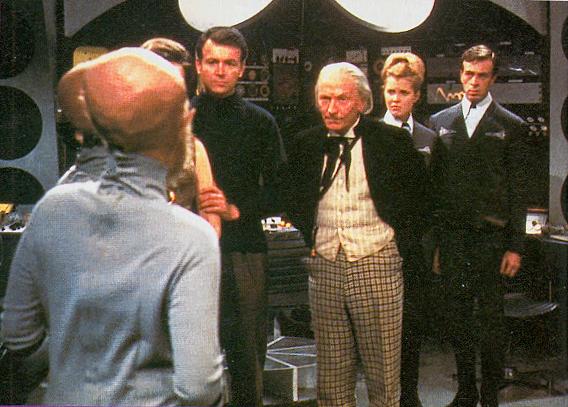
The Tardis Crew and a Sensorite
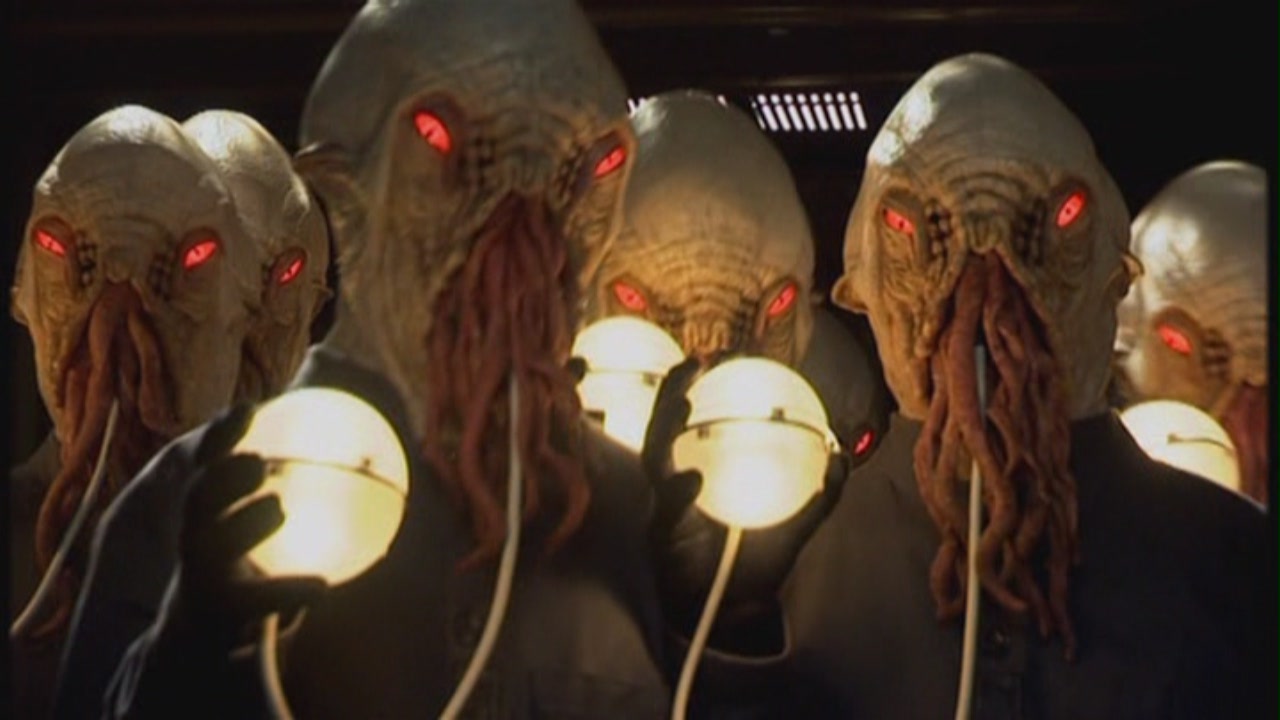
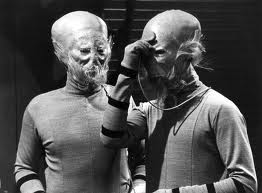
Yes, the much derided The Sensorites. In the development of Doctor Who, however, The Sensoritesis not without merit. If it were not for The Sensorites there’s a distinct possibility that one of the New Series’ favourite creatures, the Ood, may never have made their way to The Impossible Planetin 2006. Like the Ood, the peculiar looking Sensorites have a humanoid bodily appearance but with rather unusual heads. They share telepathy with the Ood and a tube that hangs from their body. In the Sensorites case there isn’t an external brain at the cord’s end, but rather a stethoscope type device which, when put to the forehead, permits their telepathic communication. Devoid of the Ood’s face tentacles, the Sensorites instead have a fine head of hair growing onwards and upwards from their chins. It’s perhaps because of the quantity of hair on the lower part of their heads that they have none left for their bald heads! Like the Ood, the Sensorites appear genderless and nameless. According to 2008’s Planet of the Ood, their home planet, the Ood-Sphere, is close by to the Sensorites’ home, the Sense-Sphere.
The near neighbours of the Sensorites, the Ood.
Tat Wood and Lawrence Miles in their well regarded series of books, About Time, describe The Sensorites as “quite possibly the most important Doctor Whostory of all”. Why? Because “the Doctor saves a planet not simply to get his Ship back but because it’s the right thing to do”. Yes, the Doctor that we know and love is beginning to develop. For once he’s the instigator of action, rather than Ian, and beginning to be less egocentric. The Doctor, quite inexplicably though, still threatens to put Ian and Barbara off the ship at the next planet because Ian reiterates the Doctor’s own admission that he can’t control the TARDIS. There’s still some way to go for the Doctor, although he’s beginning to take the well worn path that we all know.
A Sensorite using telepathy.
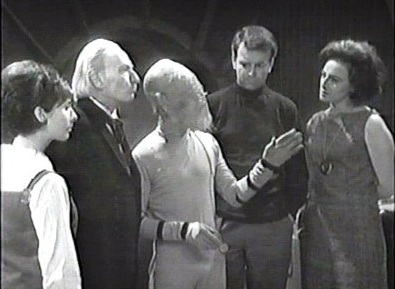
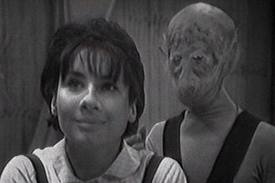
In The Sensorites Susan exhibits a strong telepathic tendency in her ability to communicate with the planet’s locals. She is a little more reminiscent of the Susan we see in An Unearthly Child and also quarrels with her grandfather for the first time. “Growing up” is how the forever teacher Barbara describes her behavior to the Doctor.
Susan and a Sensorite
The change that is taking place in the Tardis Crew is mentioned in the first episode, Strangers in Space. It also provides a convenient potted summary of the crew’s adventures in the previous 6 months since Doctor Who was first broadcast.
IAN: There’s one thing about it, Doctor. We’re certainly different from when we started out with you.
SUSAN: That’s funny. Grandfather and I were talking about that just before you came in. How you’ve both changed.
BARBARA: Well we’ve all changed.
SUSAN: Have I?
BARBARA: Yes.
DOCTOR: Yes, it all started out as a mild curiosity in a junkyard, and not it’s turned out to be quite a, quite a great spirit of adventure, don’t you think?
IAN: Yes. We’ve had some pretty rough times and even that doesn’t stop us. It’s a wonderful thing, this ship of yours, Doctor. Taken us back to pre-historic times, the Daleks.
SUSAN: Marco Polo, Marinus.
BARBARA: And the Aztecs.
The Sensorites was originally broadcast on BBC1 between 20th June and 1st August 1964.
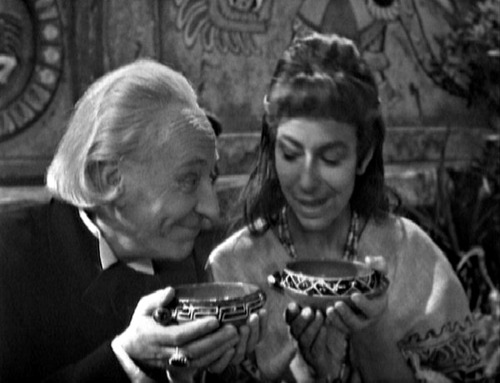
There’s probably very little that needs to be said about The Aztecs, a serial that is widely lauded by fans and critics alike as an outstanding milestone in the history of Doctor Who. It is in The Aztecs that the parameters of what New Series fans might describe as the “Wibbly Wobbly Timey Wimey … Stuff” are fleshed out. Rules are enunciated that will forever limit the Doctor and his companions’ ability to alter the course of historical events. As the Doctor states categorically to Barbara, “You can’t rewrite history. Not one line!: It’s also the serial where Barbara is mistaken for the reincarnation of the Aztec high priest, Yetaxa, and the Doctor accidently becomes engaged by sharing a cup of cocoa!
Barbara unconditionally shines in The Aztecs. When the serial commences Barbara exhibits her superb knowledge of history, finely tuned by years of secondary school teaching, when she tells Susan, almost down to the year, the age of some Aztec masks. That Susan didn’t already know this is somewhat surprising, particularly given her knowledge of the French Revolution in An Unearthly Child. Perhaps her historical knowledge is limited to her grandfather’s pet interests, for it’s in The Reign of Terror that Susan tells us that the French Revolution is the Doctor’s favourite historical period.
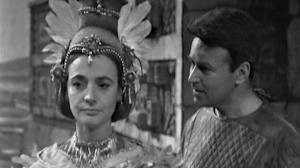
Yetaxa in all her finery.
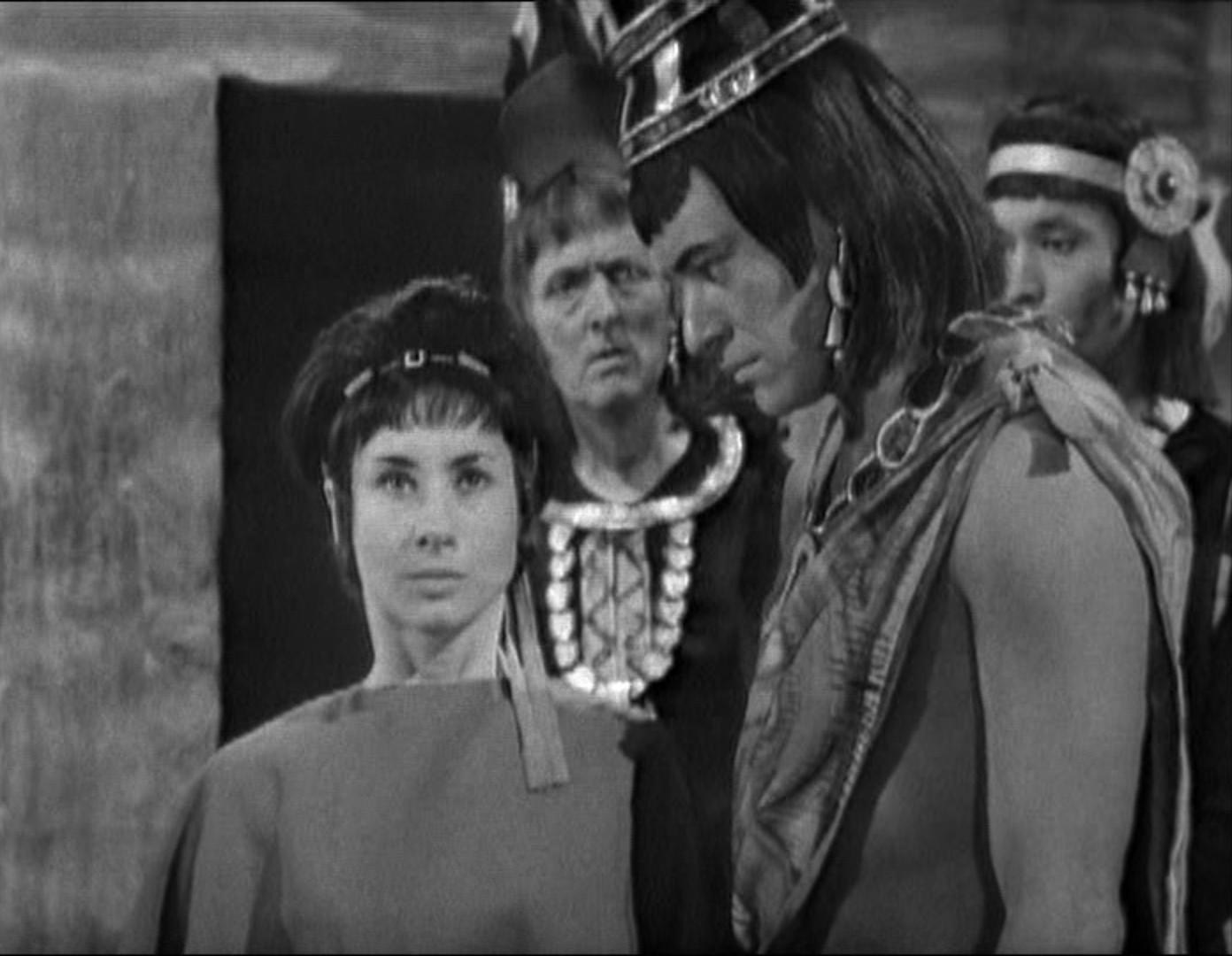
Having already displayed a keen interest in bangles during The Keys of Marinus, Barbara locates and puts on a snake bracelet. After being detained by the Aztec leaders, Barbara is quickly identified as the reincarnation of the high priest, Yetaxa. Susan asks why the Aztecs should think Barbara the reincarnation when Yetaxa was a man. Displaying again her broad knowledge, Barbara responds by advising that form doesn’t matter. It’s the wearing of the bracelet that’s all important. Barbara immediately falls into the role of a god and is resplendent in fine clothing and head gear. Her demeanor, deportment and speech is that of a being with infinite authority. When confronted with a forthcoming human sacrifice Barbara grasps the opportunity to save the Aztecs from their eventual demise. Mindful of the link between the Aztecs’ cultural practices and the destruction of their society, Barbara resolves to end the practice of human sacrifice, which she considers barbaric. She refuses to sit back and watch at the ceremony in which Ian, who has been conscripted as a warrior, must hold down the sacrificial victim. Despite the Doctor’s advice that history must never be rewritten Barbara remains resolved. The dialogue between the Doctor and Barbara is extraordinarily powerful and worth providing here verbatim.
The Doctor explains a few facts to Barbara about time travel.
DOCTOR: There’s to be a human sacrifice today at the Rain Ceremony
BARBARA: Oh, no.
DOCTOR: And you must not interfere, do you understand?
BARBARA: I can’t just sit by and watch.
DOCTOR.: No , Barbara! Ian agrees with me. He’s got to escort the victim to the altar.
BARBARA: He has to what?
DOCTOR: Yes, they’ve made him a warrior, and he’s promised me not to interfere with the sacrifice.
BARBARA: Well, they’ve made me a goddess, and I forbid it.
DOCTOR: Barbara, no!
BARBARA: There will be no sacrifice this afternoon, Doctor. Or ever again. The reincarnation of Yetaxa will prove to the people that you don’t need to sacrifice a human being in order to make it rain.
DOCTOR: Barbara, no.
BARBARA: It’s no good, Doctor, my mind’s made up. This is the beginning of the end of the Sun God.
DOCTOR: What are you talking about?
BARBARA: Don’t you see? If I could start the destruction of everything that’s evil here, then everything that is good would survive when Cortes lands.
DOCTOR: But you can’t rewrite history! Not one line!
SUSAN: Barbara, the high priests are coming.
DOCTOR: Barbara, one last appeal. What you are trying to do is utterly impossible. I know, believe me, I know.
BARBARA: Not Barbara, Yetaxa.
The Doctor is pleased to have found a source of poison
Barbara’s command not to sacrifice the victim does not save his life, however. Considering it an honour to be sacrificed, the intended victim is shamed and jumps to his death. The Doctor, naturally, quickly seizes the opportunity to chide Barbara for her actions. He explains that human sacrifice is their tradition and religion. The intended victim wanted to be offered. A distressed Barbara tells the Doctor that “she just didn’t think”, to which the Doctor promptly apologizes for being so harsh. The Doctor advises her that what happens next is up to her. Already suspected of being a false god by some, Barbara faces a challenge.
Barbara and Ian
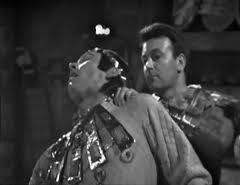
Barbara continued the façade of being the Yetaxa and amongst her other actions, put a knife to Tlotoxl’s throat in a successful endeavour to save Ian’s life. Engaged in a ritualistic fight to the death with Ian, Ixta (the combatant) had the upper hand after the Doctor had, by Ixta’s deception, given him a mild poison. Ixta had scratched Ian on the wrist with this poison during the fight, thereby rendering him groggy and increasingly incapable of fighting. When goaded by the participants to save her servant Ian, presumably by supernatural means, Barbara responded by threatening to kill Tlotoxl if Ian died. Commanding Ixta to put down his club, the combatant obeyed and the fight was over. Ixta didn’t claim victory. In response to Autloc’s subsequent comment that the people had been awaiting a miracle from the Yetaxa, Barbara pragmatically stated “Why should I use divine powers when human ability will suffice?”
Barbara holds a knife to Tlotoxl’s throat.
After outwitting a plan to have her consume poison, thereby proving her human identity, Barbara eventually admits that she is not the Yetaxa. When the Tardis Crew is eventually able to escape back into the cave and reach the safety of the Tardis, Barbara laments the failure of her mission to civilize the Aztecs. Again, it is worth quoting the Doctor and Barbara’s conversation verbatim.
BARBARA: We failed.
DOCTOR: Yes, we did. We had to.
BARBARA: What’s the point of travelling through time and space if we can’t change anything? Nothing. Tlotoxl had to win.
DOCTOR: Yes.
BARBARA: And the one man I had respect for, I deceived. Poor Autloc. I gave him false hope and in the end he lost his faith.
DOCTOR: He found another faith, a better, and that’s the good you’ve done. You failed to save a civilization, but at least you helped one man.
Tlotoxl – Evil dudes don’t come much better than this!
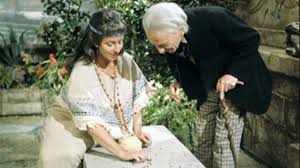
The Doctor’s character softens to a small degree in The Aztecs. For the first time we see a love interest in the form of the intelligent and resourceful Cameca. Although clearly taken by Cameca, he is not prepared to take her with him. This relationship affords several opportunities for comic relief, not least of which is when the Doctor accidently accepts Cameca’s proposal of marriage. He was not aware that sharing a cup of cocoa was an act of betrothal. Similarly, when the Doctor advises Ian that he has a fiancée, the expression on Ian’s face is priceless. Clearly the tension between Ian and the Doctor is beginning to mellow.
The Doctor and his love interest, Cameca.
That shared cup of cocoa!
Ian learns that the Doctor has a fiancee.
This mellowing of tension is also shown in the Doctor’s relations with Barbara, and particularly her eventual acknowledgement that the Doctor was correct in respect of not rewriting history. Although chiding Barbara harshly, she soon admits her own indiscretion and readily forgives him. The Doctor shows ingenuity in making the wheel, a device not yet discovered by the Aztecs. This allowed the Doctor and his companions to lift the door separating them from the Tardis.
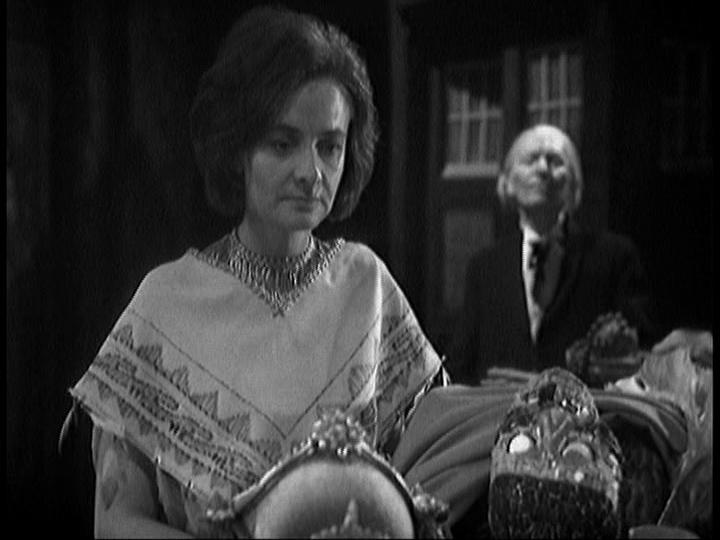
The Doctor and that not so heavy stone
Susan’s character development in The Aztecs is particularly interesting and in some respects proto-feminist. Susan was sent to a seminary type institution upon suspicions of Barbara’s divinity being raised. Yetaxa’s “handmaiden” was tutored in the skills required of a young Aztec woman. She displayed a quick aptitude to learn however, like Barbara, she was not prepared to accept the status quo in all respects. Upon being told to keep her eyes downcast when she meets her future husband, Susan asked how she would know who he is. In response she was advised that she will be told who she’ll marry. Susan was outraged and stated that she would live her life the way she wanted and chose whomever she wished to marry.
Susan, the Yetaxa’s handmaiden.
Later, it had been decided that Susan would marry the “Perfect Victim”, the person intended for the next sacrifice three days later during an eclipse. Such a person is afforded anything they wish for in the days prior to their sacrifice. Susan responded to this news with rage and stated that it’s barbaric and that they were all monsters. For her insubordination she was to be punished. That the male writer, John Lucarroti, should attribute Susan with such a strong will against this undeniably sexist practice is quite extraordinary. This serial was aired in 1964, prior to the large scale emergence of second-wave feminism. Perhaps Lucarroti had read Betty Friedan’s seminal work, The Feminine Mystique, which was first published in 1963.
Ian defeats Ixta with finger power
Ian almost succumbs to Ixta.
Ian remains the hero and “man of action” in this serial. He becomes a warrior, defeats Ixta in a trial battle through the mere use of finger pressure to the neck, and eventually propels Ixta to his death is a most heroic and ingenious manner. He moves a large boulder blocking a tunnel with little discomfort, although it’s admitted in the special features that the boulder was made from a very light material. He also knocks out a number of people. A force to be reckoned with, Ian is also becoming more tolerant of the Doctor and can have the occasional light moment with him. The Tardis Crew is not yet a totally cohesive group, however the hostility of early serials is beginning to diminish.
Ian the warrior
The Aztecs was originally broadcast in the UK between 23 May and 13 June 1964
Much ridiculed by fans, but less so than The Sensorites, the Keys of Marinus is one of two little regarded stories in Doctor Who’s first season. Written by the Daleks’ author, Terry Nation, it was hoped that the Voord, the principal baddies in the serial, would become the “next big thing”. Alas, this was not to be and unlike the Daleks whose iconic status sees them still appearing in Who 50 years later, the poor Voord have never again been spied. Although their heads were pretty cool, the wetsuit clad bodies and swimming flippers do not a great monster make!
You can’t help but love the Voord, the “next big thing” that were never seen again on Doctor Who.
Not dissimilar to season 16’s The Key to Time, this serial involves a quest by the Doctor and his companions to locate the four hidden micro-keys for the Conscience of Marinus, a machine with the power to not only judge good and evil, but also permeate the minds of citizens, eradicating all evil thoughts and intentions, and replacing them instead with only good and honourable deeds.
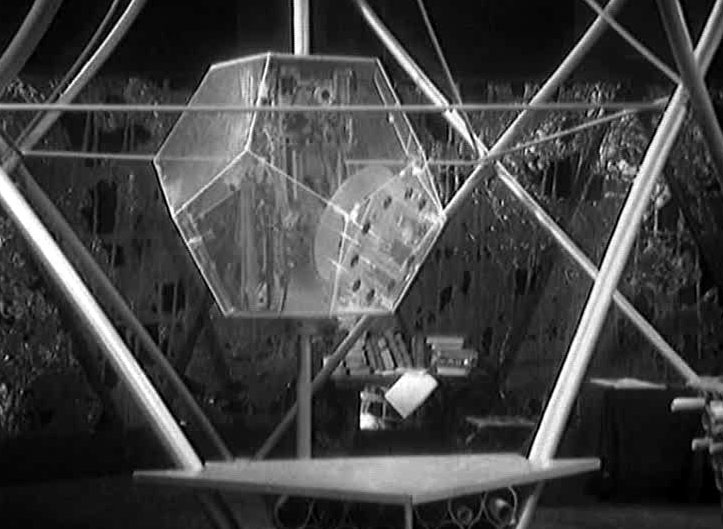
The Conscience of Marinus
Whereas the Fourth Doctor, Tom Baker, and Romana I’s quest for keys extended to six serials (five of four episodes and the last of six), the Keys of Marinus must be found in six episodes only. Episodes 1 and 6 are set in the Tower, the home of Arbitan, the keeper of the Conscience of Marinus, whereas the remaining episodes (2-5) are each set in a different city or area of the planet Marinus. The logistics of this, naturally, meant the construction of five different sets, something which invariably would have been a huge budgetary headache for the production team. The ravine over which the party, minus the Doctor, cross in episode 4, The Snows of Terror, looks suspiciously like the set used in The Ordeal, which is part 6 of The Daleks. The trusty BBC could be assured of not wasting a good set!
Sabetha, with the assistance of Susan, crosses that ravine.
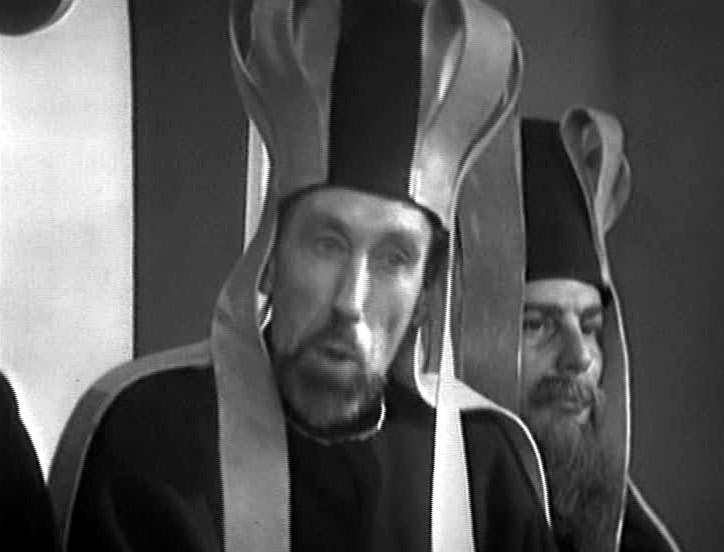
For all the criticism directed at the Keys of Marinus, which are too numerous to elucidate here, the story is not without its virtues. The Doctor, who is absent from episodes three and four because William Hartnell was on holidays, begins to protect his reluctant companions more so than in previous stories. In episode 5 particularly, Sentence of Death, the Doctor acts as Ian’s advocate at a trial in the city of Millennius. Ian has been framed for murder and the legal system operating in the city is the opposite of that which we know in the United Kingdom and its former colonies. Rather than there being a presumption of innocence, in Millennius one is guilty unless innocence can be proved beyond reasonable doubt. Any person, irrespective of legal training, can appear as advocate (the equivalent to a solicitor, barrister or attorney) for the accused. The Doctor shines in his spirited defense of Ian. A salutary moral is obviously told in respect of the rule of law.
The senior judge in the city of Millennius. All three were possessed of the most outrageous head gear.
That humans should not be ruled by machines, and that individual conscience is essential to human society, is an overarching theme of the story. The Conscience of Marinus’ destruction at the story’s end is shown as a worthy result.
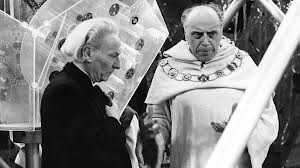
The Doctor with Arbitan, the keep of the Conscience of Marinus
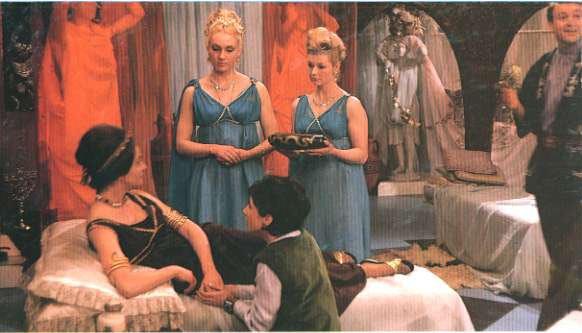
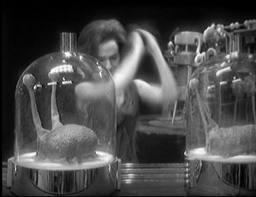
Ian remains the hero of the show which is all the more evident in that the Doctor’s absence in episodes three and four is barely noticed. Susan screams too much, particularly in part 3, The Screaming Jungle, and Barbara is initially prepared to accept the decadent wealth of the city in part 2’s The Velvet Web. Whilst Ian is the pragmatist and wonders what price you must pay for having all that you desire, he is soon won over. It is Barbara, who after a night’s rest, can see through the charade and realizes that the beauty she had previously seen, and the other members of the Tardis Crew still see, is but an optical illusion. Beautiful clothes are but rags and fine drinking ware is tin. Barbara also has the tremendous scene where she smashes the Brains of Morphoton, horrid brains in bell jars that look not dissimilar to snails’ heads. It is in the next serial, The Aztecs, that Barbara will really shine. Striking throughout is the character of Sabetha, played by Katherine Schofield. At the end I was left rather wishing that she’d joined the Tardis Crew and not gone off to start a new life with her boyfriend, the gorgeous Altos.
Barbara smashes the Brains of Morphoton
The Keys of Marinus was originally broadcast in the UK between 11th April and 16th May 1964
I’ve now finished watching the first season of Doctor Who and only have another 32 seasons to go. Watch out for reviews of “The Keys of Marinus”, “The Aztecs”, “The Sensorites” and “The Reign of Terror” over the next few days.
What news to wake up to on a fine Sunday morning. The BBC has officially announced that Matt Smith will leave Doctor Who in the Christmas special. Let the speculation begin!














 The Doctor Who Mind Robber