The TARDIS may be the most important part of the Doctor’s gadgetry but it is not the only thing he relies on. The next most important part of his arsenal is the sonic screwdriver. The primary function of the device is for the writers to avoid plot holes by giving the Doctor a way to access technologies from any time or place. Within the show it has used as a lockpick, a medical scanner, a computer hacking device, a tracker for alien life and technology and a remote for other devices. The only notable weakness of the sonic screwdriver is it’s inability to manipulate wooden devices.
Initially use of the device was sporadic, first appearing during the era…
Welcome to our “Chook of the Week”. Our first winner is a fine specimen known as the Third Doctor. Displaying a superior plumage of white feathers, The Third Doctor is a mix of White Silky and commercial White Leghorn. When combed and coiffured with skill, the Third Doctor’s mane of feathers can take on a decidedly bouffant style. Strong willed and critical of authority, the Third Doctor chooses to crow whenever and wherever he desires. Other poultry take glee in attempting to identify the source and mimic the sound of his peculiar crowing diction.
At last I’m up to date with my reviews. A quick trip to Sydney, a funeral, and a visit by a friend resulted in my reviews lagging way behind my viewing. Henceforth I can view and review reasonably contemporaneously. As soon as my eldest son finishes watching the Special Edition of Inferno(I train my children well) it’s back to season 3 and a reconstruction of Mission to the Unknown.
If beauty is in the eye of the beholder then no better example could be found than in the premiere story of Doctor Who’s third season, Galaxy 4. It’s at this stage that you’d anticipate me summarizing the moral thesis of the story as my opening catch phrase alludes to. Not so! The beauty to which I refer bears no relationship to the relative physical characteristics of the Drahvins and the Rills, but rather to the viewer’s appreciation of the serial. In their book Running Through Corridors, Rob Shearman and Toby Hadoke approach a marathon watch of Doctor Who with the intention of finding the good in each and every story – even the downright shockers. Despite their best endeavours, neither Shearman or Hadoke could find much to endear them to Galaxy 4. I beg to differ, and as such am perhaps one of the few fans who genuinely love the serial.
Even Rob Shearman and Toby Hadoke had difficulty finding the good in Galaxy 4
It’s probably because I’m a woman that I find the concept of a female dominated alien race somewhat appealing. The Drahvins, natives of the planet Drahva in Galaxy 4, are a most practical bunch. When the Doctor and Steven ask the leader, Maaga, if all their race are female, Maaga’s response if most abrupt – “Oh, we have a small number of men, as many as we need. The rest we kill. They consume valuable food and fulfil no particular function.” I almost squeal with delight whenever I watch that segment, but please don’t tell my sons. They’ll probably find it hard to sleep at night! The Doctor responds cheekily by saying, “Yours must be a very interesting civilisation”. If ever there was an understatement, that’s one. When Maaga later offers to free Steven if he takes the Drahvins off the planet in his ship, his retort is classic. “Oh, yes, yes. But even assuming I believed you, that on the way you didn’t decide that I was eating too much food, there is a snag … I can’t operate it”, he states. There are no flies on Steven. He’s a bright one!
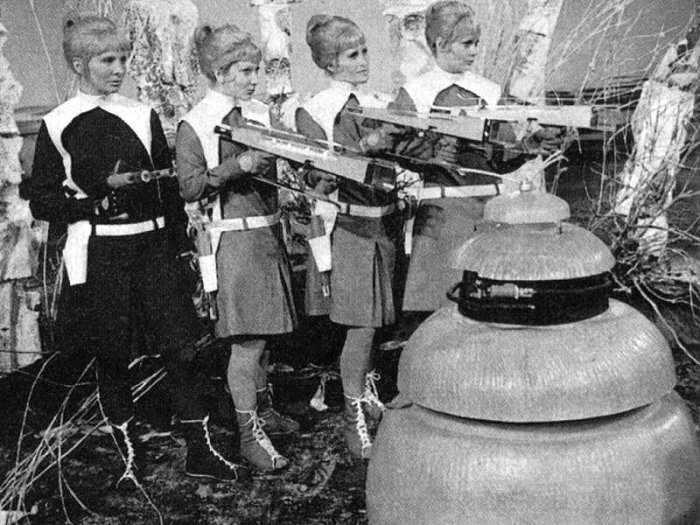
The Drahvins with a Chumbley
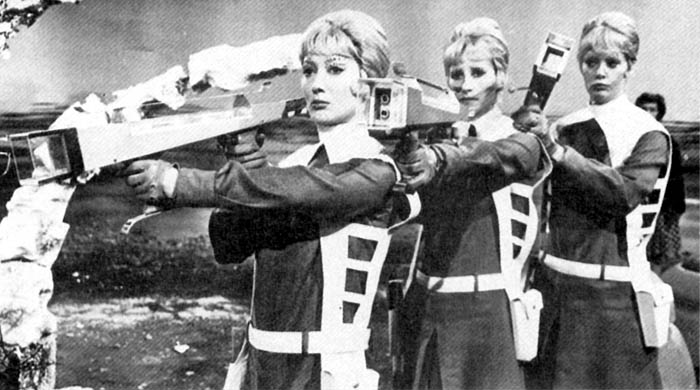
The Drahvins that the Doctor and his companions meet are small in number and comprise only four in total. All have long blonde hair and wear unflattering green and white uniforms. All but the leader, Maaga, are drones. Bred purely as soldiers, the three are without intelligence and cultivated in test tubes. Whilst Maaga is a living being, she considers the soldiers to be mere products, and inferior ones at that. “Grown for a purpose and capable of nothing more”, she says, “To fight. To Kill”. The soldiers are programmed to obey all orders on command and to offer themselves up to death if they fail in their mission. Like the Tribe of Gum in An Unearthly Child, the Drahvins cannot understand human kindness and why a person might sacrifice their life for another. While Maaga eats real food, the soldiers subsist on tablets only. Steven endeavours to reason with one of the Drahvin and convince her of the inequality of this class based system. Before he can succeed Maaga enters the room and stops the conversation.
The Drahvins in colour. Their dresses were actually green.
The soldiers’ lack of intelligence is the cause of constant frustration to Maaga. Charged with finding a new planet for colonization, she was lumbered with soldiers to assist her. All thinking is left to her and the drones lack even the intellect to imagine the Rills dying on a white exploding planet. Death and destruction are things Maaga intellectually craves, but killing is undertaken in an automated and routine manner by the drones. They are incapable of enjoying the process of killing. Maaga is one sick and twisted psychotic individual!
The Drahvins in combat mode
It is little wonder that the writer, William Emms, saw fit to have the Drahvins all killed at the story’s end. They’re not nice people, even if the thought of a planet with limited men might appear momentarily enticing. Both the Doctor and the Rills’ failure to rescue the Drahvins, although logical, is morally troublesome. The Rills had long offered to transport the Drahvins home, notwithstanding their longstanding aggression against them. Earlier in the serial the Doctor had even stated to Maaga that neither he, nor his companions, kill. And yet, the Doctor leaves the Drahvins on the planet knowing full well that within minutes it will explode. Compare this, for a moment, with the Fourth Doctor’s classic moral dilemma in The Genesis of the Daleks. The Doctor is afforded the opportunity to destroy the Daleks forever, and yet he hesitates. Does he have the right to commit genocide, even though the Daleks are evil reincarnate and will cause death and suffering to millions of people? Sarah Jane certainly considers it morally acceptable but the Doctor is not so sure. By the Seventh Doctor’s tenure, however, such moral concerns appear far from his mind when Skaro is seemingly destroyed in Remembrance of the Daleks.
Is it morally correct to kill the Drahvins?
That Galaxy 4 featured humans produced by test tube, 13 years prior the first in vitro fertilisation (IVF) birth in 1978, is quite marvellous. The story canvassed the moral issue of cloning three decades before the birth of Dolly the Sheep in 1996. Future science, rather than science fiction, was at the core.
Maaga, the Drahvin leader, isn’t a clone
I opened with the phrase “Beauty is in the eye of the beholder”. This, undoubtedly, was the major theme of the writer, William Emms. The beautiful people in the serial, the Drahvins, are actually morally bankrupt and psychotically evil. Given their blonde hair, I suspect the Drahvins to be modelled on the Nazis. Not unlike Hitler, their leader Maaga rallied her troops’ support by openly lying about the “enemy”. The Nazis lead the German people to incorrectly believe that the Jewish people were the cause of Germany’s economic woes. Maaga convinced her people that the Rills had killed a Drahvin soldier and were necessarily evil. Maaga had actually killed the soldier herself.
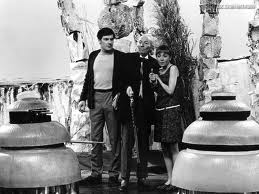
Steven, the Doctor and Vicki encounter Chumblies for the first time
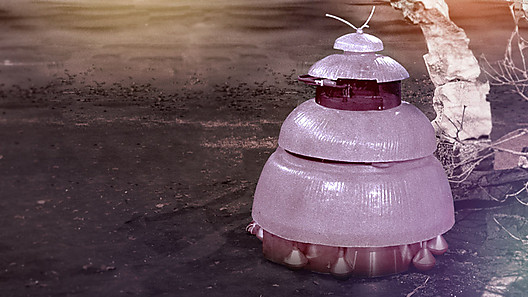
The Rills are the “ugly” of the story and even consider themselves to be physically unbearable to all but their own kind. They are great big green blobs that can only breathe ammonia. They are, however, the good and the just of the story. Notwithstanding having their spacecraft shot down by the Drahvins, they offer assistance to the stranded women when both peoples are marooned on the planet. They continue to offer the hand of friendship almost to the end. They immediately forgive the Doctor for sabotaging their equipment and attend to the repair without seeking the Doctor’s assistance. Like the Sensorites, the Rill communicate telepathically. Having no vocal chords they speak through the robotic Chumblies.
A Chumbley with four Rills in the background
I cannot end this review without mention of Chumblies. I love the Chumblies. They’re cute and chumble around in a most endearing fashion. So named by Vicki for that very reason, it’s somewhat amusing that the Rills had no problem using this adopted nickname when referring to their robotic assistants. Surely they already had a name for them! “Bring back the Chumblies” I say to BBC Wales, and while you’re at it, a big stuffed Chumbley would look rather nice on my bed!
Maaga, Steven and Vicki
Only episode three of Galaxy 4 exists in its entirety, having been rediscovered in 2011. A reconstruction of the missing story, using off-screen stills, audio recordings and animation, together with the recently recovered episode three, was included in the special features of The Aztecs Special Edition released in 2013.
The Doctor and Vicki realize that the Chumbley poses no threat
A reconstruction of “Galaxy 4”, including the complete episode three, is included as a special feature of “The Aztecs” Special Edition DVD. “Galaxy 4” was originally broadcast in the UK between 11 September and 2 October 1965
Robert Shearman and Toby Hadoke, “Running Through Corridors. Rob and Toby’s Marathon Watch of Doctor Who” (Mad Norwegian Press, Des Moines, Iowa: 2011),
First encountered carrying a stuffed Panda called Hi Fi on the planet Mechanus, Steven Taylor was presumed dead. After assisting the Doctor, Ian, Barbara and Vicki to escape the Mechanoid City in The Chase, Steven had returned to the City to retrieve Hi Fi just as the Daleks destroyed it. It was great dismay, therefore, that the Doctor and Vicki were confronted by Steven as he stumbled into the Tardis control room before collapsing to the floor. The Tardis had just materialized in 11th Century England however Steven had stowed away in the ship, presumably whilst Vicki and the Doctor were saying their goodbyes to Ian and Barbara on Mechanus. Suffering ill effects from the Dalek blast, Steven assumed that he must have been delirious when he chased after the crew and eventually found the ship.
Vicki, Steven and the stuffed panda, Hi Fi
The spaceship pilot who had spent two years as a prisoner of the Mechanoids was now the Doctor’s latest companion. Notwithstanding his experience with space craft, Steven has clearly not seen a machine as magical as the Tardis before. He doesn’t believe it is a time-machine or that they’ve landed in the 11th Century. The Tardis’s inability to blend into its surroundings, as it was constructed to do, together with the discovery of a modern wrist watch, compounds Steven’s disbelief. Prone to speak his mind, Steven is openly dismissive of Vicki’s assertions about the ship’s capabilities and earns a quick rebuke from the Doctor for calling him “Doc”. Quickly recovering from a state of deep sleep or unconsciousness, Steven shows no ill effects from his previous deprivations on the planet Mechanus. It would not be unfair to assume that a person who had gone two years without human companionship, and has an overt attachment to a stuffed toy, may be suffering some form of psychological distress. Not unlike Vicki, who rapidly regained equilibrium following her trauma on the planet Dido, Steven is promptly able to put the past behind him, leave the panda on a chair, and embrace a new life of adventure with the Doctor.
The Doctor, Steven and the Viking helmet which isn’t a “space helmet for a cow”
The Time Meddler affords the Doctor opportunities aplenty for rollicking laughs and gratuitous violence. Upon alighting from the Tardis the Doctor examines a metal helmet with horns. Steven is less than confident with the Doctor’s assertion that he’s found a Viking helmet. Flabbergasted by his new companion’s response of “maybe” the Doctor replies, “What do you think it is? A space helmet for a cow?” Although absent from episode two (William Hartnell was on holidays) the Doctor is nonetheless seen to douse the monk with a pale of water from inside his cell. Episode three sees him poke a stick into the Monk’s back and pretend it’s a Winchester ’73. He also knocks out a Viking by hiding behind a cell door and jumping out at him.
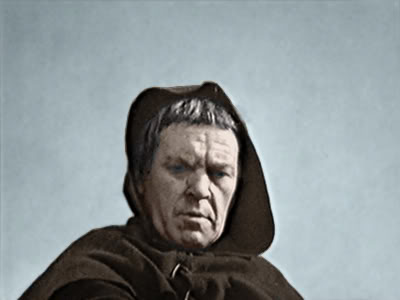
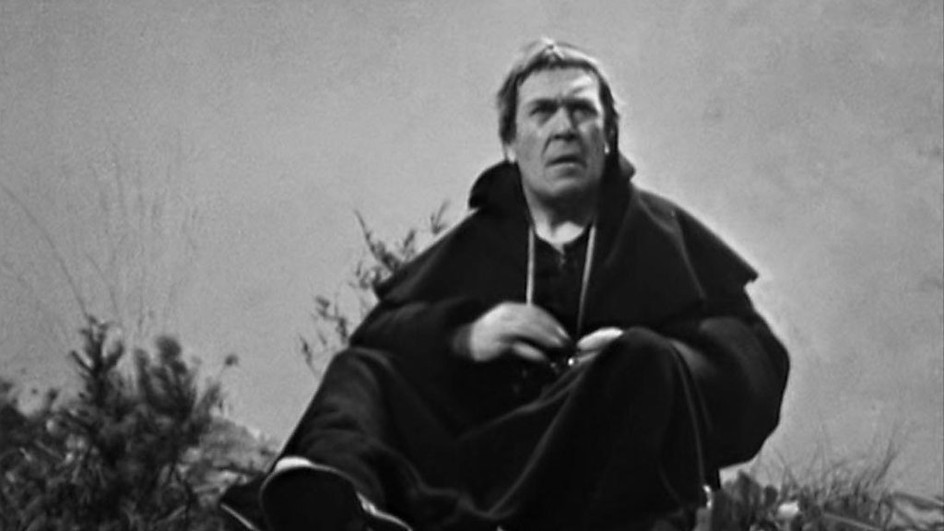
The Doctor gets an upper hand with the monk
The Time Meddler is a delightful blend of historical drama and science fiction. Hitherto, the historical dramas had been played strictly straight, even if historical accuracy was at times debateable. The Tardis crew’s arrival in the Tardis was the story’s only concession to the sci fi genre. The Time Meddler broke this mould by the insertion of another time traveller into the mix. The monk is from the Doctor’s own planet, although around 50 years after the Doctor. For the first time in Doctor Who we meet another Gallifreyan, although a name is not given to the Doctor’s planet, or his race, until the tenure of the Second Doctor. The monk’s Tardis is in the form of a sarcophagus which the Doctor disparages by claiming it is only sheer luck that the Type 4 machine fits so well into its surroundings. Almost 50 years after the monk’s quip that he couldn’t repair the camouflage unit, or chameleon circuit as it was later to become known, the Doctor’s Tardis still remains in its police box form. The monk’s Tardis is so advanced that it has automatic drift control which permits it to be suspended in space with absolute safety. The Doctor’s banter with the monk about their time machine’s respective features is not unlike a couple of rev heads discussing the relative merits of their cars!
The Vikings discuss their plans
Although the Doctor, and Vicki, maintain that history must never be changed, it’s clear from The Time Meddler that it is nonetheless possible to do. Whilst discussing the consequences of changing history, Vicki advises Steven that a person’s memories would alter the moment time has been rearranged and that history books, which had not yet been written, would be rewritten to reflect the changed history. Why you would need to rewrite a book that had never been written in the first place is a small example of flawed logic. The monk’s diary reveals that he met with Leonardo Da Vinci and discussed the principles of powered flight. He had also deposited two hundred pounds in a London bank in 1968, nipped forward two hundred years and collected a fortune in compound interest. Clearly the monk had never thought of popping forward to find the winning lotto numbers and back again in time to put his numbers in! He alludes to having provided the Britons with an anti-gravitational lift which allowed them to build Stonehenge. The monk’s audacious plan was to rewrite the course of English history by thwarting the Viking invasion. The Doctor is outraged at the monk’s “disgusting exhibition” of a plan and is determined to thwart it. Circumvent it he certainly does, by tying a piece of string around the dimensional control in the monk’s control panel, and once out of his Tardis, gently removing it. The monk’s Tardis then shrinks to a minute size, ruining it completely and preventing him access to it. The monk is stranded indefinitely in 1066.
The monk on the watch out for Vikings
A rollicking good tale, The Time Meddler was the blue print for future quasi historical adventures . The monk would soon meet the Tardis Crew again in the 12 part serial, The Daleks’ Master Plan. Unfortunately that was his last televised adventure.
The “Time Meddler” was originally broadcast in the UK between 3rd July and 24th July 1965
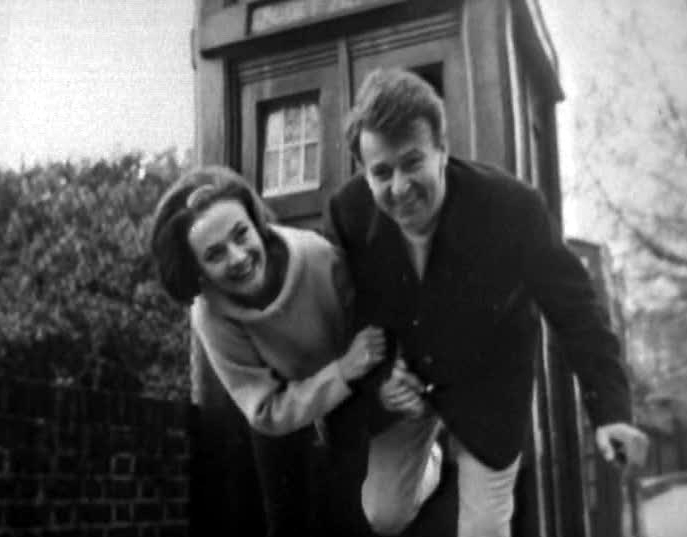
Less than 18 months after their creation, the Daleks made their third appearance as the Doctor’s arch enemies in the six part serial, The Chase. Almost universally panned in fan circles as the worst Dalek story ever, The Chase is not entirely without merit. It is in this story that Ian and Barbara leave the Tardis for the last time and return to 1965 London. Their arrival home in the Daleks’ time travelling ship is one of the most iconic and best remembered segments in Who’s history. The still photography of the teachers playfully posing against a variety of London landmarks joyfully demonstrates their relief to finally return to what passes as normality. How did they explain away their two year absence from Coal Hill School? That’s a mystery that remains unanswered.
Ian and Barbara enjoy London as they pose in front of a real Police Box. Yes, they really did exist!
Prior to their tear jerking departure from the Doctor and Vicki, Ian and Barbara were as close to home as 1966 New York. It was on the Empire State Building, in episode three, that the viewer meets the character of Morton Dill, played by Peter Purves. The viewers and the production team alike were unaware that Purves would reappear in episode six of that same serial as a stranded spaceship pilot on the planet Mechanus, named Steven Taylor. Evidencing the almost complete absence of forward planning in the Doctor Who camp, the decision to appoint a replacement for Ian and Barbara was not made until Purves impressed all concerned during his role as a naive tourist from Alabama. In a period of less than three weeks Purves went from a bit-part extra to a companion-in-waiting. It would not be until the next serial, The Time Meddler, that the character of Steven Taylor would be officially invested into the Tardis Crew. Purves was the first person to have appeared as two separate characters in the same Who serial.
Morton Dill, the dim witted hick from Alabama, investigates a Dalek on the Empire State Building
My 12 year old son considers Peter Purves to be the Doctor’s best companion solely based upon his portrayal of Morton Dill. And he wasn’t even a companion then! My son loves the Alabama imbecile and finds it hard to contain his laughter as he watches Dill’s onscreen antics. Purves’ attempt at an American accent was at least consistent in that episode, unlike the season three story, The Gunfighters, where he occasionally forgets that he’s meant to be from the USA. Moreover, we don’t have to listen to him sing in The Chase!
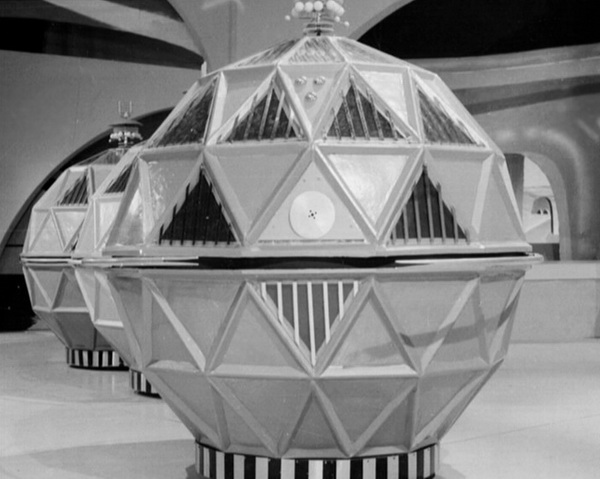
A Mechanoid. The “next big thing” that wasn’t!
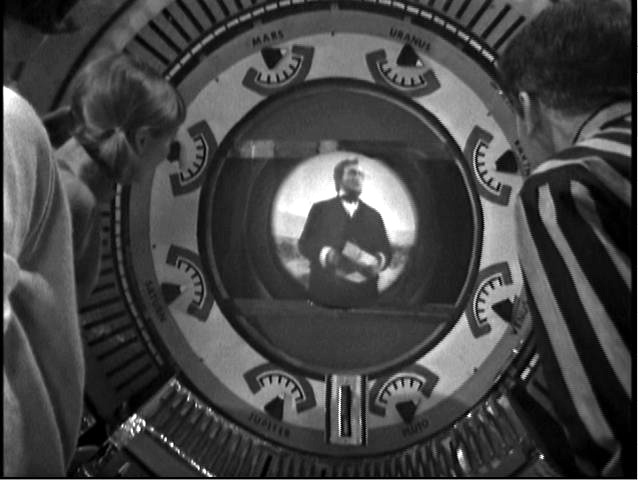
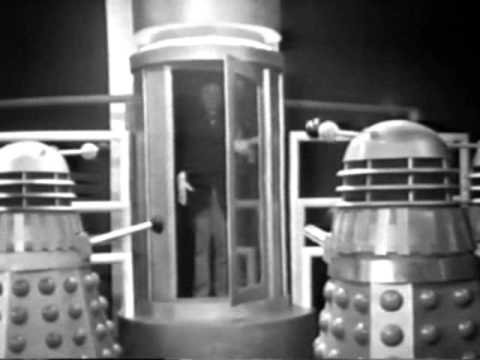
Not surprisingly, The Chase witnesses a number of firsts. There’s the first, and regrettably only, appearance of yet another “next big thing”, the Mechanoids. Their unwieldy size, slowness and limited movement undoubtedly had much to do with this. It was not for want of trying that it took almost another 18 months for Doctor Who to eventually invent a genuine contender to the Dalek popularity stakes, the Cybermen. Another first and last was the Time-and-Space Visualiser, a large disc with television monitor which was taken as a souvenir from the planet Xeros’ Space Museum. Seemingly programmed by punch cards, the Visualiser enabled the Tardis occupants to view any event in history’s past. To demonstrate the machine’s awesome powers the crew were treated to clips from Abraham Lincoln’s “Gettysburg Address”, William Shakespeare conversing with Queen Elizabeth 1, and most prestigiously for Doctor Who, the Beatles performing in 1965. The Beatles clip was no mere piece of stock footage from the BBC Archives, but a song filmed specifically for Who and also shown on Top of the Pops. The Chase is the first to feature an evil android Doctor. The serial also sees debut of the redesigned Daleks, who at last have their own time machine.
The Time-and-Space Visualiser showing Abraham Lincoln’s “Gettysburg Address”
The Daleks produce an evil android Doctor
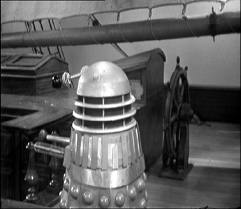
Why is it that The Chase is held in such low regard? The answer would undoubtedly vary from person to person, although the hybrid nature of the story must be a likely cause. There are so many elements thrown in together, with no satisfactory explanation why. The only plot involves the Daleks chasing the Doctor and his crew to various locations throughout the universe. The Doctor is the Daleks ultimate enemy as he thwarted their attempts to commandeer the Earth as a spaceship in The Dalek Invasion of Earth. At least in TheKeys of Marinus the crew were endeavouring to retrieve the lost keys to the Conscience of Marinus, and their adventures encompassed a series of locations and terrains on only one planet. During the course of The Chase the Doctor and his companions are variously in a Haunted House; the Mary Celeste; New York City; and the planets Aridius and Mechanus.
Daleks on the Mary Celeste
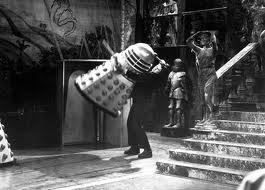
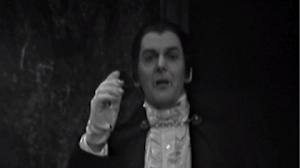
Bizarre is a less than adequate word to describe the Tardis Crew’s adventures in the Haunted House in which with a robotic Count Dracula, Frankenstein and Grey Lady reside. One is left wondering why, and whatever was Terry Nation thinking at the time. Nation would also have us believe that Daleks were the cause of the mysterious disappearance of the crew of the British-American merchant ship, the Mary Celeste, in 1872. The Daleks also had a keen interest in New York’s Empire State Building. Had the Twin Towers been built in 1965 then I’m sure Nation would have positioned them there instead. It almost seems as though Nation was giddy on the success of the Daleks and had assumed that viewers were gullible enough to accept anything thrown at them. Clearly the BBC production team agreed, at least at the time.
Frankenstein puts an end to a pesky Dalek
In retrospect, however, such criticism fails to acknowledge the sheer fun of the story. And it’s probably the gaiety of this serial which is the principal reason why The Chase is held in such high disregard. Daleks are meant to be menacing and intimidating. Throw in a mix of comedy interludes and the foreboding in which they are ordinarily met quickly evaporates. Viewers have no need for bothersome distractions of a witty nature. They just want to be terrified, even if by mid 1965 it was plainly obvious that the Doctor and his companions always triumph. The Daleks’ next appearance, in six months time, did not suffer from a similar fate. The highly regarded 12 parter, The Daleks’ Master Plan, gave the audience three solid months of terror and the first time, the death of not only one, but two companions. Hereafter the security of the Tardis Crew could never again be assured.
Dracula and Doctor Who just don’t mix
The Chase was originally broadcast in the UK between 22 May and 26 June 1965
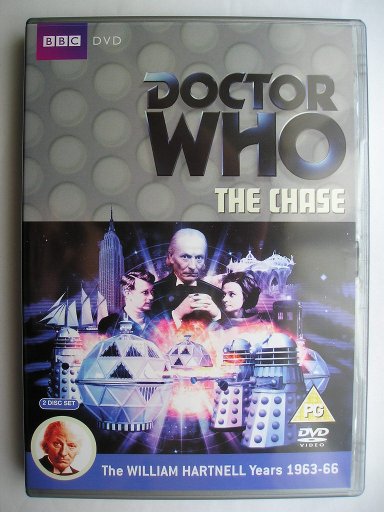
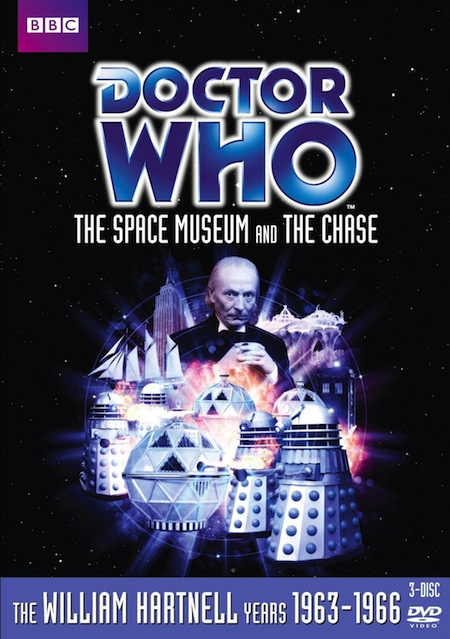
The Chase was released in a Box Set with The Space Museum entitled (you guessed it!) “The Space Museum The Chase”.
You can always be assured that Rob Shearman will give a hearty defence of any long derided Doctor Who serial. Writer of the Series One episode, Dalek, and several Big Finish audio productions, Shearman joined with Toby Hadoke, of Moths Ate My Doctor Who Scarf fame, to author Running Through Corridors: Rob and Toby’s Marathon Watch of Doctor Who. Shearman’s affection for The Space Museum is laid bare in the DVD special feature, Defending the Museum. His devotion rests on the assumption that The Space Museumis a parody of William Hartnell era Doctor Who episodes. The aggressors, the Moroks, are little more than morons who invade a planet only to turn it into a museum for their past achievements. The rebels are excruciatingly bad. Dressed in black polo neck jumpers, they look like students in a coffee bar. Vicki starts a revolution only because she’s bored and the native Xerons don’t need a great revolutionary, just a locksmith!
Writer Rob Shearman
Shearman is quick to praise episode one of The Space Museum, which he considers quite extraordinary. The story, he argues, is about inaction and how an event can be prevented once you know it’s going to happen. If this was in a theological context the argument would be about predestination and Calvinist theories of same. In the world of Doctor Who, however, does doing something really matter? In The Space Museum’s case it certainly does. Although all the motions of the Tardis Crew lead them into the very same situation, their actions have a positive effect on third parties. It is precisely because of other people’s deeds that history, for want of a better word, is changed and the Doctor and his companions are saved.
The Tardis Crew as museum exhibits
Although Shearman’s analysis is a worthy summation of the serial’s message, The Space Museumsuffers from internal contradictions which counter this. In episode four Barbara laments that the crew have been on four separate journeys involving four discrete courses, yet they all lead to this one point. The Doctor explains that their actions may have influenced others, to which Ian responds by concluding that it can be others that change the future for them. Vicki quips in with the example of a revolution. What none of the Tardis Crew seem to realize, however, is that they’ve actually changed history themselves. The Doctor made much of the loss of one of Ian’s buttons earlier in the serial and chided him for not having noticed whether the frozen Ian in the display cabinet had a lost button or not. The Doctor and his companions, after all, were all wearing the same clothes. What no one twigged to, regrettably, was that once Barbara’s cardigan had been unravelled then she was no longer identical to the cardiganed Barbara in the display case. A bite of Barbara’s cardigan by a clueless Ian, and Barbara’s homely skills in teaching Ian how to retrieve wool from a knitted garment, was all that was required to save them. Heck, who needs a revolution with an arsenal of firearms when a knitted one will do!
Ian attempts to eat Barbara’s cardigan
The Space Museum is resplendent with comic interludes, the Doctor being given the majority of them. Eccentric as always, the Doctor frequently giggles at the cleverness of his own actions. After tying up a young Xeron rebel without the victim even seeing him, the Doctor hides in the casing of a Dalek exhibit. Popping his head out of the top of the Dalek is a classic moment. When hooked to the Moroks’ thought machine he is able to outwit the truth analyser which reflects thoughts onto a television screen. When asked how he arrived on Xeron, a picture of a penny farthing is flashed onto the screen. A pod of seals is seen when the Doctor is asked where he comes from. The Doctor naturally cackles with glee.
The Doctor hides inside the casing of a Dalek exhibit
Ian is portrayed in a menacing and quite violent light in this serial. Although cheerfully playing a game of “Cowboys and Indians” after removing a ray gun from its exhibition case, Ian is soon brandishing the weapon like a true warrior. Threatening the aggressors with a gun comes easily to Ian, who astounds the viewers with his matter of fact acceptance of violence near the close of the third episode. Pointing the ray gun at the Morok leader, Ian is told by the threatened Lobos that he’d be a fool to kill him. “You will achieve nothing”, says Lobos. Ian’s reply is chilling – “Possibly, but it might be enjoyable”. Ian’s colleagues at Coal Hill School would scarcely recognize him.
Morok Leader Lobos. The Moroks’ hairstyles are as unappealing as the Xerons’ eyebrows
Vicki is able to distance herself from the Doctor in this serial and spends much of the time in the presence of the young rebel Xerons. She has a rudimentary knowledge of the Daleks from 25th Century history books although she is surprised at how unintimidating they appear. Vicki has a sound understanding of time dimension theory and is able to re-programme a less than intelligent computer to accept truthful, but otherwise incorrect, answers. As previously mentioned, her crowning glory in the serial is convincing the laid back rebels that revolution is not only a good, but also an achievable, objective. Unfortunately everything concerning the revolution is too easy and entirely implausible, with young Vicki making it appear like a fun afternoon distraction.
Vicki tricks a less than intelligent computer
Romance appears imminent at the story’s end as Vicki bids a fond farewell to the rebel, Tor. Holding both of his hands on their goodbyes, it appears for a moment that Vicki may have to choose between love and the Doctor. Alas, another quick marriage proposal is not made and Vicki remains with the Tardis Crew – at least for the moment.
Those bizarre Xeron extra eyebrows. Is it little wonder that Vicki didn’t stay?
Barbara’s role in The Space Museum is somewhat less forthright than usual, although she does display her characteristic homely skills in clothing (de)construction. The costume department failed her miserably and she is dressed in the most matronly garb yet seen. That the show was filmed almost live is evident from Barbara’s half slip being in view for the best part of an episode.
The Tardis Crew examine the Dalek exhibit. Barbara lucked out in the costume department
The serial ends with the revelation that the whole “time dimension” problem was caused by a stuck component in the Tardis. If this sounds familiar, well it is. The bizarre events of The Edge of Destruction were prompted by the same type of technical malfunction. As Tat Wood and Lawrence Miles state in About Time 1, the Doctor has clearly yet to discover WD40!
The special features on The Space Museum DVD are well worth viewing. Together with Rob Shearman’s defence, there’s also a delightful short piece, My Grandfather, the Doctor, in which Jessica Carney speaks about the career of her grandfather, William Hartnell. Comedian Christopher Green’s spoof, A Holiday for the Doctor, in which he stars as actress Ida Barr, is not to be missed.
Christopher Greene as “Ida Barr”
“The Space Museum” was originally broadcast in the UK between 24th April and 15th May 1965
The Space Museum was released in a Box Set with The Chase entitled (you guessed it!) “The Space Museum The Chase”.
Cross dressing, harems and marriages of political convenience. The Crusade has it all. Add to the mix kidnapping, royal knighthoods, shoplifting, the impersonation of a King, and torture by ants, and you have Doctor Who’s creative take on the Third Crusade.
One of the original objectives of Doctor Who was to produce educational family entertainment. Accordingly, it was the BBC’s intention to instruct the United Kingdom’s children in events of historical significance. The role of the Doctor and his companions was not to alter history but rather to be witnesses to extraordinary events. Save for their arrival in the Ship, the Tardis Crew was not immersed in science fiction adventures.
Ian is knocked out, again
The first three years of Who is resplendent with stories of historical intrigue. From the much lamented lost classic of Marco Polo, through to the final historical adventure, the Second Doctor’s The Highlanders, these stories tread a delicate line between historical accuracy, liberal reinterpretations, and farce. A more than rudimentary knowledge of history is presumed of the viewer, undoubtedly as a consequence of the greater importance of history in the 1960’s school curriculum. It is perhaps for this reason that 21st century viewers to Classic Doctor Who may feel somewhat confused when confronted with stories embracing Caesar Nero, Richard the Lionheart, or Robespierre.
Amongst the many historical dramas of the first three years of Doctor Who were “Marco Polo”
“The Aztecs”
“The Reign of Terror”
“The Gunfighters”
and “The Highlanders”
It is with bewilderment, therefore, that the viewer is likely to confront The Crusades. Whilst an ordinary viewer may be mildly aware of the Christian Crusades, knowledge of individual campaigns and participants is exceedingly unlikely. Who was Saladin? What year was this set in? Where was Jaffa? Why were they fighting? These “Who, What, Where and Why” questions would undoubtedly grace the watchers’ minds. Sadly, this Doctor Who story does nothing to answer those queries.
To assist in your comprehension of The Crusade’s events, a potted summary of the historical background is thus. The Crusade referred to in the story’s title is actually the Third Crusade, a campaign of Western European Christianity to regain the Holy City of Jerusalem from Muslim control. Ordered by Pope Gregory VIII, the Third Crusade spanned the years 1189 to 1192 and was led by three leaders, King Philip II of France, Emperor Frederick Barbarossa of Germany, and most importantly for the purposes of Doctor Who, the English King, Richard I. Known as Richard the Lionheart for his battlefield prowess, and Melek-Ric by the Muslim Saracens, Richard lived in England for only 6 months of his 10 year reign. The French speaking king spoke no English and based himself in the French Duchy of Aquitaine.
Salah al-Din Yusuf was a Muslim leader known by the name of Saladin. Famous for uniting the Muslim world, Saladin was responsible for capturing Jerusalem, the Christian’s Holy City, for the Muslims in 1187. Between 1191 and 1192 Richard won victories at Cyprus, Acre and against Saladin at Arsuf. It was during the winter of 1191 and 1192 that the Crusaders were in Jaffa, the location of this serial, resting up prior to an intended march on Jerusalem. Jaffa was known as Joppa in Biblical days and is located on the Mediterranean Sea, just south of Tel Aviv in Israel. It is known for its New Testament association with St. Peter and the Old Testament stories of Jonah and Solomon. Jaffa is said to have been conquered at least 22 times and was officially merged with Tel Aviv in 1950. Jaffa Hill is 40 metres high and provides an excellent view of the coastline. It is for this reason that Jaffa has been of such strategic importance. As the crow flies, Jaffa is approximately 53 kilometres from Jerusalem.
Jaffa has now merged with Tel Aviv
A cursory knowledge of history provides the viewer with enough information to broadly contextualize the serial. Understanding the whole of the story, however, is made extraordinarily difficult by the absence of episodes two and four of this four part serial. Episodes one and three are included in triple DVD set Lost in Time. A sweet addition to the DVD’s special features is an introduction by William Russell, as the character Ian. Episodes two and four are provided in audio format only, although fan made reconstructions can be found on YouTube. For the purposes of this review I watched the Loose Cannon reconstructions which are linked below.
Ian introduces “The Crusade” in the “Lost in Time” DVD special features
Loose Cannon, The Crusade, Episode 2 Part 1
Loose Cannon, The Crusade, Episode 2 Part 2
Loose Cannon, The Crusade, Episode 4 Part 1
Loose Cannon, The Crusade, Episode 4 Part 2
In respect of the developing characters of the Tardis Crew, The Crusade sees the strengthening of Vicki and the Doctor’s bond. As was the case in The Romans, Vicki is paired with The Doctor throughout the course of the story. Being conspicuously dressed upon their arrival, the Doctor and Vicki visit a market. Inside a merchant’s cloth shop the Doctor witnesses a deal between the merchant and a thief for the purchase of stolen clothing. By distracting the merchant, the Doctor subsequently steals the clothes without compunction. Being stolen once they can be stolen again, the Doctor concludes as he justifies a crime which he them proceeds to downgrade to mere borrowing. This is hardly a good example for young viewers!
The Doctor and Vicki
Given the nature of the stolen clothing, Vicki is dressed as a boy and passed off to the household of King Richard as a youth whose voice has not yet cracked. She is dressed not unlike a Peter Pan character. This charade continues until episode three, during which the King’s sister, Joanna, overhears the Doctor and Vicki’s conversation. Despite this fraud the Doctor and Vicki remain within the household. The sudden change of Vicki’s sex brings forth a humorous interlude between Joanna and Chamberlain. Joanna orders a confused Chamberlain to have the servants go to the market to buy fine cloth to dress Vicki. He doesn’t understand why dresses, silks and satins would be required for a boy and thought it was some form of joke. After Vicki states that it’s perfectly simple, she’s a girl, Chamberlain exclaims “A girl? Dressed as a boy? Is nothing understandable these days?”. I can only imagine that Chamberlain would find the 21st century very difficult to comprehend.
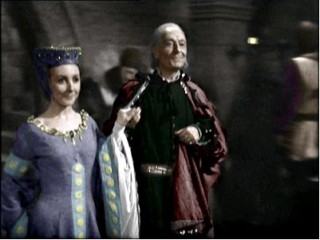
The splendidly dressed Doctor with Vicki, this time dressed as a girl
Soon after the Doctor leaves Vicki in the care of Joanna. A tender moment between the Doctor and his young companion is seen as Vicki becomes fearful that the Doctor won’t return. “You wouldn’t go off and leave me, would you? I mean, your ship’s the only home I’ve got now and I couldn’t bear it”. Vicki’s fears are placated by the Doctor who assures her that the separation will only be temporary.
Barbara in the harem
Akin to The Romans again, Barbara and Ian are separated and it’s Ian’s task to rescue her. Barbara is kidnapped and escapes several times, and Ian at one time is tortured by a trail of ants whilst tied down to the sand. A clever tactical ploy enables Ian’s escape. Ian’s resourcefulness saves Barbara from a murderer’s hands in the harem and also the Doctor’s execution at the serial’s end. He also displays exceptional fighting skills for a secondary school science teacher. Ian is knighted by Richard the Lionheart as Sir Ian of Jaffa and it is this honour to which an elderly Ian refers in the special features of the DVD. Short as they are, these introductions are a delight to behold and can be accessed below. The first clip is Ian’s introduction to The Crusade serial generally. The second clip is a potted summary of the events in the lost episode two. The third clip summarizes the plot of missing episode four.
William Russell, The Crusade, Introduction.
William Russell, The Crusade, plot summary of Episode 2
William Russell, The Crusade, plot summary of Episode 4
The serial ends with the crew laughing at Sir Ian’s expense before they are all inexplicably frozen solid. The viewer must wait until the next story, The Space Museum, to see the reason for this extraordinary situation. From 12th Century Israel to the far future in Xeros, the time travellers’ journey continues.
Sir Ian of Jaffa is knighted by Richard the Lionheart
Episodes 1 and 3 of “The Crusade”, and the audio of Episodes 2 and 4, are included in the “Lost in Time” triple DVD set. “The Crusade” was originally broadcast in the UK between 27th March and 17th April, 1965.
After fifty years on television everything has come back to the first question people ask him: Doctor who?
With 33 seasons already under the belt we’ve learned quite a bit about the British television icon, but if you want the answer to the above question without hundreds of hours of television then look no further.
Background
‘The Doctor’ is an alias adopted by a time travelling alien who has taken an interest in protecting Earth and its history amid his adventures. What his real name is and why he took on the title ‘Doctor’ is something that he has kept to himself, but he does claim that the original Greek medicine practitioners adopted the title in his honour. The Doctor’s homeworld is Gallifrey, whose people refer to themselves as the ‘Time Lords’. One important part of the character’s story that is not often mentioned in the recent seasons is that The Doctor…
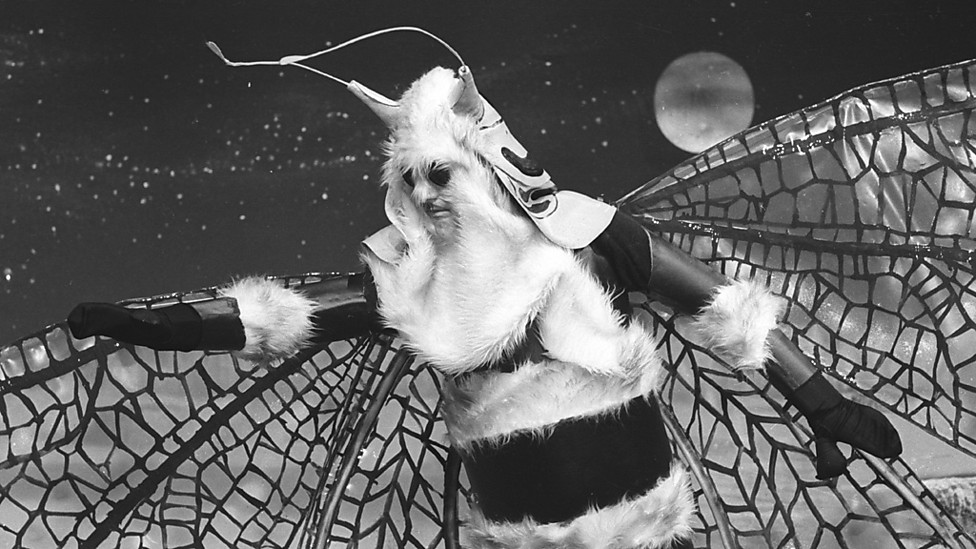
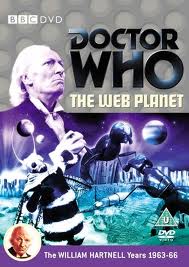
In my review of The Romans I lamented the overuse of clichés in the serial. It’s with a cliché that I must unfortunately cut short this review of The Web Planet. Did your mother ever tutor you in the necessity to limit your speech to things only favourable? The tried and true expression, “If you can’t say anything nice, don’t say anything at all” (or words to that effect), immediately comes to mind. Having considered this well reasoned advice I leave you with a suggestion on how best to enjoy The Web Planet. Forget the beautifully produced BBC DVD and instead invest three and a half minutes of your time watching this YouTube clip. You won’t be disappointed and can be certain that sleep will be furthest from your mind.
The Web Planet was originally broadcast in the UK between 13th February and 20th March 1965

























 The Doctor Who Mind Robber