It is at this time in my chronological marathon of DoctorWhothat I should be posting my review of The Ice Warriors.For the first, and most probably last time in this marathon, I’m been unable to watch a serial in its correct order because it has yet to be released on DVD. As luck would have it, the six part serial The Ice Warriorswill be released in Australia and New Zealand on 28 August 2013. The Region 2 release is set for 26 August and the Region 1 for 17 September. Despite what I said in my Complete DVD Collection post, I’ve pre-ordered the DVD and anticipate receiving it by the end of next week. I’m not very good at practising what I preach 🙂 Please stay posted for my review.
Episodes two and three, which are missing from the BBC Archives, have been animated for this DVD release
Together with the four episodes held in the BBC Archives, The Ice Warriorswill include animations of the two lost episodes two and three. Together with a number of audio commentaries, the special features include Cold Fusion – Making the Ice Warriors(a making of documentary); Beneath The Ice(a featurette on the making of the animated episodes); VHS Links from the original VHS release; Blue Peter(Design-A-Monster segment); Doctor Who Stories – Frazer Hines (Part 2); and Animated reconstruction of the original The Ice Warriors trailer.
Whilst we wait for the release of The Ice WarriorsDVD please enjoy the Coming Soon to DVD Trailer and the BBC’s exclusive animation preview.
The Ice Warriors– Coming Soon to DVD Trailer
The Ice Warriors– BBC’s Exclusive Animation Preview
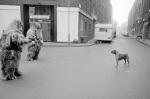
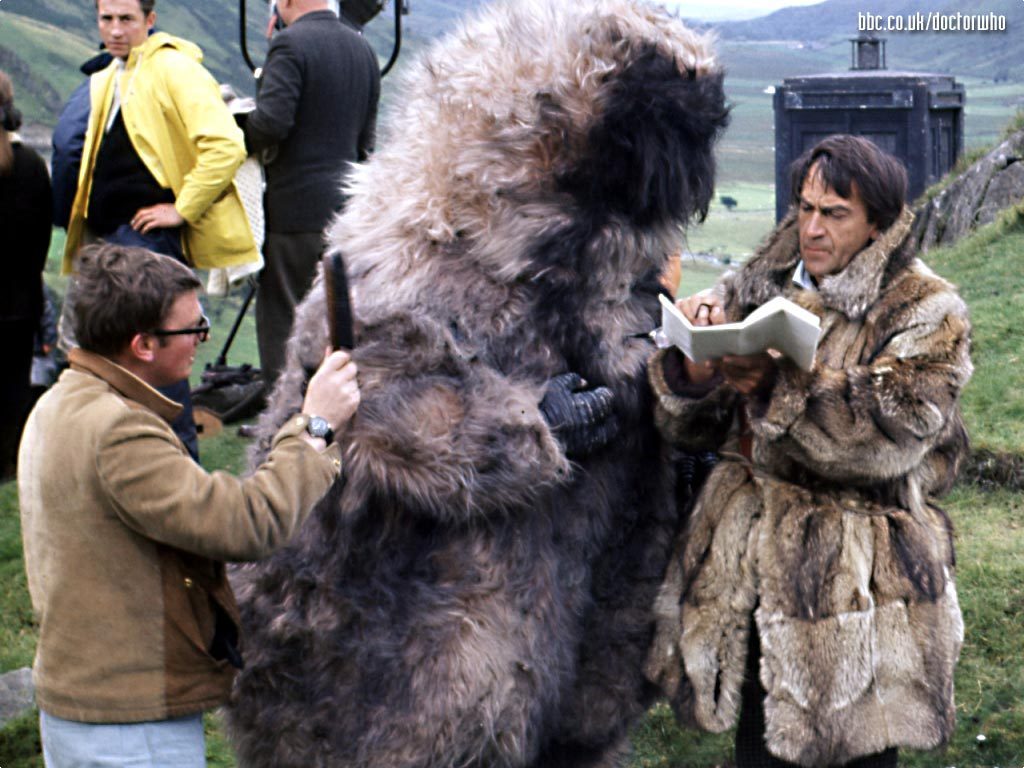
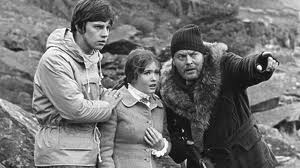
Beware of the Yeti! In September last year the UK newspaper the Mirror released 10 recently recovered photographs taken during the filming of The Abominable Snowmen and its sequel, The Web of Fear. Three photos were taken during the shooting of The Abominable Snowmen in Snowdonia, Wales in September 1967. The other seven photos are from the filming of The Web […]
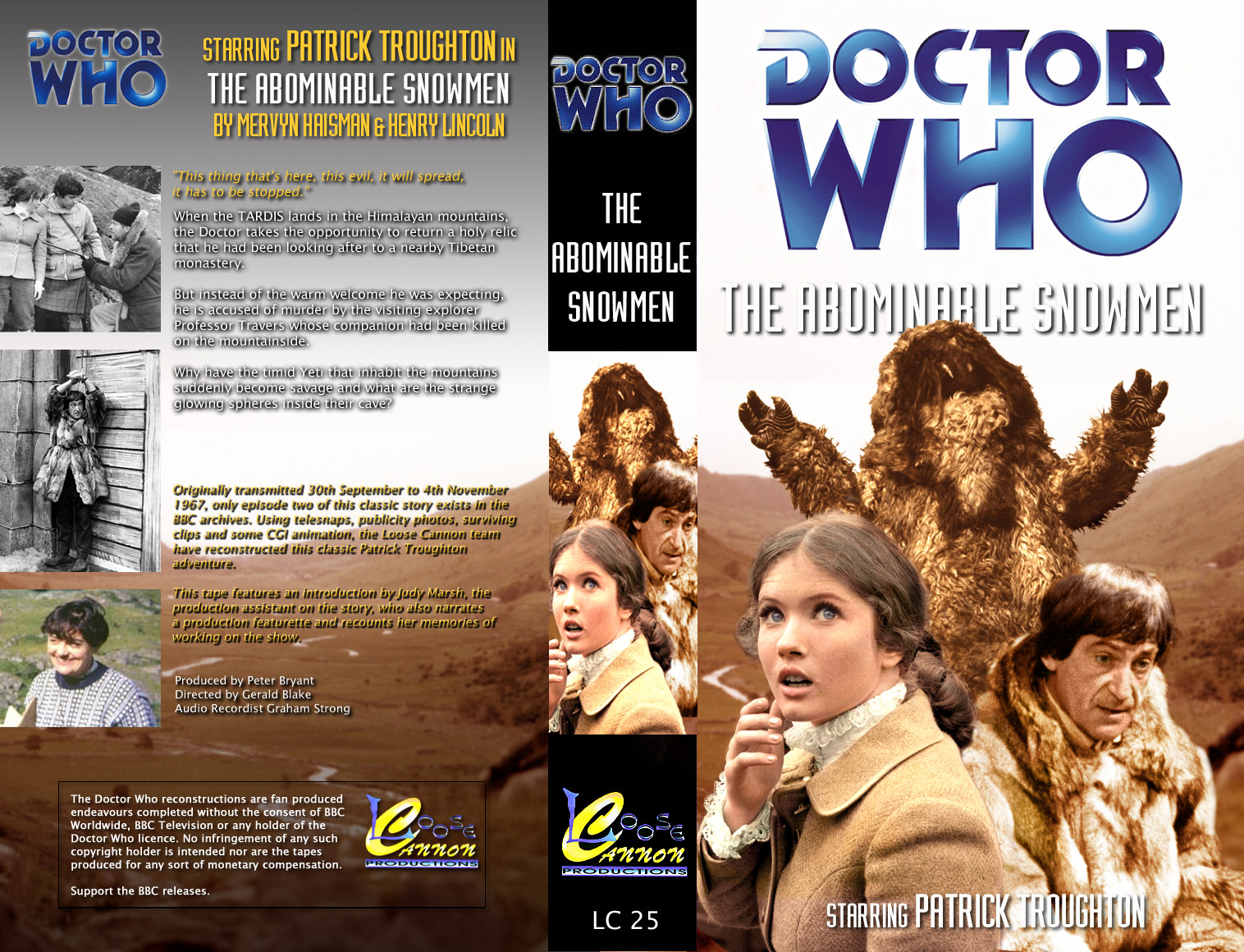
Only one of the six episodes of The Abominable Snowmen is held in the BBC Archives and has been released on the triple DVD set, Lost in Time.The remaining five episodes can be viewed as reconstructions by Loose Cannon Productions.
Loose Cannon’s The AbominableSnowmen,Episode 1 Part 1
Loose Cannon’s The AbominableSnowmen,Episode 1 Part 2
Loose Cannon’s The AbominableSnowmen,Episode 3 Part 1
Loose Cannon’s The AbominableSnowmen,Episode 3 Part 2
Loose Cannon’s The AbominableSnowmen,Episode 4 Part 1
Loose Cannon’s The AbominableSnowmen,Episode 4 Part 2
Loose Cannon’s The AbominableSnowmen,Episode 5 Part 1
Loose Cannon’s The AbominableSnowmen,Episode 5 Part 2
Loose Cannon’s The AbominableSnowmen,Episode 6 Part 1
Loose Cannon’s The AbominableSnowmen,Episode 6 Part 2
Episode 2 of The Abominable Snowmen is held in the BBC Archives and has been released on the triple DVD set, Lost in Time. The Abominable Snowmen was originally broadcast in the UK between 30 September and 4 November 1967.
The 1960s saw the dawning of Western interest in Eastern religions. Perhaps premier among the spiritualities investigated was Buddhism. It was in 1967 that a Trappist monk of the Abbey of Gethsemane, Thomas Merton, published his collection of essays, Mystics and Zen Masters. More than 40 years later, two of the top five Google search results on “Merton and Buddhism” return a conservative Catholic article entitled, “Can You Trust Thomas Merton?” Yes, there are still many orthodox Catholics who would prefer to imagine that the Second Vatican Council never occurred, and fear that enlightened spiritual writers such as the late Fr Merton are a threat to the very fabric of Christendom.
Thomas Merton with the Dalai Lama
It should come as no surprise, therefore, that Doctor Who should enter into this stream of consciousness with its Tibetan tale of Buddhist Monks and Yeti, The Abominable Snowmen. Five of the six episodes of this serial are among the 106 currently missing from the BBC Archives. Thankfully the good people at Loose Cannon Productions have come to our rescue, yet again, with their masterful reconstructions. Episode two is available on the triple DVD set, Lost in Time. An excellent precise of the serial was provided by David J Howe and Stephen James Walker in their 2003 publication, The Television Companion. The Unofficial and Unauthorised Guide to Doctor Who. Rather than reinventing the wheel I’ll let them summarise the plot for you:
Songsten, Khrisong and a fellow monk
“The TARDIS arrives in Tibet in 1935 and the Doctor visits the remote Detsen (sic) monastery in order to return a sacred bell, the ghanta, given to him for safe keeping on a previous visit. There he meets and Englishman, Travers, on an expedition to track down the legendary Abominable Snowmen or Yeti. It transpires that the Yeti roaming the area are actually disguised robots, which scare away or kill anyone who approaches. The High Lama Padmasambhava, whom the Doctor met hundreds of years earlier on his previous visit, had been taken over by a nebulous alien being, the Great Intelligence, which has artificially prolonged his life and is now using him to control the Yeti by way of models on a chessboard-like map. The Intelligence’s aim is to create a material form for itself and take over the Earth. The Doctor banishes it back to the astral plane, allowing Padmasambhava finally to die in peace”.
David J Howe & Stephen James Walker’s The Television Companion was published in 2003 by Telos Publishing
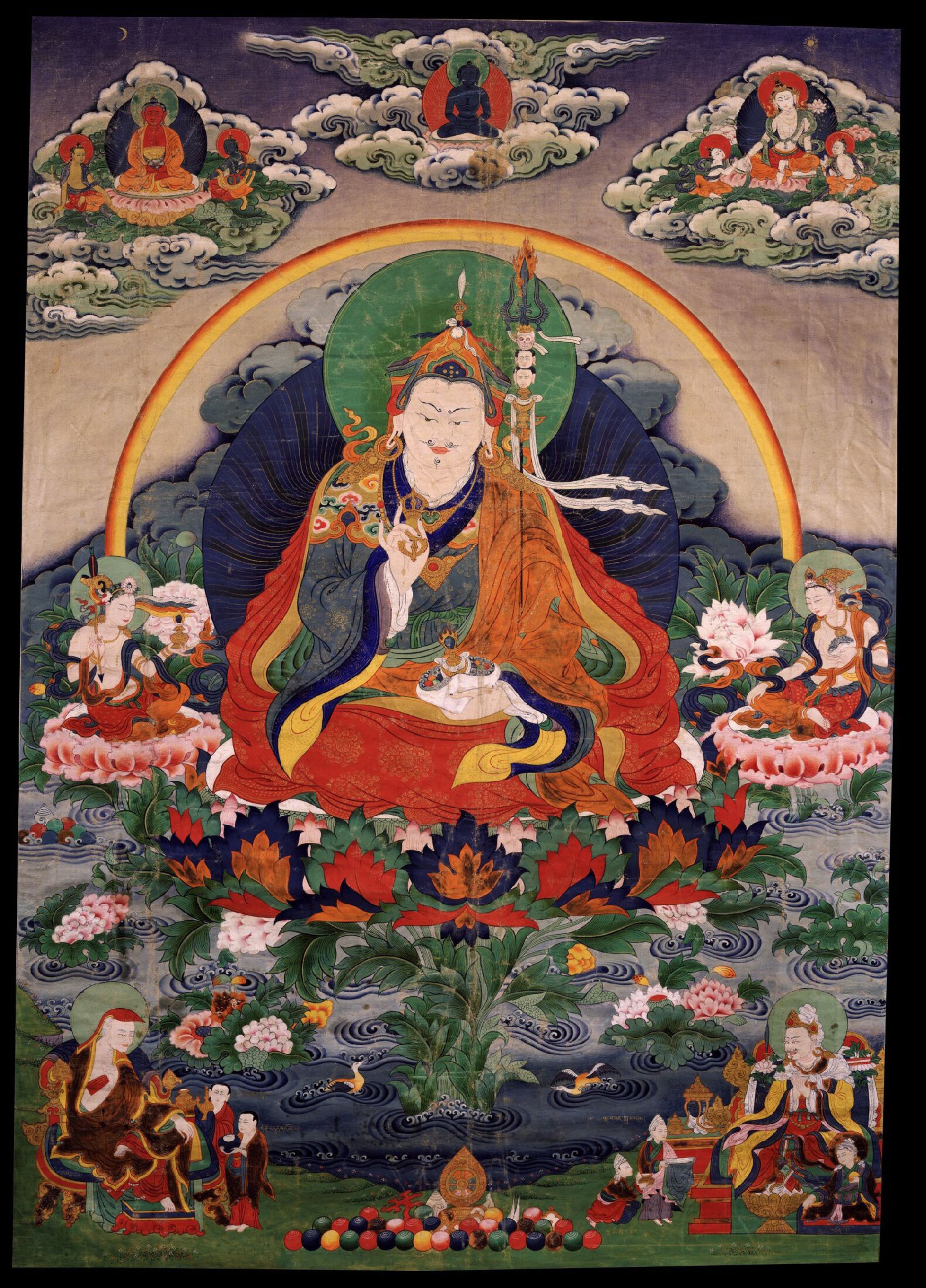
The Abominable Snowmen’s writers, Mervyn Haisman and Henry Lincoln, sought to authenticate the serial by utilizing some real life names from the history of Tibetan Buddhism. The Master of the monastery was Padmasambhava, so named after the eighth century Buddhist Master who is said to have brought Vajrayana (tantric) Buddhism to Tibet. History names Padmasambhava as the author of Liberation Through Hearing During the Intermediate State (Bardo Thodol) which is known colloquially in the Western world as The Tibetan Book of the Dead. Given that the Bardo Thodol is in effect a treaty on how to ensure an absolute death and escape from the cycle of reincarnations, it is profoundly ironic that Padmasambhava of The Abominable Snowmen should be caught in a state of suspended life for hundreds of years. His death at the conclusion of the serial is more in accord with Buddhist philosophy as Padmasambhava at last finds peace in absolute death.
An image of Padmasambhava
The name of monastery’s Abbot, Songsten, is taken from seventh Century Tibetan Empire founder, Songtsän Gampo, whilst the young monk Thonmi is so named after Thonmi Sambhota, the person traditionally credited for the invention of the Tibetan script. When the script was novelized by Terrance Dicks in 1974 as Doctor Who and the Abominable Snowmen, it was on the suggestion of Doctor Who’s then producer, Barry Letts, that these names should be changed. As a Buddhist Letts considered the appropriation of the names inappropriate and accordingly they were slightly amended to Padmasambvha, Songtsen, and Thomni . At face value it appears that perhaps the Abbot’s name would best have remained as Songsten, as that is further from the real spelling of Songtsän than Songtsen.
An image of Songtsan Gampo
An image of Thonmi Sambhota
Whereas The Tomb of the Cybermen was resplendent with crazed archaeologists, The Abominable Snowmen instead has a “mad anthropologist”. This at least is how the fictional press of the serial refer to the explorer Travers as. Incidentally Travers is played by Jack Watling, the father of companion Deborah Watling. Watling reprised his role of Travers three serials later in the sequel, The Web of Fear. Watling, the elder, did a fine job in the serial, as did Deborah who was quite mesmerizing in the scene where she speaks the same phrase automatically whilst under Padmasambhava’s trance.
Jamie, Victoria and the “mad anthropologist”, Travers. Jack Watling, the father of Deborah Watling, played Travis
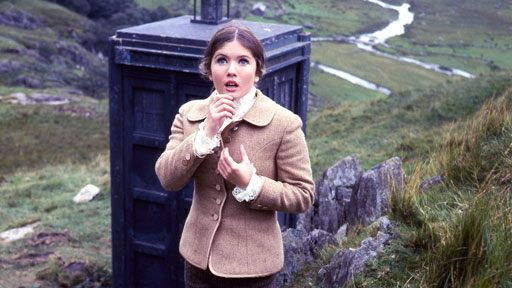
Victoria emerges from the TARDIS and is shocked by what she sees
The necessity for compassion is perhaps the integral moral of this story. Although the monk-warrior Khrisong is murdered by the Abbot, Songsten, he is forgiven of his crime by both the victim on his death bed, and by his fellow monks thereafter. As the young monk Thonmi rightly concludes, Songsten had been put under a trance by the Master, Padmasambhava. He was but a puppet, as was Padmasambhava whom the Doctor identified as also being controlled. The entity that was the source of this control was the Great Intelligence. This theme of forgiveness is not restricted only to Buddhism, but also to Christianity. Khrisong’s final words are reflective of one of Jesus Christ’s seven final sayings, “Father, forgive them, for they do not know what they do” (Luke 23:34). Judeo-Christian links in this story can also be gleaned from Padmasambhava’s use of the words “I am” on several occasions when describing himself. Padmasambhava at one point states, “But our brother must not be allowed to depart in the knowledge that I am other than what I am”. “I am that I am” is the common English translation of God’s response to Moses when asked for his name (Exodus 3:14).
Khrisong is unforgiving to the Doctor as he is put out as Yeti bait. In death, however, Khrisong forgives his murderer, Songsten
The Doctor and the young monk, Thonmi
The Great Intelligence returned, like Travers, in The Web of Fear, but the character would not be reprised for a third time for over 44 years, the longest period in abeyance of any monster, alien or foe in Who’s history. Manifesting itself as snow in the 2012 Christmas Special, The Snowmen, the Great Intelligence planned to invade the earth with Snowmen in lieu of Yeti. The Great Intelligence eventually gained control of Walter Simeon’s body and would appear again as the Doctor’s main protagonist in the 2013 episodes The Bells of Saint John and The Name of the Doctor. A brief history of the Great Intelligence from The Abominable Snowmen to The Name of the Doctor is set out in the video below.
The Great Intelligence Through the Ages 1967 -2013
The character’s long dormancy was most probably a consequence of the rift between its creators, Haisman and Lincoln, and the producers of Doctor Whofollowing the pair’s ill-fated third Who script, The Dominators. Interestingly, no acknowledgement appears for Haisman and Lincoln as the creators of the Great Intelligence in the final credits of the Series 7 episodes in which the entity appears. Monsters created by other freelance writers, such as Terry Nation’s Daleks, are still credited to their originators to this day.
Haisman and Lincoln’s creations, The Yeti, taking a stroll
A final fascinating note on the Great Intelligence is that its appearance in The Snowmen predates chronologically its presence in The Abominable Snowmen and The Web of Fear. With the Abominable Snowmen set in around 1935 and The Web of Fear in the UNIT era, which is probably sometime in the 1970s, the Victorian tale of The Snowmen well predates the Troughton era stories. John Hussey in his article on the history of the Great Intelligence published in Doctor Who TV, posits that the Doctor’s battles with the Great Intelligence in The Snowmen could have actually been the inspiration for the two earlier stories. As evidence Hussey directs the reader’s attention to the London Underground map which the Eleventh Doctor showed the Great Intelligence. In outlining to the Intelligence the weaknesses in the system the Doctor may in fact have been responsible for Intelligence’s subsequent (but shown on TV, earlier) attack utilizing the London Underground in The Web of Fear.
The Eleventh Doctor shows the Great Intelligence a map of the London Underground in The Snowmen
A snowman from 2012’s The Snowmen
Being so critical of racism in the last serial, The Tomb of the Cybermen, I would be remiss not to point out that the Tibetan characters in The Abominable Snowmen are all played by Caucasian males. Unlike other Who serials such as the Third Doctor’s Planet of the Spiders and the Fourth Doctor’s The Talons of Weng-Chiang , the characters’ facial make up isn’t overtly reminiscent of Asian identity. This early example of the Doctor Who production team erring in its moral duty to employ a more multi-cultural cast could perhaps, in this instance only, be overlooked if the viewer chooses to regard all the monks as Western converts to Buddhism.
The Abominable Snowmen’sPadmasambhava
An unfortunate example of racism in the Third Doctor’s Planet of the Spiders
White men were still being cast as Asian males in The Talons of Weng-Chiang, a Fourth Doctor Adventure
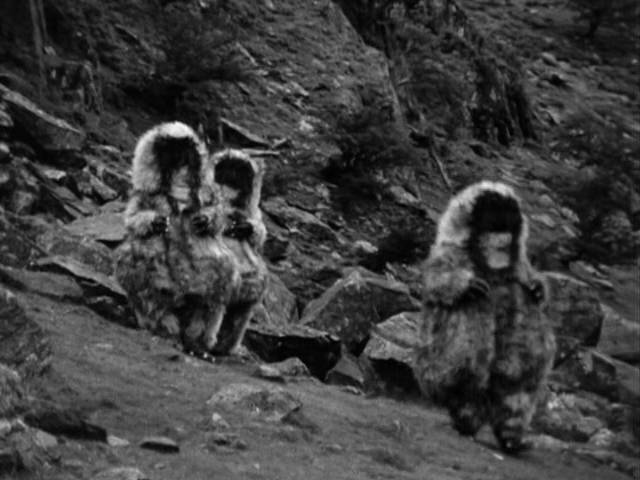
I couldn’t fail to conclude this review without saying a word or two on the most loveable of Doctor Who monsters, the Yeti. By the writers’ making these mythical Himalayan creatures robots, the designers were given the most perfect excuse for their creation of a less than realistic monster. If the Yeti looked pair shaped and cuddly, rather than mammoth and scary, the designers could always claim that realism was not their intention. Perhaps they could retrospectively claim that the Monoids of The Ark were really robots! All told, The Abominable Snowmenis a cracking good yarn and comes highly recommended. By me at least!
The Yeti were so cute as to attract children during the filming of The Abominable Snowmen in Wales
Perhaps The Ark’s Monoids should have been robots. It would help explain their appalling design!
Episode 2 of The Abominable Snowmen is held in the BBC Archives and has been released on the triple DVD set, Lost in Time.The Abominable Snowmen was originally broadcast in the UK between 30 September and 4 November 1967.
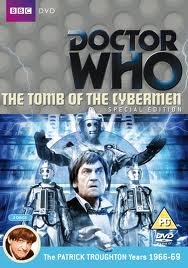
I first watched The Tomb of the Cybermen in the wake of Matt Smith’s much publicized disclosure that Tomb was his favourite Doctor Who serial. It’s often said that Smith is channelling Patrick Troughton. I was somewhat bemused, therefore, when I walked away with a rather flat feeling at the serial’s end. It was okay, I thought, but nothing spectacular. My second view, for this marathon, was somewhat more enjoyable, perhaps only because of the elation felt in watching the earliest and first complete Second Doctor serial in the BBC Archives. Nine incomplete serials in a row is a somewhat daunting undertaking so my relief is perhaps entirely understandable.
The men are amazed to see the Cybermen emerge from their frozen tombs
The second viewing, however, did nothing to soften my discontent with the unnecessary and detrimentally racist stereotypes. For the second serial in a row there is a huge and mute black strongman. In The Evil of the Daleks the character of Kemel was meant to be a Turkish Wrester. The actor who played him, Sonny Caldinez, however was black. In Tomb of the Cybermen we have an equally large black strongman, this time named Toberman, and the “manservant” to the equally mysterious, and racially ambiguous, Kaftan. Early drafts of the script had Toberman (played by Roy Stewart) wearing a hearing aid, however this was written out of the final script.
Roy Stewart played the mute strongman and “man servant” of Kaftan, Toberman
Shirley Cooklin was the wife of Story Editor, Peter Bryant, and the role of Kaftan was written specifically for her. In the Special Feature, The Lost Giants, which is included the Special Edition of The Tomb of the Cybermen DVD, Cooklin describes the difficulties she faced as an actress. As someone who was not blond haired and blue eyed, she was constantly cast as characters such as French maids. What Cooklin failed to mention in the video, however, was that she was made up to have much darker skin than she ordinarily had. An unspecified accent was used throughout the serial and her very dark complexion was less than subtle in hinting that Kaftan was a mysterious and potentially dangerous outsider. So successful were the make-up artists in disguising Cooklin that Frazer Hines, a known ladies man, tried unsuccessfully to pick her up!
The “blacked up” Shirley Cooklin as Kaftan
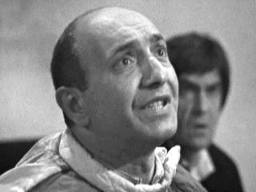
The third member of our trio of crooks was the increasingly manic Klieg, played by George Pastell. Pastell was a Greek Cypriot actor famous for playing swarthy villains. The instigator of a totally crazy plan for world domination in which the Cybermen were to be conscripted as willing assistants, Klieg considered himself the most intelligent and logical person in the world. Clearly he was neither and his arrogance was his downfall.
George Pastell played the swarthy villain, Klieg
In between my first and second viewings of The Tomb of the Cyberman I had the misfortune of watching the Series Seven episode, Journey to the Centre of the TARDIS. My choice of the word “misfortune” is quite deliberate because throughout that 2013 episode I experienced the same niggling concerns about racism as I had watching Tomb. The Doctor and Clara find themselves, and the TARDIS, on board an intergalactic salvage ship. The ship is crewed by the brothers Gregor and Bram Van Baalen , together with a humanoid looking android, Tricky. If this was 1967 it would not have surprised me that the characters being “baddies” would also be “black”. This is 2013 however, and I just shook my head in disbelief as the first black characters in Doctor Who for a long time were also villains. Unfortunately most criticism directed to this episode related to allegedly poor acting on the part of Ashley Walters, Mark Oliver and Jahvel Hall. What is more important is that the actors were given little to work with and subjected to negatively stereotypical characterizations.
Incredibly, the only photos I could find online of the Van Baalen brothers, and Tricky, were either from behind or as monsters. Racism was again evident in 2013’s Journey to the Centre of the TARDIS
I am not alone in my concerns about racism and Doctor Who. Philip Sandifer in his blog, and now books, Tardis Eruditorum, is unashamedly critical and has published an excellent essay in the second volume of Tardis Eruditorum, entitled “What do we Make of All These Black Mute Strongmen?”. He describes the decision by writers Kit Pedler and Gerry Davis to characterize Toberman as a black mute strongman not as a conscious act of malice, but rather an example of “unconscious failures to even notice that there’s a problem. More often than not, discrimination is just a particular flavour of stupidity”. In other words, these racist stereotypes are so ingrained that the writers didn’t even realize that they were being inherently racist. Such racism, I would posit, was inherent in the Stephen Thompson penned 2013 story, Journey.
Philip Sandifer is critical of racism in Doctor Who
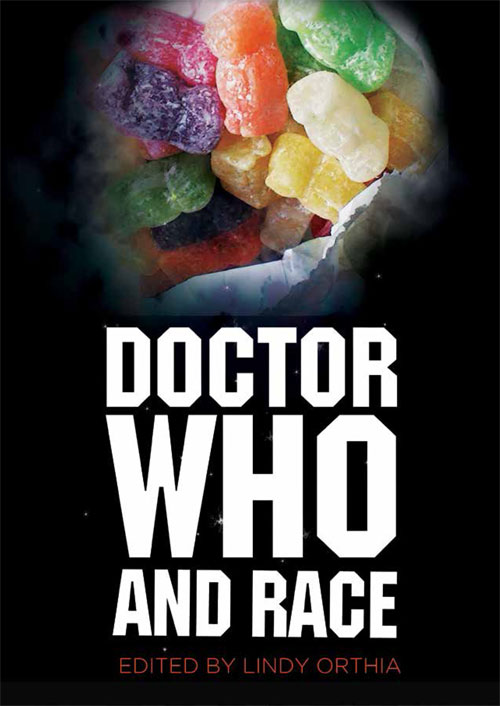
Published in July 2013, the Lindy Orthia edited book, Doctor Who and Race, is a collection of 23 essays on the issue. In May this year there was widespread controversy when Orthia was reported as describing Doctor Who as “thunderingly racist”. The BBC issued a statement which stated as follows:-
“Doctor Who has a strong track record of diverse casting among both regular and guest cast. Freema Agyeman became the first black companion and Noel Clarke starred in a major role for five years [Mickey Smith]. Reflecting the diversity of the UK is a duty of the BBC, and casting on Doctor Who, is colour-blind. It is always about the best actors for the roles”.
Doctor Who and Race, edited by Lindy Orthia, was released in July 2013
I’m still waiting for Doctor Who and Race to be released on Kindle. Once it is I will undoubtedly post a review of it on this blog.
The Tomb of the Cybermen does, however, have its positives. The emergence of the Cybermen from their frozen tombs in episode two is brilliantly done and undeniably iconic. You can even excuse them for using cling wrap as it was as “new” and “exciting” as bubble wrap was to the 1970s Doctor Who designers.
The Cybermen emerge from their icy tombs
The Doctor’s discussion with the new companion, Victoria, in episode three is as close to tear-jerking as you’ll get. In discussing the death of Victoria’s father (in The Evil of the Daleks), the Doctor gently tells her of his own family recollections – “I have to really want to, to bring them back in front of my eyes. The rest of the time they … sleep in my mind and I forget. As so will you”. The Doctor also discloses for the first time his age and we learn that in earth terms he is roughly 450 years old.
The Doctor and Victoria’s episode three discussion.
Finally, the scene in which the Doctor and Jamie accidently hold hands as they enter the tomb is just fabulous. Both intending to hold Victoria’s hand, they quickly disengage when the manliness of the other hand becomes apparent. In the Special Features Frazer Hines describes how he and Patrick Troughton didn’t officially rehearse the scene. Fearing that their unscripted gag would be cut out, they left its unveiling to the actual filming knowing that cuts were expensive and rarely made.
Frazer Hines and Deborah Watling discussing the making of The Tomb of the Cybermen.
The Tomb of the Cyberman is unfortunately the only complete serial featuring Deborah Watling as Victoria. It’s back to reconstructions and only one complete episode, when I continue my marathon with The Abominable Snowmen.
The Tomb of the Cybermen was originally broadcast in the UK between 2 September and 23 September 1967
Only one episode of the seven part serial, The Evil of theDaleks,is held in the BBC Archives. Episode 2 has been released on the triple DVD set, Lost in Time. For the purposes of this marathon I watched Loose Cannon’s reconstructions of Episodes one, three, four, five, six and seven.
Loose Cannon’s The Evil of the Daleks,Episode 1 Part 1
Loose Cannon’s The Evil of the Daleks,Episode 1 Part 2
Loose Cannon’s The Evil of the Daleks,Episode 3 Part 1
Loose Cannon’s The Evil of the Daleks,Episode 3 Part 2
Loose Cannon’s The Evil of the Daleks,Episode 4 Part 1
Loose Cannon’s The Evil of the Daleks,Episode 4 Part 2
Loose Cannon’s The Evil of the Daleks,Episode 5 Part 1
Loose Cannon’s The Evil of the Daleks,Episode 5 Part 2
Loose Cannon’s The Evil of the Daleks,Episode 6 Part 1
Loose Cannon’s The Evil of the Daleks,Episode 6 Part 2
Loose Cannon’s The Evil of the Daleks,Episode 7 Part 1
Loose Cannon’s The Evil of the Daleks,Episode 7 Part 2
The Evil of the Daleks was originally broadcast in the UK between 20 May and 1 July 1967. Episode 2 is available on the triple DVD set Lost in Time
Season four draws to a close with the Daleks’ last appearance in Doctor Who for five years in The Evil of the Daleks. Ranked 18th in the Doctor Who Magazine’s Mighty 200 poll of 2009, this serial bears all the hallmarks of a classic. The most highly placed Second Doctor story in the poll, The Evil of the Daleks displays a hitherto unseen darkness in the Doctor’s character. By melding the BBC’s panache for period piece Victoriana drama and the futuristic world of Skaro, the serial arranges the Daleks in a threatening new light.
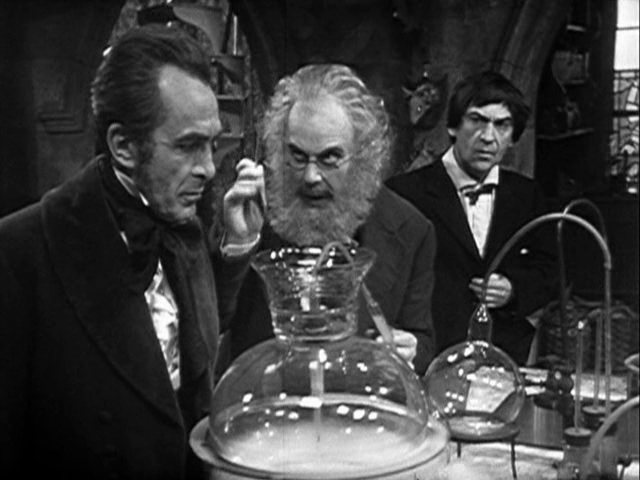
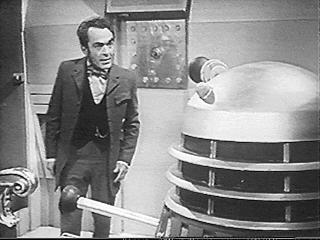
The Doctor looks on as Edward Waterfield and Theodore Maxtible discuss their experiment
Written by David Whitaker, The Evil of the Daleks in part draws upon Whitaker’s own Dalek cartoons which were a feature in TV Century 21 magazine. Published over 104 issues in 1965 and 1966, the Dalek cartoons featured a Dalek Emperor, the titular head of the Daleks not hitherto encountered in the television series. In cartoon form the Dalek Emperor was more similar in appearance to the 1988 Dalek Emperor of Remembrance of the Daleks than the large elaborate one of The Evil of the Daleks. That a Dalek spin off cartoon should influence the television production of Doctor Whoclearly exhibits how iconic the Daleks had become in the mythology of Doctor Who during those early years.
The Dalek Emperor first appeared in the David Whitaker penned Dalek cartoons published in TV Century 21 magazine
The Dalek Emperor of the comics was more faithfully reproduced in the 1988 serial Remembrance of the Daleks
The Doctor co-operates with the Daleks in putting Jamie to a test in saving the daughter of Edward Waterfield, Victoria who has been imprisoned by the Daleks. In doing so the Doctor engages in an uncharacteristic argument with Jamie with the sole intention of utilizing reverse psychology to obtain his own ends. The Doctor tells Jamie that he has never purported that “the ends justify the means”, however Jamie consider this to be mere words. “You and me, we’re finished. You’re just too callous for me”, Jamie says to the Doctor. “Anything goes by the board. Anything at all”.
Jamie’s task is to save the companion-in-waiting, Victoria Waterfield, from the Daleks
The test which Jamie was undertaking would enable the Daleks to plot and distil those essential human characteristics that had until then always permitted humans to defeat the Daleks. Courage, pity, chivalry, friendship, and compassion were some of those virtues and emotions that Jamie exhibited in his trial to rescue Victoria. When three dormant Daleks were impregnated with the “human factor” they behaved in a somewhat unexpected manner. Episode five ends with the Doctor being taken for a “train” ride by a Dalek. “Jamie, they’re taking me for a ride” the Doctor exclaims in delight, “they’re playing a game”. Episode six opens with the Doctor advising that the Daleks are only children, but will grow up very quickly – in a matter of hours, in fact. He advises the baby Daleks that Jamie is a friend and to their delight gives each of them a name – Alpha, Beta and Omega.
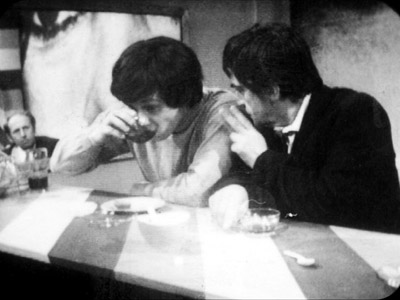
Jamie and the Doctor drink coffee in a cafe during episode one
Despite their childish play the Daleks do not take on the comic like features that they did in The Chase. The Doctor’s oldest foes remained menacing because of their radical and quick transformation back to their dangerous and menacing form. By impregnating a large number of Daleks with the “human factor” the Doctor incites a Dalek Civil War as the humanized Daleks question the orders of their superiors. Never before had the Daleks questioned “why” they automatically follow commands. This was very much a human trait. Notwithstanding that total genocide of the Daleks is a possible consequence of the Civil War, the Doctor nonetheless encourages their destruction. This is very much at odds with the classic stand of the Fourth Doctor in Genesis of the Daleks.
The Evil of the Daleks – 3D Animation – Prelude to the Civil War
Victoria’s father, Edward Waterhouse, sacrifices himself to save the Doctor
The chief human baddie, Theodore Maxtible, looks surprisingly like our most common images of Karl Marx. I wonder if that was intentional? Although the Daleks were conjured into Maxtible’s 1866 Victorian home by mistake, he is nevertheless keen to make what he can out of the Daleks’ technology. Waterfield co-ops the Doctor and Jamie’s assistance against their will but for the more honourable cause of having his daughter freed. Waterfield is disturbed by the death that surrounds him and his complicity with the destruction caused. When he accuses Maxtible of constantly avoiding reality – that people are dying because of them – Maxtible remains indignant. “We are not to blame for everything that has happened” he said “No English judge or jury would find it in their hearts to convict us of one solitary thing”. The legality of what they had done was not Waterfield’s concern, but clearly the morality of it. He went on to state that he would confess his role in everything once Victoria was released. Unfortunately that opportunity was never afforded to him as he sacrificed his life to save the Doctor.
The character of Theodore Maxtible, played by Marius Goring, bears an uncanny resemblance to Karl Marx
The real Karl Marx
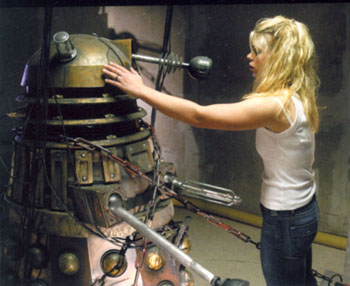
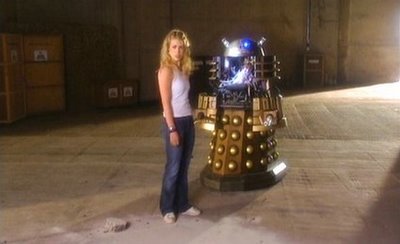
The “human factor” in The Evil of the Daleks would re-emerge in a somewhat different form, as DNA, in the Rob Sherman penned Dalek in 2005. In the first Dalek story of New Series Doctor Who, companion Rose Tyler replenishes a long dormant Dalek by placing her hand upon it. Her DNA enables the Dalek to regenerate its casing and break free of the chains that have bound it. Later the Dalek experiences human emotions as a consequence of the human DNA. Psychologically traumatised by emotions that are alien to Daleks, the Dalek commits suicide after commanding Rose to order its own death. The “human factor” in The Evil of the Daleks, which precipitated questioning, the Dalek Civil War and ultimately the (temporary) Dalek destruction, had the same decimating effect on the pepper pot’s psychology and continued existence in Dalek.
Rose Tyler comforts a Dalek in the 2005 episode Dalek, thereby transferring some of her DNA to it
Rose is compelled to order the Dalek’s own destruction as it is psychologically traumatized by the human DNA
The Evil of the Daleks has aged badly in respect of its racial stereotyping of the character of Kemel. Played by the West Indian born Sonny Caldinez, Kemel is a Turkish wrestler and strongman for Maxtible. Although possessed of almost super-human strength, Kemel is both unintelligent and mute. He’s almost the kind of character that you would expect in a First Doctor story, as William Hartnell was unfortunately infamous for his intolerance of all but Caucasian Englishmen. Sonny Caldinez would go on to play an Ice Warrior in each of the four Ice Warrior themed serials in the Classic Series, The Ice Warriors, The Seeds of Death, The Curse of Peladon and The Monster of Peladon.
Sonny Caldinez played the role of Kemel, a Turkish wrester and strongman
Sonny Caldinez subsequently appeared as an Ice Warrior in four Classic Series stories. He is seen here with the Third Doctor and Alpha Centauri in The Monster of Peladon (1974)
The Evil of the Daleks does leave us with perhaps one of the Doctor’s best ever quotes. In speaking to Terrall the Doctor says, “I am not a student of human nature. I am a professor of a far wider academy, of which human nature is merely a part. All forms of life interest me”. “Professor” is the name that companion Ace playfully called the Seventh Doctor, but I’m rushing ahead of myself here. Join me for my next review where Season five opens with the first 100% complete Second Doctor serial, the iconic Tomb of the Cybermen.
The Evil of the Dalekswas originally broadcast in the UK between 20 May and 1 July 1967. Episode 2 is available on the triple DVD set Lost in Time























 The Doctor Who Mind Robber