On 26 July The Doctor Who Mind Robber reported an article in the UK’s Sunnewspaper in which an international simulcast of the 50th Anniversary Special was mooted. Yesterday, more than two months after the Sun’sreport, the BBC officially announced that at least 75 countries have agreed to broadcast The Day of the Doctoron 23 November.
Tim Davie, the chief executive of BBC Worldwide said, “the simultaneous broadcast and cinema screening of the special across so many countries will make for a fitting birthday tribute to our time lord”. The special is due to screen in 200 cinemas across the United Kingdom. Steven Moffat was then quoted as saying, “The Doctor has always been a time traveller. Now he’s travelling through time zones”.
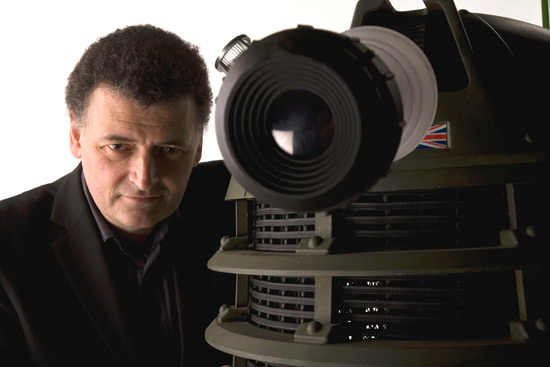
Steven Moffat, Executive Producer of Doctor Who
Together with the Eleventh Doctor and his current companion, the 75 minute special will also feature the Tenth Doctor, David Tennant, and the first companion of new series Doctor Who,Billie Piper. A hitherto unknown incarnation of the Doctor, played by John Hurt, will also appear. It has been widely rumoured that Hurt’s Doctor will be number 8.5, being an incarnation between Paul McGann’s Eighth Doctor and Christopher Eccleston’s Ninth Doctor. There has been no further information forthcoming on a comment by the Fifth Doctor, Peter Davison, several weeks ago. Davison was reported as having said that ”I’m making an appearance somewhere over that period of time but I can’t reveal in what. I can’t reveal anything specific about it. I’m not allowed to. It is a big year for the show and we’re all doing our bit for it. Trust me.”
The ABC yesterday confirmed that The Day of the Doctorwill be simulcast live throughout Australia.
To celebrate Doctor Who’s upcoming 50th Anniversary The Doctor Who Mind Robberwill be counting down the last 50 days to this momentous event. Starting on Friday 4th October (Australian time) we’ll be posting a 1960s Whopost everyday. Utilizing a “best of” format, the posts will examine a myriad of First and Second Doctor topics including Cliff Hangers, Monsters, Billy Fluffs, Firsts. Lasts, Companions, Supporting Actors and Dodgy Special Effects. Any suggestions for “Best” or “Worst” lists would be gratefully appreciated.
William Hartnell as the Doctor in The Celestial Toymaker
Patrick Troughton as the Doctor in The Power of the Daleks
My first post will be rather unimaginatively titled The Ten Most Wanted Missing Episodes. Please join me from the 4th of October for this exciting daily look at retro Doctor Who.
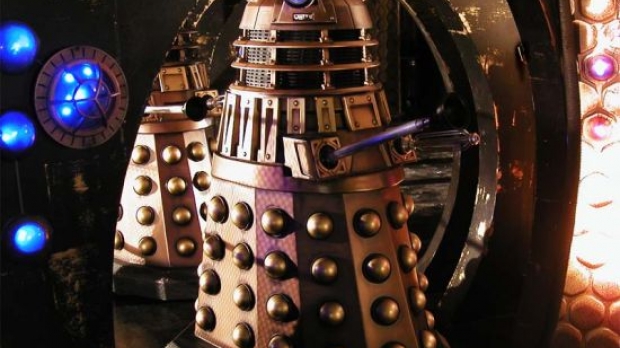
In the BBC’s continued drip feeding of The Day of the Doctordetails, a photograph was today released from behind the scenes of the 50th Anniversary Special. Together with several Dalek bottoms, it also appears to feature at least one damaged Dalek. Could this perhaps hint at the Time War?
The BBC has also revealed that the Twitter hashtag for the Day of the Doctor,and ‘stings’ that will reveal the ident for the Special, will be unveiled on BBC One this evening. I have to admit to not knowing what an ident or a sting were prior to reading the BBC’s press release. I’m not a great deal wiser now, however I believe that an ident is the Station Identification (the branding of the station) and a sting is a brief glimpse of what’s forthcoming. If anyone can enlighten me further it would be greatly appreciated.
In the meantime, here’s the BBC One 2009 Christmas Ident featuring the Tenth Doctor, David Tennant. You learn something every day!
The Wheel in Spacemarks the end of Doctor Who’s Fifth Season and the almost constant run of missing episodes which have plagued marathon viewers since the beginning of Season Three. Season Six is complete, save for the penultimate serial The Space Pirates, and two episodes of the eight part serial The Invasion. Thanks to the brilliant work of Cosgrove Hall. the two missing episodes of The Invasion have been animated and the complete serial is available for viewing on DVD.
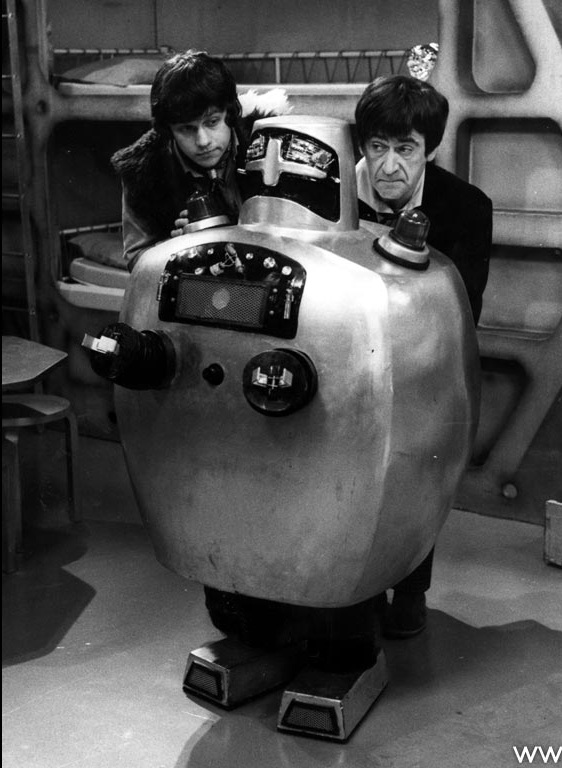
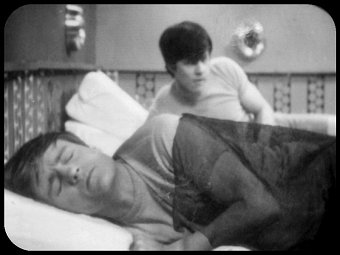
Jamie and the Doctor with the Servo-Robot which subsequently rendered the Doctor unconscious
The Cybermen made their fourth appearance in 18 months in The Wheel in Space. With the temporary retirement of the Daleks in the last serial of Season Four, the Cybermen had assumed the mantle of the Doctor’s number one enemy. Whereas the Daleks were previously guaranteed to appear in two serials per season, Terry Nation’s attempts to sell his creations to the US saw the Cybermen snatch their title as favourite recurring monsters. Their appearance in The Wheel in Space, however, was a great deal more subtle than in previous adventures. Not seen until the cliff hanger of episode two, their screen time was nearly as limited as their speech. The somewhat verbose sing-song voices of The Tenth Planet Cybermen were replaced by almost mute monsters with more human voices. Now possessing three silver fingers, the Cybermen’s principal terror derived from them silently emerging unexpectedly from anywhere on the Wheel.
The companion-in-waiting, Zoe, with two Cybermen
The hints of humanity that the first generation Cybermen possessed were long gone, with the cyber creatures now described by the Doctor thus: “Their entire bodies are mechanical and their brains have been treated neuro-surgically to remove all human emotions, all sense of pain. They’re ruthless, inhuman killers!”. These Cybermen, the Doctor said, need to colonize and have the treasures of earth.
The emotionless Cybermen provide a brilliant juxtaposition to the Doctor’s newest companion, Zoe Heriot. 15 year old Zoe is an astrophysicist and astrometricist first class and employed as the Wheel’s parapsychology librarian. Her perfect recall of scientific facts and ability to undertake mental calculations faster than a hand-held calculator are the consequence of her being brainwashed by the City’s educational institution. The processes by which she was educated are not revealed, although one can only guess that they were somewhat similar to those encountered by the First Doctor’s companion, Vicky. Coming from 2493, Vicky outlined to a stunned Barbara in The Rescue how her schooling comprised of being hooked up to a machine for only an hour a week. Zoe, however, comes from a much earlier time, perhaps the early 21st Century, so it’s possible that the education system was not the same. Wood and Miles in About Time argue that the character of Zoe would never work in a current day series “largely because most of her functions could be served by an idiot with a laptop”. With the digital age not even dreamed of in 1968, Zoe was one of the brainwashed bureaucrats that many feared would envelop us in the future.
Tat Wood & Lawrence Miles, About Time 2
An unfortunate consequence of Zoe’s education is she is entirely logic driven and completely unable to cope in unexpected circumstances. She is described as being without emotion twice in one day by her co-workers on the Wheel. Rob Shearman in Running Through Corridors described her as “a robot wanting to be a human being”. Shearman’s analysis of Zoe on page 266 is so well written as to warrant me quoting it in full.
The Doctor’s latest companion, Zoe Heriot
Someone else enslaved to logic is Zoe Heriot. She’s a much darker character than I’d ever realised. Whitaker’s script rather brilliantly only hints that she comes from a pitiless totalitarian regime, where young children are taken and brainwashed so that they can come out the other end supergeniuses – capable of holding a huge amount of information, but not the wherewithal to respond to it emotionally. She’s just another Cyberman.
Rob Shearman brilliantly analyses Zoe in Running Through Corridors
Zoe’s brainwashing was quickly detected by the Doctor who responded to her with perhaps one of his most memorable comments, “Logic, my dear Zoe, merely enables one to be wrong with authority”. During the course of the serial the limitations she faces because of her reliance on logic become painfully clear. Jamie and Zoe’s conversation in the Wheel Operations room during episode five evidences her growing disillusionment, and foreshadows her ultimate decision to stow away in the Tardis.
JAMIE: Oh, there is something you don’t know, then.
ZOE: There’s too much I don’t know. I was trained to believe logic and calculation would provide me with all the answers. Well, I’m just beginning to realise there are questions which I can’t answer.
JAMIE: You’re just not trained for an emergency like this.
ZOE: Well, that’s the whole point. What good am I? I’ve been created for some false kind of existence where only known kinds of emergencies are catered for. Well, what good is that to me now?
JAMIE: Hey, we’re not done yet, you know.
ZOE: And if we survive? What then, Jamie? Suppose we do get ourselves out of this mess. What have I got left? A blind reliance on facts and logic?
The Crew in the Control Room of the Wheel
When Zoe is found in the TARDIS’s magic chest at the story’s end Jamie’s immediate reaction is to say that it’s impossible for her to go with them. This of itself is quite extraordinary given that he voiced no such concerns when Victoria hitched a ride after her father’s death in The Evil of the Daleks. Perhaps Jamie was secretly hoping that the Doctor would pop back and pick up Victoria from Brittanicus Base? The less polite might argue that Jamie wanted the Doctor all to himself! The Doctor responded to Zoe’s request to stay by saying that it wasn’t impossible but “something that we have to decide”. It appears that the TARDIS is a democracy and that the Doctor is not the sole decision maker. This is in stark contrast to the First Doctor’s tenure where the Ship was clearly his own, to do with as he pleased. Kidnapping is something that the Second Doctor would never acquiesce to.
Jamie is initially reticent to accept Zoe as a member of the TARDIS Crew
To help Zoe decide if she wanted to accept the challenges of life in the TARDIS, the Doctor projected his thought patterns onto a monitor and the reprise from episode two of The Evil of the Daleks was seen. In the break between Seasons Six and Seven the BBC aired the first ever Doctor Who repeat, The Evil of the Daleks, and this was scripted into both episode six of The Wheel in Space and episode one of Season Six, The Dominators. This was the first and only time that a repeat was scripted into a serial. The viewers had to wait for Zoe’s decision on whether to stay with the Doctor and Jamie.
The Evil of the Daleks was the first Doctor Who serial ever repeated and the first and only repeat to be scripted into a serial
Another first for The Wheel in Space was the use of the Doctor’s pseudonym, John Smith. When Gemma Corwyn, the Second-in-Command of the Wheel and a particularly strong and well developed female character, asked Jamie what the Doctor’s name was he was stumped. “The Doctor” was the only name by which Jamie knew this mysterious man with whom he’d lived and travelled for the past two years. Glancing over at some medical equipment manufactured by John Smith & Associates Jamie replied, “Er. John Smith”. Later, when the Doctor recovered from his Servo-Robot induced unconsciousness and Corwyn introduced him to Zoe, Jamie had to nudge the Doctor into recognizing that his name was John.
The piece of medical equipment which inspired (the now literate) Jamie to give the Doctor the alias “John Smith”
The Doctor would go onto use the alias John Smith dozens of time thereafter. It could be argued that Jamie’s naming of the Doctor was a mere coincidence and that he was already known by that alias. In the Series Five episode, The Vampires of Venice, the Doctor produced a library card with the First Doctor’s image on it and the address 76 Totter’s Lane. This may well be another example of retroactive continuity as previously discussed in my review of The Abominable Snowmen. Interestingly enough, on one occasion when the Doctor didn’t use the alias of John Smith (Tooth and Claw) he adopted the name James McCrimmon instead. What a lovely nod to Jamie that was.
The Eleventh Doctor shows his library card bearing the name and photo of Dr John Smith in The Vampires of Venice (2010)
The Tenth Doctor identifies himself as James McCrimmon in Tooth and Claw(2006)
It is important to be mindful, however, of the voluminous amounts of criticism that have been directed at The Wheel in Space. Frequently dismissed for being the last of an almost continuous stream of “Base under Siege” stories in Season Five, The Wheel is somewhat slow and features a great deal less of the Doctor then generally seen. Patrick Troughton was on holidays during episode two when the Doctor is conveniently unconscious for the whole episode. When he does appear not a great deal happens. This general disaffection with the story is perhaps best summed up by Cornell, Day and Topping in The Discontinuity Guide (1994) when they describe the serial like this:
Dull, lifeless and so derivative of other base-under-siege stories that it isn’t really a story in its own right. Despite the detailed Wheel setting, the galloping lack of scientific credibility is annoying, and the Cybermen are so bland and ordinary that they could have been any other monster. Generic speed-written tosh.
Paul Cornell, Martin Day & Keith Topping, The Discontinuity Guide
Notwithstanding this criticism, The Wheel in Space was placed at 156 in the 2009 Doctor Who Magazine Mighty 200. That was well above several other Troughton serials including The Krotons (166), The Dominators (191), The Underwater Menace (194) and The Space Pirates (195). As two episodes are held in the BBC Archives, and have been released on the Lost in Time DVD, it is well worth disregarding the consensus and giving The Wheel in Space a view. It’s worth it just to see the lovely Wendy Padbury introduced as Zoe.
The Wheel in Space was originally broadcast in the UK between 27 April and 1 June 1968. Episodes 3 and 6 of The Wheel in Space are held in the BBC Archives and have been released on the triple DVD set, Lost in Time.
Paul Cornell, Martin Day & Keith Topping, The Discontinuity Guide,Virgin Publishing Ltd: London,1995.
Robert Shearman & Toby Hadoke, Running Through Corridors. Rob & Toby’s Marathon Watch of Doctor Who. Volume 1: The 60s,Mad Norweigan Press: Illinois, 2010.
Tat Wood & Lawrence Miles, About Time. The Unauthorized Guide to Doctor Who 1966-1969 Seasons 4 to 6 Volume 2.Mad Norweigan Press: Illinois, 2010.
If you’d tuned into Doctor Who in March or April 1967 you’d be excused for thinking that the programme’s production team had a real issue with holidaying Brits. Firstly The Macra Terror compared Butlins style Holiday Camps to a colony governed by giant mind-controlling crabs. Then the next serial, The Faceless Ones, took a shot at the bourgeoning package holiday market and groups of 18 to 25 year-olds jetting off from Gatwick Airport to European destinations such as Rome, Dubrovnik and Athens. Participating in such tours could find you miniaturized, shot 150 miles into the air in a aeroplane which transforms into a spaceship, and finally stored away indefinitely in a drawer after an alien has replicated and taken on your form. It’s enough to turn anyone off taking that next holiday!
The Tardis lands on the runway of Gatwick Airport
Mind control and losing one’s identity were issues of great concern to the writers of Doctor Who in the late 1960s. Together with The Macra Terror and The Faceless Ones, such themes were also addressed in a number of other stories. In the Cybermen serials there was the ever present threat of being upgraded and becoming one of them. In the Underwater Menace you were at risk of being turned into a Fish Person, and miniaturization and long time storage had been canvassed in The Ark.
The four members of the Tardis Crew before they scatter at Gatwick Airport
The Faceless One marks the real beginning of the classic pairing of Jamie and the Second Doctor. In his previous outings in the Tardis Jamie had been almost a tacked on afterthought. Written hastily into the series after his first appearance in The Highlanders, Jamie paraded around in a black wet suit in The Underwater Menace, moaned in a half conscious state about the “Phantom Piper” in The Moonbase, and showed his resilience to mind washing in The Macra Terror. Jamie’s amazement at the technology of the 20th Century is at last played upon in this serial. Large passenger aircraft are “flying beasties”, £28 is a fortune and Gatwick Airport is a world unlike any that he’s ever seen. The audience is left wondering if the Highlander from 1746 is literate as he hides behind The Times newspaper which he holds upside down. They must also wonder what sort of fools the people searching for Jamie are, that they don’t notice the hairy legs of a kilted lad beneath the paper.
Jamie is amazed by all the sights at Gatwick Airport
Jamie gets a kiss from Samantha
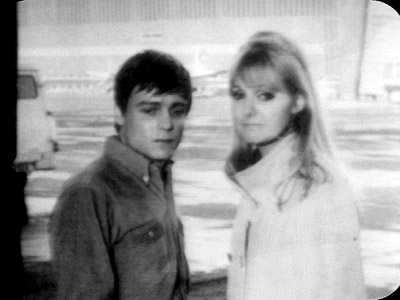
It is not until this outing that Jamie is paired principally with the Doctor, although he does spend a fair amount of air time with the Liver Bird, Samantha Briggs. The Liverpudlian character, whose brother was lost on one of the Chameleon Tours, was played by Pauline Collins and would have become the new companion had Collins agreed to the offer. I have little doubt that there were no regrets as her career progressed to stellar heights. Collins was not to appear in Doctor Who again until the 2006 Series 2 story, Tooth and Claw, in which she played Queen Victoria.
Pauline Collins played a girl from Liverpool, Samantha Briggs, who was searching for her lost brother
Pauline Collins’ next appearance in Doctor Who would be 39 years later as Queen Victoria in Tooth and Claw
Jamie’s rapport with the Doctor is incredible but is only the beginning of a steadfast relationship which will mature during Seasons five and six. This partnership, however, is at the expense of Ben and Polly who depart the Tardis Crew at the end of episode six. Ben’s days were numbered from Jamie’s arrival in The Highlanders and it was unfortunate that the dynamic between the two modern day London companions was lost. Anneke Wills chose to relinquish her role as Polly once Michael Craze’s departure became known.
Jamie’s addition to the Tardis Crew eventually came at Ben’s expense
Polly discovers a dead body in episode one of The Faceless Ones
Ben and Polly’s farewell was not much better than Dodo’s in The War Machines, which was incidentally Ben and Polly’s first adventure with the Doctor. Absent from episodes three, four and five, they only appeared in a pre-filmed segment at episode six’s close. A ten month companionship spanning two Doctors ended abruptly when the couple realized that it was 20 July 1966, the very day that they’d stumbled into the Tardis at the conclusion of The War Machines. Although visibly upset, Polly was pleased to be able to get back to her own world. The Doctor said how lucky they were because he never got to return to his. Exhibiting a marked sexism the Doctor stated, “Now go on, Ben can catch his ship and become an Admiral, and you Polly, you can look after Ben”. What a life. You could tell it was 1967! After Polly enquired as to whether the Doctor would be safe, Jamie assured her that “I’ll look after him”.
We bid Ben and Polly a sad farewell
The Second Doctor’s first present day serial, The Faceless Ones, is sure to have influenced Mark Gatiss when he wrote the Series 2 story The Idiot’s Lantern. In that 2006 Tenth Doctor story an evil entity, The Wire, existed only in the form of energy. She transferred herself between television sets and fed off humanity’s mental signals as people innocently watched the telly. In stealing the humans’ energy The Wire hoped to one day regain a corporeal form. Her victims, however, were robbed of their faces and minds, although they still retained consciousness. Faceless the victims became, but nowhere near as grotesque as their predecessors in The Faceless Ones.
Rose Tyler becomes faceless in 2006’s The Idiot’s Lantern
The Chameleon Faceless Ones of 1967 were altogether more frightening
Overall, I thoroughly enjoyed The Faceless Ones and am saddened that only two of the six episodes are held in the BBC Archives. The Second Doctor serials are just such a delight and it’s appalling that there are only a handful of complete Troughton serials remaining. As the Doctor and Jamie walked off at the story’s end, looking for the stolen Tardis, I contemplated how pleased I was that Doctor Who is a British and not an Australian programme. Jamie would never have had his Scottish accent stolen, and replaced by a Received Pronunciation one in the Chameleon-Jamie, if the show was made in Australia. Nor would the actor who played the Police Inspector Crossland experience such difficulties in gaining and retaining a Scots brogue. Most importantly, however, the humans who were replicated by the Chameleons would never have been left hidden in cars. Residing in such a hot environment we’re all too schooled in the “dogs die in hot cars” commercials to ever contemplate leaving a human in one! Join me next time as Season four comes to an end with The Evil of the Daleks and Doctor Who gets its newest companion, Victoria.
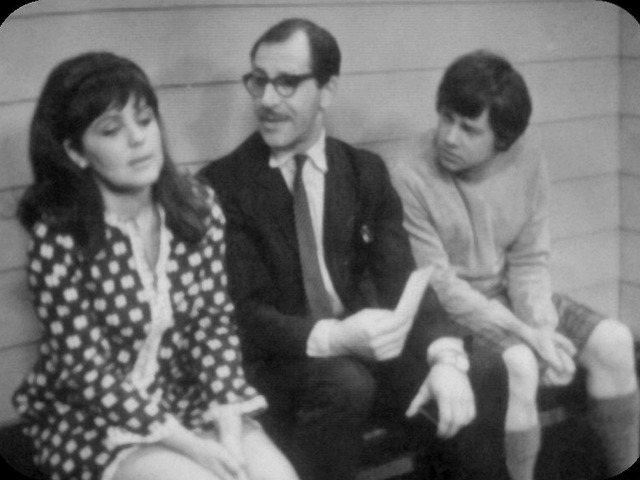
Sam, Inspector Crossland and Jamie
The Doctor and Inspector Crossland
The Faceless Ones was originally broadcast in the UK between 8 April and 13 May 1967. Episodes 1 and 3 are available on the triple DVD set Lost in Time
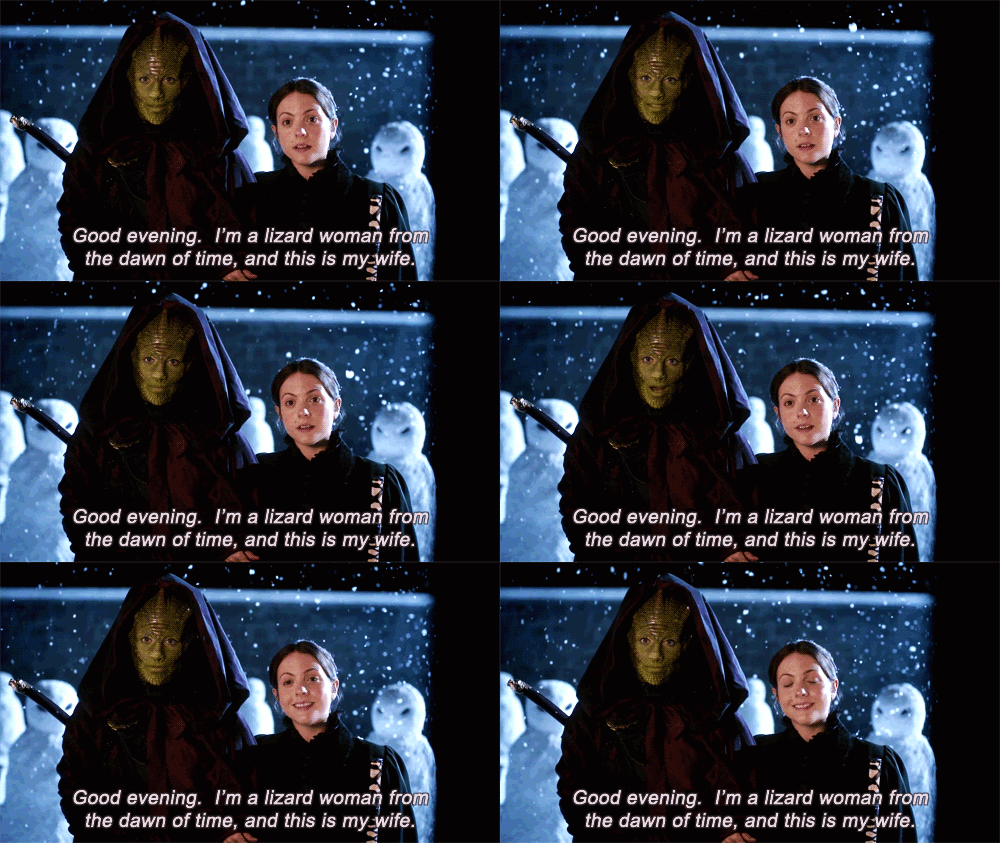
Science Fiction is the perfect genre for disguised social commentary. Subjects deemed too sensitive, or politically charged, to examine in mainstream drama can be critiqued in Science Fiction beneath the cloak of fantasy. Doctor Who in the 21st Century has been the vehicle for political exploration, particularly in respect of same sex marriage. Whilst the Eleventh Doctor’s companions, Amy Pond and Rory Williams, conformed to the Judeo-Christian tradition of being legally married (even if the Doctor, in his naivety, thought single bunk beds were fun), same sex marriage has been displayed between Madame Vastra, a warrior Silurian and her Victorian maid, and subsequent wife, Jenny Flint. Hence, whilst seemingly supporting the status quo for present day human companions, Doctor Who radically offers an alternate agenda in which same sex marriage is in itself uncontroversial when between an alien and a human.
New Series Doctor Who has broached the subject of same-sex marriage. Madame Vastra and her wife, Jenny Flint, are seen here in the 2012 Christmas Special The Snowmen
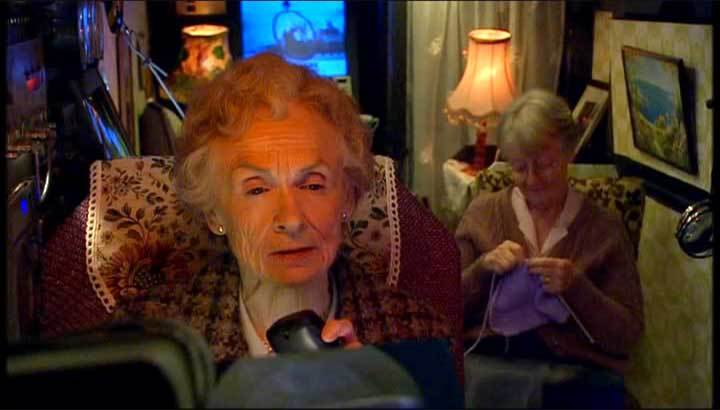
The Series Three story, Gridlock, features an elderly human same sex couple, Alice and May Cassini, who have been trapped on the motorway for 23 years. Their relationship, whilst millions of years away in the far future, is disguised under the humour of a cat, Thomas Kincade Brannigan, who is married to a human, Valerie. Notwithstanding his own less than conventional marriage, Brannigan is nonetheless unable to wrap his mind around the concept of two women being married to each other. He continues to refer to the couple as the “Cassini Sisters”. More about Gridlock, and its relationship to The Macra Terror¸later in this review.
In 2007’s Gridlock Thomas Kincade Brannigan, a cat, is married to a human, Valerie, but finds same-sex marriage difficult to comprehend
The “Cassini Sisters”, Alice and May, are actually a married couple.
Whilst seemingly a story about giant killer crabs, The Macra Terror, is actually a biting social commentary on British working class recreation and totalitarian regimes. The third and final Doctor Who script written by Ian Stuart Black, The Macra Terror is a continuation of Black’s concerns surrounding colonialism which were raised in his first Who penned serial, The Savages. Black’s second serial, The War Machines, examined amongst other things, mind control which is another of the concerns of The Macra Terror.
Ian Stuart Black, writer of The Macra Terror, The Savagesand The War Machines
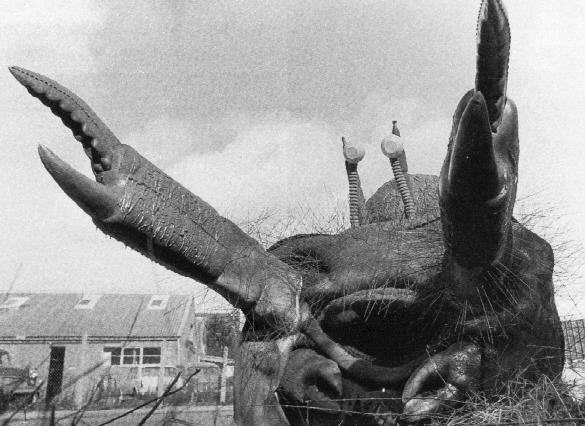
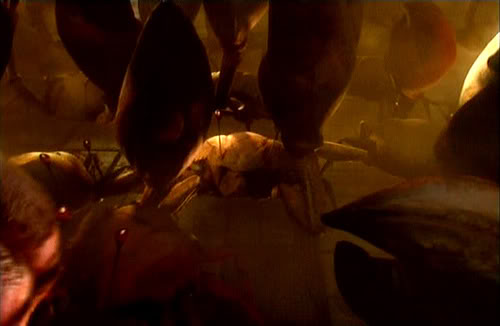
The Macra Terror is set on an unnamed planet far in the future. Colonized by Earth at some time in the past, this planet is the natural home of the Macra, giant crabs that are reliant up gases toxic to humans for their survival. Perhaps because humans had changed the above ground atmosphere of the planet, the Macra now reside underground, except at night when they visit the planet’s surface. The Macra have enslaved the human population and compels them to work mines to produce the toxic gas so essential for their survival. The human residents, however, are ignorant of the Macra’s control of their colony and blissfully unaware that they have become enslaved through mind control. Believing themselves to reside in a utopian society, the human colony bears an uncanny resemblance to mid 20th Century British Holiday Camps. Life is regimented, happiness compulsory and dissent considered a mental illness requiring treatment.
The Macra kills the Colony’s Controller
A publicity shot of the Controller and Macra taken prior to filming. Note that the Controller’s hair and make up is different from the Australian Censors saved film clip
A reasonable familiarity of the British holiday camp culture is required to understand the biting commentary of The Macra Terror. As an Australian I found the story’s references to holiday camps oblique and the holiday camp atmosphere more akin to a prison. Whilst that was certainly one of Black’s messages, British residents would have been a great deal more conversant with commercialized leisure culture that holiday camps were a part of. These holiday camps were usually in seaside areas and were an immensely popular annual holiday for working class families. Having suffered from the restrictions and rationing of the Second World War, the British were keen to escape from their work day drudgery into a world of organized leisure for a week or two a year. Suitably priced for low income earners, the holiday camps offered affordable accommodation in acceptable, but rudimentary, accommodation and communal meals. Activities for all the family were offered with these centring upon the communal nature of the holiday experience. Competitions would be run for the best “Knobbly Knees” or the most “Glamorous Grannies”, for example, and holidayers would be conscripted into performing on stage. Swimming pools, ballrooms, tennis courts, bars and funfairs could be found at these establishments. Crèches provided child care for children, thereby allowing their parents the opportunity for valuable down time together.
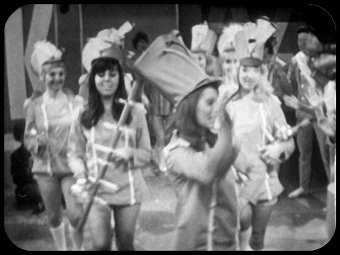
The Colony is run along the lines of a Holiday Camp. Here Drum Majorettes perform
Ben has a complimentary massage in the Refreshing Department
These holiday camps, however, had an aura of regimentation around them. Many of the camps had been resumed by the military during the war and still retained ghosts of soldiers’ past. Public announcements were made through public address systems and some establishments, such as Butlins which was the UK’s largest holiday camp provider, awoke campers at the same time every morning with muzak. Undoubtedly because of wartime austerity and regimentation, the average punter holidaying at these camps would have found such scheduling of their leisure unsurprising. An intriguing pictorial history of British Holiday camps can be accessed here.
Cinema release commercial for Butlins Holiday Camps
The music you’d be woken up to each day at Butlins, together with postcards from the 1960s.
The Macra Terror opens with drum majorettes performing to a colony tune. The Doctor, Ben, Polly and Jamie have found themselves on the planet and unwittingly captured an escaped patient of enforced conformity, Medok. They are welcomed to the colony like honoured guests and afforded the services of the Refreshing Department. A complete choice of all treatments is offered including steam baths, beauty treatments, massages, clothes cleaning, sunlight treatment, moonlight treatment, and sparkling and effervescent sprays. Whilst Polly gleefully accepts a shampoo, the Doctor is put into a clothes reviver where both his body and his clothes are cleaned and he emerges immaculately groomed. Although Polly thinks he looks gorgeous, the Doctor has other ideas. Discovering the” rough and tumble machine” for the toning of muscles, the Doctor jumps in and emerges as his usual dishevelled self. If only all four episodes of this serial weren’t lost, because this would be an incredible scene to see.
Paul Android, Colonial Dance, The Macra Terror. The uploader describes himself as a hardcore Whovian who loves everything Doctor Who. On his YouTube Channel he has over 100 piano arrangements of themes for Doctor Who. Bless him!
The Doctor is quick to discover that all is not peachy in the colony. The public address system announcements willing people to happiness have a sinister air about them. Whilst the humans are sleeping at night the Macra pump subliminal messages into their heads however the Doctor is able to awaken both Polly and Jamie before they come under its effects. Ben is not so lucky and is successfully brainwashed. This indoctrination ensures that all humans are compliant and are effectively in denial as to the Macra’s existence. This indoctrination makes Ben turn against his friends and interestingly, loose his Cockney accent. All is resolved at the end, however, when Ben saves the day by destroying the gas pumping equipment. In doing so the Macra are killed and the colony again has its freedom. Notwithstanding all the colony has been through, it appears to be happy to continue with its traditions of holiday camp style, enforced happiness. When it’s suggested that the Doctor might become the Colony’s next Pilot (leader), the Tardis Crew is quick to decamp but not before Jamie does the Highland Fling as they exit through the door. Now that’s another scene I’d love to have been able to see.
Jamie is a restless sleeper and cannot be indoctrinated. Ben, however, is a victim of the mind control
The enforced happiness that is an essential element of the Macra controlled colony, is a theme that is taken up 21 years later in the Seventh Doctor story, The Happiness Patrol. Another biting political saga in disguise, The Happiness Patrol is scathingly critical of British Prime Minister Margaret Thatcher. The Macra, however, would not be seen in Doctor Who for another 40 years and currently hold the record for the second longest gap in appearances of any Who monster or character. They made their return in the 2007 story, Gridlock, which bears some similarities with The Macra Terror. The character with the longest interval between appearances is The Great Intelligence, with 44 years between outings. In Gridlock the Macra have infiltrated the city of New New York in New Earth, whereas in The Macra Terror it is humans that have colonized the Macra’s planet. In both instances the Macra are reliant upon noxious gas, with the Gridlock variety thriving on the toxic fumes of motor vehicles. The Tenth Doctor states that the Macra have devolved since last he met them, and again in Gridlock they appear to be doomed as the roof to the motorway opens, thereby allowing the gas on which they are reliant to escape.
Polly and Ben are confronted by the Macra
The 2007 Macra of Gridlock are much smaller and less intelligent creatures
The Macra Terror is unfortunately Ben and Polly’s penultimate Doctor Who serial. Join me at Gatwick Airport for The Faceless Ones as we sadly bid them farewell.
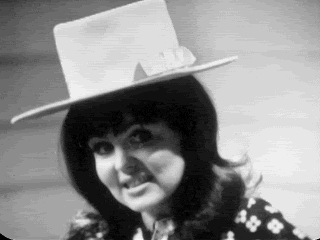
The Doctor finds another funny hat to wear
The Macra Terror was originally broadcast in the UK between 11 March and 1 April 1967. All four episodes are missing from the BBC Archives
The UK’s The Sunnewspaper has reported that Doctor Who’s 50th Anniversary Special on 23 November 2013 will be broadcast simultaneously throughout the world to avoid leaks. Set to air at 8.00 p.m. on BBC1 in the UK, it will be shown on ABC1 at 5.00 a.m. on 24 November in Queensland, and 6.00 a.m. in those eastern Australian States sensible enough to have Daylight Savings. I have yet to see any confirmation by the ABC, although The Sun reports that all global broadcasters have agreed. You can read the The Sun’s article at http://www.thesun.co.uk/sol/homepage/showbiz/tv/5034088/Dr-Who-special-aired-worldwide-at-exactly-same-time.html
With all the hype surrounding Doctor Who’s 50th Anniversary on 23rd November, the 50th birthday of the Doctor’s oldest and most deadliest foe, the Daleks, looked like it may well have been forgotten. Born on the screens of the United Kingdom’s 405 line black and white TV sets on 21st December 1963, the Daleks have appeared in over 30 Doctor Who serials, together with a number of cameos and flashbacks. They have battled against 10 of the Doctor’s 11 incarnations and have been killed and resurrected more times than Rory Williams!
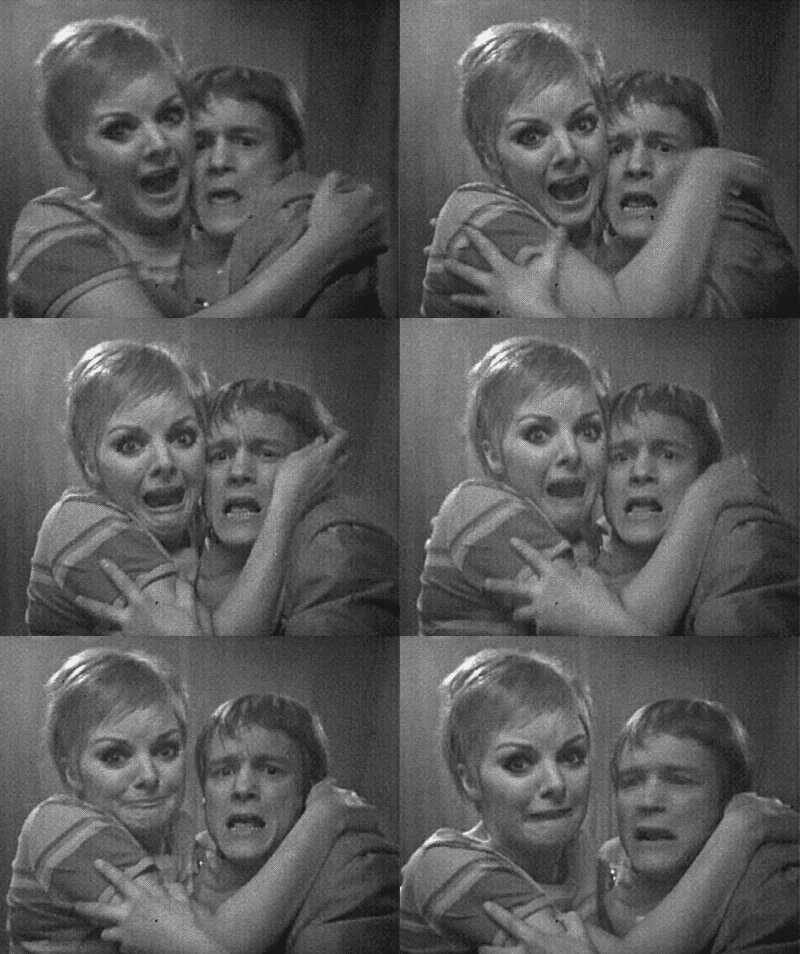
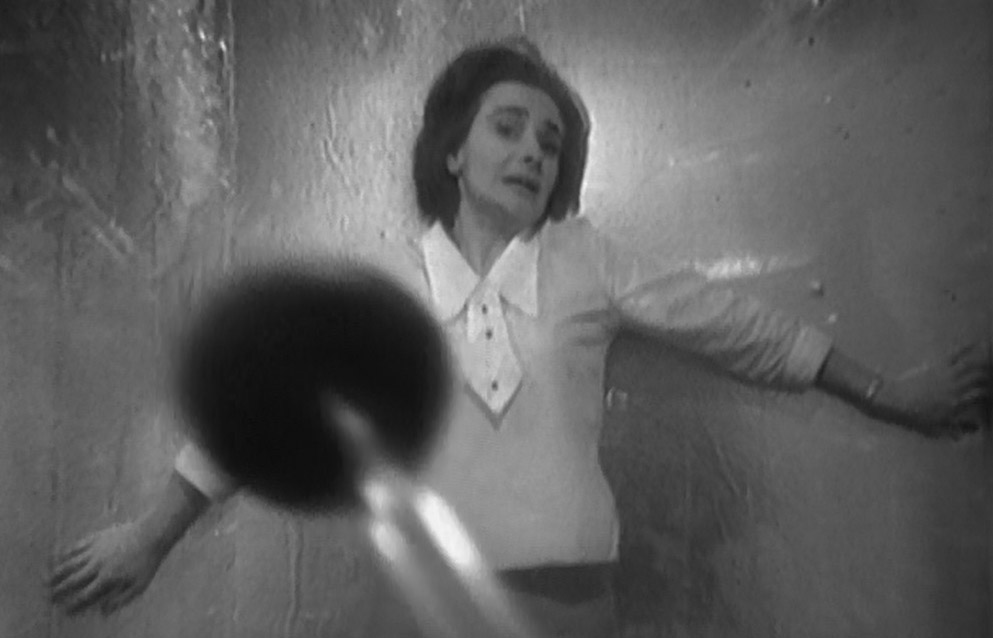
Barbara is pinned against the wall in fear during the Daleks’ first appearance in Doctor Who on 21st December 1963
The BBC has today announced that the Daleks will appear in the Doctor Who 50th Anniversary special, together with the shape shifting Zygons who will make only their second appearance – 38 years after their first. Details of the nature of the Daleks battle with the Tenth and Eleventh Doctors, together with John Hurt, a hitherto unknown incarnation, have yet to be revealed. Let’s hope it’s as memorable as the closing shot of 1963’s The Dead Planet where companion Barbara Wright is pinned in fear against wall. Barbara’s screams indicated the presence of a terrifying foe, although for the next seven days the audience could only but imagine what the strange rubber object on the end of a metal rod was. The Daleks were born and there was no looking back. Without the Dalekmania which followed their first story, it’s unlikely that Doctor Who would have celebrated its first birthday, let alone its 50th. Long live the Daleks and may we look forward to another 50 years of terror!
The BBC today released this photograph of the Daleks from the 50th Anniversary special which is to be aired on 23rd November 2013





















 The Doctor Who Mind Robber