Category Archives: First Doctor

Day 28 of 50th Anniversary Countdown – Top Ian Chesterton Quotes

Standard

Image

Ian Chesterton was the Doctor’s first male companion and a science teacher at Coal Hill School. The training of his discipline made him particularly sceptical of the Doctor’s claims when first they met. Some of Ian’s best dialogue was in the early days of Doctor Who when he found the belligerence of the old git almost unbearable. Join the Doctor Who Mind Robber as we explore 10 of Ian’s best moments.

An Unearthly Child (Episode 1)

(Ian and Barbara enter the TARDIS for the first time)

Ian Chesterton: But it was a Police Telephone Box. I walked right round it. Barbara, you saw me.

The Doctor: [to Ian] You still think it’s all an illusion?
Ian Chesterton: I know that free movement in time and space is a scientific dream I don’t expect to find solved in a junkyard.
The Doctor: Your arrogance is nearly as great as your ignorance.

The Doctor: You don’t understand, so you find excuses. Illusions, indeed? You say you can’t fit an enormous building into one of your smaller sitting rooms?
Ian Chesterton: No.
The Doctor: But you’ve discovered television, haven’t you?
Ian Chesterton: Yes.
The Doctor: Then by showing an enormous building on your television screen, you can do what seemed impossible, couldn’t you?
Ian Chesterton: Well, yes, but I still don’t know…
The Doctor: Not quite clear, is it? I can see by your face that you’re not certain. You don’t understand. And I knew you wouldn’t! Never mind.

Ian Chesterton: Let me get this straight. A thing that looks like a police box, standing in a junkyard, it can move anywhere in time and space?
Susan Foreman: Yes.
The Doctor: Quite so.
Ian Chesterton: But that’s ridiculous!

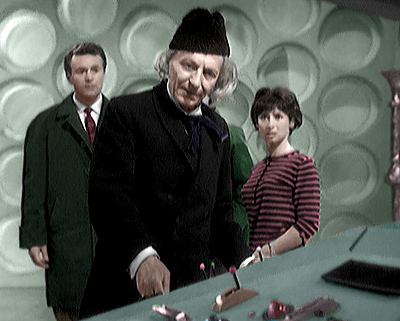
Ian and Barbara with the Doctor in An Unearthly Child

Ian and Barbara with the Doctor in An Unearthly Child

An Unearthly Child  (Episode 2) – The Cave of Skulls

(The TARDIS Crew arrive in pre-historic times and soon realize that they don’t even know the Doctor’s name)

Susan Foreman: We’ve left 1963.
The Doctor: Oh, yes, undoubtedly. I’ll be able to tell you where presently. Zero? That’s not right. I’m afraid this yearometer is not calculating properly. Hm! Well, anyway, the journey’s finished.
[looking at Ian on the ground]
The Doctor: What are you doing down there?
Barbara Wright: What have you done?
Ian Chesterton: Barbara, you don’t believe all this nonsense.
Susan Foreman: Well, look at the scanner screen.
The Doctor: Yes, look up there. They don’t understand and I suspect they don’t want to. Well, there you are. A new world for you.
Ian Chesterton: Sand and rock?
The Doctor: Yes. That’s the immediate view outside the ship.
Barbara Wright: But where are we?
Ian Chesterton: You mean that’s what we’ll see when we go outside?
Susan Foreman: Yes, you’ll see it for yourself.
Ian Chesterton: I don’t believe it.
The Doctor: You really are a stubborn young man, aren’t you?
Ian Chesterton: All right, show me some proof. Give me some concrete evidence. I’m sorry, Susan. I don’t want to hurt you, but it’s time you were brought back to reality.
Susan Foreman: But you’re wrong, Mr. Chesterton.
The Doctor: They are saying I’m a charlatan. What concrete evidence would satisfy you? Hmm?
Ian Chesterton: Just open the doors, Doctor Foreman.
The Doctor: Eh? Doctor who? What are you talking about?

Ian Chesterton: Just a minute. You say we’ve gone back in time?
The Doctor: Yes, quite so.
Ian Chesterton: So that when we go out of that door, we won’t be in a junkyard in London in England in the year 1963?
The Doctor: That is quite correct. But your tone suggests ridicule.
Ian Chesterton: But it is ridiculous. Time doesn’t go round and round in circles. You can’t get on and off whenever you like in the past or the future.
The Doctor: Really? Where does time go, then?
Ian Chesterton: It doesn’t go anywhere. It just happens and then it’s finished.

Barbara Wright: You’re very quiet.
Ian Chesterton: I was wrong, wasn’t I?
Barbara Wright: Oh, look, I don’t understand it anymore than you do. The inside of the ship, suddenly finding ourselves here. Even some of the things Doctor Foreman says…
Ian Chesterton: That’s not his name. Who is he? Doctor who? Perhaps if we knew his name, we might have a clue to all this.

Susan, Barbara, the Doctor and Ian

Susan, Barbara, the Doctor and Ian in An Unearthly Child

An Unearthly Child (Episode 3) – The Forest of Fear

The Doctor:: You seem to have elected yourself leader of this little party.
Ian Chesterton: There isn’t time to vote on it.
The Doctor:: Just as long as you understand that I won’t follow your orders blindly.
Ian Chesterton: If there were only two of us, you could find your own way back to the ship.
The Doctor:: Aren’t you a tiresome young man?
Ian Chesterton: And you’re a stubborn old man. But you will lead. The girls in between and I’ll bring up the rear. Because that’s the safest way.

The Doctor and his companions in The Forest of Fear

The Doctor and his companions in The Forest of Fear

The Daleks (Episode 2) – The Survivors

(Ian and Susan are confronted by the Daleks for the first time)

Dalek: You will move ahead of us, and follow my directions. This way. Immediately! I said immediately!
[Ian begins to run away]
Dalek: Fire!
[they fire at him]
Ian Chesterton: My legs! My legs!
[Susan runs towards Ian]
Dalek: Stop!
[to Ian]
Dalek: Your legs are paralyzed. You will recover shortly, unless you force us to use our weapons again. In that case, the condition will be permanent.
[to the Doctor and Susan]
Dalek: You too, help him.
Ian Chesterton: My legs, my legs. I can’t use my legs!

Ian's legs are paralysed in The Daleks

Ian’s legs are paralysed in The Daleks

The Daleks (Episode 2) – The Survivors

(Ian and realizes that the Doctor has foolishly put all of the crew in danger by lying about the TARDIS’s fluid link)

The Doctor: We need… We need drugs to be treated.
Ian Chesterton: But where are we going to find them?
Susan Foreman: The TARDIS will have to take us to another time and place, where we can be cured.
Ian Chesterton: But don’t you remember? We can’t move the ship until we find the mercury for the fluid link!
The Doctor: For the fluid link, yes. Yes, I’m afraid I cheated a little on that. I was determined to see the city, but everybody wanted to go on, and well, to avoid arguments, in short, there’s nothing wrong with the fluid link.
Susan Foreman: What? Grandfather, do you mean to say that you risked leaving the ship just to see this place?
Ian Chesterton: You fool! You old fool!
The Doctor: Abuse me as much as you like, Chesterton. The point is… we need an immediate return to the ship, and I suggest we leave at once.
Ian Chesterton: We’re not leaving until we’ve found Barbara.
The Doctor: Very well. You may stay and search for her if you wish, but Susan and I are going back to the ship. Now, come along, child.
The Doctor: All right, carry on, fine. How far do you think you’ll get without this.
[holds up the fluid link]
The Doctor: Give that to me!
Ian Chesterton: Not until we’ve found Barbara.
The Doctor: Give it to me I say!
Ian Chesterton: No. It’s time you faced up to your responsibilities. You got us here. Now I’m going to make sure you get us back.
The Doctor: Chesterton, this is…
Ian Chesterton: We’re wasting time. We should be looking for Barbara.
Susan Foreman: He’s right, Grandfather. We are wasting time.
The Doctor: Child, if only you’d think as an adult sometimes… Oh, very well, very well. Let’s go, then. Let’s go.

Barbara, Susan and the Doctor in episode 2 of the Daleks, The Survivors

Barbara, Susan and the Doctor in episode 2 of the Daleks, The Survivors

The Daleks (Episode 5) – The Expedition

(Ian is frustrated that the Doctor always gets his name wrong)

The Doctor: I’m afraid my little trick has rather rebounded on me. What you might call tempting providence, Chesserman.
Ian Chesterton: Well, don’t worry about it now, Doctor. It’s happened.
The Doctor: Yes. Well, at least you’re not vindictive.
Ian Chesterton: Well I will be if you don’t get my name right.
The Doctor: Hmm?
Ian Chesterton: It’s “Chesterton”.
The Doctor: Yes. Hey?
[irritated]
The Doctor: Yes, I know that.
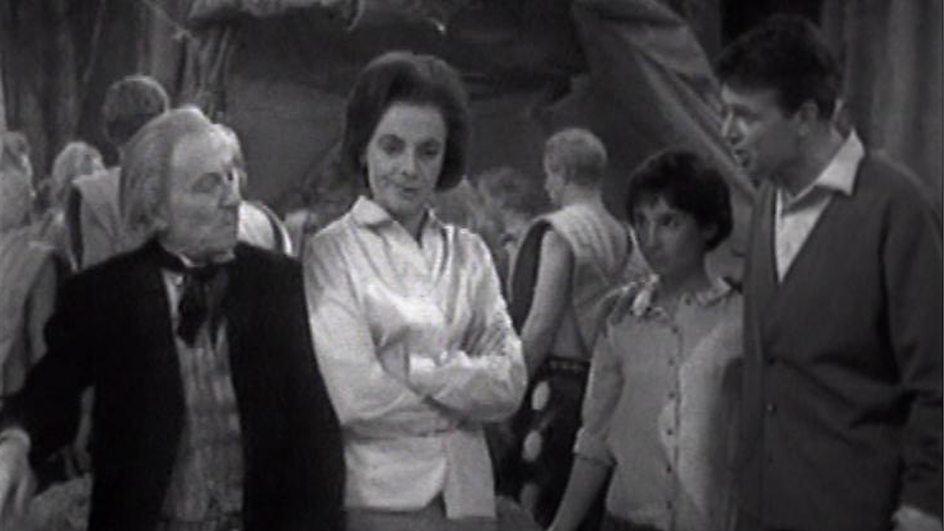
The TARDIS Crew in The Expedition - Episode 5 of The Daleks

The TARDIS Crew in The Expedition – Episode 5 of The Daleks

The Reign of Terror (Episode 5) – A Bargain of Necessity

(Ian has difficulty believing that his word will be accepted)

Léon Colbert: Now be sensible. Save yourself from the guillotine.
Ian Chesterton: You wouldn’t believe my story anyway.
Léon Colbert: Suppose you let me be the judge of that. How did you get to France?
Ian Chesterton: You really want to know, eh?
Léon Colbert: The truth?
Ian Chesterton: Oh yes, it’s the truth all right.
Léon Colbert: You swear it?
Ian Chesterton: Yes, I swear it! I flew here with three friends in a small box. When I left England it was 1963.
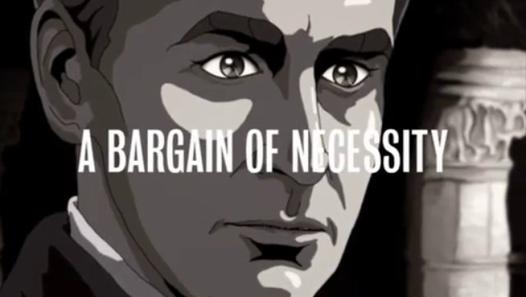
The title card for the animated episode 5 of The Reign of Terror - A Bargain of Necessity

The title card for the animated episode 5 of The Reign of TerrorA Bargain of Necessity

The Reign of Terror (Episode 6) – Prisoners of Conciergerie

The Doctor: Our lives are important, at least to us. But as we see, so we learn.
Ian Chesterton: And what are we going to see and learn next, Doctor?
The Doctor: Well, unlike the old adage, my boy, our destiny is in the stars, so let’s go and search for it.

Ian found himself imprisoned in The Reign of Terror

Ian found himself imprisoned in The Reign of Terror

The Romans (Episode 4) – The Inferno

Ian: I’ve got a friend who specialises in trouble. He dives in and usually finds a way.

The TARDIS Crew in The Romans

The TARDIS Crew in The Romans

The Web Planet

I’ve seen a colony of ants eat their way right through a house. That size, they could eat their way through a mountain. Why are they that big?

The Doctor and Ian in The Web Planet

The Doctor and Ian in The Web Planet

The Crusade (Episode 2) – The King of Jaffa

(Ian is knighted by King Richard of England).

Richard the Lionheart: [tapping his sword on each of Ian’s shoulders] In the name of God, St. Michael, and St. George, we dub you Sir Ian, Knight of Jaffa. Arise Sir Ian and be valiant.
[holds out his hand and Ian kisses it]
Ian Chesterton: Your majesty.
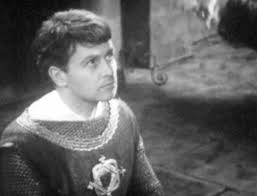
Sir Ian of Jaffa is knighted by Richard the Lionheart in The Crusade

Sir Ian of Jaffa is knighted by Richard the Lionheart in The Crusade

The Crusade (Episode 4) – The Warlords

(Ian saves the Doctor’s life by pretending to betray him)

Ian Chesterton: I am Sir Ian, my lord, Knight of Jaffa. I know this villain’s treachery… and hearing that you were looking for him, I followed you.

(Later, as the party return to the TARDIS)

Ian Chesterton: …Any more cracks about knighthood, and I’ll carry out that execution!
The Doctor: Well, my dear boy, I must say I think you’ve earned a good knight’s sleep!
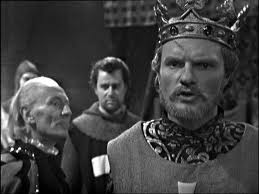
The Doctor and King Richard in The Crusade

The Doctor and King Richard in The Crusade

Vivien Fleming

©Vivien Fleming, 2013.

An Adventure in Space and Time to Screen in UK on 21 November

Standard

Image

BBC Two has announced on Twitter that it will be airing the Mark Gatiss penned docudrama on the genesis of Doctor Who at 9.00 p.m. on Thursday 21 November.  Fans in Australia must wait until 8.45 p.m. on Sunday 24 November when An Adventure in Space and Time will be shown immediately after the encore screening of the 50th Anniversary Special, The Day of the Doctor, on ABC1. 

Vivien Fleming

©Vivien Fleming, 2013.

50th Anniversary Doctor Who Marathon for UKTV Australia and NZ

Standard

Image

UKTV (Australia and New Zealand) has announced a bumper schedule of Classic Series Doctor Who to celebrate the show’s 50th Anniversary this month. Doctor Who News has listed the entire month’s programmes which includes a 36 hour marathon on the weekend of the 23rd and 24th November.  Starting on Saturday morning at 5.30 a.m. in Australia, UKTV will broadcast the BBC America produced Doctor Who Revisited: The First Doctor followed by the first Doctor Who serial, An Unearthly Child. For the next day and a half every Doctor Who Revisited special for each of the 11 Doctors will be shown, followed by one complete serial from each Doctor’s era.

Full details are available from Doctor Who News here

Vivien Fleming

©Vivien Fleming, 2013.

Day 29 of 50th Anniversary Countdown – The Top 5 Second Doctor Stories

Standard

Image

Even with the recent recovery of nine missing episodes from The Enemy of the World and The Web of Fear, Patrick Troughton’s tenure as the Doctor still has 54 missing episodes, including four serials in which not a single episode is held – The Power of the Daleks, The Highlanders, The Macra Terror and Fury From the Deep. William Hartnell’s Doctor has 44 of his episodes missing, including six serials without a single episode – Marco Polo, Mission to the Unknown, The Myth Makers, The Massacre, The Savages and The Smugglers.

In the absence of so many stories, making an informed choice on the Top 5 serials for the First and the Second Doctors is both difficult and hypothetical.  A brilliant soundtrack could mask poor visual representations, whilst a boring audio may hide a visually stunning masterpiece.  Without seeing the moving pictures one can never be 100% certain that a story is as good as its reputation. All that being said, here’s the Doctor Who Mind Robber’s humble opinion of the Second Doctor’s Top 5 stories.

Is The Space Pirates really as bad as its reputation?  Only the moving pictures can show for sure

Is The Space Pirates really as bad as its reputation? Only the moving pictures can show for sure

5. The Enemy of the World

The recovery of five episodes and release of all six parts of The Enemy of the World on iTunes recently quickly lead to a reappraisal of this story’s worth. Previously only episode three had been held in the BBC Archives and released on the triple DVD set, Lost in Time. That episode was somewhat unrepresentative of the other five and caused many to underestimate the serial’s true worth.

The Enemy of the World was the only Season 5 story without monsters and not of the “base under siege” genre.  Patrick Troughton’s dual role as the Doctor and the evil would-be world dictator, Salamander, allowed him to show another side of his acting skills, notwithstanding the rather dubious Mexican accent. Enemy was also Barry Letts’ Doctor Who debut and heralded the show’s first action scenes involving helicopters and hovercraft.  Such adventures would become second nature during the tenure of the Third Doctor.

Patrick Troughton plays the evil would-be world dictator, Salamader, in The Enemy of the World

Patrick Troughton plays the evil would-be world dictator, Salamader, in The Enemy of the World

4. The Faceless Ones

This will undoubtedly be a controversial choice however it’s one of my personal favourites. Only episodes one and three are held in the BBC Archives.  The last story of Ben and Polly’s tenure as companions, The Faceless Ones is set in the ‘present day’ and features excellent location filming at Gatwick Airport in London. Pauline Collins appears as Samantha Briggs, a young woman from Liverpool who is searching for her brother who did not return from a package holiday to Rome. A psychological thriller about identity loss, it was sure to have heavily influenced Mark Gatiss’ 2006 episode, The Idiot’s Lantern.

The Faceless Ones influenced the  2006 story  The Idiot's Lantern

The Faceless Ones influenced the 2006 story The Idiot’s Lantern

3. The Evil of the Daleks

One of the most highly regarded Sixties Dalek stories, The Evil of the Daleks was the first and only serial to be repeated in the UK during that decade.  The repeat was written into the script of the Season 5 finale, The Wheel in Space, and the Season 6 premiere, The Dominators. The new companion Zoe was to view the Doctor’s thought patterns, presumably during the season break, and decide whether she wished to join the TARDIS Crew.

Yet another missing story, only episode two of The Evil of the Daleks is currently held in the BBC Archives.  The story introduced the Dalek Emperor which was a direct spin off from the Whitaker penned Daleks cartoons in TV Century 21 magazine. The Dalek “human factor” is intriguing and like The Faceless Ones, undoubtedly influenced New Series Doctor Who. Robert Shearman’s Series 1 story, Dalek, has several nods to The Evil of the Daleks, whilst Gareth Roberts’ short novel, I Am a Dalek, revives the “human factor” in more than mere words.

The Evil of the Daleks was the first Doctor Who serial ever repeated and the first and only repeat to be scripted into serials

The Evil of the Daleks was the first Doctor Who serial ever repeated and the first and only repeat to be scripted into serials

2. The War Games

Patrick Troughton’s last serial as the Second Doctor, The War Games is a 10 part epic which forever changed the history of Doctor Who. Although the name of his home planet is not yet disclosed, the Doctor is revealed to be a Time Lord. A renegade Time Lord, the War Chief, has given the secrets of time travel to an alien race which seeks to conquer the galaxy.  In their quest to build the best fighting force, human soldiers have been transported from Earth to fight a number of simultaneous wars. These discrete battle zones see engagements from the First World War, the American Civil War, Russo-Japanese War, English Civil War, Boar War, Mexican Civil War, Crimean War, Thirty Year War, Peninsula War, and Roman and Greek war zones.

Being unable to return all the War Games participants to their own time and space, the Doctor reluctantly calls in the Time Lords. Having himself been a renegade since stealing a TARDIS and taking to the universe, the Doctor is at last compelled to face justice for breaching the Time Lords’ Non Interference Policy. Jamie and Zoe are returned to their own times, with all but the memories of their first adventure with the Doctor wiped, and the Doctor is sentenced to exile on Earth.  His knowledge of the TARDIS’s time travel functions is denied him, and he is forced to change his bodily form. The term “regeneration” has not yet been coined.  So ends the monochrome era of Doctor Who and Patrick Troughton’s three year tenure as the Doctor.

Only in the 1960s could you get something as trippy and psychedelic as this

Only in the 1960s could you get something as trippy and psychedelic as this

1. The Mind Robber

An almost psychedelic trip through the land of fiction, The Mind Robber is just about as good as Doctor Who gets. This five part serial sees the Doctor, Jamie and Zoe caught in the world of children’s fairytales. They encounter Lemuel Gulliver, brilliantly portrayed by Bernard Horsfall, Princess Repunzel, Medusa, a Unicorn and a cast of Who created characters.  Far from being what it seems, nothing is reality.  Zoe and Jamie are transformed into fictional characters after Jamie had earlier had his physical appearance altered. The TARDIS explodes for the first time and the Doctor and his crew find themselves drifting in space. Zoe shows that being small in stature is in no way detrimental to fighting a 21st Century cartoon superhero, and Repunzel’s hair really is the strongest and most effective way of quickly scaling rocky cliff faces.  It’s all brilliant stuff!

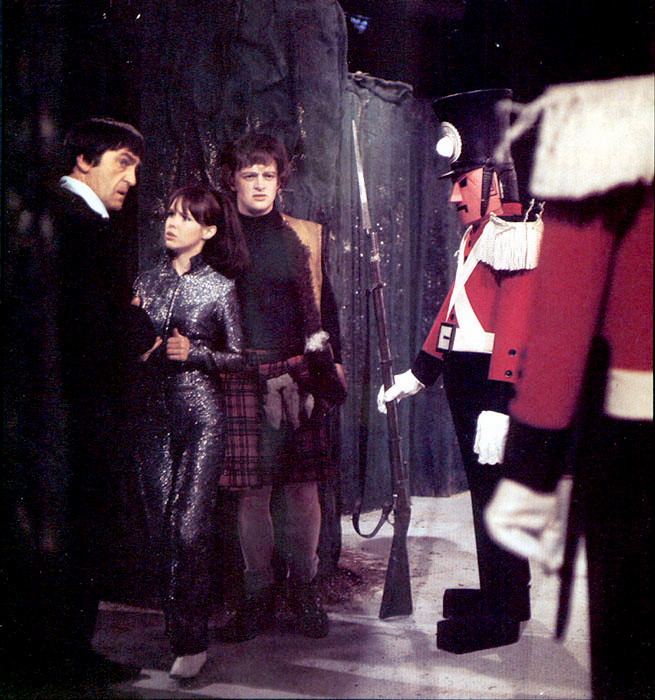
The Doctor, Zoe and the re-faced Jamie meet up with wind-up tin toy soldiers in The Mind Robber

The Doctor, Zoe and the re-faced Jamie meet up with wind-up tin toy soldiers in The Mind Robber

Vivien Fleming

©Vivien Fleming, 2013.

Day 30 of 50th Anniversary Countdown – The Top 5 First Doctor Stories

Standard

Image

5. The Aztecs

A Special Edition of The Aztecs was released earlier this year which included an abridged reconstruction of Galaxy 4, together with episode three which was recovered in 2011. The Aztecs has long been held in high esteem by fandom and is a superb example of the historical dramas that the BBC has always brilliantly produced. Set in South America during the time prior to Spanish settlement, the serial tells the story of Barbara’s determination to change history. In a quest to satisfy her penchant for bracelets, Barbara donned a snake bangle discovered not long after the party disembarked from the TARDIS.  Mistaken by the locals as the reincarnation of the high priest Yetaxa, her extraordinary knowledge of history and modern sense of morality naturally saw her rile against human sacrifice. From the beginning the Doctor’s objective was to ensure that history was not rewritten.  This was the first serial in which the parameters of “fiddling” with time and space were examined.  Barbara’s refusal to conform to the Doctor’s direction that “time can’t be rewritten.  Not one line” very nearly had fatal consequences for the Crew. Henceforth there would be limits on the TARDIS Crew’s actions.

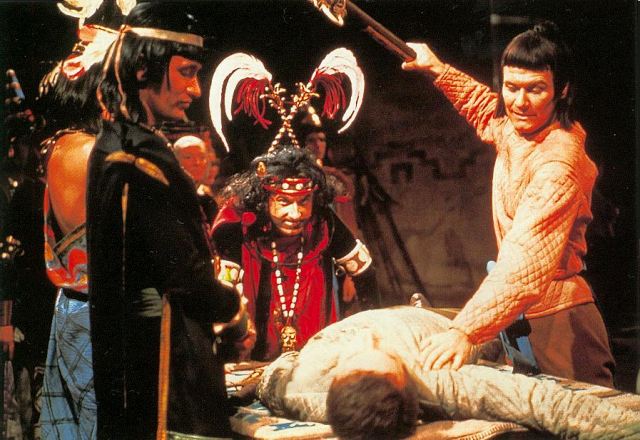
Ian was lucky to escape with his life in The Aztecs

Ian was lucky to escape with his life in The Aztecs

4. The Tenth Planet

The First Doctor’s final story, The Tenth Planet heralded a number of firsts – Doctor Who’s first regeneration, the introduction of the Cybermen and the prototype for the Second Doctor’s “base under siege” formula. Rumours abound that the missing fourth episode, which features William Hartnell’s regeneration, has been recovered.  The DVD of the story has recently been released featuring an animation of episode four.  I wonder if a Special Edition, with the (alleged) recovered episode four, should be expected soon?

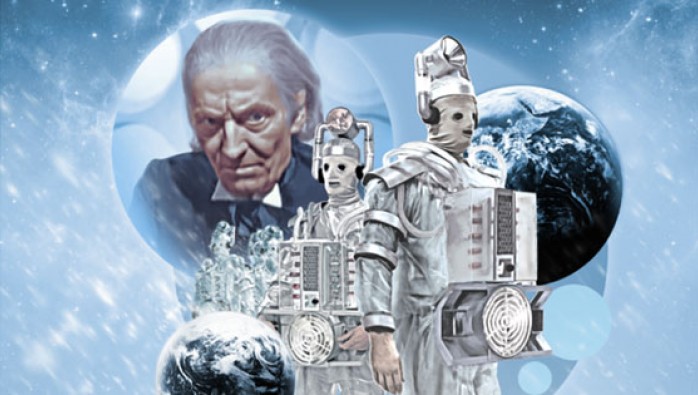
The DVD cover art for The Tenth Planet

The DVD cover art for The Tenth Planet

3. The Massacre

The Massacre is completely missing from the BBC Archives, although some of the current missing episode rumours suggest that it has been recovered.  Set in 1572 France, the serial chronicles the Doctor and Steven’s adventures during the Massacre de la Saint-Barthélemy (the St. Bartholomew’s Day Massacre) in which thousands of protestant Huguenots were massacred in a religious war lead by Roman Catholics. William Hartnell plays two roles in The Massacre – both the Doctor and the Doctor’s evil doppelganger, the Abbot of Amboise. As this is a historical drama it can almost be assured that the set design and costuming was brilliant.  The story is the only example in monochrome Doctor Who of a single companion accompanying the Doctor.  It also introduces new companion, Dodo Chaplet, in the last 10 minutes of the final episode.

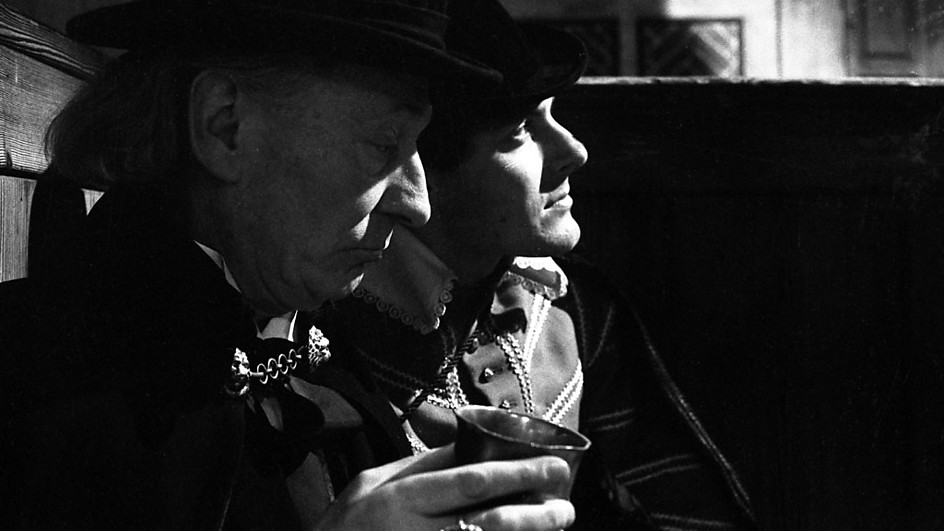
The Doctor and Steven in The Massacre

The Doctor and Steven in The Massacre

2. An Unearthly Child

The first Doctor Who serial, An Unearthly Child introduced the strange adventures of a belligerent old man, the Doctor, and his grand-daughter, Susan Foreman. Possessed of a time machine which externally resembled a Police Call Box, the Doctor’s Ship was larger on the inside and capable of both time and space travel.  Coal Hill school teachers, Ian Chesterton and Barbara Wright, barged their way into the TARDIS (an acronym for Time and Relative Dimension in Space) whilst looking for their student, Susan.  Fearful that the teachers would reveal his secret, the Doctor kidnapped the pair as the TARDIS was seen to dematerialize for the first time.

Episodes two, three and four of the serial are more properly known as The Cave of Skulls, The Forest of Fear and The Firemaker. The Doctor, Susan and their two unwilling companions find themselves in pre-historic times and at the mercy of a tribe of cavemen who have lost their knowledge of fire making.

The first TARDIS Crew in An Unearthly Child

The first TARDIS Crew in An Unearthly Child

1.  Marco Polo

I’m going out on a limb here nominating a completely lost seven part serial as the Top First Doctor story.  As outlined in our post Missing Episodes – Has Marco Polo Been Recovered?  last week, I wouldn’t be at all surprised if this classic serial has been recovered and restored, and finds its way onto the iTunes playlists before Christmas.

The fourth Doctor Who story, Marco Polo was directed by Waris Hussein who was also responsible for the first serial, An Unearthly Child. As far as the BBC is presently letting on, all that remains of Marco Polo are some stunning colour photographs taken on set and the fan recorded soundtrack.  In the days prior to home video recording and commercial VHS releases, the only way that a fan could re-live a Doctor Who episode was to listen to the reel-to-reel audio recording which they’d made during the episode’s original transmission. Incredibly, around half a dozen fan recorded collections remained extant and were located during the 1980s and 1990s. It was during those decades that fans became cognisant of the BBC’s destruction of its television heritage and went searching for what remained.  Thanks to the endeavours of a small group of hard-core fans who religiously recorded Doctor Who each Saturday evening, aficionados of Who were now able to listen to long lost episodes.

Is Marco Polo really as good as fans who watched the original and only transmission remember?  Certainly the audio suggests something very special.  Hopefully we’ll all be able to soon judge for ourselves.

Marco Polo is the earliest missing Doctor Who serial

Marco Polo is the earliest missing Doctor Who serial

HONOURABLE MENTIONS

The Daleks’ Master Plan

Sara Kingdom in combat mode in The Daleks' Master Plan

Sara Kingdom in combat mode in The Daleks’ Master Plan

The Myth Makers

Vicki and Troilus in The Myth Makers

Vicki and Troilus in The Myth Makers

The image at the top of this post is a painting by Francois Dobois depicting the St. Bartholomew’s Day Massacre. No copyright infringement is intended.

Vivien Fleming

©Vivien Fleming, 2013.

Day 31 of 50th Anniversary Countdown – It’s Wholloween (or The Chase, Episode 4)

Gallery

Day 32 of 50th Anniversary Countdown – Top 3 Male Companions of the Sixties

Standard

Image

Yesterday the Doctor Who Mind Robber listed our Top 3 Female Companions of the Sixties. Although fewer in number than their women counterparts, today we examine our Top 3 Male Companions of the Sixties.

3. STEVEN TAYLOR

Not unlike his fellow companion Vicki who was number 3 in our list of the Top 3 Female Companions  of the Sixties, Steven joined the Doctor in a traumatized state. Portrayed by Peter Purves, Steven was an astronaut which had been held captive by the Mechonoids for two years.  As the sole human on the planet Mechanus, his only companion was a stuffed Panda named Hi-Fi. In the Doctor Who Mind Robber’s review of Steven’s first complete serial, The Time Meddler, we described his introduction to the TARDIS Crew in the following way:

Steven, Vicki and Hi-Fi in The Time Meddler

Steven, Vicki and Hi-Fi in The Time Meddler


After assisting the Doctor, Ian, Barbara and Vicki to escape the Mechonoid City in The Chase, Steven had returned to the City to retrieve Hi Fi just as the Daleks destroyed it. It was great dismay, therefore, that the Doctor and Vicki were confronted by Steven as he stumbled into the TARDIS control room before collapsing to the floor. The TARDIS had just materialized in 11th Century England however Steven had stowed away in the ship, presumably whilst Vicki and the Doctor were saying their goodbyes to Ian and Barbara on Mechanus.  Suffering ill effects from the Dalek blast, Steven assumed that he must have been delirious when he chased after the crew and eventually found the ship.

Astronaut Steven Taylor as we first met him in The Chase

Astronaut Steven Taylor as we first met him in The Chase

The spaceship pilot who had spent two years as a prisoner of the Mechonoids was now the Doctor’s latest companion.  Notwithstanding his experience with space craft, Steven has clearly not seen a machine as magical as the TARDIS before.  He doesn’t believe it is a time-machine or that they’ve landed in the 11th Century.  The TARDIS’s inability to blend into its surroundings, as it was constructed to do, together with the discovery of a modern wrist watch, compounds Steven’s disbelief.  Prone to speak his mind, Steven is openly dismissive of Vicki’s assertions about the ship’s capabilities and earns a quick rebuke from the Doctor for calling him “Doc”.  Quickly recovering from  a state of deep sleep or unconsciousness, Steven shows no ill effects from his previous deprivations on the planet Mechanus.  It would not be unfair to assume that a person who had gone two years without human companionship, and has an overt attachment to a stuffed toy, may be suffering some form of psychological distress. Not unlike Vicki, who rapidly regained equilibrium following her trauma on the planet Dido, Steven is promptly able to put the past behind him, leave the panda on a chair, and embrace a new life of adventure with the Doctor.

Peter Purves first appeared in Doctor Who as Morton Dill, the dim witted hick from Alabama in The Chase.  Here Dill investigates a Dalek on the Empire State Building

Peter Purves first appeared in Doctor Who as Morton Dill, the dim witted hick from Alabama in The Chase. Here Dill investigates a Dalek on the Empire State Building

Steven accompanied the Doctor on his journeys from the final serial of Season 2 until the penultimate Season 3 story, The Savages. In the intervening period he assisted the Doctor battle the evil but beautiful Drahvins in Galaxy 4 and the Daleks in the 12 part The Daleks’ Master Plan.  Steven travelled to ancient Troy where he and the Doctor farewelled Vicki, and to 1572 France where he was the Doctor’s sole companion during the massacre of French protestants.  He and Dodo were compelled to play the Celestial Toymaker’s puerile games to retrieve the TARDIS in The Celestial Toymaker and were confronted by the Monoids in The Ark. Steven’s penultimate adventure was to the American Mid-West where he surprised all by being able to sing and barely escaped a lynching.  His departure in The Savages was less than adequate. Having negotiated peace between the Guardians and the Monoids , the Doctor, much to Steven’s dismay,  volunteered  him to remain on the planet and facilitate the transformation to a fair and just society. Although initially hesitant, Steven quickly accepted the challenge and the Doctor and Dodo departed in the TARDIS. So ended Steven’s 12 month tenure as a companion.

Steven with the body of the Abbot of Amboise in The Massacre

Steven with the body of the Abbot of Amboise in The Massacre

2. IAN CHESTERTON

Ian Chesterton was one half of the “Ian and Barbara” duo who introduced the world to Doctor Who. A science teacher at Coal Hill School, he shared a concern with history teacher Barbara Wright about their 15 year old student, Susan Foreman.

After being kidnapped by the Doctor when he and Barbara entered the TARDIS looking for Susan, Ian’s initial relationship with the Doctor was tense and combative. His relations with the self-centred Doctor remained strained  until the Fourth serial, Marco Polo. Included in Doctor Who as both a point of identification for the audience and as a “man of action” for the more elderly and sedate Doctor, Ian remained with the TARDIS crew until the penultimate serial of Season 2, The Chase. During his two year tenure showed himself to be both intelligent and compassionate.  He had  penchant for wearing cardigans and was knocked unconscious more times than any other companion in the history of Doctor Who. Ian was knighted as Sir Ian of Jaffa by King Richard 1 of England in The Crusade.

Sir Ian of Jaffa is knighted by Richard the Lionheart in The Crusade

Sir Ian of Jaffa is knighted by Richard the Lionheart in The Crusade

It is our intention to provide no more than a cursory examination of Ian in this piece.  A comprehensive analysis of William Russell and his contribution to the history of Doctor Who would require a wordy dissertation, many thousands of words in length.  Instead we will leave you with a photographic essay of Ian.  All images are courtesy of http://thechestertons.tumblr.com.

Ian Chesterton had a fond appreciation for cardigans

Ian Chesterton had a fond appreciation for cardigans

Ian was shrunk to the size of an ant and caught in a matchbox in Planet of Giants

Ian was shrunk to the size of an ant and caught in a matchbox in Planet of Giants

Ian comforts Barbara

Ian comforts Barbara

Ian endeavours to unravel Barbara's cardigan in The Space Museum

Ian endeavours to unravel Barbara’s cardigan in The Space Museum

Ian displays how to paralyse a man with finger pressure only in The Aztecs

Ian displays how to paralyse a man with finger pressure only in The Aztecs

Barbara attends to Ian's hair in The Romans

Barbara attends to Ian’s hair in The Romans

Ian parties

Ian parties

Ian and Barbara embrace on returning to 1965 London in The Chase

Ian and Barbara embrace on returning to 1965 London in The Chase

Ian and Barbara frolic in London during their farewell in The Chase

Ian and Barbara frolic in London during their farewell in The Chase

3. JAMIE McCRIMMON

Jamie was the last male companion to join the Doctor in the Sixties although he made up for his late arrival by holding the record as the longest standing companion in Doctor Who’s history. Appearing in 116 episodes in total, Jamie exceeded the next most proficient companion, Sarah Jane Smith, by 21 episodes. Suffering from chicken pox during episode two of The Mind Robber, Frazer Hines was replaced by Hamish Wilson for that episode and the beginning of the following one. As luck would have it The Mind Robber was set in the land of fiction and Jamie’s change of appearance was quickly scripted to arise from the Doctor incorrectly reconstructing his face after he’d been transformed into a cardboard cut-out. Wilson’s departure and Hines’ return was facilitated by the Doctor correctly reconstructing Jamie’s face, with Zoe’s assistance, after he was again transfigured into a cut-out.

Hamish Wilson played the role of Jamie in episodes two and three of The Mind Robber

Hamish Wilson played the role of Jamie in episodes two and three of The Mind Robber

Jamie joined the Doctor, Ben and Polly in the second serial of the Second Doctor’s tenure, The Highlanders. The last historical in Classic Series Who until the 1982 Fifth Doctor’s adventure, Black Orchard, Frazer Hines’ contract as Jamie was originally to last for only the four weeks of the serial.  Hines’ rapport with the cast quickly saw him offered a full time position in the TARDIS Crew prior to the first episode of The Highlanders being broadcast.

Jamie confronts the Doctor, Ben and Polly in The Highlanders

Jamie confronts the Doctor, Ben and Polly in The Highlanders

James Robert McCrimmon met the Doctor and his companions, Polly and Ben, at the Battle of Culloden in 1746. A young and brave Highlander, the kilted Scot was ignorant of 20th Century technology which prompted an array of startled responses to everyday occurrences.  A plane in The Faceless Ones was a “flying beastie”.  In that serial he also had to ask the Doctor what a passport was, to which the Doctor responded, “Oh, some sort of official mumbo-jumbo”.

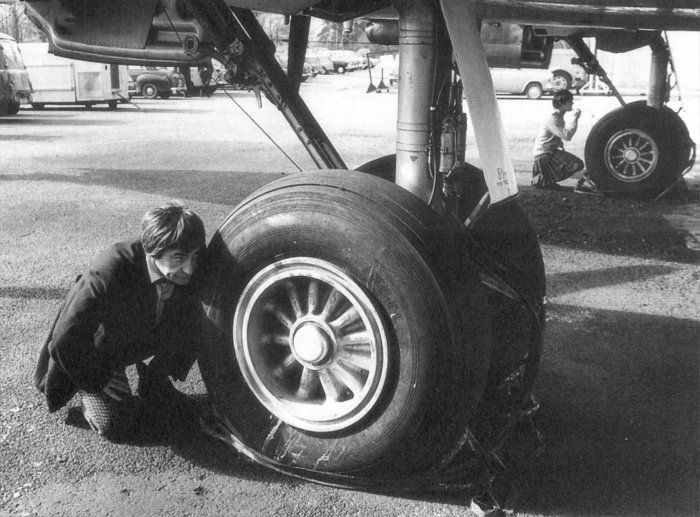
The Doctor and Jamie beside a "flying beastie" in The Faceless Ones

The Doctor and Jamie beside a “flying beastie” in The Faceless Ones

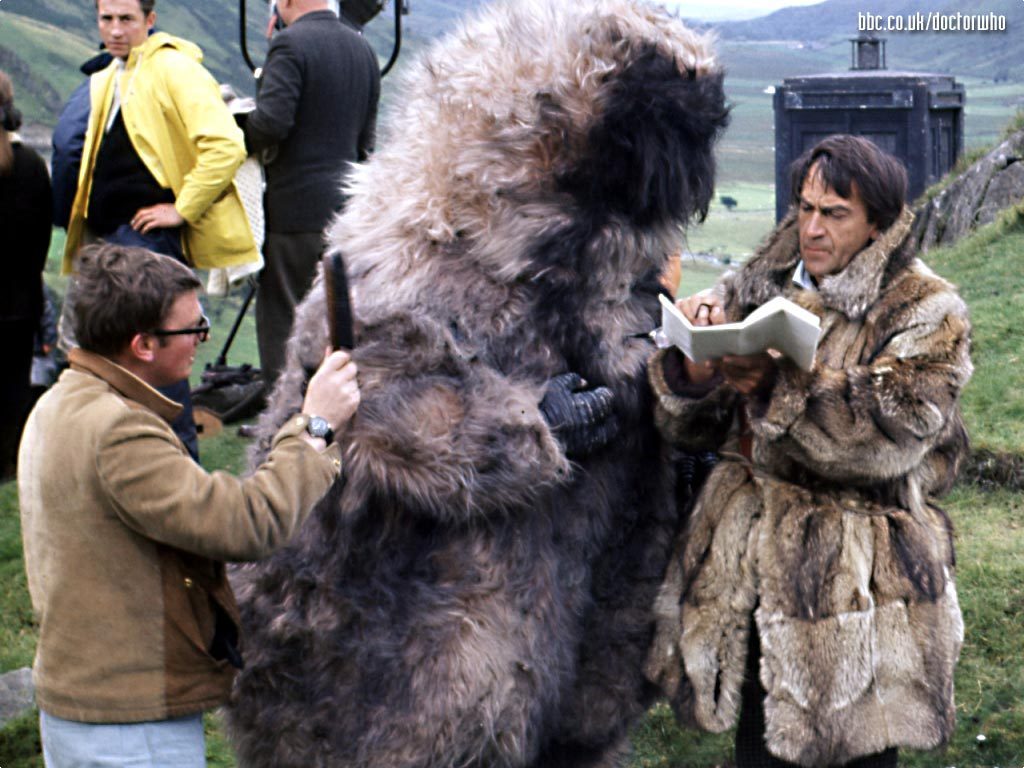
In The Evil of the Daleks Jamie was inquisitive about the sound of a train rumbling past.  He had no idea what the noise was and the Doctor described them to him in the simplest manner possible – “Well, it’s a train.  There are carriages and they go on wheels, on rails, and they’re drawn by a steam ..”.   He was unaware of what the Himalayas were in The Abominable Snowmen  and mistook the Doctor in his big fur coat as “a great sort of hairy beastie”.

Jamie mistook the Doctor in his fur jacket for a "hairy beastie" in The Abominable Snowmen

Jamie mistook the Doctor in his fur jacket for a “hairy beastie” in The Abominable Snowmen

In a state of delirium Jamie thought that a Cyberman in The Moonbase  was the Phantom Piper, the McCrimmon clan’s equivalent of the Grim Reaper. When Zoe first met Jamie in The Wheel in Space she was intrigued by his clothing.  She was unable to resist laughing and blurted out to Jamie, “You’re wearing female garments”. Needless to say, he was less than impressed and was quick to advise Zoe that his garb was that of a true Scotsman.  After initially mistaking him for a “kiltie” from Denmark or Scandinavia,  Zoe admitted that pre-century history was not her forte.  Jamie famously responded, “Aye, maybe not but just watch your lip or I’ll put you across my knee and larrup you”.

Polly tends to the ailing Jamie.  Whilst hallucinating  Jamie mistakes a Cyberman for the "Phantom Piper" in The Moonbase

Polly tends to the ailing Jamie. Whilst hallucinating Jamie mistakes a Cyberman for the “Phantom Piper” in The Moonbase

Jamie was also responsible for giving the Doctor his alias of John Smith.  In episode two of The Wheel in Space the Doctor was unconscious.  When asked what his name was by Gemma  Corwyn, Jamie glanced at piece medical apparatus with the words “John Smith & Associates” inscribed on it and replied, “John Smith”. That name has remained the Doctor’s preferred non de plume to this day.

The piece of medical equipment which inspired the now literate Jamie to give the Doctor the alias John Smith (The Wheel in Space)

The piece of medical equipment which inspired the now literate Jamie to give the Doctor the alias John Smith (The Wheel in Space)

Jamie’s naivety allowed him to seamlessly ask the “what’s this, Doctor” questions. One of his favourite phrases was “look at the size of that thing, Doctor”, to which the Doctor would invariably respond by saying, “Yes, Jamie, that is a big one.”Jamie was fiercely protective of the Doctor and the two men had a magnificent rapport.  Frazer Hines and Patrick Troughton were not averse to hamming it up occasionally and on two occasions held hands.  In The Tomb of the Cybermen the Doctor mistook Jamie’s hand for Victoria’s, and in The Dominators they jumped from a small landing hand-in-hand.

The Doctor and Jamie hold hands again in The Dominators

The Doctor and Jamie hold hands again in The Dominators

Jamie’s last fellow companion, Zoe Heriot, was named as our favourite female companion of the Sixties.  The pair’s departure from Doctor Who in the final episode of The War Games was both powerful and melancholy. With his memory wiped of all but his first adventure with the Doctor, Jamie returned to the battlefields of Culloden.  Momentarily dazed, Jamie picked himself off the ground, sword in hand, and with a scream of “Creag an tuire” resumed battle with the enemy.  Frazer Hines reprised his role as Jamie briefly in the 1983 20th Anniversary Special, The Five Doctors, and more substantially as a companion of both the Second and the Sixth Doctors in 1985’s The Two Doctors. 

Jamie with the Second and Sixth Doctors in The Two Doctors

Jamie with the Second and Sixth Doctors in The Two Doctors

Vivien Fleming

©Vivien Fleming, 2013.

The illustration at the top of this post is by tygerbug and is courtesy of deviantART – http://tygerbug.deviantart.com/art/Doctor-Who-Ben-Polly-Jamie-184396442.  No copyright breach is intended.

It’s About Time, It’s About Space

Standard

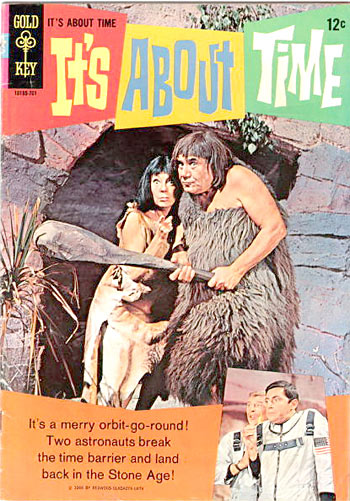
ImageSo pervasive was the force of American television popular culture on this child of the 1960s that every time I type An Adventure in Space and Time, the forthcoming docudrama on the genesis of Doctor Who,  I have to make a correction that the spell checker never picks up. What error could this be, I hear you ask? Well, for the last 40 odd years a catchy little theme song has been running through my head that goes something like this “It’s about time, it’s about space, about two men in the strangest place …”

Yes, the Sherwood Schwartz created one season science fiction comedy series, It’s About Time, will forever make me type An Adventure in Time and Space. This 1966-1967 CBS show was in production at the same time as Schwartz’s more famous offering, Gilligan’s Island. It’s About Time chronicled the adventures of two astronauts that travelled faster than the speed of light and somehow found their way back to the prehistoric times. Their interactions with the locals were the constant cause of merriment.

The stars of It's About Time Frank Aletter and Jack Mullaney

The stars of It’s About Time Frank Aletter and Jack Mullaney

Having watched the short YouTube clip memories of my Australian childhood came flooding back as I recalled the days when we had only three TV stations.  It wouldn’t have mattered that It’s About Time was filmed in wonderful “Technicolor”, because we still only had black and white TV. Colour transmission didn’t begin in Australia until 1 March 1975. Name an American children’s themed TV show of the Sixties and you can be sure that it was played ad nauseam on one of Australia’s networks.

The clan of cavemen, in wonderful Technicolor, from It's About Time

The clan of cavemen, in wonderful Technicolor, from It’s About Time

I couldn’t help but notice the similarities between episodes two, three and four of An Unearthly Child and It’s About Time. The Cave of Skulls, The Forest of Fear and The Firemaker saw the Doctor and his companions, Ian, Barbara and Susan, caught in pre-historic times and at the mercy of likes of Za, Kal, Hur and Horg. As Season One of Doctor Who was never aired in the US the likelihood of Sherwood Schwartz having seen, let alone heard, about Doctor Who is negligible. Stranger things have happened, though!

The Doctor is at the mercy of cavemen in An Unearthly Child

A monochrome Doctor is at the mercy of cavemen in An Unearthly Child

Vivien Fleming

©Vivien Fleming, 2013.

An Adventure in Space and Time Retro Posters and Interviews Released

Standard

Image

The anticipation for the Doctor Who 50th anniversary docudrama, An Adventure in Space and Time, is growing daily as the BBC drip-feeds publicity stills, posters and interviews for the forthcoming drama. The 90 minute special, which was penned by Doctor Who and Sherlock writer Mark Gatiss, will air on ABC1 in Australia on Sunday 24 November 2013 at 8.45 p.m.

The Radio Times published two retro inspired posters yesterday for what Mark Gatiss has described as his “love-letter to Doctor Who”. The BBC Media Centre has also released a Media Pack for An Adventure in Space and Time which includes an interview with Mark Gatiss, together with press releases and short interviews with the show’s stars – David Bradley (William Hartnell), Jessica Raine (Verity Lambert), Brian Cox (Sydney Newman) and Sacha Dhawan (Waris Hussein).  

An Adventure in Time and Space Retro Poster First Doctor

Vivien Fleming

An Adventure in Space and Time to Screen in Australia on 24 November

Standard

Image

The Doctor Who Club of Australia has today reported that An Adventure in Space and Time, the 90 minute drama on the beginnings of Doctor Who, is to screen on ABC1 at 8.45 p.m. on Sunday 24 November 2013. The Mark Gatiss penned docudrama will be broadcast following the repeat of the 50th Anniversary Special, The Name of the Doctor, at 7.30 p.m. The Name of the Doctor will first be simulcast early on the morning of 24 November.  The time has not yet been announced.
David Bradley with Claudia Grant as Carole Ann Ford (Susan Foreman) in An  Adventure in Space and Time

David Bradley with Claudia Grant as Carole Ann Ford (Susan Foreman) in An Adventure in Space and Time

Together with showing repeats of Series 6 of Doctor Who each weekday evening at 7.40 p.m.  ABC2 is also screening a series of Doctor Who Specials on Sunday nights at 7.30 p.m. Episode 1, which screened last Sunday night and is repeated this evening at 10.30 p.m. is The Science of Doctor Who.  Next Sunday, 3 November, is The Women of Doctor Who and the following Sunday, 10 November is The Timey-Wimey of Doctor Who. All specials are repeated on ABC2 on the Tuesday following their original broadcast and are available on iTunes for at least a week thereafter.

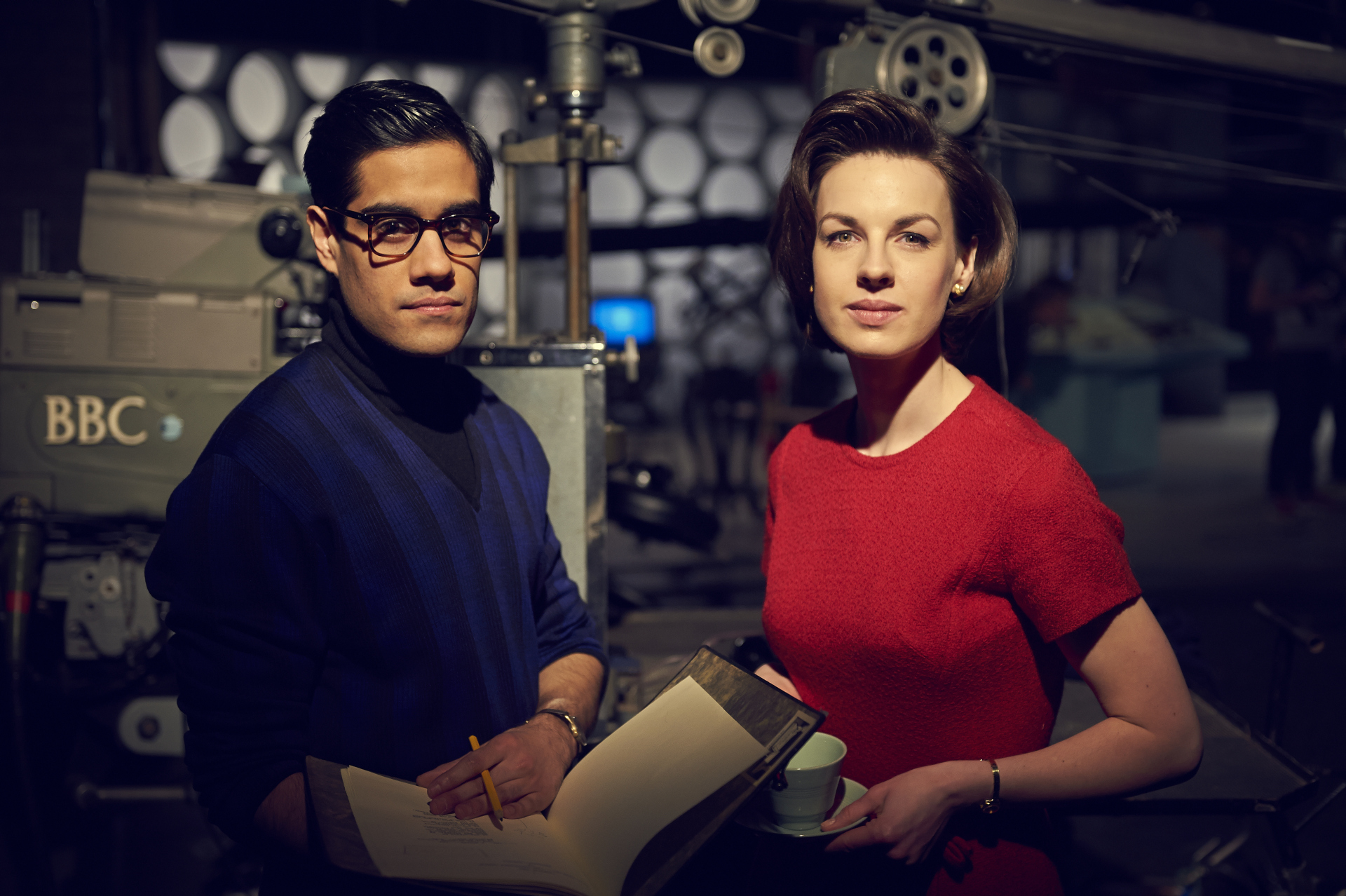
Sacha Dhawan as Waris Hussein, the Director of An Unearthly Child and Jessica Raine as Verity Lambert, Doctor Who's first Producer

Sacha Dhawan as Waris Hussein, the Director of An Unearthly Child and Jessica Raine as Verity Lambert, Doctor Who’s first Producer

To read our article on An Adventure in Space and Time click here.  For a detailed article on Doctor Who from an Australian perspective click here.

Vivien Fleming