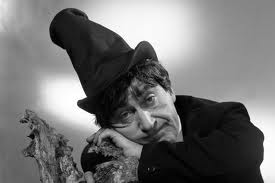
When the Second Doctor burst forth onto our television screens it appeared for short time that Doctor Who may have acquired a rather eccentric hat fancier as its new Doctor. Decked out in a battered stove pipe hat, the Doctor was quick to remark upon hats he found enticing. In his premiere serial, The Power of the Daleks, the Doctor complimented Bragen on his hat which he found very smart. “I would like a hat like that” he told the Bragen, Vulcan’s Head of Security and rebel leader.
The Doctor wears his stove pipe hat whilst reading his 500 Year Diary in The Power of the Daleks
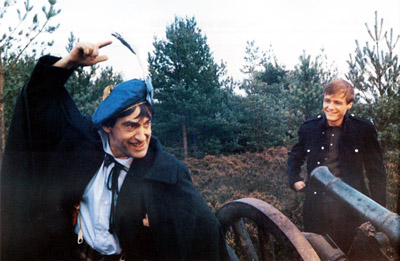
In his next adventure, The Highlanders, the Doctor quickly spotted a bonnet with eagle feather and Jacobite cockade. Putting the hat on the Doctor said to Polly, “I would like a hat like that. How do I look?” Polly replied, “It’s got words on it. With Charles our brave and merciful Prince Royal, we’ll greatly fall or nobly save our country”. The Doctor’s response was “Bah, Romantic piffle”. He then threw the bonnet onto the ground.
The Doctor again spoke of his desire for others’ hats in episode four of The Highlanders. When Ben pulled a tam-o’shanter over his face the Doctor responded for the third time in his short tenure with the phrase, “I would like a hat like that”.
A collection of tam-o’shanters. There are very few still photos, and no film whatsoever, of the Doctor’s second adventure, The Highlanders
Alas, the Doctor’s obsession with envying others’ hats ended in The Highlanders. His own penchant for wearing hats similarly dissipated as his stove pipe hat was quickly relegated to the TARDIS’s chest. He donned hats from time to time thereafter, but never again would he have signature headwear. His recorder would be seen a little longer, however it too would soon find itself gathering dust somewhere within the realms of the TARDIS.
The Doctor’s recorder lasted just a little longer than his signature stove pipe hat of early serials
In the tradition of Monty Python’s The Life of Brian, we will take a liberal interpretation of the word “hat”. If it was good enough for Python not to take “Blessed are the cheesemakers” literally, and to accept that “it refers to any manufacturers of dairy products”, then it’s good enough for The Doctor Who Mind Robber. “Hat” will therefore refer to any headpiece or item of any nature whatsoever which was placed upon the Doctor’s head. Join The Doctor Who Mind Robber as we investigate the Second Doctor’s fascination with headwear. To chart the evolution of the Doctor’s headwear all serials are listed in broadcast order.
A publicity shot of Patrick Troughton wearing his trademark stove pipe hat and playing a recorder
1. The Power of the Daleks
The Second Doctor wears a stove pipe hat in his first serial, The Power of the Daleks
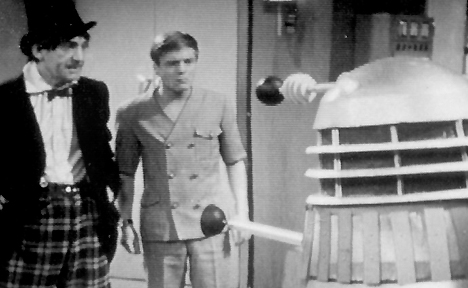
The Doctor, Ben and a Dalek in The Power of the Daleks
2. The Highlanders
Ben, The Doctor, Polly and THAT hat in The Highlanders
The Doctor briefly wore a Jacobite bonnet before dismissing it as “Romantic piffle”
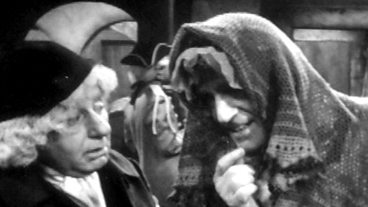
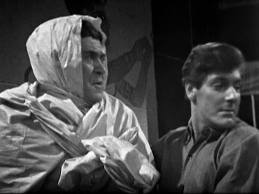
Disguising himself as a women, the Doctor wears a head scarf in The Highlanders
3. The Underwater Menace
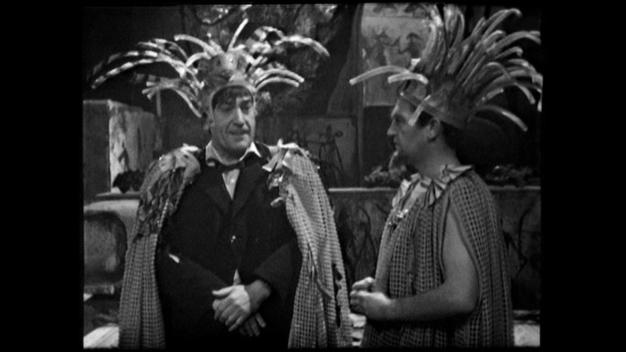
The Doctor wears an unusual form of headwear in The Underwater Menace
Continuing his tradition for dressing up, the Doctor dons a hippy type bandanna and dark glasses in The Underwater Menace
4. The Macra Terror
The Doctor in a drum majorette’s hat in The Macra Terror
5. Fury From the Deep
The Doctor kept his head warm down by the beach in Fury From the Deep
6. The Wheel in Space
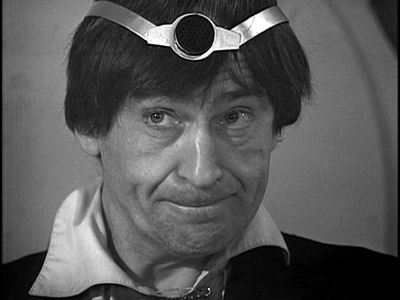
The Doctor wears a strange contraption on his head in The Wheel in Space
7. The Mind Robber
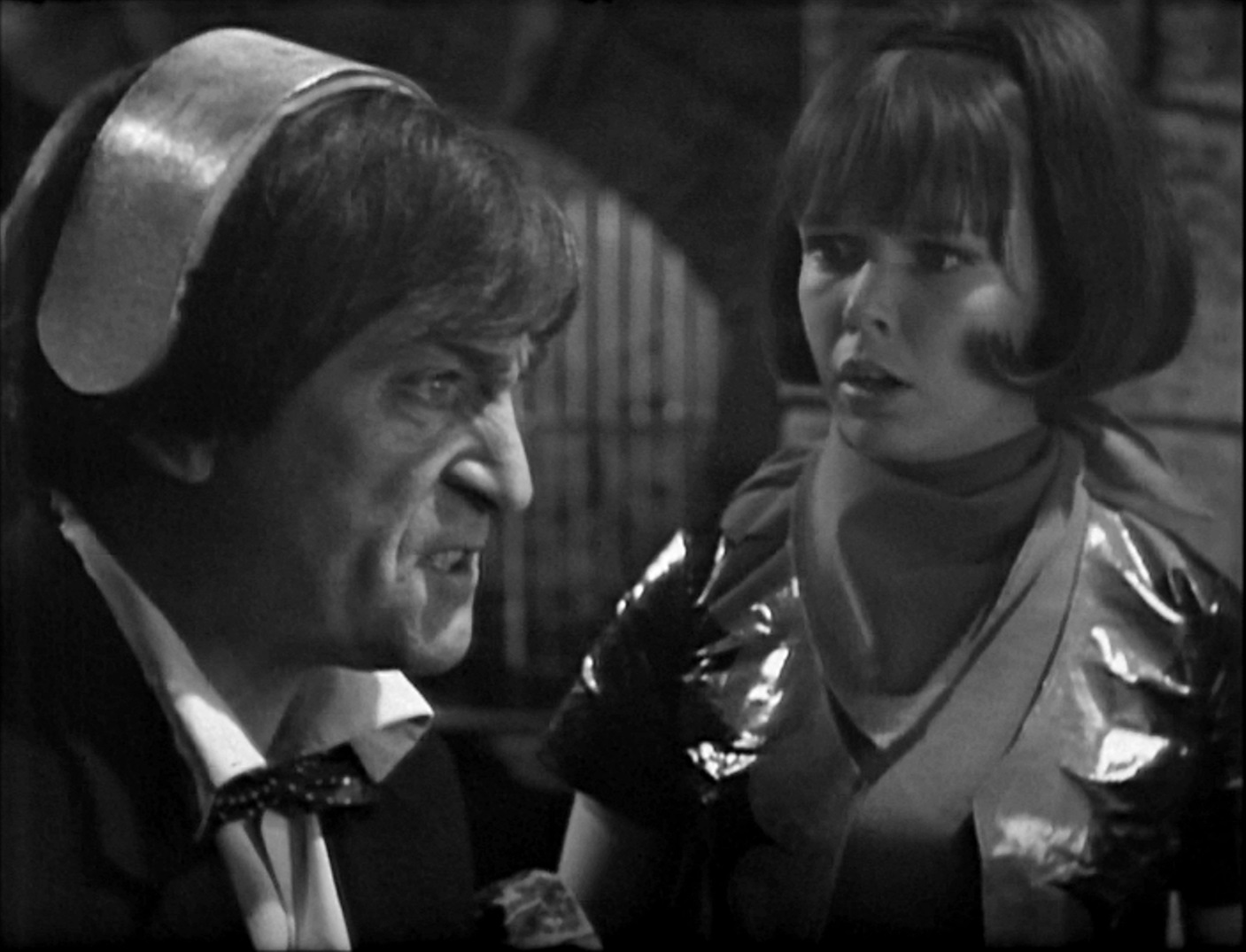
The Master of the Land of Fiction hooked the Doctor up to the computer in The Mind Robber
8. The Krotons
The Doctor takes the test in The Krotons
9. The Seeds of Death
The Doctor is caught in so much foam that it even covers his head in The Seeds of Death
10. The War Games
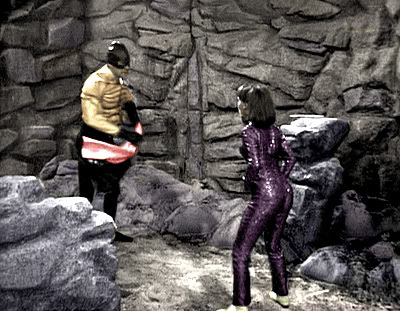
The Doctor and Zoe wear Army caps in The War Games
The Doctor Who50th Anniversary trailer was aired on BBC One on Saturday night and released online immediately after. Fan reaction has been overwhelmingly positive. Notwithstanding the BBC’s statement that the “trailer does not include any actual footage of the 50th anniversary episode”, fans have nonetheless dissected and deconstructed the trailer for any hints to The Day of the Doctor’s content.
A number of enlightening articles have been posted by fellow bloggers. Particularly commendable are Blogtor Who’simage breakdown of the trailer which includes 27 screen captures and their article on 50 things to notice. Also of note are Doctor Who TV’s“11 Things we Loved in the Doctor Who 50 Year Trailer” and their “50th Anniversary Trailer Who Did You Miss?” Also check out io9’s “24 Things you Missed from Doctor Who’s50th Anniversary Trailer”. Enjoy deconstructing the Trailer!
A scene from the 50 Years’ Trailer. Is this the Brigadier?
The BBC has released a series of behind the scenes photographs from the 50 Years’ trailer which was aired in the UK last Saturday night. You can read our post on fan reaction to the trailer here. All photographs are the copyright of the BBC. No copyright infringement is intended.
The BBC has released a series of promotional photographs from the forthcoming drama, An Adventure in Time and Space. The photos will inevitably fuel fans’ ever increasing anticipation of this 90 minute expose on the origins of Doctor Who. The drama, which promises to provide incredible attention to detail, is due to be broadcast in late November. For further […]
In an article published in the Radio Timesthe writer of An Adventure in Space and Time, Mark Gatiss, has indicated that “moments of lost episodes ,.. like Marco Polo” have been recreated for the drama. The 90 minute production, which dramatizes the origins of Doctor Who,will be aired in November as part of the 50th Anniversary celebrations. Stars of the show include David Bradley as William Hartnell (the First Doctor), Brian Cox as Sydney Newman (Doctor Whoco-creator), and Jessica Raine as Verity Lambert (first producer). The two surviving members of the original cast of Doctor Who,William Russell (Ian Chesterton) and Carole Ann Ford (Susan Foreman) appear in small cameo roles as “Harry” and “Joyce”. Mark Eden, who played Marco Polo in the missing serial of the same name, appears in the drama as Donald Baverstock, the Controller of BBC One.
Mark Eden as Marco Polo. Pictured behind him is William Russell as Ian Chesterton. Both Eden and Russell appear in An Adventure in Space and Time
Rumours circulating prior to the announced recovery of The Enemy of the Worldand The Web of Fearearlier this month speculated that MarcoPolo was part of a three serial haul. So consistent were the rumours that an acronym circulated amongst fans for this alleged multiple story recovery – MEW (Marco, Enemy, Web).
In our article on 21 OctoberThe Doctor Who Mind Robbermused upon the relationship between the revival of the Great Intelligence in Series 7 and the recovery of The Web of Fear,the second (and last) story in which the Intelligence appeared. In our humble opinion it appears that Doctor Whoshow runner, Steven Moffat, was aware of Web’s recovery and almost certainly resurrected the Intelligence to assist in the BBC’s marketing of the recovered episodes.
The Eleventh Doctor (Matt Smith) with the Great Intelligence (Richard E. Grant) in The Name of the Doctor
Given the precedent set by the Intelligence’s return, together with the long-standing MEW rumours, it’s at least arguable that Gattis’ recreation of elements of Marco Polois a further example of a BBC missing episode marketing campaign. Should we anticipate an announcement on the return of Marco Polonot long after the broadcast of An Adventure in Space and Time?Let’s wait and see!
In the meantime, check out our gallery of brilliant promotional photographs for An Adventure in Time and Spacehere.
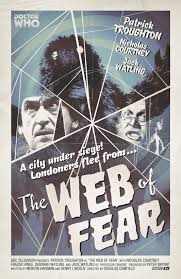
Radio Times produced retro poster for The Web of Fear
Doctor Who’s long history of non-human villains has its genesis in the show’s second ever serial, The Daleks. Choosing the Top 5 is relatively easy given the extraordinarily high attrition rate of monsters considered to be “the next big thing”. Starting with Terry Nation’s The Sensorites, and ending with Robert Homes’ The Krotons, the Sixties werelittered with the carcases of monsters that never quite made the grade. The Dominator’s Quarks,The Underwater Menace’s benevolent Fish People, The Macra Terror’s Macra, The War Machines’ WOTAN and War Machines, Galaxy 4’s Rill, The Chase’s Mechonoids, and The Web Planet’s Zarbi and Menoptra are but a few examples.
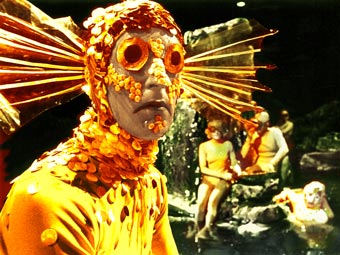
One of the less successful monsters of the Sixties, the Fish People from The Underwater Menace
In essence, any 1960s monster that scored a repeat story in that decade has made The Doctor Who Mind Robber’s list of the Greatest Monsters of the Sixties. All have been revived in New Series Doctor Who, with the exception of the Yeti. Please see Day 49 of our countdown for the Ten Least Remembered Monsters of the Sixties.
When Colonel Lethbridge-Stewart asked the Doctor in The Web of Fear what the Great Intelligence was he responded by saying, “Well, I wish I could give you a precise answer. Perhaps the best way to describe it is a sort of formless, shapeless thing floating around in space like a cloud of mist, only with a mind and will”.
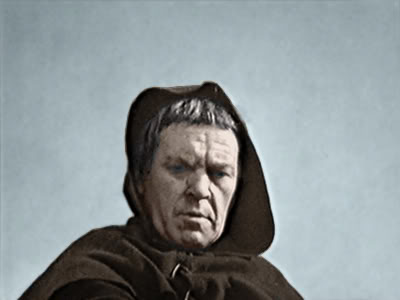
The Doctor, Jamie and Victoria first encountered the Great Intelligence at the Det-Sen monastery in 1935 Tibet (The Abominable Snowmen). Having possessed the body of the monastery’s Master, Padmasambhava, this otherwise disembodied sentient being permitted its host to live up to 300 years. The Intelligence forced Padmasambhava to build him an army of robot Yeti, the construction of which took over 200 years. The Yeti were controlled by small hand-made pyramids. The Intelligence’s plans to take over the mountain on which the monastery stood were thwarted when the Doctor, Edward Travers and the companions destroyed the pyramids. Padmasambhava finally found the peace he so desired when his body passed away and the Intelligence again became a sentient being without a parasitic body.
The Abominable Snowmen’s Padmasambhava was possessed by the Great Intelligence
The Doctor and his companions again met the Intelligence when they found themselves in the London Underground 40 years later. In The Web of Fear their old friend Professor Travis had inadvertently facilitated the reactivation of the Yeti. The Doctor, Jamie and Victoria teamed up with members of the British Army to thwart the Intelligence’s plans for domination. The Intelligence used the body of the deceased Staff Sergeant Arnold and even Professor Travers for a short time. The Intelligence sought to possess the Doctor’s body and to drain his mind with a conversion headset. Unbeknownst to his companions, the Doctor had already reversed the settings so that it was the Intelligence’s mind, rather than his own, that would be drained. Jamie, however, smashed the control spheres prior to the Doctor sapping the Intelligence’s mind. Although still alive, the Intelligence vanished and was never again seen by the Second Doctor.
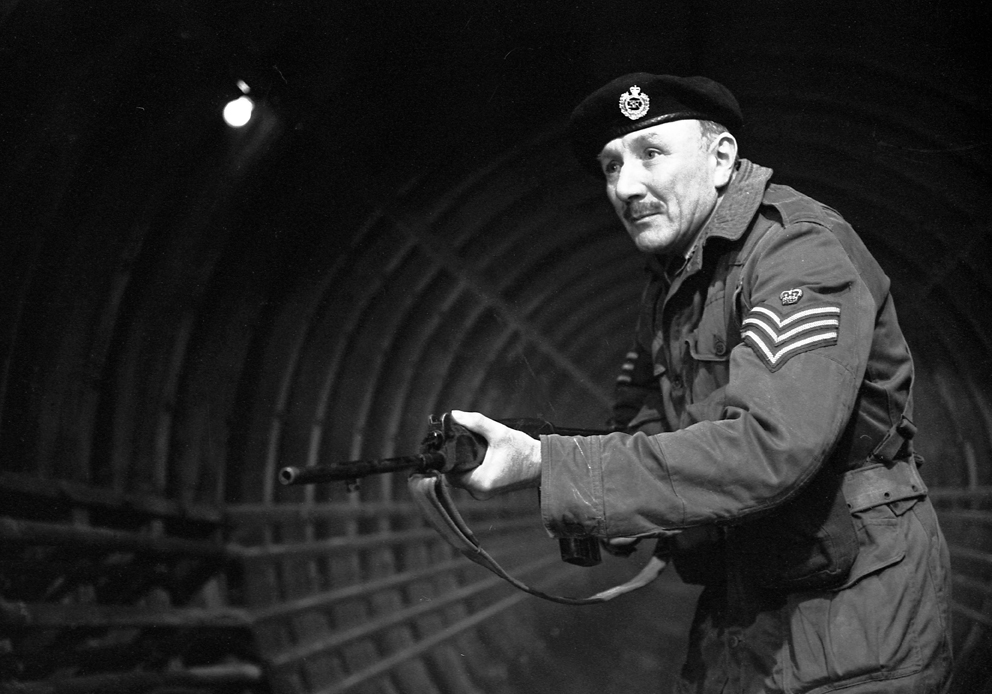
Staff Sergeant Arnold was possessed by the Great Intelligence in The Web of Fear
Although briefly seen in the 20th Anniversary Special, The Five Doctors, the Yeti have only been the central players of two serials, The Abominable Snowmen and The Web of Fear. Robotic servants of the Great Intelligence, the first Yeti were manufactured by Padmasambhava at the Intelligence’s command. Rather pear shaped and cuddly, the Mark 1 Yeti were not as threatening in appearance as their Mark 2 counterparts which had claws capable of holding web-guns and were more streamlined. Exactly who assisted the Intelligence in the production of the Mark 2 Yeti of The Web of Fear has never revealed.
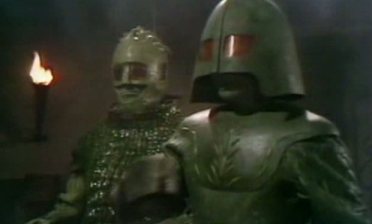
The Ice Warriors are natives of the planet Mars. Large reptilian humanoids, the Ice Warriors can stand up to 7 feet in height. The Doctor and his companions first came upon the Ice Warriors at the Brittanicus Base where they had been frozen in ice for over 5,000 years. Defeated when their space craft exploded the Ice Warriors were next encountered on the Moon in The Seeds of Death. Their attempts at obtaining control of the Earth were foiled when the Doctor discovered that their seed pods were ruined by water. The Doctor then sent their space craft into an orbit around the sun.
The Doctor used his genius in an attempt to thwart death in The Seeds of Death
When the Ice Warriors were next met by the Doctor in 1972’s The Curse of Peladon they were members of the Galactic Foundation and had renounced violence. They became allies with the Doctor and remained so in a subsequent Third Doctor adventure, The Monster of Peladon (1974).In 2013’s Cold War the Ice Warriors’ pacifism was a long forgotten.
The Cybermen made their Doctor Who debut in William Hartnell’s last serial, The Tenth Planet. Very much humanoid in appearance, the Mark 1 Cybermen were possessed of a sing-song voice. Their faces were covered only with a stocking and they still retained their human hands. Unlike their successors, the first Cybermen initially did not seek to destroy the human race but rather hoped to convince them to join their “utopian” existence.
A Mark 1 Cyberman in The Tenth Planet
With the success of their first television appearance the Cybermen were quickly co-opted as rivals to the Dalek’s mantle of favourite Doctor Who monster. Each story in which they appeared saw their costumes modified, with the most substantial change occurring to the Mark 2 model. Gone were the stockinged faces and in their place were robotic heads. The five digits of their human hands were replaced by three fingered gloved hands.
The Cybermen emerge from their icy tombs in this iconic image from The Tomb of the Cybermen
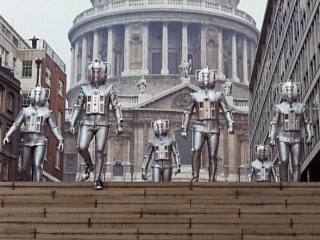
The Cybermen were the subject of two particularly iconic images of Sixties Who. Even the tackiness ofbreaking through new-fangled cling wrap was insufficient to dampen the effectiveness of the Cybermen’s emergence from their icy tombs in The Tomb of the Cybermen. Their appearance on, and march down, the steps of St Paul’s Cathedral in The Invasion was arguably the greatest cliff hanger of the era. Still images of the event have become part of popular culture.
Perhaps the most iconic cliff hanger in classic series Doctor Who. The Cybermen on the steps of St Paul’s Cathedral in The Invasion
Only a brave person would nominate anything other than the Daleks as their favourite 1960s monsters. Appearing in just the second Doctor Who serial, it was arguably the Daleks that saved the show from a mere 13 week run. In a stroke of genius the Terry Nation created and Ray Cusick designed mutants immediately captured the imagination of the British public. Dalekmania was in full swing and within 18 months the Daleks would appear in the first of two colour, theatrically released movies.
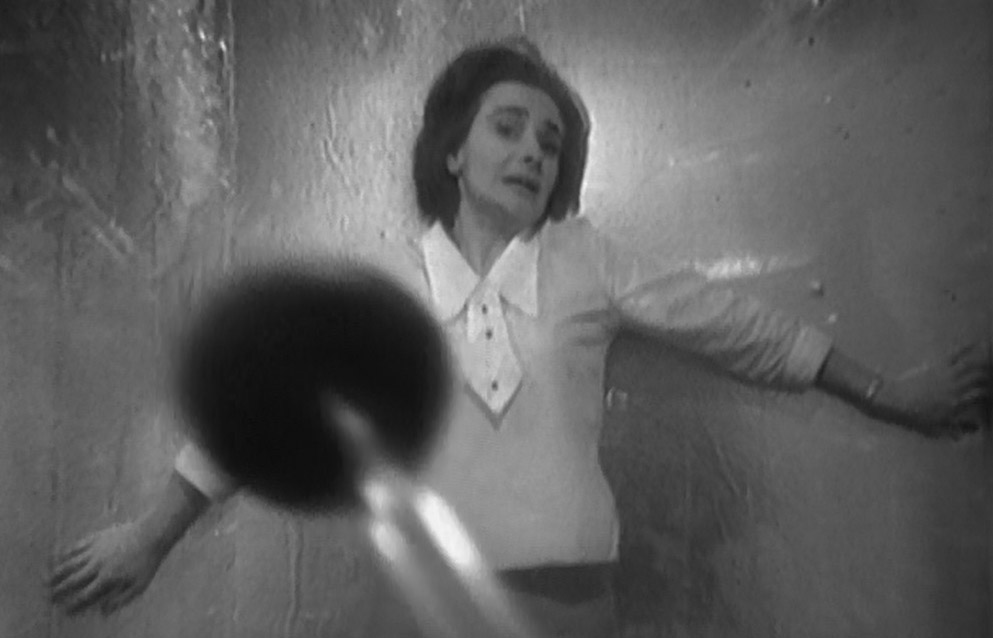
Barbara is pinned against the wall in fear during the Daleks’ first appearance in Doctor Who on 21st December 1963
The Daleks featured in seven Sixties serials and appeared as a cameo in another. The 12 piece extravaganza The Daleks’ Master Plan is one of the most sought after missing serials. Only 3 episodes are held in the BBC Archives. Among other missing episodes is Mission to the Unknown, the only one part 1960s serial which also has the distinction of featuring none of the regular cast. Arguably the most missed of all Dalek serials is the Second Doctor’s first story, The Power of the Daleks. It, together with another missing story, The Evil of the Daleks, is highly revered in fandom. It can only be hoped that at least some of these missing episodes are some day recovered.
The 12 part The Dalek’s Master Plan is one of the most sought after missing Doctor Who serials
Although the Chumblies were never reprised they were the most adorable Doctor Who monsters ever. Despite the Doctor, Steven and Vicki being initially frightened by them it soon became apparent that they were benign and worked for the good and just with the Rill. The Chumblies are top of my list of Sixties monsters that I’d most like to see revived.
In my review of the recently released The Ice Warriors DVD on 3 September I posited that there may be a relationship between the resurrection of seemingly deceased Doctor Who monsters and the sale of Classic Series DVDs. Only four months prior to The Ice Warrior’s DVD release an Ice Warrior emerged for the first time in 39 years in The Cold War. Similarly, the last Fourth Doctor DVD to be issued, The Terror of the Zygons, coincidently found its way onto retailers’ shelves but a mere six weeks prior to the Zygons much anticipated reprise in the 50th Anniversary Special, The Day of the Doctor. Should we anticipate the return of the Fish People soon given the impending release of The Underwater Menace, I asked.
In retrospect, the recovery of The Web of Fear is now obvious considering the story arc which commenced with the 2012 Christmas Special, The Snowmen. At the time the return of the Great Intelligence, a formless mass first encountered in The Abominable Snowmen and last seen in The Web of Fear 44 years earlier, was a incredibly bizarre decision by Doctor Who show runner Steven Moffat. Of all villains to resurrect, why choose one who only appeared in two missing serials over 40 years previously? Not that this was the first time that a monster seemingly lost for all time had been reimaged. The Macra reappeared in the 2007 Series 3 episode Gridlock having last been seen in 1967’s The Macra Terror.
A snowman from 2012’s The Snowmen
The Great Intelligence’s revival was not limited to a single episode, however. It went on to appear in two further Series 7 episodes, The Bells of Saint John and The Name of the Doctor and was the series’ major protagonist. Which leads us to further coincidences. Were the Snowmen who accompanied the Great Intelligence in The Snowmen a substitute for the Intelligence’s first tools, the Yeti? Should we anticipate the recovery and issue of The Abominable Snowmen sometime soon? Moreover, is this image taken from the 50th Anniversary trailer perhaps a hint that The Abominable Snowmen has indeed been returned. The snow capped mountains in the background clearly represent Tibet and the stone block building could readily be a monastery. Is the Second Doctor playing his recorder as if to summon the missing episodes home? Only time will tell, however one thing is certain. Henceforth the revival of any monsters and villains from lost 1960’s episodes will be scrutinized and speculated upon by fans as evidence of recoveries. Let’s see what the 50th Anniversary and Christmas Specials, together with Series 8, brings forth!
A screen capture from the BBC trailer for the 50th Anniversary Special, The Day of the Doctor
Tomorrow The Doctor Who Mind Robber will examine the 5 Greatest Monsters of the Sixties. Today, however, we look at the 10 Greatest Humanoid Villains. By humanoid we refer to any villainous character that looks human, whether they derive from Earth or some other planet. In our humble opinion 1960s Doctor Who was rather more successful in creating villains of human appearance than “monsters” in the traditional sense. Perhaps the costumes and special effects that made the “monsters” were a substitute for good script writing, or alternatively, distracted viewers from the actual performances of the actors. In any event, we hope you enjoy our list and acknowledge now that Mavic Chen’s allegedly blue skin may have made him look somewhat less than human!
Eric Klieg and his associate Kaftan were members of the Brotherhood of Logicians. The Brotherhood was a group of highly intelligent individuals who believed in pure logic. The Doctor’s next companion, Zoe, would undoubtedly have qualified for membership of the Brotherhood. Klieg and Kaftan financed Professor Parry’s expedition to Telos and accompanied the party of archaeologists. Also present was Kaftan’s manservant Toberman. Seeking to obtain absolute power, Klieg revived the Cybermen from their tombs in the mistaken belief that they would logically support his quest for domination. Both Klieg and Kaftan were killed at the hands of the Cybermen.
Klieg and Kaftan were members of the Brotherhood of Logicians who funded Professor Parry’s expedition to Telos in The Tomb of the Cybermen
Professor Zaroff was a brilliant scientist renowned the world over for experiments involving the creation of inexpensive food from the sea. Having suddenly disappeared he was presumed dead, however the Doctor and his companions met Zaroff when they visited the lost city of Atlantis.
Zaroff was mentally unhinged and absurdly sought to destroy the world just because he could. That he would die in the process was irrelevant as his aim to be the greatest scientist in the world would nonetheless be achieved. His plan for the earth’s destruction involved draining the oceans into the Earth’s molten core, thereby causing the planet’s explosion from overheated steam. Before Zaroff could commence draining the oceans the Doctor flooded Atlantis and the professor was drowned in his laboratory. Zaroff is perhaps best known for his manic cry of “Nothing in ze world can stop me now!”
The Drahvins were a race of attractive blonde women whose beauty disguised their malignant intentions. Stranded on an unnamed planet when their space ship crash landed, the Drahvins were intent on destroying the Rill, another race of creatures also stranded on the planet. Although there were male Drahvins very few were allowed to live as they “consume valuable food and fulfil no particular function”. The female Drahvins are of two castes – those with intelligence and free will who were conceived naturally, and those who are soldier drones and created in test tubes. The latter are bred purely to fight and kill. An extensive examination of the Drahvins appears in my review of Galaxy 4.
The external beauty of the Drahvins masked their evil intentions in Galaxy 4
7. Smythe – The War Games
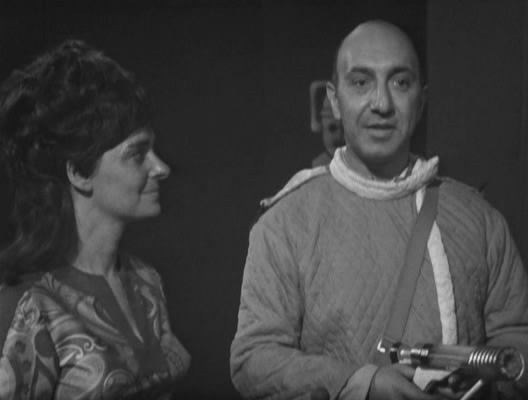
Smythe was a War Lord, a humanoid race who endeavoured to conquer the galaxy in The War Games. Akin to the Time Lords, the War Lords possessed time machines named SIDRATs (TARDIS backwards). The SIDRAT’s technology was not as advanced as the TARDIS’s and had been imparted to the War Lords by a renegade Time Lord, the War Chief. Smythe assumed the identity of a British Army General in the simulated World War 1 zone of the War Games. The intention of the War Lords was to select the best soldiers for use in their quest for domination. Twice he attempted to have the Doctor executed by firing squad after conducting a kangaroo court and convicting him of treason. By putting on his spectacles and staring into his subordinates eyes, Smythe was able to successfully control their minds. He was eventually shot dead by a member of the resistance.
The War Lord Smythe wearing his magical spectacles in The War Games
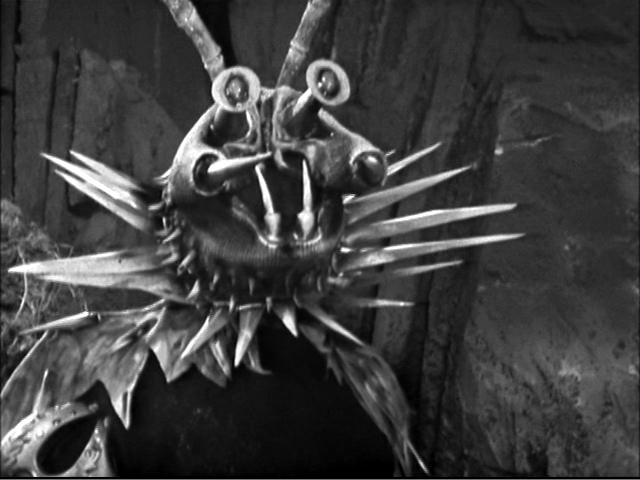
Messrs Oak and Quill were engineers at the Euro Sea Gas rig that the Second Doctor and his companions found themselves on in The Fury From the Deep. Dressed in maintenance garb, the pair looked like Laurel and Hardy and were possessed by the Weed Creature. Only Mr Oak spoke. The pair gained entry to Mrs Harris’s home on the pretext of repairing a stove. They rendered Mrs Harris unconscious in perhaps the most terrifying minute of Doctor Who ever by opening their charcoal lined mouths and breathing toxic gas.
Mr Quill and Mr Oak were the Laurel and Hardy of Villains in The Fury From the Deep
Once of the most iconic images from the Second Doctor’s lost adventure Fury from the Deep. Almost one minute of this clip survives thanks to the Australian Film Censorship Board
Performed by Australian actor Ray Barrett, Bennett was one of only two long-term survivors of a crashed space ship on the planet Dido. Prior to the crash he had murdered one of the crew members however the subsequent fate of the craft meant that he was not brought to justice. The only member of the crew who was unaware of the killing was a young girl named Vicki. In an attempt to ensure that he was never put on trial, Bennett killed all the other passengers, together with a number of natives of Dido, when they met for a meet-and-greet. Vicki was sick with a fever and didn’t attend the function. As such she was blissfully unaware of Bennett’s crimes.
Vicki and Bennett are the sole survivors of a spaceship crash on the planet Dido
Bennett subsequently enslaved Vicki in domestic servitude and psychologically terrorised her by masquerading as a Dodo native, the horrendous Koquillion. When the Doctor finally unmasked him Bennett was approached by two hitherto unknown humanoid survivors of Dodo. Whilst backing away from them Bennett fell to his death down a rock face.
Bennett masqueraded as the horrendous Koquillion in The Rescue
The Celestial Toymaker was an immortal being with the capacity to travel through time and space. He took the physical form of a Caucasian male dressed in the garb of a Mandarin. The Toymaker used the immense power that he wielded to control a world of children’s games in which he rigged the rules. The games played were a matter of life and death. In order to retrieve the TARDIS Steven and Dodo were ensnared in a series of puerile games with clowns, playing cards, ballerinas, a cook, a sergeant, and a bratty school boy. The Doctor, in the interim, was engaged in a game of trilogic with Toymaker in which he was required to move and restack 10 pieces in the exact correct 1023 moves. Annoyed by the Doctor’s banter, the Toymaker first made him invisible, save for right hand, and then totally mute. Through bluff and cunning the Doctor eventually beat the Toymaker, retrieving the TARDIS and decamping with his companions.
The Toymaker finds the Doctor’s presence intolerable in The Celestial Toymaker
Peter Butterworth’s character, the Monk, has the distinction of being the first, and only, humanoid villain revived during Sixties Doctor Who. Certainly The Abominable Snowmen’s Travis was pretty nasty to start with, however he warmed to the Doctor and his companions during the course of that story and was undoubtedly an old friend by the time they met again 40 years later in The Web of Fear.
Unlike the other villains in this list the Monk was actually quite a pleasant chap. Sure he played havoc with the Doctor and his friends, but always did so in a cheery manner. Like the Doctor he also had a TARDIS, however the Monk’s actually functioned properly. Not only was he able to programme it to materialize at the desired time and location, but its chameleon circuit was also fully functioning – at least until the Doctor sabotaged it on several occasions. In The Time Meddler the Doctor removed the dimensional control (the chameleon circuit) from the Monk’s TARDIS which shrunk it to a minute size. The Monk was left stranded in 1066 England. In The Daleks’ Master Plan the Doctor briefly reprogrammed the Monk’s chameleon circuit and his TARDIS variously became a motorbike, a western type covered wagon and a World War II tank. The Doctor eventually stole the Monk’s directional unit and his TARDIS ended up as a block of ice stranded on an icy planet.
Peter Butterworth portrayed the Monk in The Time Meddlerand The Daleks’ Master Plan
Although not identified as a Time Lord or from Gallifrey, the Monk was certainly the first of the Doctor’s people to meet with him in Doctor Who. It’s hardly any surprise that the Monk’s race and home were not revealed in The Time Meddler and The Daleks Master Plan. The show’s writers did not invent Gallifrey or the Time Lords until the Season 6 finale, The War Games. It is only with the benefit of hindsight that fans have been able to place the Monk into Doctor Who’s continuity. The Monk is top of my list of Sixties humanoid villains that I’d most like to see revived.
Tobias Vaughn is the second of two great Doctor Who villains portrayed by Kevin Stoney. The head of International Electromatics, the largest electronics manufacturer in the world, Vaughn foolishly believed himself to be capable of both using and outwitting the Cybermen in his own plans for world domination. He imprisoned Professor Watkins, an old friend of Professor Travis, and had him invent a device which created emotions so strong that it would destroy the Cybermen. After entering into an alliance with the Cybermen and assisting in their planned invasion of Earth, Vaughn was betrayed by them and entered into an alliance with the Doctor. Vaughn and the Doctor used the machine invented by Watkins to defeat the Cybermen, but not before Vaughn met his death at the hands of a Cyberman atop a building.
Kevin Stoney played the role of Tobias Vaughn in The Invasion
The first of Kevin Stoney’s brilliantly portrayed villains, Mavic Chen was the Guardian of the Solar System who formed an alliance with the Daleks in The Daleks Master Plan. A traitor to fellow humanoids, Chen sought to obtain universal domination by ultimately betraying the Daleks. Chen’s thirst for power gradually consumed him to such an extent that he became mentally unbalanced. Chen conscripted Space Security Service agent Sara Kingdom to assassinate her own brother, Bret Vyon, although she eventually switched allegiance to the Doctor. Having assisted in the retrieval of the taranium core required to fuel the Dalek’s Time Destructor, Chen’s usefulness came to an end and he was exterminated by the Daleks.
Kevin Stoney portrayed Mavic Chen in The Daleks’ Master Plan
A trailer for the Doctor Who 50th Anniversary Special, The Day of the Doctor, was screened on BBC One this evening. The press release issued earlier today stated the following:
A specially created trailer celebrating the last 50 years of Doctor Who will air tonight on BBC One, as an exclusive image is revealed today featuring the 11 Doctors.
Travelling through time fans will be taken on a journey from the very beginning using state of the art technology. The special trailer is set to show all of the Doctors as they first appeared on screen, including William Hartnell in high res colour for the very first time, as celebrations ramp up to the 23 November.
A huge moment for the BBC, the 50th celebrations will culminate with the special episode, ‘The Day of the Doctor’, starring Matt Smith, David Tennant and Jenna Coleman with Billie Piper and John Hurt. A whole range of shows have also been commissioned across TV and radio to mark the anniversary.
The minute long trailer will air after Strictly Come Dancing tonight on BBC One and will be also be available on http://www.bbc.co.uk/doctorwho



























 The Doctor Who Mind Robber