Monthly Archives: October 2013

Missing Episodes Hysteria Update II

Standard

Image

The Doctor Who Mind Robber has previously reported on a series of rumours concerning the return of hitherto missing Doctor Who episodes. At the time of writing 106 episodes are believed missing from the BBC Archives.  All monochrome, the lost episodes span the tenures of the First and Second Doctors and date from 1964 to 1969.  The earliest missing episode is William Hartnell’s fourth serial, Marco Polo, whilst the last is Patrick Troughton’s penultimate story, The Space Pirates. Colour prints of several of the Third Doctor’s episodes have not been recovered, however black and white copies exist and have been colourized. The final Jon Pertwee serial to receive the miraculous colour treatment was The Mind of Evil, which was released in June 2013.

The colourized Mind of Evil was released in June 2013

The colourized Mind of Evil was released in June 2013

An article published today in the UK tabloid, the Mirror, alleges that over 100 missing Doctor Who episodes have been recovered by dedicated fans in Ethiopia. Supposedly retrieved from the Ethiopian Television and Radio Agency,  the source for this rumour is one Stuart Kelly, who is described as a Doctor Who expert. Mr Kelly is said to have announced the find at the Wigtown Book Festival in Scotland last week.

Like all previous rumours, Mr Kelly’s announcement is not from a first hand source.  Kelly relies on the hearsay of a third party.  The Mirror reports him as saying, “I was told by a friend that the ­episodes have been found in Ethiopia. The BBC is ­negotiating to get them back right now. I really can’t say any more than that.”

Marco Polo is the earliest missing Doctor Who serial

Marco Polo (1964) is the earliest missing Doctor Who serial

Moreover, the Mirror has made no attempt to corroborate the story with either the third party or the BBC. In June the blog Bleeding Cool reported on rumours of over 90 episodes being recovered.  Upon approaching the BBC, Philip Fleming, Head of Communications, Brands, Content & Digital, BBC Worldwide issued Bleeding Cool the following statement:

There are always rumours and speculation about Doctor Who missing episodes being discovered, however we cannot confirm any new finds.

Tonight on Twitter Doctor Who Restoration Team member Paul Vanezis responded to the Mirror article and stated, “I would love it to be true. But it isn’t.”  This denial is less than definitive, however.  Whilst the recovery of over 100 episodes from Ethiopia may be untrue, Vanezis is far from denying that all rumours are false. The BBC’s announcement in June could be similarly met with scepticism. Whilst not confirming any finds, the BBC certainly didn’t deny any either.

The Space Pirates is the last missing Doctor Who story

The Space Pirates (1969) is the last missing Doctor Who story

Well known Doctor Who uberfan Ian Levine has today Tweeted about the Mirror’s article and a subsequent report on the UK’s SkyNews on Sunday morning. Levine said, “Maybe the Mirror news story, and the Sky News Video Report, might just force the BBC’s hand into FINALLY making an announcement this week…”   Levine’s comments are sure to be echoed by many fans who are becoming increasingly frustrated by the prolonged rumours.

Doctor Who uberfan Ian Levine

Doctor Who uberfan Ian Levine

Interestingly, Sodere: Ethopian Social Media Network which has over 90,000 Facebook likes, republished the Mirror’s article today.  Make of that as you will.

In the meantime, you can read The Doctor Who Mind Robber’s previous Missing Episode stories hereherehere, and here.  You might also like to view our 50th Anniversary Countdown post, The 10 Most Wanted Missing Episodes. Any comments would be greatly appreciated.

For further developments please see Radio Times Reports Digital Release of Two Missing Episodes This Week.

Vivien Fleming

©Vivien Fleming, 2013.

Day 49 of 50th Anniversary Countdown – The 10 Least Remembered Monsters of the Sixties

Standard

Image

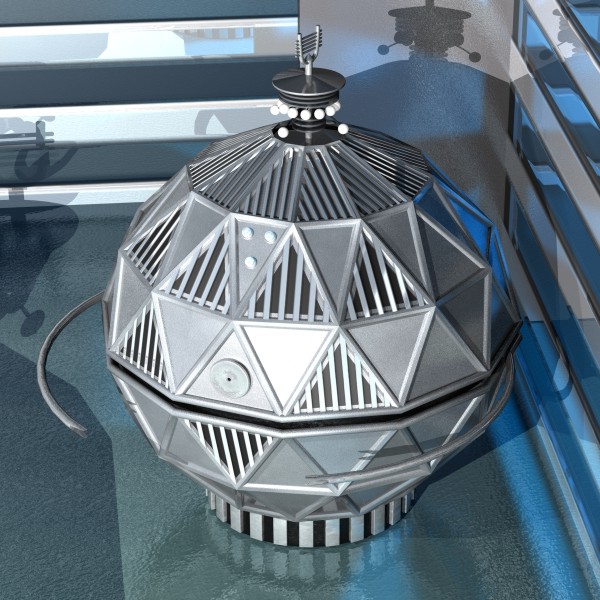
10.          The Mechonoids – The Chase

Written by the Daleks’ creator, Terry Nation, the Mechonoids appeared in the penultimate serial of Season 2, The Chase.  Together with the farewell of companions Ian and Barbara, The Chase  was the first attempt by Terry Nation to create a rival to the Daleks’ popularity. The Mechonoids were created to protect humans on the planet Mechanus however ultimately no humans colonized the planet. The Daleks battled the Mechonoids during this story.  Not unlike many early Doctor Who monsters, the Mechonoids were large, cumbersome and totally unsuited for most of their tasks.

The Chase was the Mechonoids only television appearance on Doctor Who, although they did appear in comics and had several items of merchandise produced.

A mechonoid with two Daleks in The Chase

A mechonoid with two Daleks in The Chase

9.            The Macra – The Macra Terror

Although revived in the Series 3 episode Gridlock, the providence of the Macra would probably have been lost on most New Series Doctor Who fans. With all four episodes of The Macra Terror lost, it is of little surprise that the Macra have long faded from memory.  Giant crab like creatures, they inhabited underground tunnels and were reliant upon toxic gases to breath.

Thanks for the vigilance of the Australian Censorship Board, several censored clips from The Macra Terror have survived.  A 15 second clip of a Macra grabbing Polly and another 7 second clip of Ben and Polly watching an approaching Macra, have survived from Episode Two. A two second clip of the Controller being attacked by a Macra survives from Episode Three.

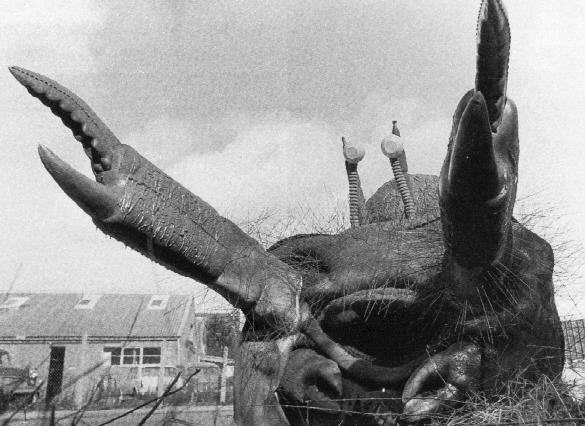
A publicity shot of the Controller and Macra taken prior to filming

A publicity shot of the Controller and Macra taken prior to filming

8.            The Krotons – The Krotons

Robert Holmes’ first serial for Doctor Who produced yet another one-off monster, the Krotons.  In my review of The Krotons I described these monsters thus:

 Yet another attempt at a Dalek replacement, the Krotons were a poor substitute.  With arms that looked like the robot’s from Lost in Space, the Krotons were disabled by their strange and inflexible metal hands.  Possessed of a rather cool spinning head, the poor Krotons were not so lucky with that part of their costume below the waist. A rubber skirt was merely tacked on to disguise the operators’ legs”. 

The Krotons spoke with South African accents

The Krotons spoke with South African accents

7.            The Quarks – The Dominators

Created by Mervyn Haisman and Henry Lincoln, the writers of the two Yeti stories The Abominable Snowmen and The Web of Fear, the Quarks of The Dominators were nowhere near successful as Haisman and Lincoln’s first monsters. The Quarks were less than convincing monsters and were ostensibly a box with legs, two pieces of wood for arms, and a quite fancy round head.  The creatures were so small that school children were hired as operators.

Haisman and Lincoln believed that they’d created “the next big thing” and as a consequence a dispute between the writers and the BBC ensued. The writers’ sought exclusive rights for the marketing of the Quarks however unbeknownst to them, the BBC had already sold the comic rights to the Quarks. An injunction against the airing of The Krotons was threatened, although legal action was not forthcoming. The Dominators was the last Doctor Who serial that Haisman and Lincoln worked on. Although never again appearing on TV, the Quarks had a short career as comic book characters.

The Quarks were less than convincing as monsters

The Quarks were less than convincing as monsters

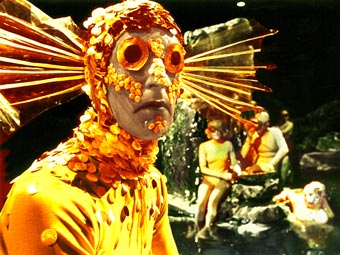
6.            The Fish People – The Underwater Menace

Of The Underwater Menace’s four episodes, two are held in the BBC Archives and only  one has been released on the Lost in Time compilation DVD. Another of the Troughton era serials that is generally held in low regard by fandom, The Underwater Menace featured Fish People.  These strange creatures were once humans but had been operated on to enable them to breath underwater.  These surgically modified humans, who now had gills, flippers and scales, were slaves to the Atlaneans. Polly narrowly escaped being transformed into a Fish Person.

The Fish People’s costumes included many sequins and they spent much of their time engaged in synchronised swimming.  The rest of the time they collected  a constant supply of fresh plankton  which was required by the Atlaneans who were bereft of refrigeration.  Alas, the plankton of The Underwater Menace were not as cute as the SpongeBob SquarePants character.

A rare colour photo of the Fish People

A rare colour photo of the Fish People

5.            WOTAN – The War Machines

Making its first and only appearance in the Season Three finale, The War Machines, WOTAN was the world’s most sophisticated computer.  Pre-empting the internet, WOTAN was designed to link together all of the world’s computers. Located on the top floor of the newly opened Post Office Tower in London, WOTAN was a malignant machine which sought world domination.  WOTAN evidenced the fear of many that the newfangled room-sized computers would usurp humans.

Although not the world's largest computer, WOTAN in the most intelligent

Although not the world’s largest computer, WOTAN is the most intelligent

4.            The Rill – Galaxy 4

Although technically a monster, the Rill of Galaxy 4 were actually benign creatures who had long been the victims of a campaign of aggression by the Drahvins, a race of aggressive females.  Enormous and obscenely ugly green creatures, the Rill can only breathe ammonia. In a tale with the well worn moral of “you can’t judge a book by its cover”, the beautiful blonde Drahvins are the evil and the ugly Rill are the good.

A Chumbley with four Rills in the background

A Chumbley with four Rills in the background

3.            The Menoptra and The Zarbi – The Web Planet

Hailed by some fans as a masterpiece, the First Doctor adventure The Web Planet also has a sizeable number of critics. I was so bored and uninspired by the painfully slow six part serial that I was unable to gather the enthusiasm to write a review.  Instead I posted a fan made YouTube clip which although only three minutes in duration, was immeasurably better than the 150 minute serial.  Is it any wonder that the Menoptra and the Zarbi are forgotten Doctor Who monsters?

Creatures of The Web Planet

Creatures of The Web Planet

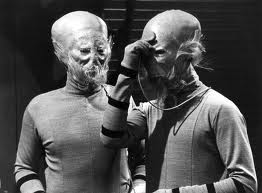
2.            The Sensorites – The Sensorites

The penultimate story of Season One, The Sensorites was Doctor Who’s first attempt to create a monster to rival the Daleks.  The Sensorites, who are near neighbours to the New Series monsters, the Ood, are a strange race of creatures who communicate by telepathy. With unusually shaped bald heads, the Sensorites have a fine head of hair growing onwards and upwards from their chins.  Like the Ood, the Sensorites are nameless and genderless and have a tube which hangs from their bodies.  The cord is not the external brain of the Ood, however, but rather a stethoscope to facilitate their communication by telepathy.

A Sensorite using telepathy.

A Sensorite using telepathy.

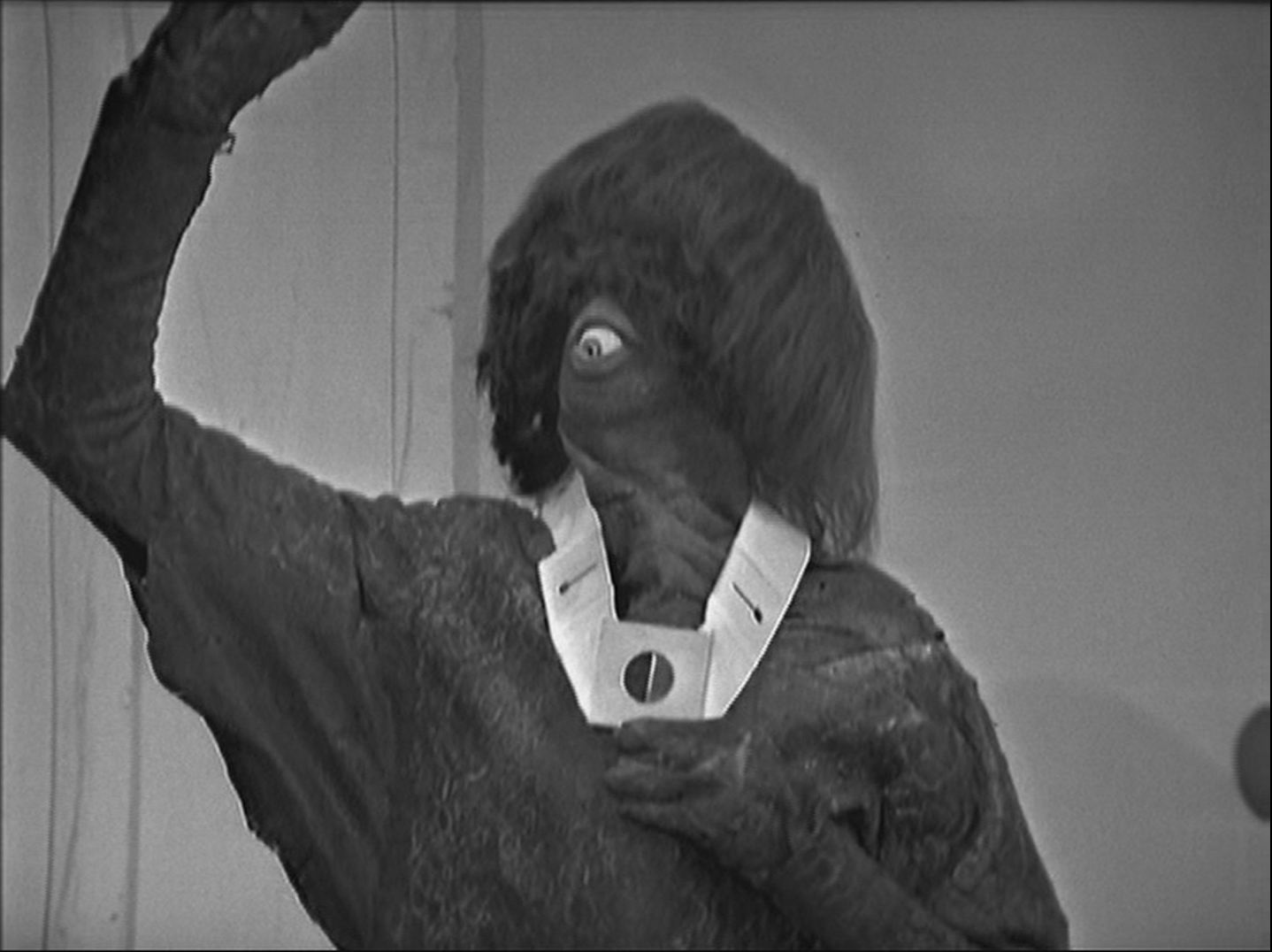
1.            The Monoids – The Ark

Surely the worst designed of all Sixties Doctor Who monsters, the Monoids  were originally the servants of the Guardians.  In my review of The Ark I described the Monoids in this way:

“.. .a peculiar mute race whose most  distinctive feature is their one eye.  This single eye is in their mouths, or at least what would’ve been their mouths if they had human anatomy. These eyes are actually painted ping pong balls which the actors held in place with their mouths.  Now that’s ingenious small budget special effects for you!  On the top of their heads is a long Beatles style mop top wig, whilst the rest of their bodies are clothed in green ill fitting garb. They have webbed hands and feet and move slowly”.

A lowly regarded serial, The Ark is nonetheless a stunningly directed four part story which is always met by sighs of relief by marathon watchers.  After five lost serials in succession, including the 12 part The Daleks’ Master Plan, watching The Ark on DVD is almost like winning the lottery!

A Monoid complete with voice box

A Monoid complete with voice box

HONOURABLE MENTIONS

  1.  The Voord – The Keys of Marinus
  2.  The Delegates – The Daleks’ Master Plan
  3.  The Chumblies – Galaxy 4

TOMORROW – DAY 48 – The Top 10 Cliff Hangers of the Sixties

YESTERDAY – DAY 50 – The 10 Most Wanted Missing Episodes

You can't help but love the Voord, the "next big thing" that were never seen again on Doctor Who.

You can’t help but love the Voord, the “next big thing” that were never seen again on Doctor Who.  The Keys of Marinus.

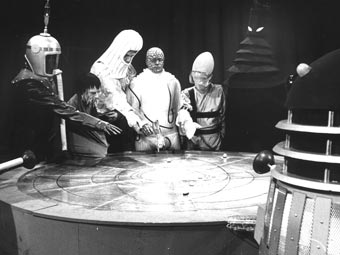
Some of the delegates in attendance in The Daleks Master Plan

Some of the delegates in attendance in The Daleks’ Master Plan

A Chumbly with the Drahvins

A Chumbley with the Drahvins in Galaxy 4

Vivien Fleming

©Vivien Fleming, 2013.

Welcome Third Doctor

Video

Yes, I know that I’ve yet to review The War Games or watch Spearhead From Space (for the purposes of this marathon), however I’m far too excited about the arrival of my favourite Doctor to wait to share this clip. The first tattooed Doctor has appeared and what better way to endear him to the audience than through a shower scene. Thank goodness this is Doctor Who and not Psycho!

Goodbye Second Doctor

Video

After a two month marathon of Patrick Troughton’s tenure as the Second Doctor, it was with more than a little sadness that I bid farewell to the Cosmic Hobo this evening. Jamie and Zoe were returned to their own time and Doctor Who, as we know it, changed forever.

With the monochrome era behind us, Doctor Who returned to the screens in colour with an earth-ensnared, TARDIS-less Doctor. The Spearhead From Space will soon introduce us to the Autons, but prior to that my forthcoming review of The War Games will lure me back to the sixties for one last hurrah. Please join me as I continue my journey through 50 years of Doctor Who.

Day 50 of 50th Anniversary Countdown – The 10 Most Wanted Missing Episodes

Standard

Image

Today The Doctor Who Mind Robber commences its 50 Day Countdown to Doctor Who’s 50th Anniversary. Today the author will also conclude the 1960s component of her Ultimate Doctor Who Marathon by viewing the final episodes of Patrick Troughton’s last serial, The War Games. What more appropriate era to concentrate our daily articles on than Sixties Doctor Who?

For the next 50 days we will publish a daily article on a 1960s related topic. Perhaps appropriately, given the ongoing Missing Episodes Hysteria, our first survey will be on the Ten Most Wanted Missing Episodes.

10.      THE ABOMINABLE SNOWMEN

Having just finished reading Terrance Dicks’ novelization of The Abominable Snowmen I’d love to see the five missing episodes returned to the BBC Archives.  Episode two has been released on Lost in Time.

The first of Doctor Who’s two Yeti stories, The Abominable Snowmen is set in the Himalayan Buddhist Monastery, Det-Sen in 1935. Together with introducing the Yeti to the world of Who, the story is also the first appearance of the Great Intelligence. Given the Intelligence’s reintroduction as the major protagonist of Series 7 (The Snowmen, The Bells of Saint John, and The Name of the Doctor), The Abominable Snowmen has obvious marketing potential to New Series fans.

Together with providing fans with another full adventure with the little seen companion Victoria, The Abominable Snowmen is also significant for including the father and daughter team of Deborah (Victoria) and Jack (Travers) Watling.  The story was one of the first to involve extensive location filming and features some splendid Welsh scenery as Snowdonia substituted for Tibet.  The Yeti, whilst menacing, are also adorably cute.

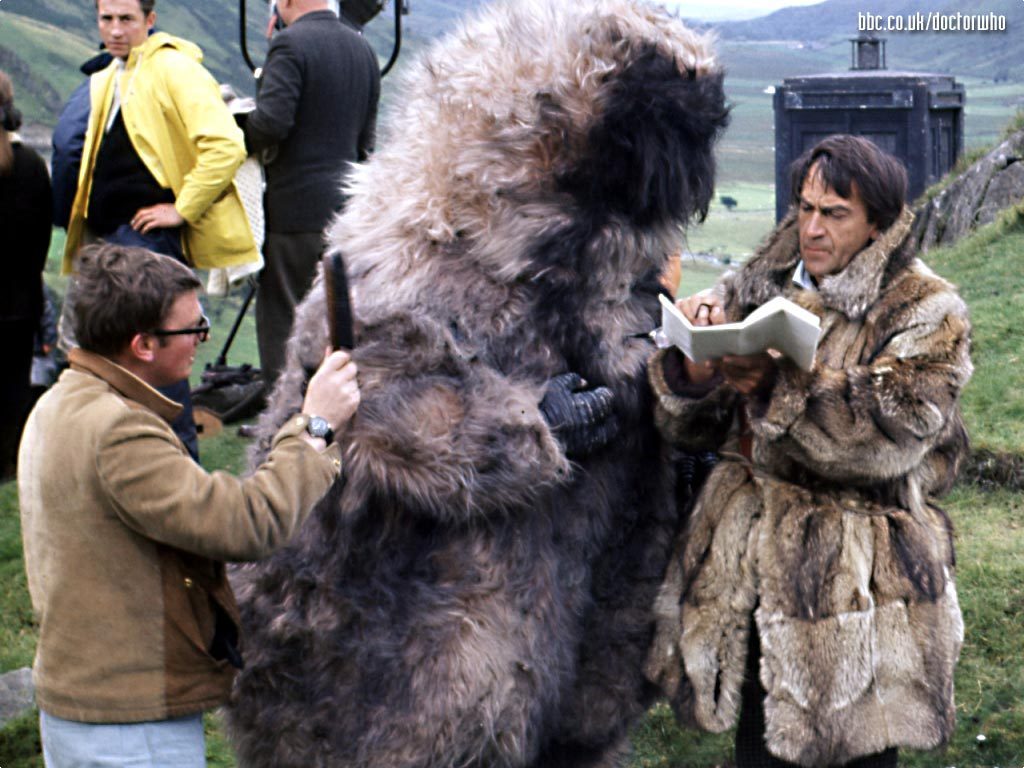
Patrick Troughton on the set of The Abominable Snowmen

Patrick Troughton on the set of The Abominable Snowmen

9.       THE FACELESS ONES

Ben and Polly’s farewell serial, The Faceless Ones is one of my personal favourites.  Episodes one and three are in the BBC Archives and have been released on the Lost in Time compilation.

Set in modern day London, The Faceless Ones was filmed at Gatwick Airport and features Pauline Collins as the would-be companion, Samantha Briggs.  Collins would appear in Doctor Who 39 years later as Queen Victoria in Tooth and Claw.  The serial has certain similarities with the Mark Gatiss penned Series 2 serial, The Idiot’s Lantern.

As one of the few “present day” serials of Doctor Who’s monochrome era, The Faceless Ones is a worthy companion to Ben and Polly’s first serial, The War Machines.  The pair departs on the same day as their arrival in the aforementioned story, which is unfortunately their only complete serial.  The most under-represented of all 1960’s companions in terms of extant episodes, it would be a delight to finally see Ben and Polly’s farewell to the Second Doctor in episode six.  As the companions who flawlessly provided the continuity between the First and Second Doctors, Ben and Polly justifiably deserve more screen time.
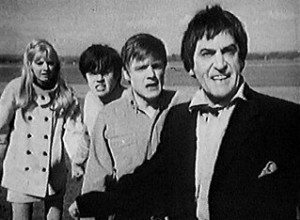
The four members of the Tardis Crew before they scatter at Gatwick Airport in The Faceless Ones

The four members of the Tardis Crew before they scatter at Gatwick Airport in The Faceless Ones

8.     THE MACRA TERROR

Another Patrick Troughton serial with a monster revived in New Series Doctor Who (Gridlock), The Macra Terror is entirely missing from the BBC Archives. Featuring Ben and Polly as the Second Doctor’s companions, The Macra Terror features the monster which put paid to model maker Shawcraft Models’ association with Doctor Who. The few off air clips available are just fabulous.  As previously mentioned, there are far too few Ben and Polly episodes so any finds will allow us to fully appreciate their significant contribution to this tumultuous period of Doctor Who’s history.

A publicity shot for The Macra Terror

A publicity shot for The Macra Terror

7.    THE DALEKS’ MASTER PLAN

The 12 part Hartnell era masterpiece, The Daleks’ Master Plan has nine of its episodes missing. Episodes two, five and ten have been released on Lost in Time.

The DMP is resplendent with firsts, including Nicholas Courtney’s premier appearance in Who as secret agent Bret Vyon, the first deaths of companions, and the first return of a humanoid villain, the Monk. The short-lived companion Katarina, played by Adrienne Hill, is killed in episode four, which also sees the death of Bret Vyon at the hands of his sister Sara Kingdom (played by Jean Marsh).  Sara Kingdom, who also subsequently becomes a companion, is killed in episode 12.

The DMP is perhaps the least likely of all serials to be recovered.  Although sold to Australia it was never broadcast as a consequence of censorship problems. The DMP is in fact the only Doctor Who serial to have never been screened in Australia.  Australia is the only country to have purchased all Who serials since the first serial, An Unearthly Child. Australia’s neighbour, New Zealand, has an equally prestigious record of long standing support, having purchased all serials save for the DMP.   The ABC has confirmed that it no longer holds the episodes.  The serial was sold to no other countries.

Magnificent flame throwing Daleks in The Daleks' Master Plan

Magnificent flame throwing Daleks in The Daleks’ Master Plan

6.    THE ENEMY OF THE WORLD

The only non-Monster story in Season 5, The Enemy of the World is one of the most sought after Troughton era serials.  Only episode three is held in the BBC Archives and has been released on the Lost in Time DVD.

Very much in the style of a James Bond movie, The Enemy of the World is unique in that Patrick Troughton plays two roles – the Doctor and also the evil would-be world dictator, Salamander.  Featuring Who’s first helicopter and hovercraft scenes, which will become all too familiar during Jon Pertwee’s tenure as the Third Doctor, The Enemy of the World is so unlike the “Base Under Siege” stories as to warrant an exulted position in the archives of Doctor Who. 

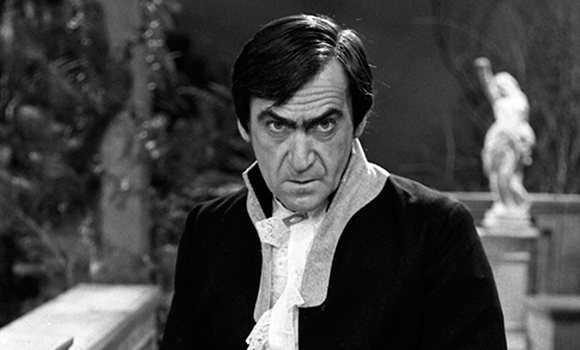
Patrick Troughton as Salamander in The Enemy of the World

Patrick Troughton as Salamander in The Enemy of the World

5.   THE WEB OF FEAR

The second and final Yeti story, The Web of Fear has only one episode in the BBC Archives.  Episode one has been released on Lost in Time.

The Web of Fear is set in the present day London Underground and introduces Colonel Lethbridge-Stewart.  Quickly promoted to Brigadier, Lethbridge-Stewart went on to have a distinguished career of more than 40 years with Doctor Who and its franchises.  Bringing monsters to London foreshadowed the Third Doctor’s earth-bound tenure and Jon Pertwee’s much quoted phrase, “Yeti on the Loo”.  It precipitated Doctor Who’s propensity to bring horror and science fiction to the mundane, everyday streetscapes of viewers.
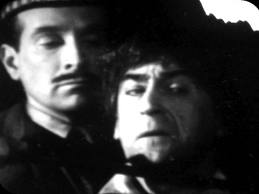
The Doctor first met Colonel Lethbridge-Stewart in less than perfect circumstances

The Doctor first met Colonel Lethbridge-Stewart in less than perfect circumstances

4.   THE EVIL OF THE DALEKS

The second and final Dalek serial of the Troughton era, only episode two of the seven part serial is held in the BBC Archives.  It has been released on the Lost in Time DVD.

Coming in at 18 in the 2009 Doctor Who Magazine Mighty 200 poll, The Evil of the Daleks was the most highly placed Second Doctor story.  Set in Victorian England, it introduced the new companion Victoria who, having lost her father to the Daleks, was effectively adopted by the Doctor and Jamie.  The story featured the concept of the “human factor” in Daleks, something which would re-emerge in the first Dalek story of 21st Century Who, Dalek.  It also included some lovely scenes in which “baby” Daleks, who had been impregnated with the “human factor”, gleefully played trains with the Doctor.

The Evil of the Daleks was the first Doctor Who serial ever repeated and the first and only repeat to be scripted into serials

The Evil of the Daleks was the first Doctor Who serial ever repeated and the first and only repeat to be scripted into serials

3.     THE POWER OF THE DALEKS

The Power of the Daleks is Patrick Troughton’s first serial as the Second Doctor.  In what could only be described as criminal negligence, none of its six episodes are held in the BBC Archives.

Widely acclaimed as one of the better 1960s Dalek stories, Power of the Daleks introduces a Doctor not only wildly different from his predecessor, but also significantly divergent from Troughton’s later portrayal.  This is the first the viewer sees of a Doctor who will rapidly transform during the course of Season Four.  The recorder, stove-pipe hat and baggy trousers will soon be a thing of the past.  More importantly, however, the Doctor’s personality significantly evolves. The Power of the Daleks is also remarkable for the magnificent Dalek production line, which by luck rather than good management, is still available for our viewing pleasure as a short clip.

The Doctor, Polly and Ben are confronted by Daleks in The Power of the Daleks

The Doctor, Polly and Ben are confronted by Daleks in The Power of the Daleks

2.   THE TENTH PLANET – EPISODE 4

Although episodes one, two and three of The Tenth Planet exist in the BBC Archives, episode four has been lost in time.  Together with the recently animated lost episode, The Tenth Planet will be finally released on DVD in November 2013.

Often described as the proto-type for the Troughton era “Base Under Siege” stories, The Tenth Planet heralded the introduction of the Cybermen. It is perhaps best remembered, however, as William Hartnell’s final story as the Doctor. It is most unfortunate that of all episodes to be lost, it is the final episode with Doctor Who’s first regeneration that doesn’t grace the shelves of the BBC’s Archives. This loss is compounded by the complete absence of Patrick Troughton’s first serial, The Power of the Daleks, from the Archives as well.  Gone also was the opportunity to see the regeneration reprised in the first episode of the next serial.  As luck would have it, however, an amateur film taken off-screen during the broadcast of episode four exists and allows fans to witness this historic regeneration, albeit in a rather grainy form.
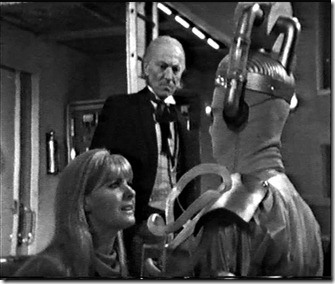
The Tenth Planet introduces the Cybermen to Doctor Who for the first time.  A Cyberman is pictured here with Polly and the Doctor

The Tenth Planet introduces the Cybermen to Doctor Who for the first time. A Cyberman is pictured here with Polly and the Doctor

1.   MARCO POLO

Undoubtedly the most highly sought after missing Doctor Who story is Marco Polo.  The fourth story of the series’ first season, this historical drama is the earliest missing story. Directed by Waris Hussein, who also directed Doctor Who’s first serial An Unearthly Child, all that remains visually of this story is a collection of beautiful colour photographs taken during the filming. On the basis of these photos alone, Marco Polo appears to have been an exceptionally cinematic production. As the most widely sold Hartnell era serial, it’s nothing short of bizarre that not a single episode has resurfaced.

A thirty minute reconstruction of Marco Polo was released with the three disc box set The Beginning, which also includes An Unearthly Child, The Edge of Destruction and The Daleks. 

The Doctor and his companions in Marco Polo

The Doctor and his companions in Marco Polo

HONOURABLE MENTIONS

1. Fury From the Deep

2. The Savages

3, The Massacre

4. The Myth Makers

5. Mission to the Unknown

6. The Crusade

7. The Smugglers

TOMORROW – DAY 49 – The 10 Least Remembered Monsters of the Sixties

For the latest developments in the Missing Episodes Hysteria please see our articles on recent Mirror and Radio Times articles.

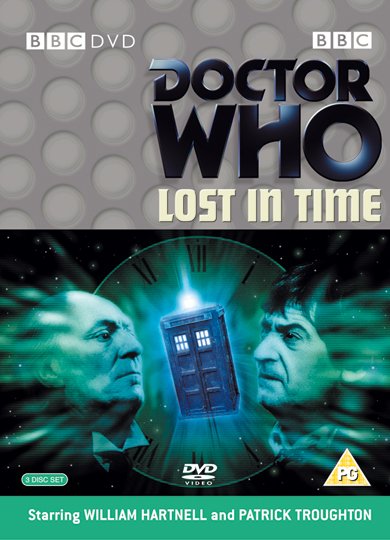
Episode two of The Space Pirates has been released on the triple DVD set Lost in Time

Orphan episodes have been released on the triple DVD set Lost in Time

Vivien Fleming

©Vivien Fleming, 2013.
Worldwide Screening of 50th Anniversary Episode

Standard

Image

On 26 July The Doctor Who Mind Robber reported an article in the UK’s Sun newspaper in which an international simulcast of the 50th Anniversary Special was mooted.  Yesterday, more than two months after the Sun’s report, the BBC officially announced that at least 75 countries have agreed to broadcast The Day of the Doctor on 23 November.

Tim Davie, the chief executive of BBC Worldwide said, “the simultaneous broadcast and cinema screening of the special across so many countries will make for a fitting birthday tribute to our time lord”. The special is due to screen in 200 cinemas across the United Kingdom. Steven Moffat was then quoted as saying, “The Doctor has always been a time traveller.  Now he’s travelling through time zones”.

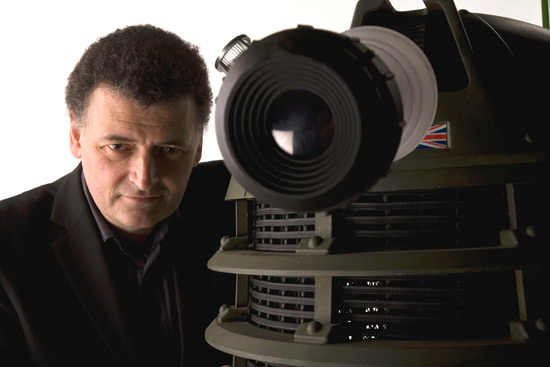
Steven Moffat, Executive Producer of Doctor Who

Steven Moffat, Executive Producer of Doctor Who

Together with the Eleventh Doctor and his current companion, the 75 minute special will also feature the Tenth Doctor, David Tennant, and the first companion of new series Doctor Who, Billie Piper. A hitherto unknown incarnation of the Doctor, played by John Hurt, will also appear.  It has been widely rumoured that Hurt’s Doctor will be number 8.5, being an incarnation between Paul McGann’s Eighth Doctor and Christopher Eccleston’s Ninth Doctor. There has been no further information forthcoming on a comment by the Fifth Doctor, Peter Davison, several weeks ago.  Davison was reported as having said that  ”I’m making an appearance somewhere over that period of time but I can’t reveal in what. I can’t reveal anything specific about it. I’m not allowed to. It is a big year for the show and we’re all doing our bit for it. Trust me.”

The ABC yesterday confirmed that The Day of the Doctor will be simulcast live throughout Australia.

Vivien Fleming

The Space Pirates – Loose Cannon Reconstructions

Standard

Image

It’s time to celebrate. The penultimate serial of Season Six, The Space Pirates, is the very last missing Doctor Who story. Only episode two is held in the BBC Archives and the reason for its retention was that it was the first episode recorded on 35mm film.  For that reason it was considered to be of archival importance. For the purposes of this marathon I viewed Loose Cannon’s reconstructions of episodes one, three, four, five and six. Unfortunately these reconstructions feature a very muddy fan recorded soundtrack and contain no telesnaps. There is absolutely no visual record of the character Dom Issigri, who was played by Edmond Knight.  Accordingly Loose Cannon had to “invent” a visual representation for that character.

Loose Cannon’s The Space Pirates, Episode 1 Part 1

Loose Cannon’s The Space Pirates, Episode 1 Part 2

Loose Cannon’s The Space Pirates, Episode 3 Part 1

Loose Cannon’s The Space Pirates, Episode 3 Part 2

Loose Cannon’s The Space Pirates, Episode 4 Part 1

Loose Cannon’s The Space Pirates, Episode 4 Part 2

Loose Cannon’s The Space Pirates, Episode 5 Part 1

Loose Cannon’s The Space Pirates, Episode 5 Part 2

Loose Cannon’s The Space Pirates, Episode 6 Part 1

Loose Cannon’s The Space Pirates, Episode 6 Part 2

The Space Pirates

Standard

Image

Coming in at 195 in the 2009 Doctor Who Magazine Mighty 200, The Space Pirates has the unfortunate reputation as the least popular Patrick Troughton era Doctor Who serial. It is also the last story that is missing from the BBC Archives.  For anyone undertaking a complete marathon this alone is a cause for much celebration. But is The Space Pirates really as bad as its renown would suggest?  In the absence of five of the six episodes, the answer is largely a moot point.  A particularly visual story, The Space Pirates suffers inordinately from the absence of moving pictures.  Moreover, the complete absence of any telesnaps for the serial has made its reconstruction astonishingly difficult. John Cura had taken 35mm photographs from his television screen of the vast majority of Doctor Who episodes.  Generally providing between 70 and 80 photos per programme, these images have become an important record of otherwise lost Doctor Who visuals.  Cura had ceased photographing and selling his telesnaps to the BBC not long prior to his death in April 1969. For further information on John Cura and his telesnaps please see About the Doctor Who Mind Robber.

The Doctor and Jamie upon arrival in The Space Pirates

The Doctor and Jamie upon arrival in The Space Pirates

As if any further hindrances were required, the soundtrack for The Space Pirates is the most muddy of the entire fan recorded missing episode audios.  The renegade old time prospector, Milo Clancey, is frequently credited as the stand-out character in the serial.  I have to admit, however, to finding it almost impossible to comprehend what he was saying. Portrayed by the New Zealand born Australian actor, Gordon Gostelow, Clancey has one of the worst faux American accents in Doctor Who’s illustrious history. It’s not the American accent, however, that I find difficult to understand. Although my hearing is generally fairly reasonable, I very occasionally have difficulty understanding male voices on TV.  When last I had a hearing test the audiologist provided me with a detailed explanation of the reasons why.  I won’t bore you with the details, but hasten to add that the muddy soundtrack of The Space Pirates made it nigh on impossible for me understand most of the largely male cast.

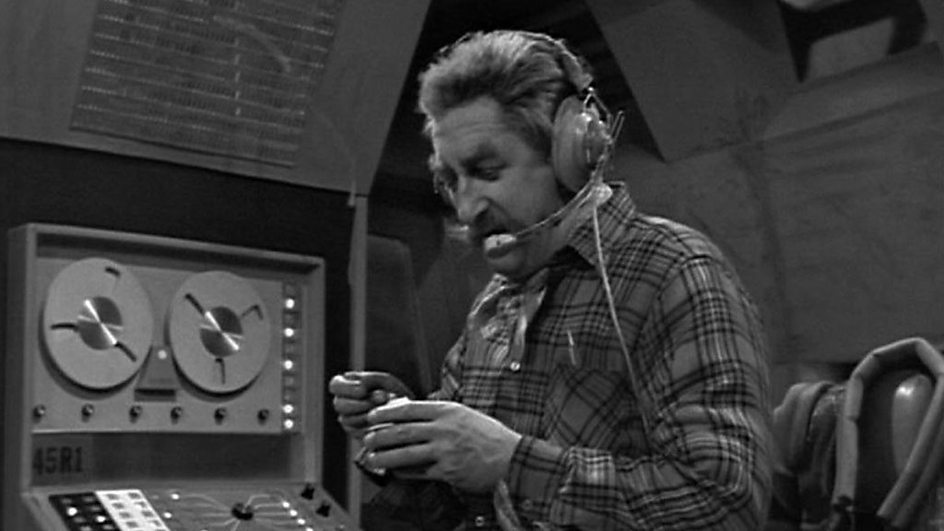
The old time pioneer of space exploration, Milo Clancey

The old time pioneer of space exploration, Milo Clancey

Writing a review of a story bereft of visual images and with a soundtrack which I could barely understand makes for a particularly difficult task.  It’s for that reason that my observations on The Space Pirates will be reasonably short and sweet. I highly recommend that you view the second part of Loose Cannon’s introduction to The Space Pirates, the link for which appears below.   The audio for this introduction, I might add, is crystal clear and provides an excellent summary of several “firsts” for the story, including Doctor Who’s first space opera;  first pirate take on a traditional American Western theme; first episode recorded on 35 mm film; first recording in Television Centre 4;  first episode (save for Mission to the Unknown) in which no regular cast members were present for a studio recording; and finally, the first time that John Nathan-Turner worked on a Doctor Who episode.   The Space Pirates is also credited for having the greatest time lapse between the commencement of an episode and the appearance of the Doctor and his companions.  Emerging onscreen fifteen minutes into the first episode, this is even longer than the 14 minutes it took for the Eleventh Doctor to appear in the Series Seven episode, The Crimson Horror.

The Doctor and his crew collapsed

The Doctor and his crew collapsed

It would be remiss if I failed to mention Madelaine Issigri’s fabulous metal hair.  Women’s wigs in the near future are not only made of metal, but are also styled with an exceptionally large beehive at the back, as opposed to the top, of the head.  It’s just brilliant! Whilst discussing women’s fashion, Zoe’s hotpants are just divine.

Madelaine Issigri had the most fabulous metal wig

Madelaine Issigri had the most fabulous metal wig

That wig again!

That wig again!

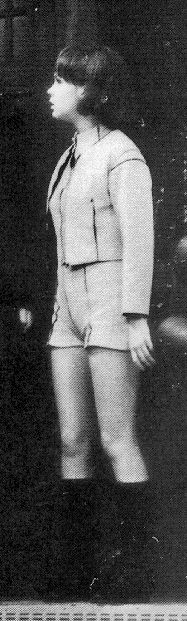
Zoe's hotpants

Zoe’s hotpants

The Doctor and his companions were noticeably absent from the greater part of The Space Pirates and could be fairly said to have played supporting roles.  Patrick Troughton’s request for a lighter acting role undoubtedly accounted for this to some degree.  In respect of the final episode, the TARDIS crew were heavily engaged in the location shoot for their final adventure, The War Games.  Accordingly the Doctor, Zoe and Jamie only appeared in pre-filmed inserts for that episode. The results of the Crew’s location filming will be evident in my next review as we say farewell to the monochrome era of Doctor Who, and the Second Doctor, Jamie and Zoe, in The War Games. 

The Space Pirates was originally broadcast in the UK between 8 March and 12 April 1969

The Space Pirates was originally broadcast in the UK between 8 March and 12 April 1969

Episode two of The Space Pirates has been released on the triple DVD set Lost in Time

Episode two of The Space Pirates has been released on the triple DVD set Lost in Time


Vivien Fleming

©Vivien Fleming, 2013.

The Doctor’s Companions – The Guardian Articles

Standard

Image

Last Saturday The Guardian published a series of three articles on Doctor Who’s companions through the ages.  The first article covers the 1960s and 1970s and features short interviews with Carole Ann Ford (First Doctor), Deborah Watling (Second Doctor), Katy Manning (Third Doctor) and Louise Jameson (Fourth Doctor).

Carole Ann Ford as Susan Foreman, the Doctor's Grand-Daughter

Carole Ann Ford as Susan Foreman, the Doctor’s Grand-Daughter

The second article encompasses the 1980s and the 1996 telemovie and includes interviews with Janet Fielding (Fifth Doctor), Sarah Sutton (Fifth Doctor), Bonnie Langford (Sixth and Seventh Doctors), Sophie Aldred (Seventh Doctor) and Daphne Ashbrook (Eighth Doctor).

Sophie Aldred as the Seventh Doctor's companion, Ace

Sophie Aldred as the Seventh Doctor’s companion, Ace

The final article features the new series companions, Billie Piper (Ninth and Tenth Doctors), Freema Agyeman (Tenth Doctor), Catherine Tate (Tenth Doctor) and Karen Gillan (Eleventh Doctor).

Catherine Tate played the Tenth Doctor's companion, Donna Noble

Catherine Tate played the Tenth Doctor’s companion, Donna Noble

Each of the three articles features an identical nine minute video featuring Karen Gillan, Carole Ann Ford, Billie Piper, Louise Jameson, Katy Manning and Freema Agyeman. The former companions discuss issues ranging from their costumes to whether the next Doctor should be a woman.

Vivien Fleming