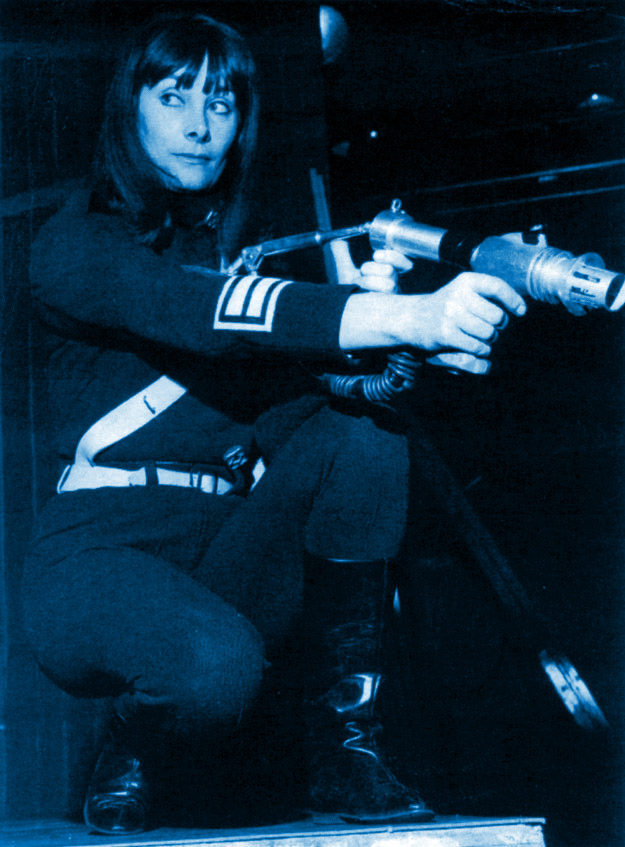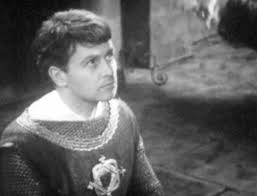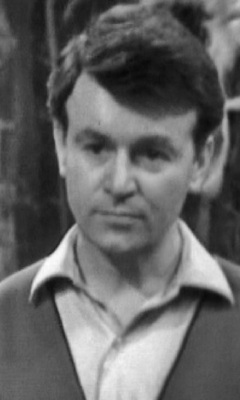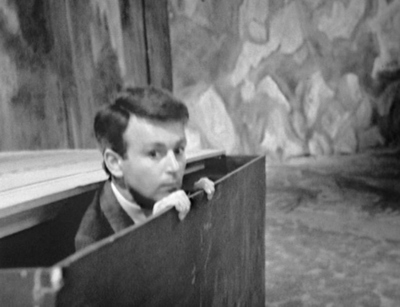
Tag Archives: First Doctor

Day 30 of 50th Anniversary Countdown – The Top 5 First Doctor Stories

Standard

Image

5. The Aztecs

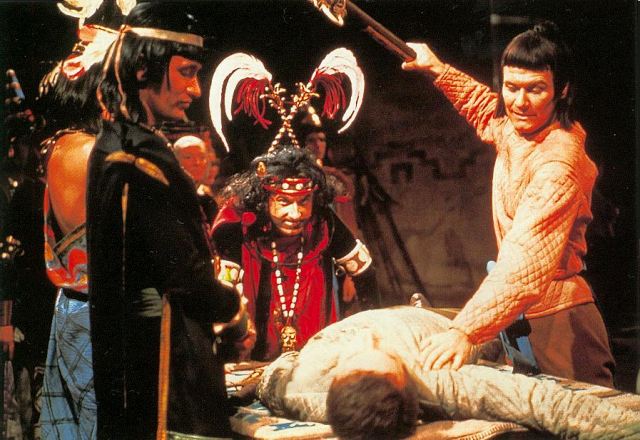
A Special Edition of The Aztecs was released earlier this year which included an abridged reconstruction of Galaxy 4, together with episode three which was recovered in 2011. The Aztecs has long been held in high esteem by fandom and is a superb example of the historical dramas that the BBC has always brilliantly produced. Set in South America during the time prior to Spanish settlement, the serial tells the story of Barbara’s determination to change history. In a quest to satisfy her penchant for bracelets, Barbara donned a snake bangle discovered not long after the party disembarked from the TARDIS.  Mistaken by the locals as the reincarnation of the high priest Yetaxa, her extraordinary knowledge of history and modern sense of morality naturally saw her rile against human sacrifice. From the beginning the Doctor’s objective was to ensure that history was not rewritten.  This was the first serial in which the parameters of “fiddling” with time and space were examined.  Barbara’s refusal to conform to the Doctor’s direction that “time can’t be rewritten.  Not one line” very nearly had fatal consequences for the Crew. Henceforth there would be limits on the TARDIS Crew’s actions.

Ian was lucky to escape with his life in The Aztecs

Ian was lucky to escape with his life in The Aztecs

4. The Tenth Planet

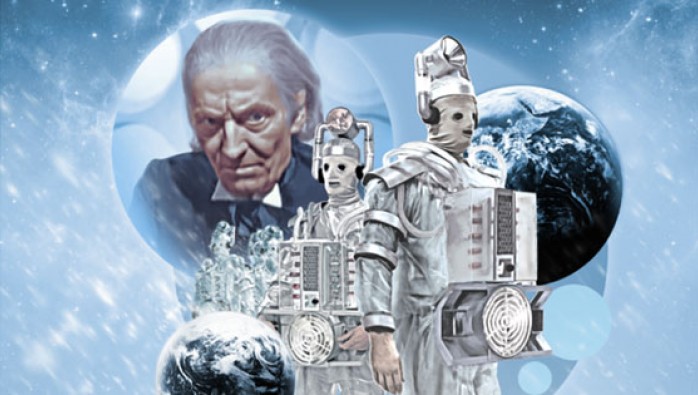
The First Doctor’s final story, The Tenth Planet heralded a number of firsts – Doctor Who’s first regeneration, the introduction of the Cybermen and the prototype for the Second Doctor’s “base under siege” formula. Rumours abound that the missing fourth episode, which features William Hartnell’s regeneration, has been recovered.  The DVD of the story has recently been released featuring an animation of episode four.  I wonder if a Special Edition, with the (alleged) recovered episode four, should be expected soon?

The DVD cover art for The Tenth Planet

The DVD cover art for The Tenth Planet

3. The Massacre

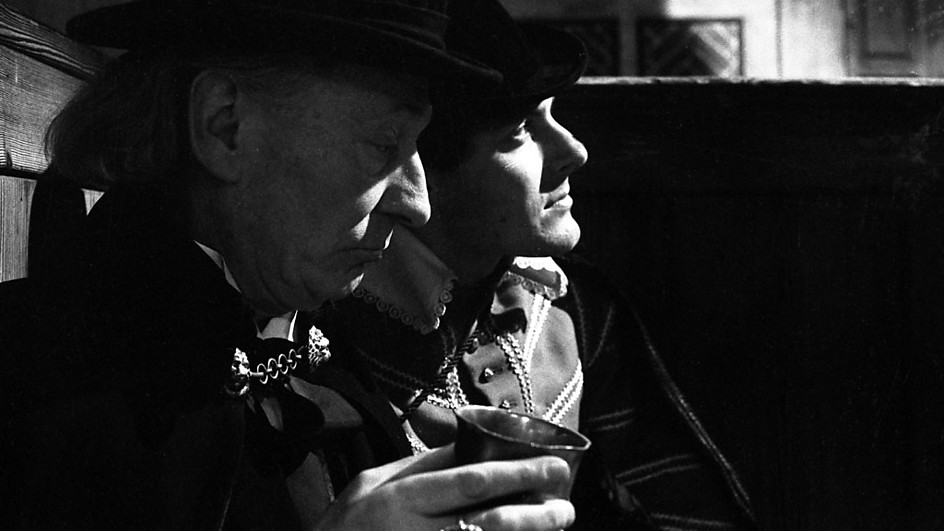
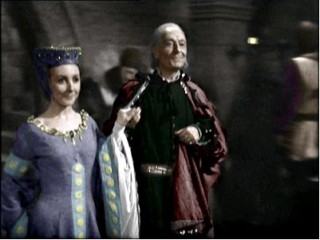
The Massacre is completely missing from the BBC Archives, although some of the current missing episode rumours suggest that it has been recovered.  Set in 1572 France, the serial chronicles the Doctor and Steven’s adventures during the Massacre de la Saint-Barthélemy (the St. Bartholomew’s Day Massacre) in which thousands of protestant Huguenots were massacred in a religious war lead by Roman Catholics. William Hartnell plays two roles in The Massacre – both the Doctor and the Doctor’s evil doppelganger, the Abbot of Amboise. As this is a historical drama it can almost be assured that the set design and costuming was brilliant.  The story is the only example in monochrome Doctor Who of a single companion accompanying the Doctor.  It also introduces new companion, Dodo Chaplet, in the last 10 minutes of the final episode.

The Doctor and Steven in The Massacre

The Doctor and Steven in The Massacre

2. An Unearthly Child

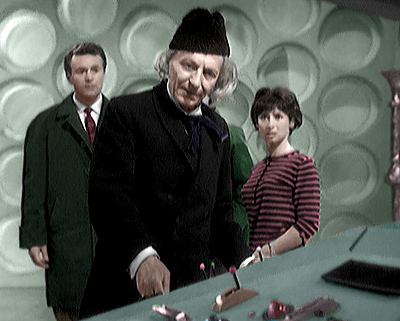
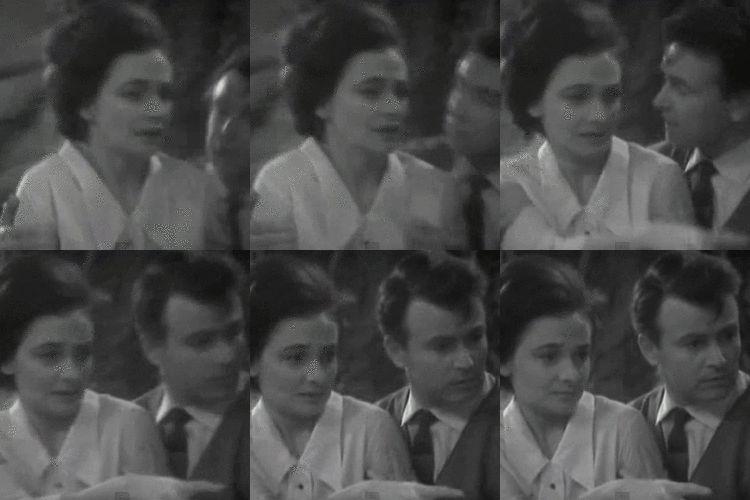
The first Doctor Who serial, An Unearthly Child introduced the strange adventures of a belligerent old man, the Doctor, and his grand-daughter, Susan Foreman. Possessed of a time machine which externally resembled a Police Call Box, the Doctor’s Ship was larger on the inside and capable of both time and space travel.  Coal Hill school teachers, Ian Chesterton and Barbara Wright, barged their way into the TARDIS (an acronym for Time and Relative Dimension in Space) whilst looking for their student, Susan.  Fearful that the teachers would reveal his secret, the Doctor kidnapped the pair as the TARDIS was seen to dematerialize for the first time.

Episodes two, three and four of the serial are more properly known as The Cave of Skulls, The Forest of Fear and The Firemaker. The Doctor, Susan and their two unwilling companions find themselves in pre-historic times and at the mercy of a tribe of cavemen who have lost their knowledge of fire making.

The first TARDIS Crew in An Unearthly Child

The first TARDIS Crew in An Unearthly Child

1.  Marco Polo

I’m going out on a limb here nominating a completely lost seven part serial as the Top First Doctor story.  As outlined in our post Missing Episodes – Has Marco Polo Been Recovered?  last week, I wouldn’t be at all surprised if this classic serial has been recovered and restored, and finds its way onto the iTunes playlists before Christmas.

The fourth Doctor Who story, Marco Polo was directed by Waris Hussein who was also responsible for the first serial, An Unearthly Child. As far as the BBC is presently letting on, all that remains of Marco Polo are some stunning colour photographs taken on set and the fan recorded soundtrack.  In the days prior to home video recording and commercial VHS releases, the only way that a fan could re-live a Doctor Who episode was to listen to the reel-to-reel audio recording which they’d made during the episode’s original transmission. Incredibly, around half a dozen fan recorded collections remained extant and were located during the 1980s and 1990s. It was during those decades that fans became cognisant of the BBC’s destruction of its television heritage and went searching for what remained.  Thanks to the endeavours of a small group of hard-core fans who religiously recorded Doctor Who each Saturday evening, aficionados of Who were now able to listen to long lost episodes.

Is Marco Polo really as good as fans who watched the original and only transmission remember?  Certainly the audio suggests something very special.  Hopefully we’ll all be able to soon judge for ourselves.

Marco Polo is the earliest missing Doctor Who serial

Marco Polo is the earliest missing Doctor Who serial

HONOURABLE MENTIONS

The Daleks’ Master Plan

Sara Kingdom in combat mode in The Daleks' Master Plan

Sara Kingdom in combat mode in The Daleks’ Master Plan

The Myth Makers

Vicki and Troilus in The Myth Makers

Vicki and Troilus in The Myth Makers

The image at the top of this post is a painting by Francois Dobois depicting the St. Bartholomew’s Day Massacre. No copyright infringement is intended.

Vivien Fleming

©Vivien Fleming, 2013.

Day 31 of 50th Anniversary Countdown – It’s Wholloween (or The Chase, Episode 4)

Gallery

Day 32 of 50th Anniversary Countdown – Top 3 Male Companions of the Sixties

Standard

Image

Yesterday the Doctor Who Mind Robber listed our Top 3 Female Companions of the Sixties. Although fewer in number than their women counterparts, today we examine our Top 3 Male Companions of the Sixties.

3. STEVEN TAYLOR

Not unlike his fellow companion Vicki who was number 3 in our list of the Top 3 Female Companions  of the Sixties, Steven joined the Doctor in a traumatized state. Portrayed by Peter Purves, Steven was an astronaut which had been held captive by the Mechonoids for two years.  As the sole human on the planet Mechanus, his only companion was a stuffed Panda named Hi-Fi. In the Doctor Who Mind Robber’s review of Steven’s first complete serial, The Time Meddler, we described his introduction to the TARDIS Crew in the following way:
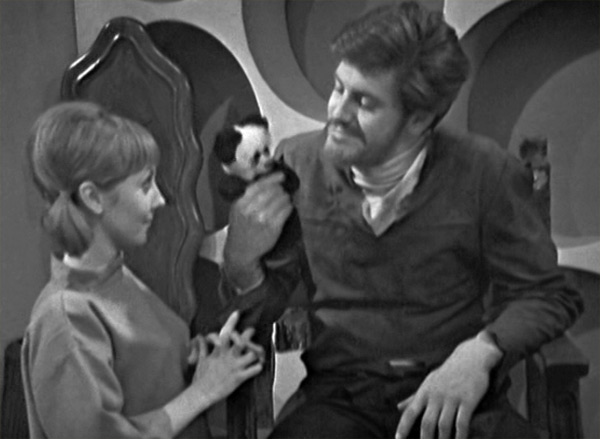
Steven, Vicki and Hi-Fi in The Time Meddler

Steven, Vicki and Hi-Fi in The Time Meddler


After assisting the Doctor, Ian, Barbara and Vicki to escape the Mechonoid City in The Chase, Steven had returned to the City to retrieve Hi Fi just as the Daleks destroyed it. It was great dismay, therefore, that the Doctor and Vicki were confronted by Steven as he stumbled into the TARDIS control room before collapsing to the floor. The TARDIS had just materialized in 11th Century England however Steven had stowed away in the ship, presumably whilst Vicki and the Doctor were saying their goodbyes to Ian and Barbara on Mechanus.  Suffering ill effects from the Dalek blast, Steven assumed that he must have been delirious when he chased after the crew and eventually found the ship.

Astronaut Steven Taylor as we first met him in The Chase

Astronaut Steven Taylor as we first met him in The Chase

The spaceship pilot who had spent two years as a prisoner of the Mechonoids was now the Doctor’s latest companion.  Notwithstanding his experience with space craft, Steven has clearly not seen a machine as magical as the TARDIS before.  He doesn’t believe it is a time-machine or that they’ve landed in the 11th Century.  The TARDIS’s inability to blend into its surroundings, as it was constructed to do, together with the discovery of a modern wrist watch, compounds Steven’s disbelief.  Prone to speak his mind, Steven is openly dismissive of Vicki’s assertions about the ship’s capabilities and earns a quick rebuke from the Doctor for calling him “Doc”.  Quickly recovering from  a state of deep sleep or unconsciousness, Steven shows no ill effects from his previous deprivations on the planet Mechanus.  It would not be unfair to assume that a person who had gone two years without human companionship, and has an overt attachment to a stuffed toy, may be suffering some form of psychological distress. Not unlike Vicki, who rapidly regained equilibrium following her trauma on the planet Dido, Steven is promptly able to put the past behind him, leave the panda on a chair, and embrace a new life of adventure with the Doctor.
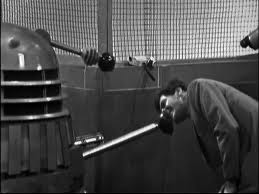
Peter Purves first appeared in Doctor Who as Morton Dill, the dim witted hick from Alabama in The Chase.  Here Dill investigates a Dalek on the Empire State Building

Peter Purves first appeared in Doctor Who as Morton Dill, the dim witted hick from Alabama in The Chase. Here Dill investigates a Dalek on the Empire State Building

Steven accompanied the Doctor on his journeys from the final serial of Season 2 until the penultimate Season 3 story, The Savages. In the intervening period he assisted the Doctor battle the evil but beautiful Drahvins in Galaxy 4 and the Daleks in the 12 part The Daleks’ Master Plan.  Steven travelled to ancient Troy where he and the Doctor farewelled Vicki, and to 1572 France where he was the Doctor’s sole companion during the massacre of French protestants.  He and Dodo were compelled to play the Celestial Toymaker’s puerile games to retrieve the TARDIS in The Celestial Toymaker and were confronted by the Monoids in The Ark. Steven’s penultimate adventure was to the American Mid-West where he surprised all by being able to sing and barely escaped a lynching.  His departure in The Savages was less than adequate. Having negotiated peace between the Guardians and the Monoids , the Doctor, much to Steven’s dismay,  volunteered  him to remain on the planet and facilitate the transformation to a fair and just society. Although initially hesitant, Steven quickly accepted the challenge and the Doctor and Dodo departed in the TARDIS. So ended Steven’s 12 month tenure as a companion.
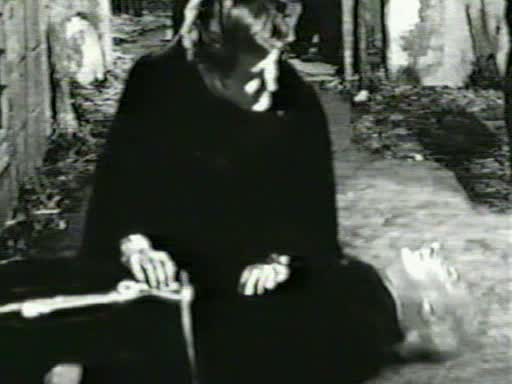
Steven with the body of the Abbot of Amboise in The Massacre

Steven with the body of the Abbot of Amboise in The Massacre

2. IAN CHESTERTON

Ian Chesterton was one half of the “Ian and Barbara” duo who introduced the world to Doctor Who. A science teacher at Coal Hill School, he shared a concern with history teacher Barbara Wright about their 15 year old student, Susan Foreman.

After being kidnapped by the Doctor when he and Barbara entered the TARDIS looking for Susan, Ian’s initial relationship with the Doctor was tense and combative. His relations with the self-centred Doctor remained strained  until the Fourth serial, Marco Polo. Included in Doctor Who as both a point of identification for the audience and as a “man of action” for the more elderly and sedate Doctor, Ian remained with the TARDIS crew until the penultimate serial of Season 2, The Chase. During his two year tenure showed himself to be both intelligent and compassionate.  He had  penchant for wearing cardigans and was knocked unconscious more times than any other companion in the history of Doctor Who. Ian was knighted as Sir Ian of Jaffa by King Richard 1 of England in The Crusade.

Sir Ian of Jaffa is knighted by Richard the Lionheart in The Crusade

Sir Ian of Jaffa is knighted by Richard the Lionheart in The Crusade

It is our intention to provide no more than a cursory examination of Ian in this piece.  A comprehensive analysis of William Russell and his contribution to the history of Doctor Who would require a wordy dissertation, many thousands of words in length.  Instead we will leave you with a photographic essay of Ian.  All images are courtesy of http://thechestertons.tumblr.com.

Ian Chesterton had a fond appreciation for cardigans

Ian Chesterton had a fond appreciation for cardigans

Ian was shrunk to the size of an ant and caught in a matchbox in Planet of Giants

Ian was shrunk to the size of an ant and caught in a matchbox in Planet of Giants

Ian comforts Barbara

Ian comforts Barbara

Ian endeavours to unravel Barbara's cardigan in The Space Museum

Ian endeavours to unravel Barbara’s cardigan in The Space Museum

Ian displays how to paralyse a man with finger pressure only in The Aztecs
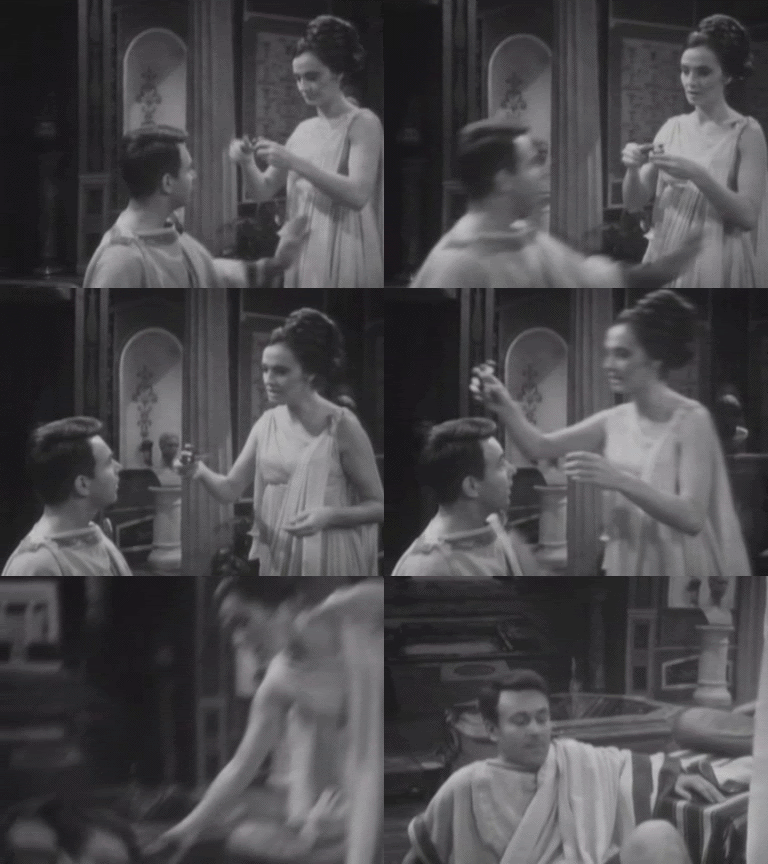
Ian displays how to paralyse a man with finger pressure only in The Aztecs

Barbara attends to Ian's hair in The Romans

Barbara attends to Ian’s hair in The Romans

Ian parties

Ian parties

Ian and Barbara embrace on returning to 1965 London in The Chase

Ian and Barbara embrace on returning to 1965 London in The Chase

Ian and Barbara frolic in London during their farewell in The Chase

Ian and Barbara frolic in London during their farewell in The Chase

3. JAMIE McCRIMMON

Jamie was the last male companion to join the Doctor in the Sixties although he made up for his late arrival by holding the record as the longest standing companion in Doctor Who’s history. Appearing in 116 episodes in total, Jamie exceeded the next most proficient companion, Sarah Jane Smith, by 21 episodes. Suffering from chicken pox during episode two of The Mind Robber, Frazer Hines was replaced by Hamish Wilson for that episode and the beginning of the following one. As luck would have it The Mind Robber was set in the land of fiction and Jamie’s change of appearance was quickly scripted to arise from the Doctor incorrectly reconstructing his face after he’d been transformed into a cardboard cut-out. Wilson’s departure and Hines’ return was facilitated by the Doctor correctly reconstructing Jamie’s face, with Zoe’s assistance, after he was again transfigured into a cut-out.
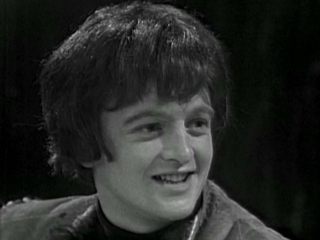
Hamish Wilson played the role of Jamie in episodes two and three of The Mind Robber

Hamish Wilson played the role of Jamie in episodes two and three of The Mind Robber

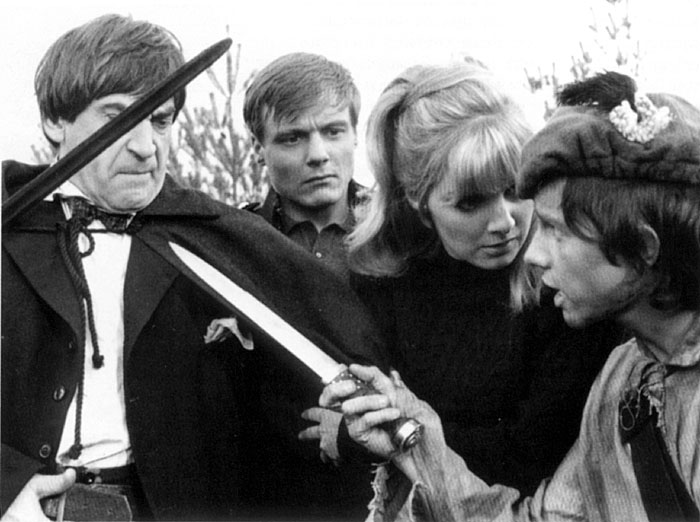
Jamie joined the Doctor, Ben and Polly in the second serial of the Second Doctor’s tenure, The Highlanders. The last historical in Classic Series Who until the 1982 Fifth Doctor’s adventure, Black Orchard, Frazer Hines’ contract as Jamie was originally to last for only the four weeks of the serial.  Hines’ rapport with the cast quickly saw him offered a full time position in the TARDIS Crew prior to the first episode of The Highlanders being broadcast.

Jamie confronts the Doctor, Ben and Polly in The Highlanders

Jamie confronts the Doctor, Ben and Polly in The Highlanders

James Robert McCrimmon met the Doctor and his companions, Polly and Ben, at the Battle of Culloden in 1746. A young and brave Highlander, the kilted Scot was ignorant of 20th Century technology which prompted an array of startled responses to everyday occurrences.  A plane in The Faceless Ones was a “flying beastie”.  In that serial he also had to ask the Doctor what a passport was, to which the Doctor responded, “Oh, some sort of official mumbo-jumbo”.

The Doctor and Jamie beside a "flying beastie" in The Faceless Ones

The Doctor and Jamie beside a “flying beastie” in The Faceless Ones

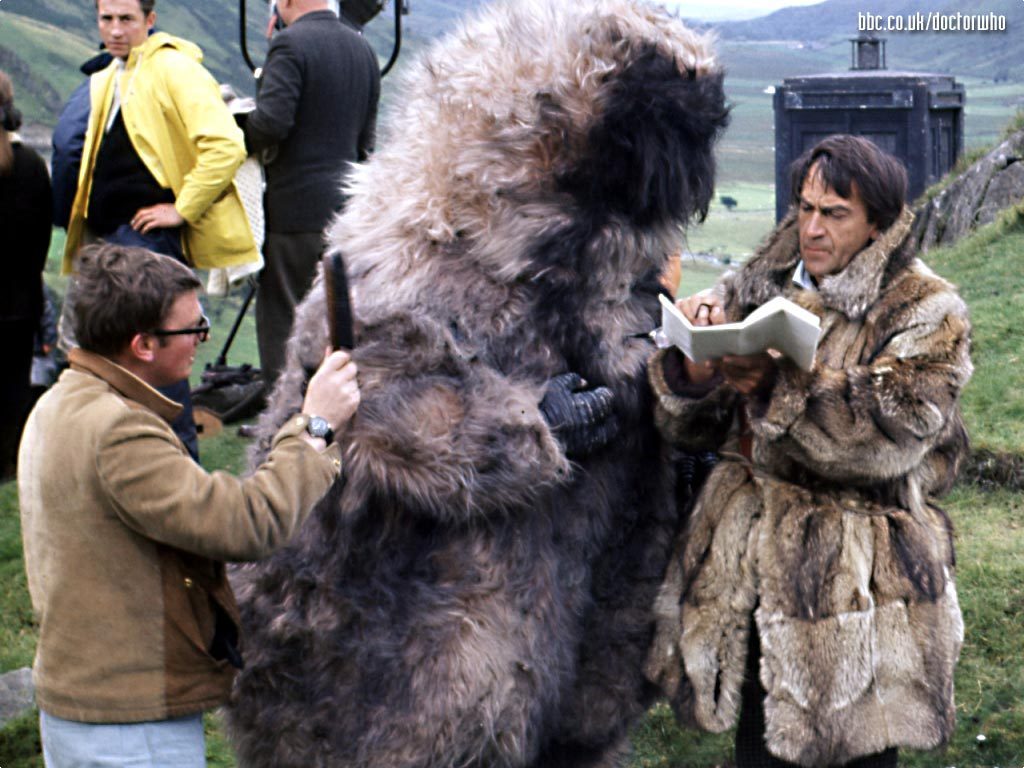
In The Evil of the Daleks Jamie was inquisitive about the sound of a train rumbling past.  He had no idea what the noise was and the Doctor described them to him in the simplest manner possible – “Well, it’s a train.  There are carriages and they go on wheels, on rails, and they’re drawn by a steam ..”.   He was unaware of what the Himalayas were in The Abominable Snowmen  and mistook the Doctor in his big fur coat as “a great sort of hairy beastie”.

Jamie mistook the Doctor in his fur jacket for a "hairy beastie" in The Abominable Snowmen

Jamie mistook the Doctor in his fur jacket for a “hairy beastie” in The Abominable Snowmen

In a state of delirium Jamie thought that a Cyberman in The Moonbase  was the Phantom Piper, the McCrimmon clan’s equivalent of the Grim Reaper. When Zoe first met Jamie in The Wheel in Space she was intrigued by his clothing.  She was unable to resist laughing and blurted out to Jamie, “You’re wearing female garments”. Needless to say, he was less than impressed and was quick to advise Zoe that his garb was that of a true Scotsman.  After initially mistaking him for a “kiltie” from Denmark or Scandinavia,  Zoe admitted that pre-century history was not her forte.  Jamie famously responded, “Aye, maybe not but just watch your lip or I’ll put you across my knee and larrup you”.

Polly tends to the ailing Jamie.  Whilst hallucinating  Jamie mistakes a Cyberman for the "Phantom Piper" in The Moonbase

Polly tends to the ailing Jamie. Whilst hallucinating Jamie mistakes a Cyberman for the “Phantom Piper” in The Moonbase

Jamie was also responsible for giving the Doctor his alias of John Smith.  In episode two of The Wheel in Space the Doctor was unconscious.  When asked what his name was by Gemma  Corwyn, Jamie glanced at piece medical apparatus with the words “John Smith & Associates” inscribed on it and replied, “John Smith”. That name has remained the Doctor’s preferred non de plume to this day.

The piece of medical equipment which inspired the now literate Jamie to give the Doctor the alias John Smith (The Wheel in Space)

The piece of medical equipment which inspired the now literate Jamie to give the Doctor the alias John Smith (The Wheel in Space)

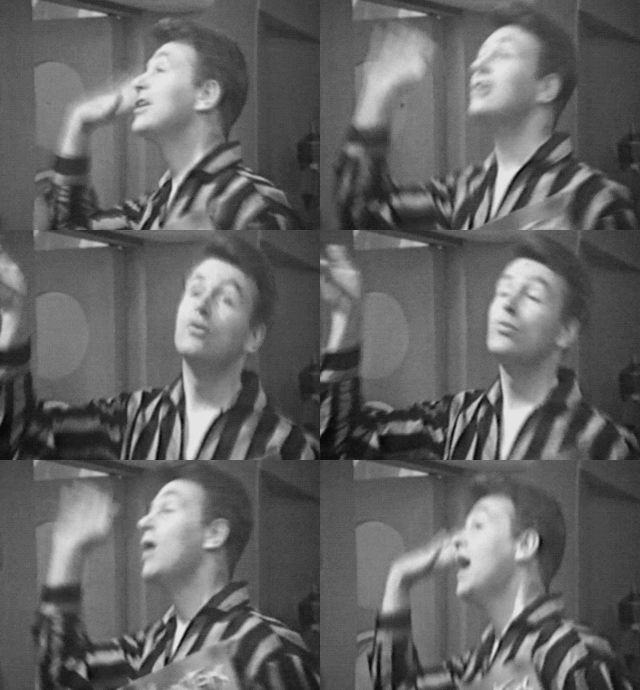
Jamie’s naivety allowed him to seamlessly ask the “what’s this, Doctor” questions. One of his favourite phrases was “look at the size of that thing, Doctor”, to which the Doctor would invariably respond by saying, “Yes, Jamie, that is a big one.”Jamie was fiercely protective of the Doctor and the two men had a magnificent rapport.  Frazer Hines and Patrick Troughton were not averse to hamming it up occasionally and on two occasions held hands.  In The Tomb of the Cybermen the Doctor mistook Jamie’s hand for Victoria’s, and in The Dominators they jumped from a small landing hand-in-hand.

The Doctor and Jamie hold hands again in The Dominators

The Doctor and Jamie hold hands again in The Dominators

Jamie’s last fellow companion, Zoe Heriot, was named as our favourite female companion of the Sixties.  The pair’s departure from Doctor Who in the final episode of The War Games was both powerful and melancholy. With his memory wiped of all but his first adventure with the Doctor, Jamie returned to the battlefields of Culloden.  Momentarily dazed, Jamie picked himself off the ground, sword in hand, and with a scream of “Creag an tuire” resumed battle with the enemy.  Frazer Hines reprised his role as Jamie briefly in the 1983 20th Anniversary Special, The Five Doctors, and more substantially as a companion of both the Second and the Sixth Doctors in 1985’s The Two Doctors. 
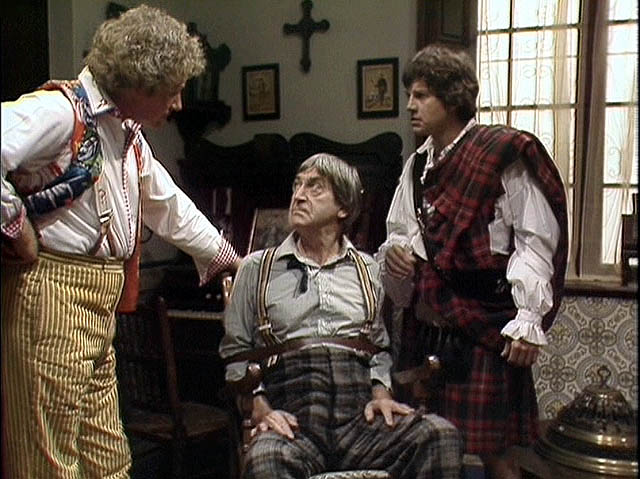
Jamie with the Second and Sixth Doctors in The Two Doctors

Jamie with the Second and Sixth Doctors in The Two Doctors

Vivien Fleming

©Vivien Fleming, 2013.

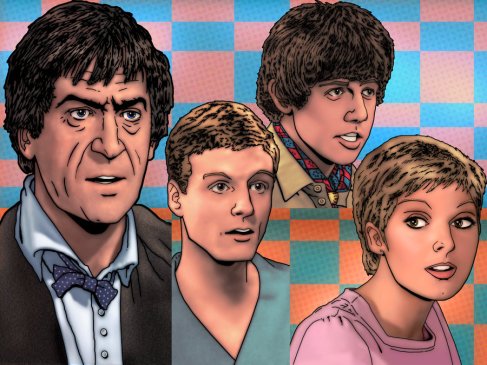
The illustration at the top of this post is by tygerbug and is courtesy of deviantART – http://tygerbug.deviantart.com/art/Doctor-Who-Ben-Polly-Jamie-184396442.  No copyright breach is intended.

Day 33 of 50th Anniversary Countdown – Top 3 Female Companions of the Sixties

Standard

Image

In the lead-up to Doctor Who’s 50th Anniversary the Radio Times has been running an online poll on the Greatest Companion Ever.  Voting has now closed and the results will be announced on the anniversary date, 23 November 2013. Today and for the following two days the Doctor Who Mind Robber will be ruminating on our Top 3 Female and Male Companions of the Sixties, together with  the 3 companions who failed to live up to our expectations.  Your comments on our choices would be greatly appreciated.

3. Vicki

On 10 July we posted an article on Vicki, the First Doctor’s companion who was hastily shown the door at the conclusion of The Myth Makers. Here’s how we described her tenure:

I have to admit I really liked Vicki. Young, perhaps no more than 17, she had a vibrancy that had been missing in her predecessor, the Doctor’s grand-daughter, Susan.  As a former secondary school teacher I envied the way she was schooled. In The Web Planet Vicki incorrectly assumed that Barbara had taught at a nursery school because they “worked upwards from the three Rs.”  The curriculum of Coal Hill School in 1963 seemed like child’s play to her.  At the age of 10 she took a certificate of education in medicine,  physics and chemistry.  When asked by Barbara how long she spent in the classroom Vicki was totally perplexed.  She’d spent almost an hour a week with a machine.  Life in 2493 must have been a child’s dream existence!

Vicki, Steven and the Doctor in The Time Meddler

Vicki, Steven and the Doctor in The Time Meddler

Vicki was a member of the TARDIS Crew  in episodes which screened from 2 January 1965 until 6th November 1965.  In just under 12 months Vicki had gone from an orphaned girl stranded on the planet Dido to the love interest of Troilus, son of the King of Troy. During that time, however, there was little in the way of character development. Save for when we met Vicki in The Rescue and she was clearly suffering from the effects of Bennett/Koquillion’s abuse, she remains a vibrant and forthright young woman throughout. As I have previously lamented, it was a shame that the opportunity wasn’t taken to examine the long term effects of this abuse on Vicki, however my concern for Post Traumatic Stress Disorder plainly comes from a 21st century perspective.

Koquillion menaces Vicki in The Rescue

Koquillion menaces Vicki in The Rescue

This absence of character evolution says much about the 1960′s perception of women, particularly young ones.  In the 1960s the median age of first marriage for women was around 20 years of age.  Career opportunities  were limited and pay was not equal.  Although unable to locate figures for the United Kingdom, Australia as a Commonwealth country would have been reasonably similar. Until 1966 the Australian Public Service required single women  to resign from their positions on the eve of their marriage. Equal pay was not granted until 1972. Is it any surprise, therefore, that women were portrayed as either children or mothers?  With women having perhaps only five years between leaving school and marriage, this period between childhood and motherhood was marginalized and frequently forgotten.

Vicki - I hope that tasted nice!

Vicki – I hope that tasted nice!

When we first meet Vicki she is in a stereotypical role as carer for Bennett.  As Bennett is supposedly crippled and unable to work, Vicki is compelled to undertake all the chores including collecting water, cooking and cleaning.  She isn’t seen to complain about this notwithstanding the absence of any thanks from Bennett.   Once a member of the TARDIS Crew, Vicki  is somewhat of a companion for the Doctor – a faux grand-daughter, if you like.   The Doctor has someone to fuss around, care about and instruct.  She provides him with moral support  and most probably a sense of identity.  She is close by his side in The Romans and The Crusade and does not distance herself in any great manner until The Space Museum, where she becomes involved with the young Xeron rebels and seems to start a revolution for fun.  A potential love interest comes to nothing. Although coupled with Steven for much of The Time Meddler, Vicki is back at the Doctor’s side during Galaxy 4.  In her final serial, The Myth Makers, Vicki  is again separated from the Doctor but only because he’s compelled her to remain in the TARDIS because of a sprained ankle.  As was the case with both Susan and Barbara, female companions in Doctor Who are overly susceptible to wrenching their ankles.  They require time to recuperate from such injuries, unlike Ian who was frequently knocked unconscious and seemed able to get up, and shake it off, each time.

Vicki with the Doctor in The Crusade

Vicki with the Doctor in The Crusade

Quite phenomenally Vicki is capable of falling in love with Troilus in less than 24 hours, most of which time she was a prisoner in a dungeon.  This love affair was even quicker than Susan and David’s in The Dalek Invasion of Earth. Having pleaded with the Doctor in The Crusade not to leave her as the TARDIS was her only home, Vicki was extraordinarily quick to leave its confines in The Myth Makers. The television audience is not even privy to Vicki’s farewells to the Doctor as they take place out of camera shot inside the TARDIS. The Doctor, nonetheless, appears satisfied with her explanation which seems to have been that she didn’t want Troilus to think she had betrayed him.

Although spending one’s life travelling in a blue wooden box through time and space may appear somewhat aimless, it’s certainly more secure than with a bloke you’ve only known for a day; in a time several thousand years before your own; and in a land where your love’s home City has been destroyed.  Ever quick to point out logical flaws in a witty manner, Wood and Miles in About Time 1 couldn’t help but extrapolate on a grave problem that Vicki and Troilus would be confronted by.  As the TARDIS translates languages for the benefit of the Crew and persons they meet along the way, once it had left then the two lovers would be unable to communicate with each other.  Unless, of course, Vicki had learnt Ancient Greek, the language that Homer attributes to the Trojans in Iliad, in school!

Vicki and Troilus in The Myth Makers

Vicki and Troilus in The Myth Makers

Aside from the characterization failures in Doctor Who, the reality of Maureen O’Brien’s hasty exit from the role of Vicki appears to lay in programme’s change of producer.  According to Howe, Walker and Stammers in The Handbook, O’Brien had been cast by Verity Truman having been suggested by one of her former drama teachers who then was in the employ of the BBC. The new producer, John Wiles, replaced Truman beginning with the production of The Myth Makers, although he had shadowed Truman during the making of Galaxy 4. Wood and Miles argue that “Wiles had noticed her tendency to pick holes in the dialogue during rehearsals for Galaxy Four, and made arrangements to have her removed while the cast were on holiday”.  It was on her return from a week’s break given to the regular cast whilst Mission to the Unknown was filmed  that O’Brien heard of her dismissal. Although the new character of Katarina was going to replace Vicki it soon became evident to Wiles and story editor, Donald Tosh, that Katarina’s Trojan naivety would make her an unsuitable companion.  It’s for that reason that Katarina was just as hastily written out of Doctor Who in the fourth episode of The Daleks’ Master Plan.

So ends the less than a year long tenure of Maureen O’Brien as Vicki.  This was but the beginning of a revolving door of companions which would grace the screens of Doctor Who over the next several years.

Vicki as we first meet her

Vicki as we first meet her

2. Barbara Wright

Barbara first met the Doctor when she and fellow Coal Hill School teacher, Ian Chesterton, went to 76 Totter’s Lane to check on the welfare of one of their students, 15 year old Susan Foreman.   Kidnapped by the Doctor after they entered the TARDIS, Barbara and Ian remained with the Doctor for two years until they took control of the Dalek time-machine at the end of The Chase. Their return to 1965 London was a joyous occasion as snapshots of them frolicking before prominent landmarks were flashed up on the screen.

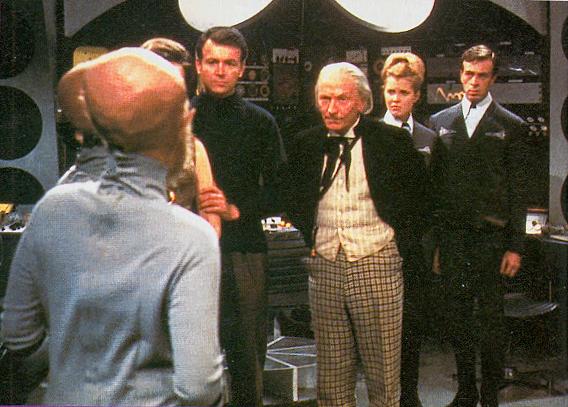
The Doctor's grand-daughter Susan, with her History Teacher, Barbara Wright and Science Teacher, Ian Chesterton in An Unearthly Child

The Doctor’s grand-daughter Susan, with her History Teacher, Barbara Wright and Science Teacher, Ian Chesterton in An Unearthly Child

Barbara’s excellent knowledge of history was useful during the Doctor’s early journeys and undoubtedly assisted the programme’s mandate to both entertain and educate.  She was more accepting of the unknown than Ian and was quicker to acknowledge that the tales that the Doctor and Susan spun about the TARIS were indeed true. When the TARIS crew visited South America in The Aztecs she was able to draw upon her knowledge of Spanish settlement and traditional Aztec culture and religion.  That, unfortunately, led her to the false belief that by assuming the mantle of the reincarnated priest, Yataxa, that had been thrust upon her, that she could change the course of history and end human sacrifices. The Doctor was quick to point out to Barbara the folly of believing that history could be altered.  She was also able to utilize her knowledge of history in The Dalek Invasion of Earth when she bamboozled the Daleks with some historical falsities and in The Reign of Terror, when she was able to identify the period of French history in which they’d materialized.

Yetaxa in all her finery as Barbara masquerades in The Aztecs

Yetaxa in all her finery as Barbara masquerades in The Aztecs

Unusually for a woman in her mid thirties, Barbara wasn’t married.  Perhaps the negative stereotype of spinster school ma’ams had been adopted here. Barbara was not without romance, however. She came upon several suitors during the course of her companionship, although none matched the tenderness of her relationship with Ian.  Although never openly remarked upon, it was clear that Barbara and Ian had become more than just colleagues.  Their joyful banter whilst reclining in luxury during The Romans was indicative of a particularly strong personal relationship. The tenderness between Barbara and her fellow companion Ian was undoubtedly a silent nod to a love that couldn’t be broached on Saturday tea time family TV. One can only dream that they became a couple and lived in marital bliss upon their return to earth.

Barbara and Ian playfully relax in The Romans

Barbara and Ian playfully relax in The Romans

Barbara and Ian in one of their many embraces (The Dalek Invasion of Earth).  Gif courtesy of http://thechestertons.tumblr.com

Barbara and Ian in one of their many embraces (The Dalek Invasion of Earth). Gif courtesy of http://thechestertons.tumblr.com

1. Zoe Heriot

The character of Zoe was arguably the first companion in Doctor Who to reflect the changing views on women that arose with the second wave of feminism. A teenage genius, Zoe first met the Doctor and Jamie in final serial of Season 5, The Wheel in Space. She remained with the Doctor until the end of the monochrome era when all three stars left in the final episode of The War Games.  My review of The Wheel in Space included a detailed introduction to Zoe.  She was  an astrophysicist and astrometricist first class and employed as the Wheel’s parapsychology librarian. Her perfect recall of scientific facts and ability to undertake mental calculations faster than a hand-held calculator were the consequence of her being brainwashed by the City’s educational institution. She had total faith in the ability of pure logic to provide all the answers required.  Zoe’s future adventures would soon show this to be a folly and the Doctor quickly, but tactfully, advised her on the limitations of logic alone.  Perhaps the Second Doctor’s most famous quote was to Zoe in The Wheel in Space when he stated, “Logic, my dear Zoe, merely enables one to be wrong with authority”.

Zoe and Jamie with the white robots in The Mind Robber

Zoe and Jamie with the white robots in The Mind Robber

Zoe was the first companion with an intellect to match the Doctor’s.  Zoe’s extraordinarily high intelligence was remarked upon several times in The Krotons.  She told Selris that the “Doctor’s almost as clever as I am” whilst earlier the Doctor had said to him, “Yes, well, Zoe is something of a genius. Of course it can be very irritating at times”.  In The Invasion she blew up the automated answering machine at International Electromatics by presenting it with a ALGOL problem that it was unable to answer.  She also assisted in the destruction of the entire fleet of Cybermen ships by mathematically calculating the correct alignment and course of projectile for the Russian missiles targeted at the ships. The Seeds of Death saw her piloting a space rocket.

The delightful Wendy Padbury as Zoe Heriot

The delightful Wendy Padbury as Zoe Heriot

The Doctor, however, was never seriously concerned by Zoe’s brilliance. There was no sense of threat and never a suggestion that her intellect was unbecoming of a young woman. That’s not to say that Zoe didn’t escape entirely from the scourge of sexism. In The Invasion the UNIT soldiers’ praise for Zoe masked an underlying sexism when she was described as “prettier than a computer”.

Jamie is initially reticent to accept Zoe as a member of the TARDIS Crew in The Wheel in Space

Jamie is initially reticent to accept Zoe as a member of the TARDIS Crew in The Wheel in Space

Zoe challenged assumptions on the role of women more by her deeds rather than by words. On at least one occasion, however, she verbalized the thoughts of women of that era. Undoubtedly buoyed by the support of Isobel Watkins in The Invasion, Zoe took offence at Jamie’s sexism when she stated “Just because you’re a man you think you’re superior, don’t you”.  Zoe’s relationship with Jamie, however, was otherwise positive.  Although less intellectually capable than his friend, Jamie is never mocked or derided by Zoe.

Zoe and Jamie cling to the TARDIS console after the Ship explodes in The Mind Robber

Zoe and Jamie cling to the TARDIS console after the Ship explodes in The Mind Robber

Both Zoe and Jamie were returned to their own time in episode 6 of The War Games, with their memories wiped of all but their first adventure with the Doctor. Donna Noble was not the first to suffer this fate. The Doctor’s companions’ departures were heartbreaking and perhaps the most poignant of Classic Series Doctor Who.

Jamie and Zoe’s Goodbye.

Vivien Fleming

©Vivien Fleming, 2013.

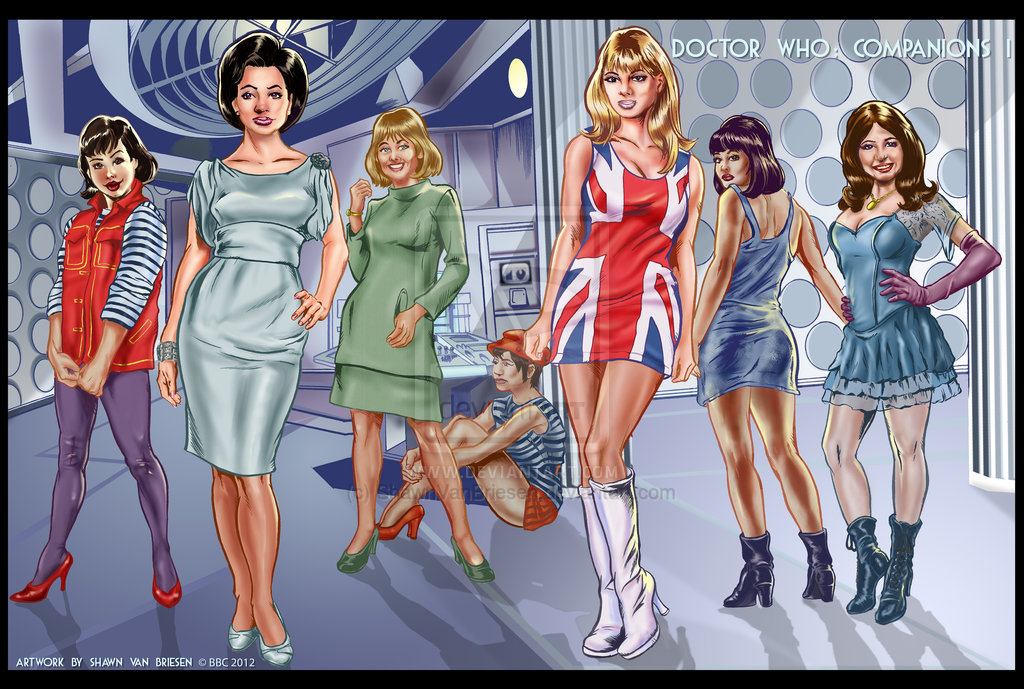
The top image is courtesy of www.deviantart.com.  Artwork by Shawn Van Briesen.  No copyright infringement is intended.

Day 34 of 50th Anniversary Countdown – 5 Best Doctor Who Radio Times Covers of the Sixties

Standard

Image

The Radio Times is a weekly radio and television programme guide which has been published in the UK since 1923. Owned and published in house by the BBC until 2011, the publication is now owned by Immediate Media Company.  Prior to the deregulation of British television listings in 1991 the Radio Times only carried listings for BBC radio and television programmes.  Since then the magazine has comprehensively listed programmes on all networks.

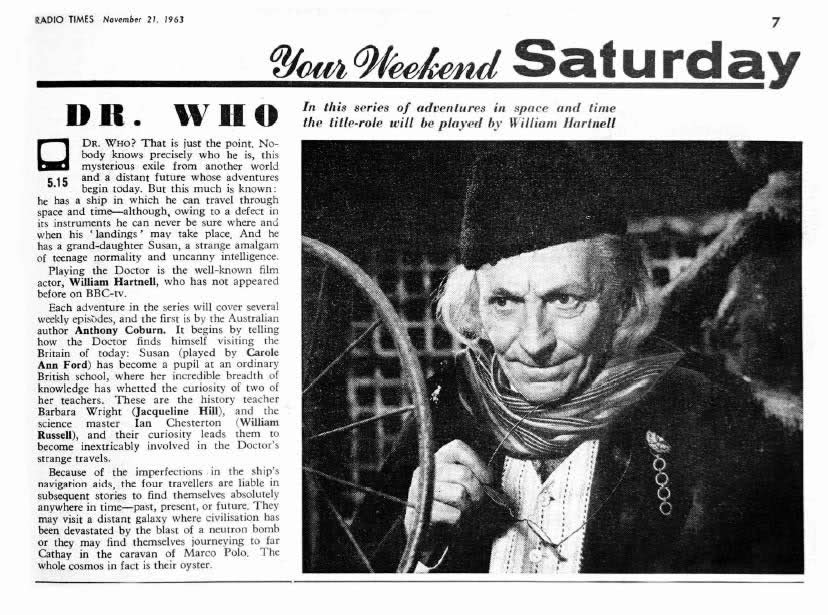
The first article published by the Radio Times on Doctor Who discussed the exciting new adventure series starring William Hartnell

The first article published by the Radio Times on Doctor Who  on 21 November 1963 discussed the exciting new adventure series starring William Hartnell

Doctor Who has been represented in more Radio Times covers than any other programme, with 29 issues featuring Who on its cover.  Today the Doctor Who Mind Robber will review the five best Doctor Who Radio Times covers of the Sixties.

5. Marco Polo

The Radio Times cover for the missing Doctor Who serial Marco Polo

The Radio Times cover for the missing Doctor Who serial Marco Polo in February 1964

4. The Power of the Daleks

The return of the Daleks were worth a Radio Times Cover story

The return of the Daleks was worth a Radio Times Cover story when the Second Doctor’s first serial, The Power of the Daleks, was broadcast in November 1966.

3. The Tomb of the Cybermen

The Cybermen soon found themselves on the Cover of Radio Times

The Cybermen soon found themselves on the Cover of Radio Times in this feature about The Tomb of the Cybermen in September 1967

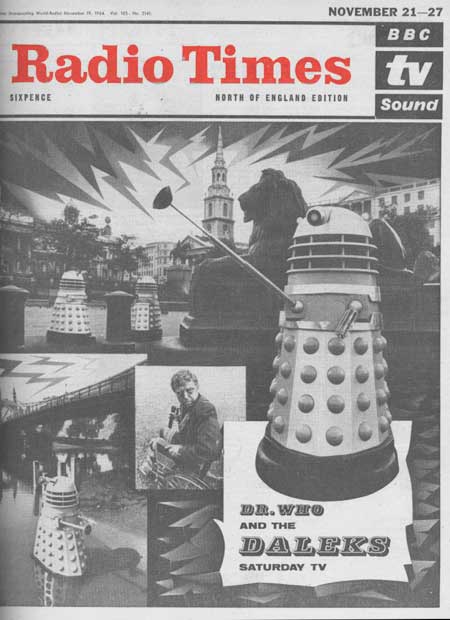
2. The Dalek Invasion of Earth

The Daleks appeared in their second Doctor Who serial in November 1964.  The Dalek Invasion of Earth featured in this cover

The Daleks appeared in their second Doctor Who serial in November 1964. The Dalek Invasion of Earth featured in this cover

1. The Enemy of the World

A rare colour cover for 1960s Radio Times saw Patrick Troughton as the Second Doctor in

A rare colour cover for 1960s Radio Times with Patrick Troughton as the Second Doctor in The Enemy of the World in January 1968.

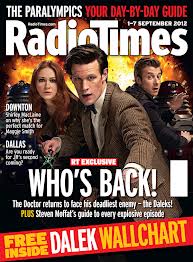
As a comparison with the current era, here’s a September 2012 cover of the Radio Times featuring the Eleventh Doctor, Amy and Rory.  The Daleks are still a major draw card.

A September 2012 Radio Times cover for the premier Series 7 episode, The Asylum of the Daleks

A September 2012 Radio Times cover for the premier Series 7 episode, The Asylum of the Daleks

Vivien Fleming

©Vivien Fleming, 2013.

Day 35 of 50th Anniversary Countdown – 5 Serials You’d Swap for Missing Episodes

Standard

Image

The success on iTunes of the recently recovered Troughton era serials, The Enemy of the World and The Web of Fear, has conclusively shown that 45 year old monochrome Doctor Who can successfully compete against the best current release TV shows.  An article in the UK’s Mirror newspaper states that in the first three days after the release of the two stories 10,000 series pass downloads were sold.  Presumably this figure is for sales in the UK only. The article goes on to state that to date there have been 73,000 episode downloads.

The Enemy of the World and The Web of Fear have only been released on iTunes in the UK, US, Canada and Australia. Enemy is due for release on DVD in late November and Web is due sometime in the New Year. Rumours continue to surface that Marco Polo may have been recovered and is soon to be released.
Doctor Who retro posters courtesy of Radio Times designer Stuart Manning - http://www.radiotimes.com/news/2013-10-11/doctor-who-missing-episodes-retro-poster-designs

Doctor Who retro posters courtesy of Radio Times designer Stuart Manning – http://www.radiotimes.com/news/2013-10-11/doctor-who-missing-episodes-retro-poster-designs

In the light of Doctor Who’s missing episodes hysteria the Doctor Who Mind Robber today looks at 5 Serials that you’d swap for missing episodes. Even the most rabid of fans acknowledge that the output of Doctor Who has never been consistent.  Some stories are brilliant whilst others would have been best left unmade. As 97 episodes are still claimed by the BBC to be missing from their archives, which extant episodes would you willingly ditch for a recovered one?

5. The Sensorites

The Sensorites is the most unloved serial of Season One Doctor Who.  In a documentary included in the Special Features of the DVD release comedian Toby Hadoke described the serial in the following way:

The Sensorites.  Poor, unloved, The Sensorites.  Nestling, lost somewhere, down the back of the fans’ collective sofa.  There it lies at number 7 in the first heady year of Doctor Who.  It didn’t even have the decency to be wiped so we could all mourn its loss, and imagine how brilliant it must have been.  It’s not a story anyone really talks about.  We certainly don’t know that much about it …

Little more needs to be said.

A scene from The Sensorites

A scene from The Sensorites

4. The Ark

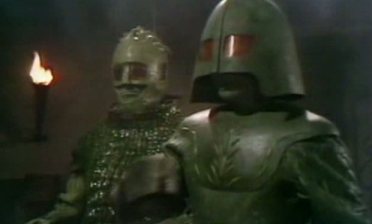
Although beautifully directed The Ark has undoubtedly the worst monsters in Classic Series Who, the Monoids. In my review I described the Monoids like this:

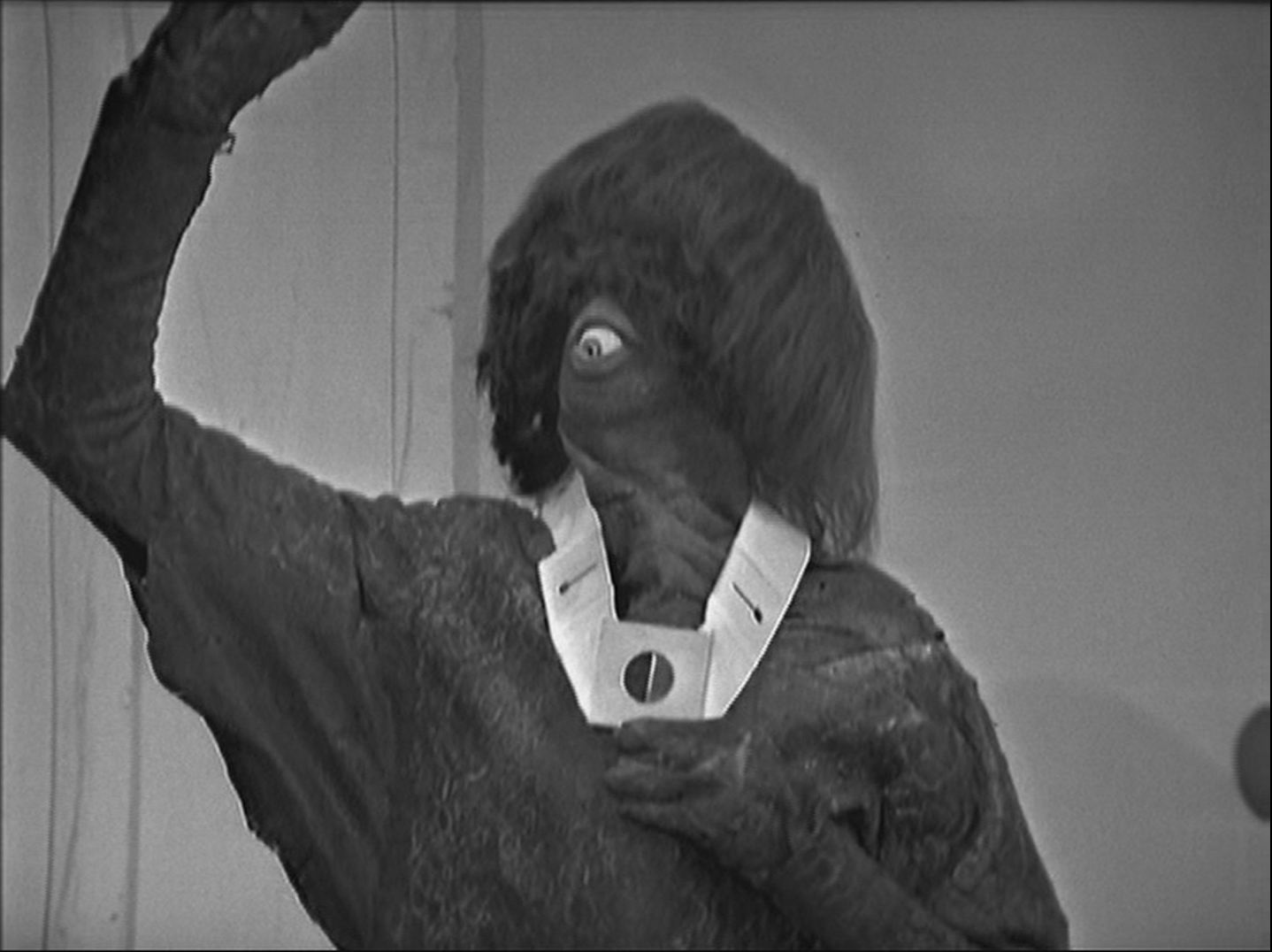
Also travelling on the spaceship are an assortment of animals and the Monoids, a peculiar mute race whose most distinctive feature is their one eye.  This single eye is in their mouths, or at least what would’ve been their mouths if they had human anatomy. These eyes are actually painted ping pong balls which the actors held in place with their mouths.  Now that’s ingenious small budget special effects for you!  On the top of their heads is a long Beatles style mop top wig, whilst the rest of their bodies are clothed in green ill fitting garb. They have webbed hands and feet and move slowly.

An unfortunate Monoid in The Ark

An unfortunate Monoid in The Ark

3. The Keys of Marinus

The Keys of Marinus is the second of two little regarded serials in Doctor Who’s first season.  The six parter was among the more expensive stories to produce as each episode took place in a different location of Marinus. Season 16’s The Key to Time is not dissimilar.  Unfortunately the variety of locations makes for a disjointed serial and the chief monsters, the Voord, are what young people today might best describe as “rubbish”. With wet suit clad bodies and swimming flipper feet their most redeeming features were their quite unusual heads.

A Voord with Susan in The  Keys of Marinus

A Voord with Susan in  The Keys of Marinus

2. The Space Museum

In my review of The Space Museum I discussed the DVD extra, Defending the Museum.  In it the writer Rob Shearman outlined his devotion to The Space Museum which rests solely upon the assumption that the story is a parody of William Hartnell era Doctor Who episodes. The aggressors, the Moroks, are little more than morons who invade a planet only to turn it into a museum for their past achievements. The rebels are excruciatingly bad.  Dressed in black polo neck jumpers, they look like students in a coffee bar.  Vicki starts a revolution only because she’s bored and the native Xerons don’t need a great revolutionary, just a locksmith! That The Space Museum can only be appreciated if it’s considered a parody says much for the low esteem in which it’s generally held. The serial is unlikely to be missed.
The Doctor hiding inside the casing of a Dalek exhibit is one of the best parts of The Space Museum

The Doctor hiding inside the casing of a Dalek exhibit is one of the best parts of The Space Museum

1. The Web Planet

I was so utterly bored by The Web Planet that I couldn’t even find the enthusiasm to review it. The best parts of the story are William Hartnell’s “Billy Fluffs” and when an extra ran slap bang into a camera and it wasn’t edited out. This fan made compilation clip, however, is brilliant.

Vivien Fleming

©Vivien Fleming, 2013.

Day 36 of 50th Anniversary Countdown – The First Doctor’s Accessories

Standard

Image

Yesterday the Doctor Who Mind Robber looked at the Second Doctor’s peculiar penchant for hats.  Today we examine the First Doctor’s accessories.  By accessories we refer to anything worn or used by the Doctor to compliment his clothing or to assist in his business  as a time-travelling hero.  The First Doctor is perhaps best known for his blue signet ring, pictured above. Together with being decorative the ring also had special powers. Amongst other things it controlled a Zarbi and opened the main doors of the TARDIS in The Web Planet; unjammed the TARDIS’s locking mechanism in The Daleks’ Master Plan; and hypnotised Dodo in The War Machines. In the days prior to the sonic screwdriver, which was introduced in the Second Doctor’s tenure, the First Doctor’s signet ring worked magic.

1. An Unearthly Child

The First Doctor first appeared in eccentric garb with a cape, long scarf and fez type hat

The First Doctor first appeared in eccentric garb with a cape, long scarf and fez type hat

The Doctor's cape is seen more clearly here in the first episode of An Unearthly Child.  This scene has been recreated for An Adventure in Space and Time

The Doctor’s cape is seen more clearly here in the first episode of An Unearthly Child. This scene has been recreated for An Adventure in Space and Time

The recreated scene in An Adventure in Space and Time

The recreated scene in An Adventure in Space and Time

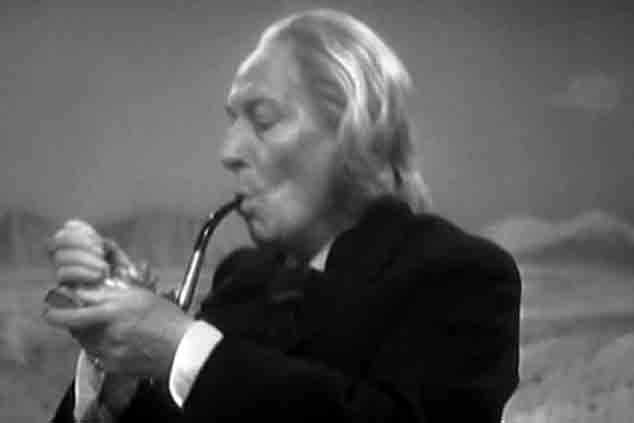
For the first and only time  the Doctor is seen to smoke in An Unearthly Child.  Patrick Troughton was seen smoking a cigar in The Enemy of the World but was playing the Doctor's evil double, Salamadar, at the time.

For the first and only time in Doctor Who’s history that the Doctor is seen to smoke is in An Unearthly Child. Patrick Troughton was seen smoking a cigar in The Enemy of the World but was playing the Doctor’s evil double, Salamader, at the time.

2. The Edge of Destruction

In The Edge of Destruction the Doctor wore a bandage which changed colour as the wound healed

In The Edge of Destruction the Doctor wore a bandage which changed colour as the wound healed

3. The Aztecs

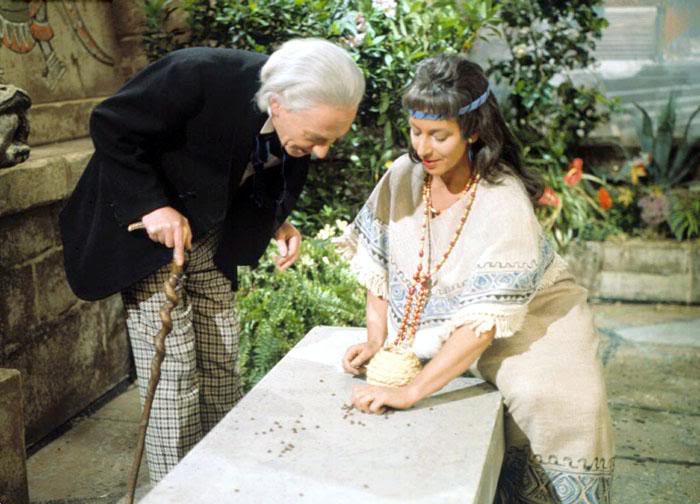
The Doctor carried a cane on many occasions.  He is pictured here with his love interest from The Aztecs, Cameca

The Doctor carried a cane on many occasions. He is pictured here with his love interest from The Aztecs, Cameca

4. The Reign of Terror

In The Reign of Terror the Doctor masqueraded as District Commissioner, resplendent in a large and colourful feathered hat

In The Reign of Terror the Doctor masqueraded as District Commissioner, resplendent in a large and colourful feathered hat

5. Planet of Giants

The Doctor wore a decorative gold chain with his cape in Planet of Giants

The Doctor wore a decorative gold chain with his cape in Planet of Giants

6. The Romans

The Doctor carried, and pretended to play a lyre as he masqueraded as Maximus Pettulian

The Doctor carried and pretended to play a lyre as he masqueraded as Maximus Pettulian in The Romans

7. The Web Planet

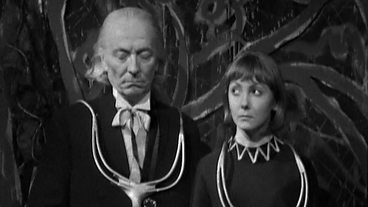
The Zarbi used these unusual collars to control the Doctor and Vicki in The Web Planet

The Zarbi used these unusual collars to control the Doctor and Vicki in The Web Planet. The Doctor later referred to them as necklaces

8. The Space Museum

In The Space Museum the Doctor used the top opening of a Dalek casing almost like a hat

In The Space Museum the Doctor used the top opening of a Dalek casing almost like a hat

9. The Time Meddler

The Doctor tells Vicki and Steven that the item he is holding is not a "space helmet for a cow" in The Time Meddler

The Doctor tells Vicki and Steven that the item he is holding is not a “space helmet for a cow” in The Time Meddler

10. The Daleks’ Master Plan

The Doctor wore a stylish panama hat in The Daleks' Master Plan

The Doctor wore a stylish panama hat in The Daleks’ Master Plan

A side view of the hat as the Doctor chats with Steven and the short lived companion Sara Kingdom

A side view of the hat as the Doctor chats with Steven and the short lived companion Sara Kingdom

11. The Massacre

In The Massacre the Doctor wore a tall hat, not altogether dissimilar to that which the Second Doctor would become known for

In The Massacre the Doctor wore a tall hat, not altogether dissimilar to that which the Second Doctor would become known for.  The Doctor is also seen to wear a decorative gold chain on his cape and a cane

12. The Gunfighters

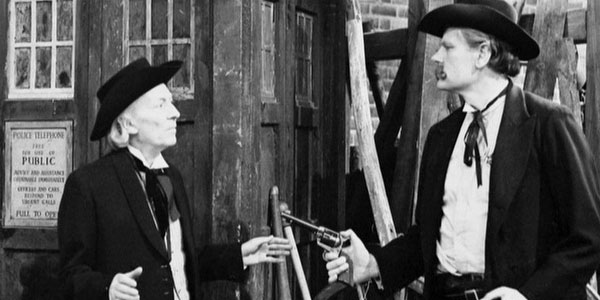
The Doctor wore a western style black hat in The Gunfighters

The Doctor wore a western style black hat in The Gunfighters

13. The Savages

The Doctor carried a Reacting Vibrator in The Savages

The Doctor carried a Reacting Vibrator in The Savages

14. The War Machines

The Doctor wore a black fez in The War Machines

The Doctor wore a black fez in The War Machines

Vivien Fleming

Day 38 of 50th Anniversary Countdown – 10 Great Companion Outfits of the Sixties

Standard

Image

In no particular order The Doctor Who Mind Robber today presents 10 Great Companion Outfits of the Sixties.

1. Jamie McCrimmon –  Kilt

Possessed of a fine pair of legs, Jamie McCrimmon always looked stunning in his kilt

Possessed of a fine pair of legs, Jamie McCrimmon always looked stunning in his kilt

2. Zoe Heriot – Catsuit

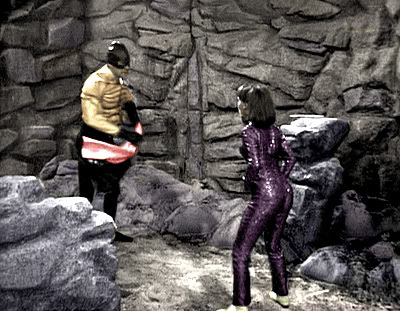
Zoe fights the Karkus in her famous catsuit

Zoe fights the Karkus in her famous catsuit

3. Barbara Wright – Yetaxa

Barbara masqueraded as the reincarnated priest Yetaxa in The Aztecs

Barbara masqueraded as the reincarnated priest Yetaxa in The Aztecs

4. Dodo Chaplet – The Celestial Toymaker

Zoe looked fabulous in The Celestial Toymaker

Zoe looked fabulous in The Celestial Toymaker

5. Sara Kingdom – The Daleks’ Master Plan

Jean Marsh in black cat suit as Sara Kingdom

Jean Marsh in black catsuit as Sara Kingdom

6. Zoe Heriot – Space Pirates’ Hotpants

Zoe shows some leg in The Space Pirates

Zoe shows some leg in The Space Pirates

7. Susan – An Unearthly Child

Susan at her casual best in An Unearthly Child

Susan at her casual best in An Unearthly Child

8. Polly – Way Out Sixties

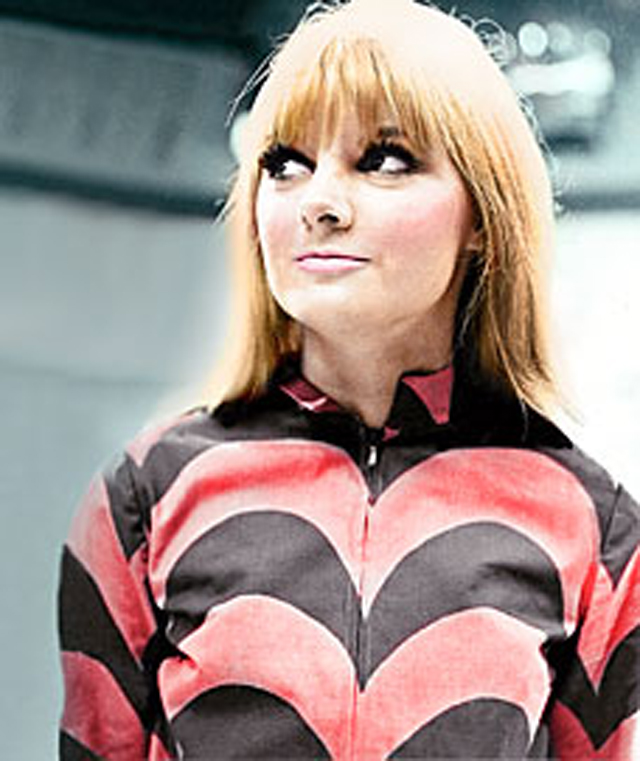
Is this the ultimate Sixties companion outfit?

Is this the ultimate Sixties companion outfit?

9. Victoria – The Abominable Snowmen

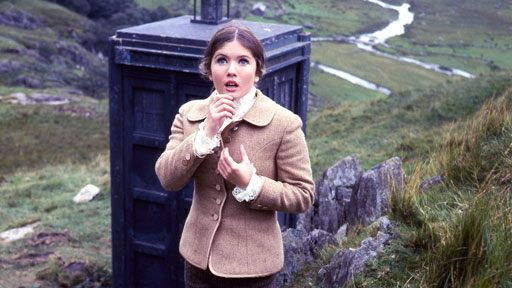
Victoria emerges from the TARDIS and is shocked by what she sees

Victoria wears Victorian riding gear in The Abominable Snowmen

10. Zoe Heriot – The Invasion 

Zoe in a green feather boa in The Invasion

Zoe in a green feather boa in The Invasion


HONOURABLE MENTION

Polly dresses as a local in The Underwater Menace

Polly dresses as a local in The Underwater Menace


Vivien Fleming

Day 39 of 50th Anniversary Countdown – The 5 Greatest Monsters of the Sixties

Standard

Image

Doctor Who’s long history of non-human villains has its genesis in the show’s second ever serial, The Daleks. Choosing the Top 5 is relatively easy given the extraordinarily high attrition rate of monsters considered to be “the next big thing”. Starting with Terry Nation’s The Sensorites, and ending with Robert Homes’ The Krotons, the Sixties were littered with the carcases of monsters that never quite made the grade.  The Dominator’s Quarks, The Underwater Menace’s benevolent Fish People, The Macra Terror’s Macra, The War Machines’ WOTAN and War Machines, Galaxy 4’s Rill, The Chase’s Mechonoids, and The Web Planet’s Zarbi and Menoptra are but a few  examples.

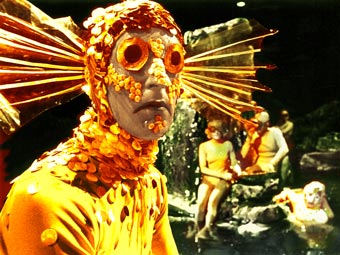
One of the less successful monsters of the Sixties, the Fish People from The Underwater Menace

One of the less successful monsters of the Sixties, the Fish People from The Underwater Menace

In essence, any 1960s monster that scored a repeat story in that decade has made The Doctor Who Mind Robber’s list of the Greatest Monsters of the Sixties. All have been revived in New Series Doctor Who, with the exception of the Yeti. Please see Day 49 of our countdown for the Ten Least Remembered Monsters of the Sixties.

5. The Great IntelligenceThe Abominable Snowmen and The Web of Fear

When Colonel Lethbridge-Stewart asked the Doctor in The Web of Fear what the Great Intelligence was he responded by saying, “Well, I wish I could give you a precise answer.  Perhaps the best way to describe it is a sort of formless, shapeless thing floating around in space like a cloud of mist, only with a mind and will”.

The Doctor, Jamie and Victoria first encountered the Great Intelligence at the Det-Sen monastery in 1935 Tibet (The Abominable Snowmen).  Having possessed the body of the monastery’s Master, Padmasambhava, this otherwise disembodied sentient being permitted its host to live up to 300 years.  The Intelligence forced Padmasambhava to build him an army of robot Yeti, the construction of which took over 200 years.  The Yeti were controlled by small hand-made pyramids. The Intelligence’s plans to take over the mountain on which the monastery stood were thwarted when the Doctor, Edward Travers and the companions destroyed the pyramids. Padmasambhava finally found the peace he so desired when his body passed away and the Intelligence again became a sentient being without a parasitic body.

The Abominable Snowmen's Padmasambhava was possessed by the Great Intelligence

The Abominable Snowmen’s Padmasambhava was possessed by the Great Intelligence

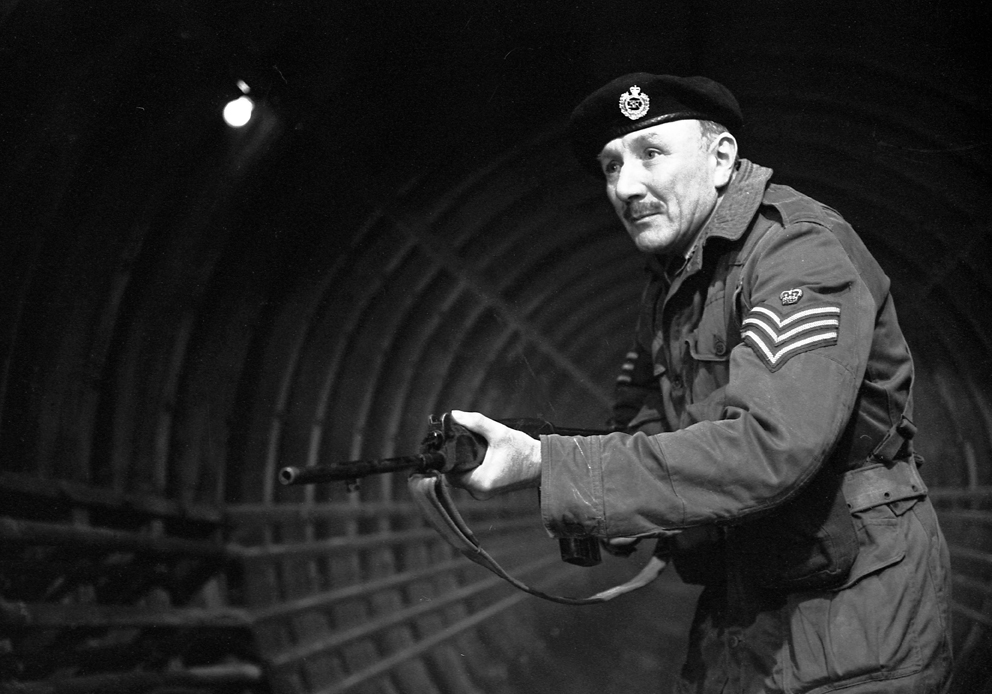
The Doctor and his companions again met the Intelligence when they found themselves in the London Underground 40 years later. In The Web of Fear their old friend Professor Travis had inadvertently facilitated the reactivation of the Yeti. The Doctor, Jamie and Victoria teamed up with members of the British Army to thwart the Intelligence’s plans for domination. The Intelligence used the body of the deceased Staff Sergeant Arnold and even Professor Travers for a short time.  The Intelligence sought to possess the Doctor’s body and to drain his mind with a conversion headset.  Unbeknownst to his companions, the Doctor had already reversed the settings so that it was the Intelligence’s mind, rather than his own, that would be drained.  Jamie, however, smashed the control spheres prior to the Doctor sapping the Intelligence’s mind.  Although still alive, the Intelligence vanished and was never again seen by the Second Doctor.

Staff Sergeant Arnold was possessed by the Great Intelligence in The Web of Fear

Staff Sergeant Arnold was possessed by the Great Intelligence in The Web of Fear

4. The YetiThe Abominable Snowmen and The Web of Fear

Although briefly seen in the 20th Anniversary Special, The Five Doctors, the Yeti have only been the central players of two serials, The Abominable Snowmen and The Web of Fear. Robotic servants of the Great Intelligence, the first Yeti were manufactured by Padmasambhava at the Intelligence’s command.  Rather pear shaped and cuddly, the Mark 1 Yeti were not as threatening in appearance as their Mark 2 counterparts which had claws capable of holding web-guns and were more streamlined. Exactly who assisted the Intelligence in the production of the Mark 2 Yeti of The Web of Fear has never revealed.

The Doctor and a Yeti in The Web of Fear

The Doctor and a Yeti in The Web of Fear

3. The Ice WarriorsThe Ice Warriors and  The Seeds of Death

The Ice Warriors are natives of the planet Mars. Large reptilian humanoids, the Ice Warriors can stand up to 7 feet in height. The Doctor and his companions first came upon the Ice Warriors at the Brittanicus Base where they had been frozen in ice for over 5,000 years. Defeated when their space craft exploded the Ice Warriors were next encountered on the Moon in The Seeds of Death. Their attempts at obtaining control of the Earth were foiled when the Doctor discovered that their seed pods were ruined by water.  The Doctor then sent their space craft into an orbit around the sun.

The Doctor used his genius in an attempt to thwart death in The Seeds of Death

The Doctor used his genius in an attempt to thwart death in The Seeds of Death

When the Ice Warriors were next met by the Doctor in 1972’s The Curse of Peladon they were members of the Galactic Foundation and had renounced violence. They became allies with the Doctor and remained so in a subsequent Third Doctor adventure, The Monster of Peladon (1974). In 2013’s Cold War the Ice Warriors’ pacifism was a long forgotten.  

Pertwee era Ice Warriors

Pertwee era Ice Warriors

2. The CybermenThe Tenth Planet, The Moonbase, The Tomb of the Cybermen, The Wheel in Space and The Invasion.

The Cybermen made their Doctor Who debut in William Hartnell’s last serial, The Tenth Planet. Very much humanoid in appearance, the Mark 1 Cybermen were possessed of a sing-song voice.  Their faces were covered only with a stocking and they still retained their human hands. Unlike their successors, the first Cybermen initially did not seek to destroy the human race but rather hoped to convince them to join their “utopian” existence.

A Mark 1 Cyberman in The Tenth Planet

A Mark 1 Cyberman in The Tenth Planet

With the success of their first television appearance the Cybermen were quickly co-opted as rivals to the Dalek’s mantle of favourite Doctor Who monster. Each story in which they appeared saw their costumes modified, with the most substantial change occurring to the Mark 2 model.  Gone were the stockinged faces and in their place were robotic heads.  The five digits of their human hands were replaced by three fingered gloved hands.

The Cybermen emerge from their icy tombs in this iconic image from The Tomb of the Cybermen

The Cybermen emerge from their icy tombs in this iconic image from The Tomb of the Cybermen

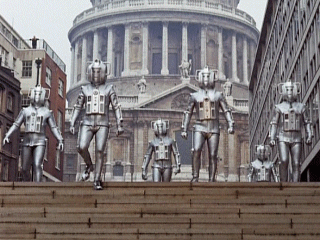
The Cybermen were the subject of two particularly iconic images of Sixties Who.  Even the tackiness of breaking through new-fangled cling wrap was insufficient to dampen the effectiveness of the Cybermen’s emergence from their icy tombs in The Tomb of the Cybermen.  Their appearance on, and march down, the steps of St Paul’s Cathedral in The Invasion was arguably the greatest cliff hanger of the era. Still images of the event have become part of popular culture.

Perhaps the most iconic cliff hanger in classic series Doctor Who.  The Cybermen on the steps of St Paul's Cathedral

Perhaps the most iconic cliff hanger in classic series Doctor Who. The Cybermen on the steps of St Paul’s Cathedral in The Invasion

1.   The DaleksThe Daleks, The Dalek Invasion of Earth, The Space Museum (cameo), The Chase, Mission to the Unknown, The Daleks’ Master Plan, The Power of the Daleks and The Evil of the Daleks

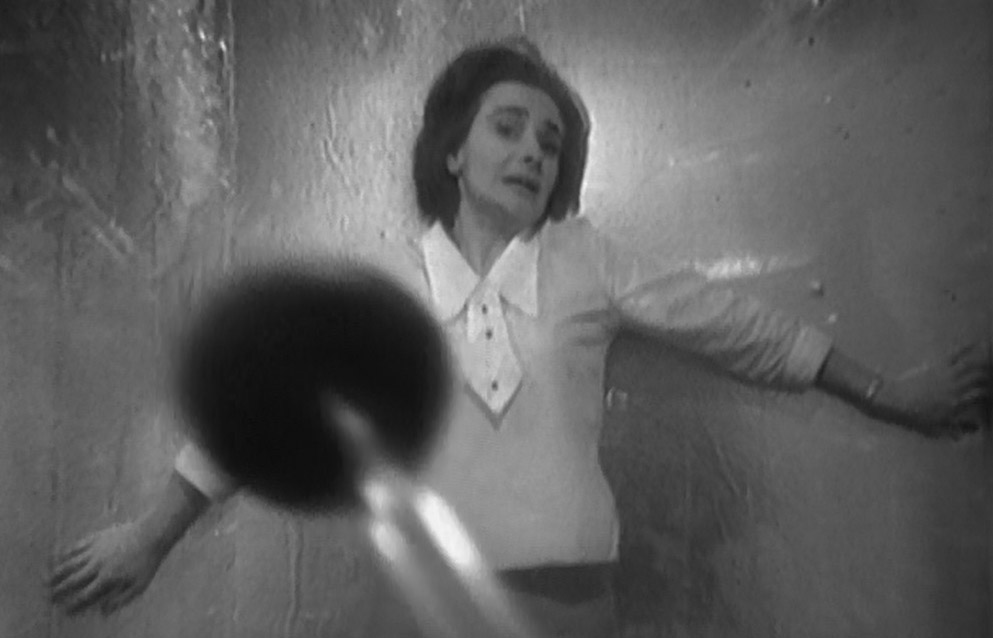
Only a brave person would nominate anything other than the Daleks as their favourite 1960s monsters. Appearing in just the second Doctor Who serial, it was arguably the Daleks that saved the show from a mere 13 week run. In a stroke of genius the Terry Nation created and Ray Cusick designed mutants immediately captured the imagination of the British public. Dalekmania was in full swing and within 18 months the Daleks would appear in the first of two colour, theatrically released movies.

Barbara is pinned against the wall in fear during the Daleks' first appearance in Doctor Who on 21st December 1963

Barbara is pinned against the wall in fear during the Daleks’ first appearance in Doctor Who on 21st December 1963

The Daleks featured in seven Sixties serials and appeared as a cameo in another. The 12 piece extravaganza The Daleks’ Master Plan is one of the most sought after missing serials. Only 3 episodes are held in the BBC Archives.  Among other missing episodes is Mission to the Unknown, the only one part 1960s serial which also has the distinction of featuring none of the regular cast.  Arguably the most missed of all Dalek serials is the Second Doctor’s first story, The Power of the Daleks.  It, together with another missing story, The Evil of the Daleks, is highly revered in fandom.  It can only be hoped that at least some of these missing episodes are some day recovered.

The 12 part Dalek's Master Plan is one of the most sought after missing Doctor Who serials

The 12 part The Dalek’s Master Plan is one of the most sought after missing Doctor Who serials

HONOURABLE MENTION

The Chumblies – Galaxy 4

Although the Chumblies were never reprised they were the most adorable Doctor Who monsters ever.  Despite the Doctor, Steven and Vicki being initially frightened by them it soon became apparent that they were benign and worked for the good and just with the Rill. The Chumblies are top of my list of Sixties monsters that I’d most like to see revived.

A Chumbley with the Drahvins in Galaxy 4

A Chumbley with the Drahvins in Galaxy 4

Vivien Fleming

©Vivien Fleming, 2013.

Missing Episodes – Let’s Discuss Coincidences

Standard

Image

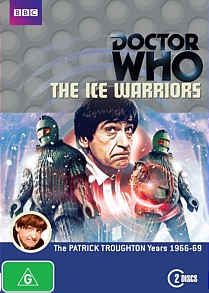
In my review of the recently released The Ice Warriors DVD on 3 September I posited that there may be a relationship between the resurrection of seemingly deceased Doctor Who monsters and the sale of Classic Series DVDs. Only four months prior to The Ice Warrior’s DVD release an Ice Warrior emerged for the first time in 39 years in The Cold War. Similarly, the last Fourth Doctor DVD to be issued, The Terror of the Zygons, coincidently found its way onto retailers’ shelves but a mere six weeks prior to the Zygons much anticipated reprise in the 50th Anniversary Special, The Day of the Doctor. Should we anticipate the return of the Fish People soon given the impending release of The Underwater Menace, I asked.

The Ice Warriors DVD Cover

In retrospect, the recovery of The Web of Fear is now obvious considering the story arc which commenced with the 2012 Christmas Special, The Snowmen.  At the time the return of the Great Intelligence, a formless mass first encountered in The Abominable Snowmen and last seen in The Web of Fear 44 years earlier, was a incredibly bizarre decision by Doctor Who show runner Steven Moffat. Of all villains to resurrect, why choose one who only appeared in two missing serials over 40 years previously? Not that this was the first time that a monster seemingly lost for all time had been reimaged.  The Macra reappeared in the 2007 Series 3 episode Gridlock having last been seen in 1967’s The Macra Terror.

A snowman from 2012's The Snowmen

A snowman from 2012’s The Snowmen

The Great Intelligence’s revival was not limited to a single episode, however.  It went on to appear in two further Series 7 episodes, The Bells of Saint John and The Name of the Doctor and was the series’ major protagonist.  Which leads us to further coincidences.  Were the Snowmen who accompanied the Great Intelligence in The  Snowmen a substitute for the Intelligence’s first tools, the Yeti? Should we anticipate the recovery and issue of The Abominable Snowmen sometime soon? Moreover, is this image taken from the 50th Anniversary trailer perhaps a hint that The Abominable Snowmen has indeed been returned.  The snow capped mountains in the background clearly represent Tibet and the stone block building could readily be a monastery.  Is the Second Doctor playing his recorder as if to summon the missing episodes home? Only time will tell, however one thing is certain.  Henceforth the revival of any monsters and villains from lost 1960’s episodes  will be scrutinized and speculated upon by fans as evidence of recoveries.  Let’s see what the 50th Anniversary and Christmas Specials, together with Series 8, brings forth!

A screen capture from the BBC trailer for the 50th Anniversary Special, The Name of the Doctor

A screen capture from the BBC trailer for the 50th Anniversary Special, The Day of the Doctor

Vivien Fleming

©Vivien Fleming, 2013.